
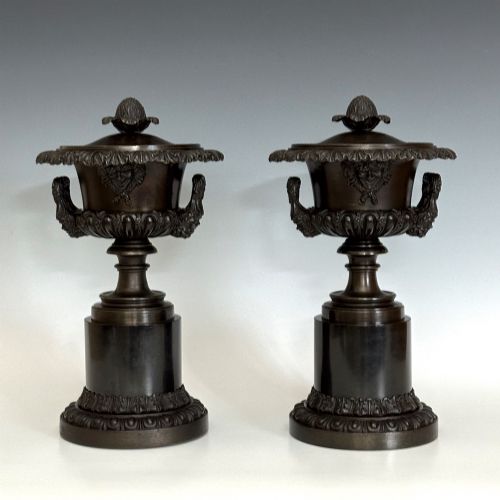


Dark Bronze Classical Vase
A dark bronze classical vase brings the gravitas of antiquity indoors, offering sculptural presence and patinated weight to a room.
Dark Bronze Classical Vase
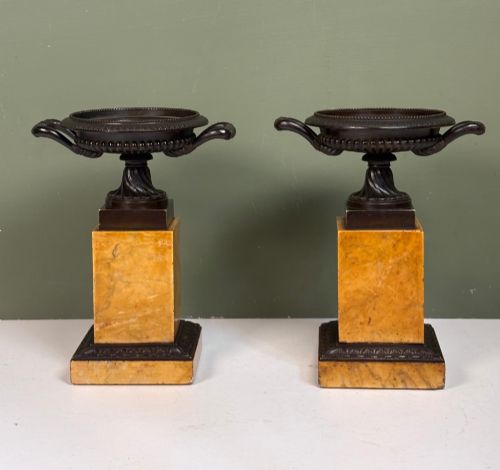
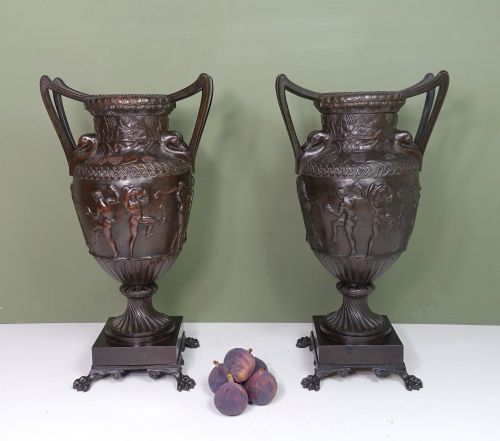
A dark bronze classical vase captures the spirit of ancient Greece and Rome through enduring metalwork forms. When you search for a dark bronze classical vase, you encounter items shaped by nineteenth-century makers inspired by archaeological discoveries across Europe.
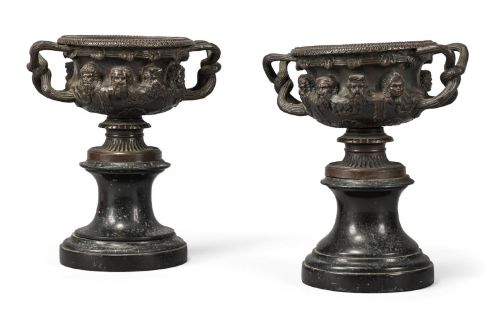
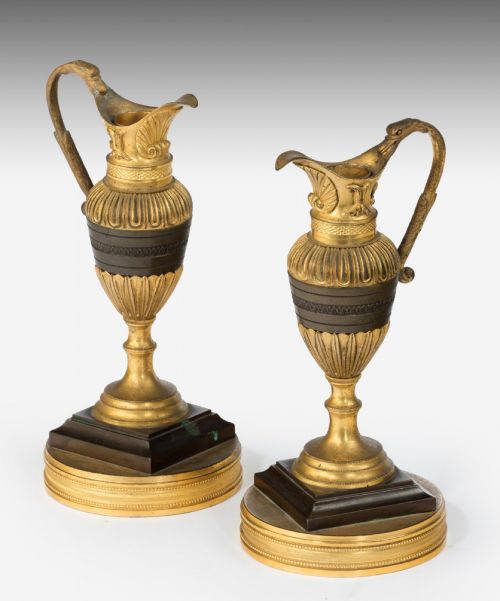
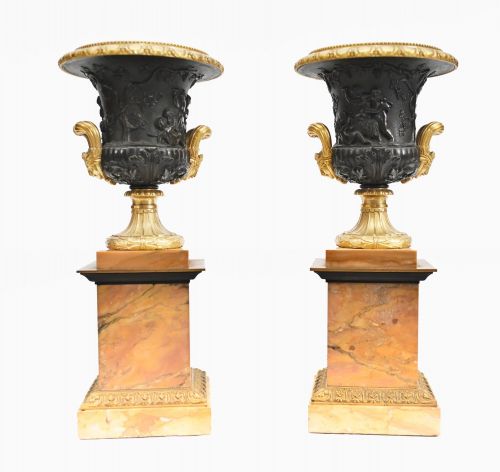
The selections span nineteenth-century production, including Victorian and Regency examples. Forms range from campana urns and table lamps to decorative vessels mounted on marble plinths.
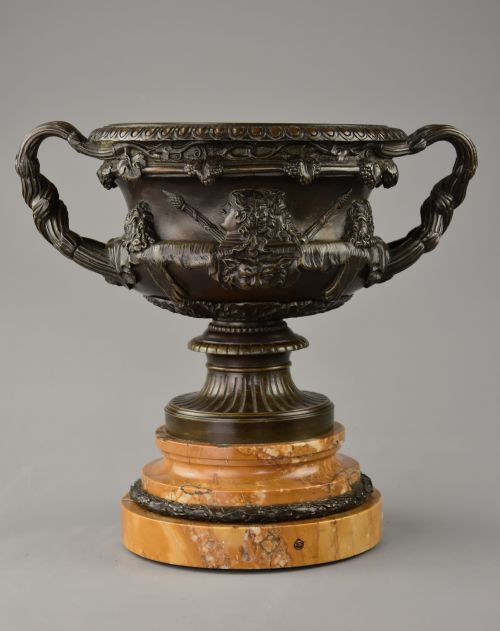
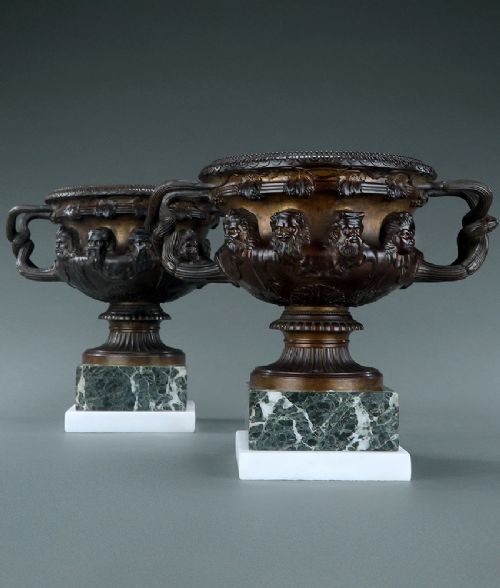
Many items reflect the Grand Tour tradition, serving as reductions of famous antiquities like the Warwick or Albani vases. Others incorporate ormolu, brass, and patinated surfaces to heighten their sculptural depth.
How they were made
Foundries utilised cast bronze, patinated bronze, and occasionally bronzed spelter to achieve deep, dark metallic tones. These metal bodies were frequently paired with white marble bases or accented with gilt bronze and ormolu details.
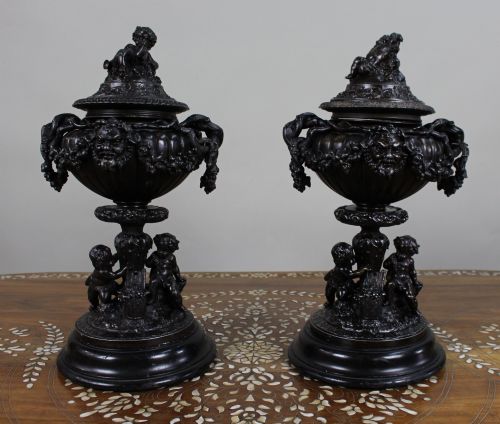
Surface finishes were carefully treated to simulate ancient patination, giving the metal a dark, weathered appearance. Artisans employed casting and chasing techniques to render classical figures, mask handles, and intricate relief work.
Several nineteenth-century urns feature jovial Bacchic masks and putti, proving that classical revivalists knew how to throw a mythological party.
What varies in quality
The crispness of the casting defines the upper tier of these vessels, where fine details in the relief work and mythological figures remain sharp and well-defined. Lesser examples show softened edges and less meticulous chasing on the metal surface.
The choice of secondary materials also separates standard production from exceptional pieces. Solid bronze paired with quality marble plinths and fire-gilt ormolu mounts indicates a higher standard of craftsmanship than lightweight spelter alternatives.
The Dark Bronze Classical Vase Glossary
- Campana
- A bell-shaped vessel form common in classical antiquity and nineteenth-century revivals. It widens toward the rim and typically sits on a circular foot.
- Grand Tour
- A traditional trip through Europe undertaken by upper-class travellers in the eighteenth and nineteenth centuries. Souvenirs included bronze reductions of famous ancient sculptures and architectural models.
- Ormolu
- Gilded brass or bronze used as a decorative mount on furniture and decorative objects. The technique involves applying a mercury-gold amalgam to the metal base.
- Tazza
- A shallow cup or vase on a pedestal foot, frequently executed in bronze or marble. These decorative objects mimic classical tableware used in ancient symposia.
- Patination
- The ageing or chemical treatment of a metal surface that produces a dark, lustrous skin. This colouration protects the underlying bronze while adding visual depth.
Dark Bronze Classical Vase: Frequently Asked Questions
What is a dark bronze classical vase?
A dark bronze classical vase is a nineteenth-century decorative vessel inspired by ancient Greek and Roman antiquities. These pieces often emulate archaeological finds collected during European travels.
They serve as sculptural ornaments, urns, or converted table lamps, bringing neoclassical motifs into domestic interiors.
How were Grand Tour vases used?
Grand Tour vases were acquired by travellers as souvenirs of Italy and Greece during the nineteenth century. They functioned primarily as decorative mantel ornaments or centrepieces in affluent homes.
Today, they are displayed on tables, pedestals, or sideboards to add classical architectural weight to a room.
Are these vases solid bronze?
Many examples are cast in solid bronze, while others utilise brass, patinated spelter, or mixed metals. Bases are frequently constructed from contrasting materials such as white or dark marble.
Checking the weight and the crispness of the metal chasing helps identify the primary material used by the foundry.
How do I care for patinated bronze?
Patinated bronze requires minimal intervention to preserve its dark surface finish. Dusting with a dry, soft cloth prevents the accumulation of particles without disturbing the underlying metal.
Polishes and harsh chemical cleaners should be avoided, as they can strip away the historical patina built up over generations.