


Bronze Souvenir Urn
These bronze souvenir urns bring the classical sculpture of Italy home to a mantelpiece, cast in metal and carved stone for nineteenth-century travellers.
Bronze Souvenir Urn
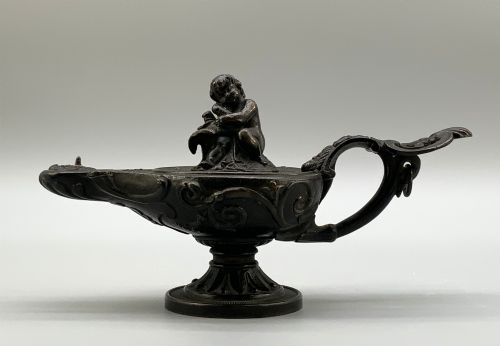
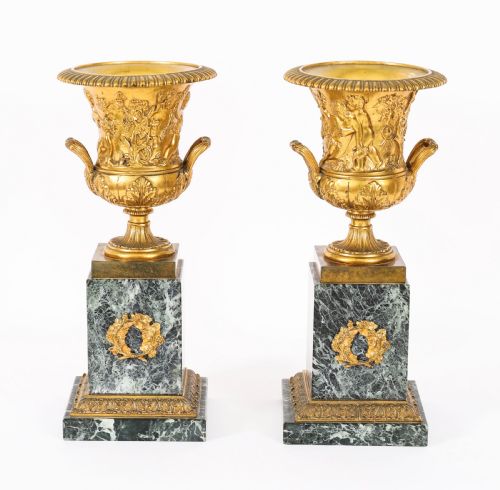
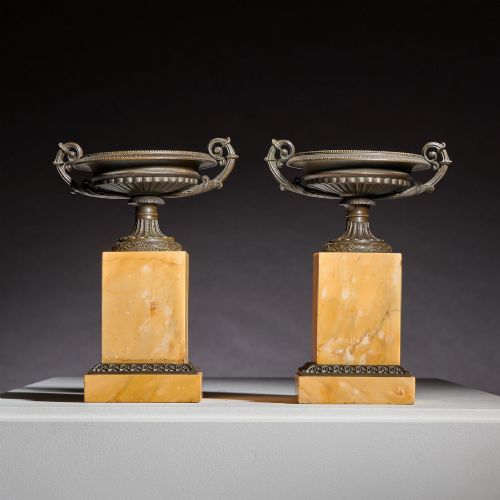
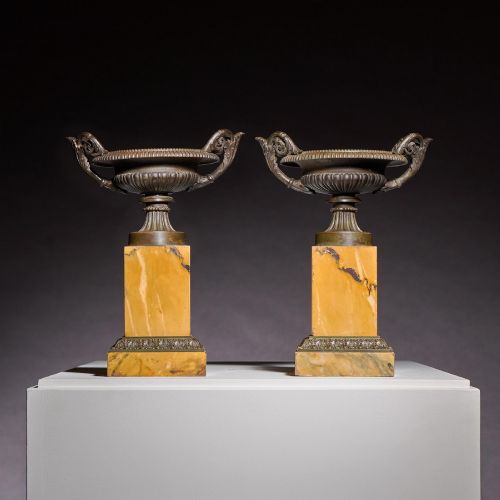
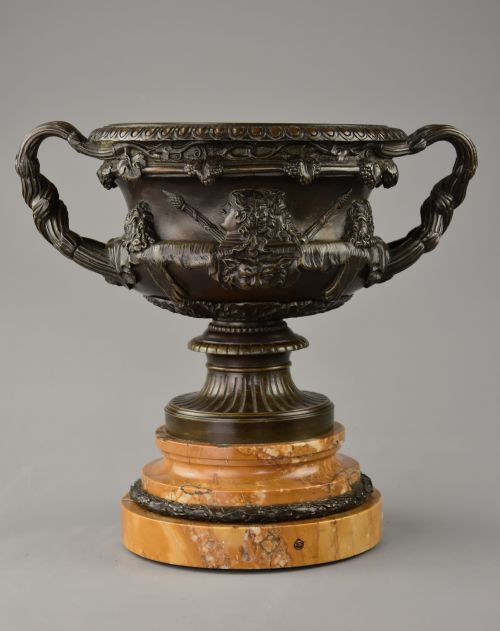
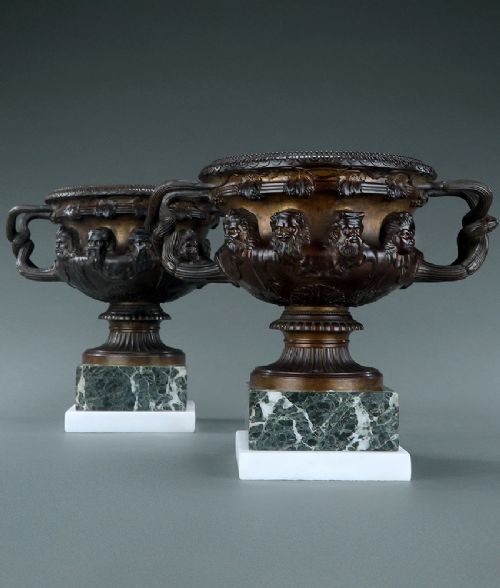
A bronze souvenir urn captures the classical taste of the nineteenth century, modelled after ancient Roman and Greek antiquities seen during European travels. These decorative objects take the form of campana urns, reductions of celebrated antiquities like the Warwick and Albani vases, and classical tazzas.
Most pieces encountered on this page date from the nineteenth century, including the Victorian era and the Regency period, often associated with the Grand Tour. Travellers purchased these ornamental vessels as tangible memories of Italy, translating monumental ancient sculpture into cabinet-sized works of art.
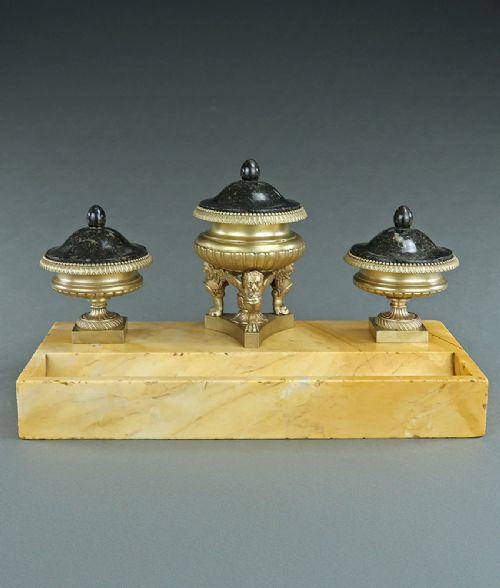
Forms vary from lidded vessels and posy vases to inkstands and drinking cups, frequently paired as mantel garnitures. They sit upon square or stepped plinths, bringing classical architectural proportion into domestic interiors.
Materials and casting methods
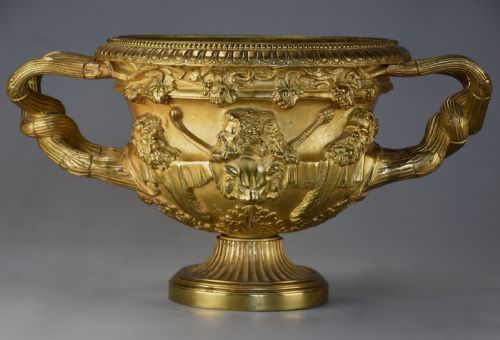
Foundries combined patinated or gilt bronze with rich natural stones, mounting metal bodies upon bases of Siena marble, green marble, and rouge griotte. Ormolu and silvered bronze appear alongside standard cast bronze and brass, providing tonal contrast to the dark patination.
Casting methods relied on traditional foundry techniques to achieve crisp relief details on miniature reductions of ancient monuments. Artisans then turned the stone bases on lathes and hand-chased the metal surfaces to sharpen the classical acanthus leaves, figures, and handles.
Travellers returning from Rome occasionally repurposed ancient drinking vessel designs into desktop inkwells.
Assessing craftsmanship and finish
The selection and turning of the marble base also dictate standard, where dense, richly figured stone with precise fitted mounts outweighs plain or poorly joined segments. The harmony between the patinated or gilt bronze vessel and its stone plinth determines the overall coherence of the object.
The Bronze Souvenir Urn Glossary
- Grand Tour
- A cultural journey undertaken through Europe by young travellers in the eighteenth and nineteenth centuries. These bronze souvenir urns were acquired along the route as portable mementos of classical antiquity.
- Campana Urn
- A bell-shaped vessel modelled after ancient terracotta and marble garden vases discovered at archaeological sites. They feature flared rims and distinct pedestal bases.
- Tazza
- A shallow ornamental cup or vase raised on a stem and foot, derived from ancient drinking vessels. Classical examples often include twin handles and classical relief decoration.
- Ormolu
- Finely ground high-carat gold applied to a bronze base through mercury amalgamation. This technique gives objects a warm, durable metallic lustre.
- Reduction
- A scale copy of a monumental sculpture or ancient vase produced for domestic display. Foundries utilised mechanical reducing machines in the nineteenth century to achieve precise proportions.
Bronze Souvenir Urn: Frequently Asked Questions
What is a bronze souvenir urn?
A bronze souvenir urn is a nineteenth-century decorative object cast in imitation of ancient Roman and Greek antiquities. Travellers bought them in Italy as portable reminders of classical architecture and sculpture seen on their travels.
These pieces typically combine cast bronze with marble bases, taking shapes such as campana urns or miniature versions of famous museum vases.
How were these urns used originally?
Travellers displayed these vessels on mantelpieces, desks, and cabinet tops to demonstrate their classical education and refined taste. Some forms served functional roles as inkwells, encriers, or small posy vases.
Many survived as decorative pairs, designed specifically to balance symmetrical interior displays in nineteenth-century homes.
How do I identify a Grand Tour piece?
Grand Tour pieces show distinct nineteenth-century manufacturing methods combined with subjects taken directly from classical antiquity. Look for cast bronze patination paired with typical stones like Siena marble or rouge griotte.
Subjects frequently mirror specific archaeological finds known to travellers, such as the Warwick Vase or the Albani Vase.
How should I clean bronze and marble?
Dust bronze surfaces gently with a soft, dry cloth to protect the original patination or gilding. Avoid using metal polishes, harsh detergents, or water on patinated bronze.
Marble bases require simple wiping with a damp cloth, followed immediately by a dry cloth to prevent moisture damage to the stone.