
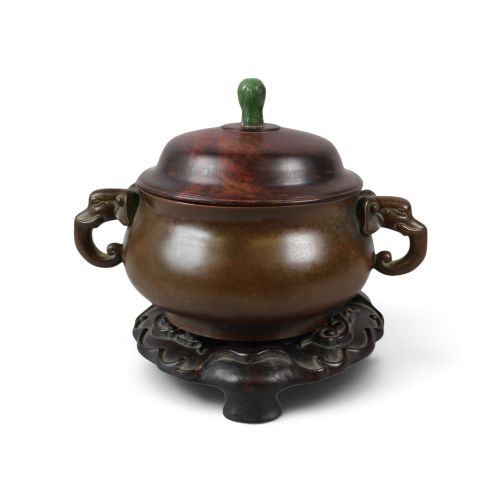
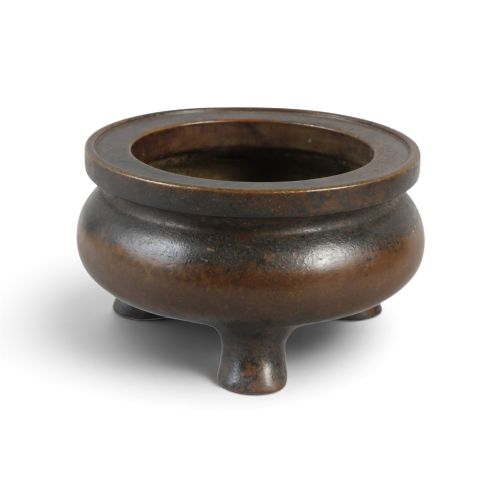
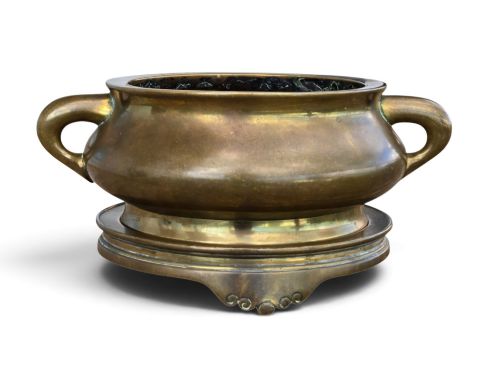
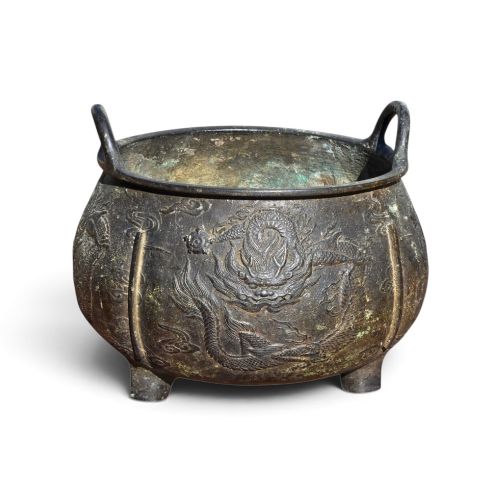
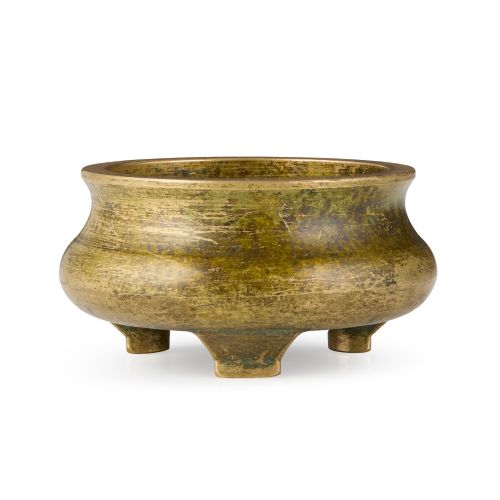
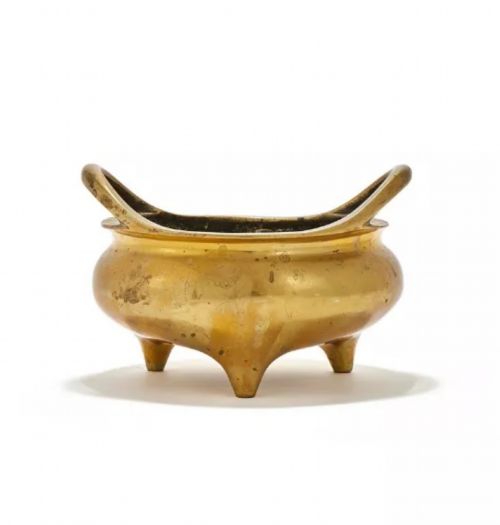
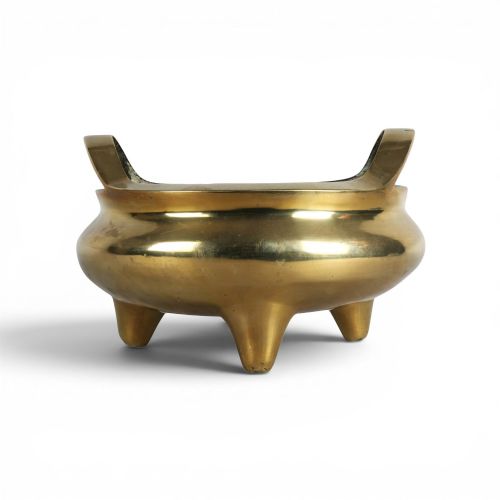

Bronze Tripod Vessel
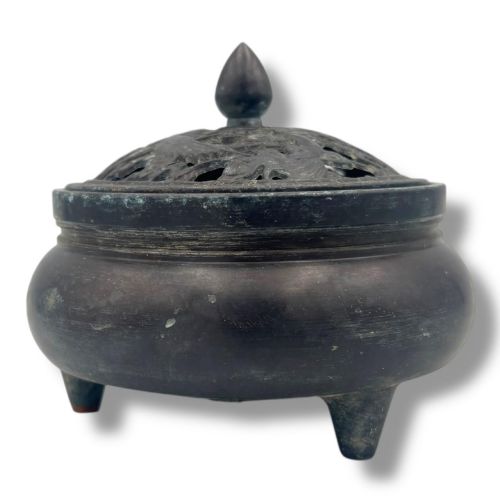
A bronze tripod vessel brings ancient ritual form and heavy cast metal into a room, serving as an incense burner or display piece.
Bronze Tripod Vessel
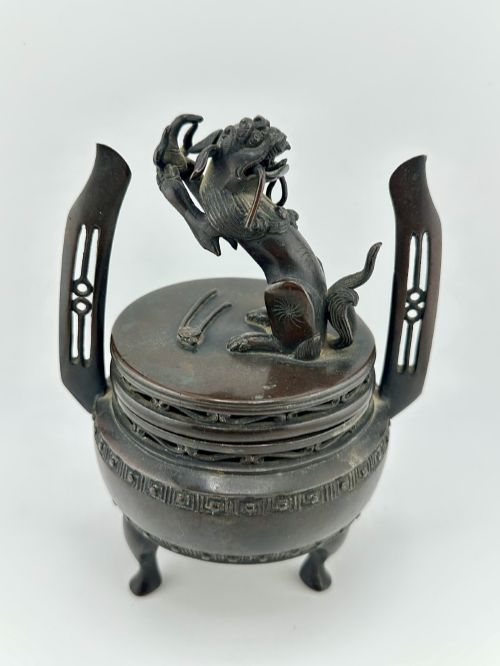
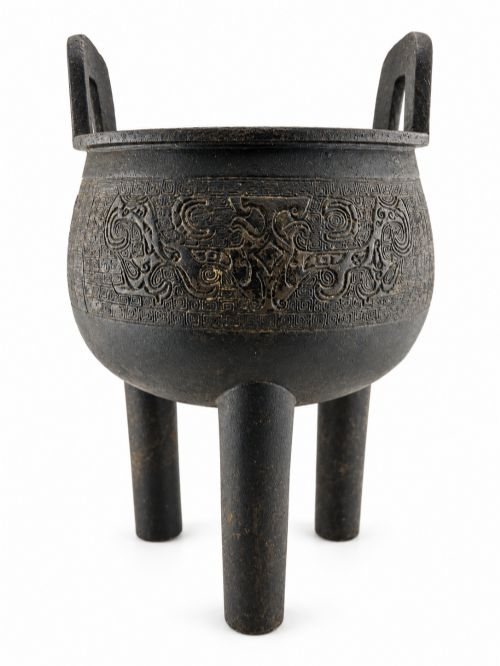
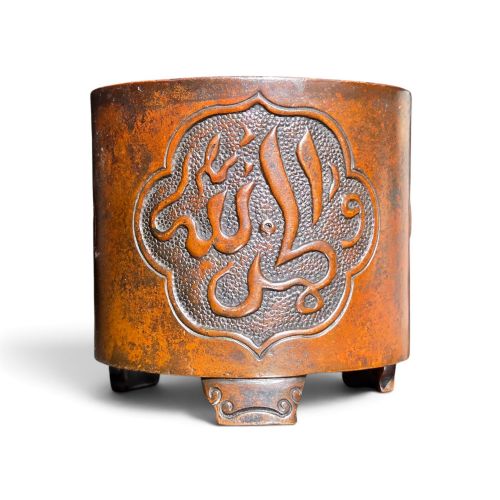
A bronze tripod vessel takes the form of an ancient ritual utensil raised on three legs, most frequently seen here as a censer or incense burner.
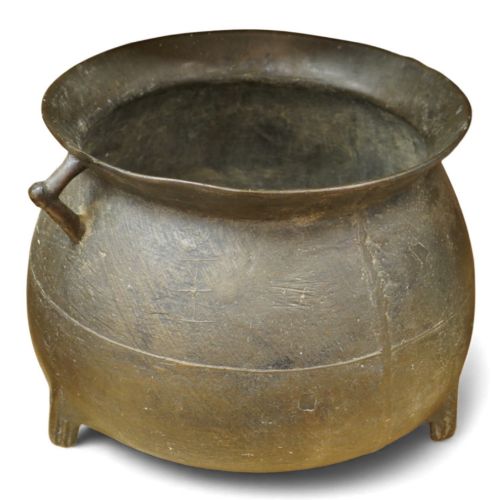
The pieces on this page span from the Ming and Qing dynasties to the nineteenth century, alongside seventeenth-century English and continental cauldrons.
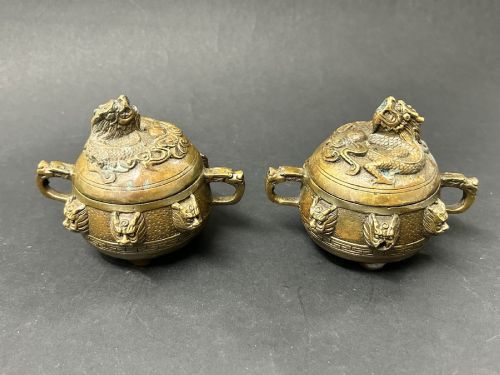
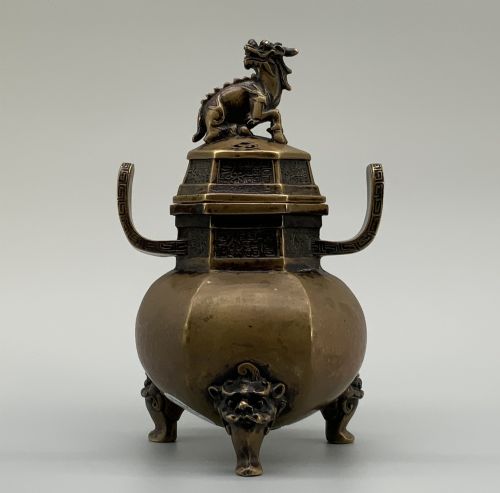
Collectors encounter archaic shapes, dragon and qilin finials, and scholar's studio pieces intended for burning aromatic woods.
Materials and Casting Techniques
These objects rely on heavy cast bronze, leaded bronze, and brass, shaped through traditional foundry methods that yield substantial weight.
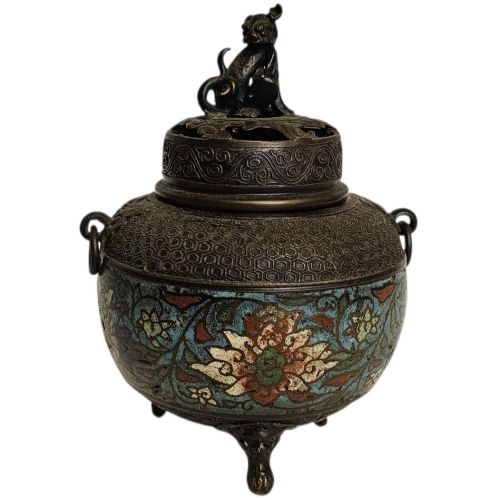
Certain examples incorporate cloisonne enamel or patinated finishes, whilst others are paired with custom hardwood stands or zitan bases.
Materials recorded across the inventory include cloisonne enamel, brass, leaded bronze, and patinated bronze.
Assessing Quality and Execution
Quality rests upon the crispness of the cast decoration, from taotie masks to dragon handles, and the presence of defined scholar marks.
Mass and resonance distinguish superior examples, as heavier castings and controlled metal alloys produce a clear bell-ring resonance.
The Bronze Tripod Vessel Glossary
- Censer
- A vessel designed for burning incense. These pieces often include matching covers pierced for the release of smoke.
- Archaic
- A style that emulates ancient ritual bronzes from earlier dynasties. This aesthetic focuses on motifs such as taotie masks and leiwen patterns.
- Patinated
- A surface treatment or natural ageing process that alters the colour of the metal. This finish often enhances the depth of the bronze.
- Cloisonne
- A technique where enamel colours are separated by thin metal wires soldered to the metal body. It frequently appears on nineteenth-century examples.
Bronze Tripod Vessel: Frequently Asked Questions
What is a bronze tripod vessel used for?
These pieces function primarily as incense burners, holding aromatic woods or powders during scholar's pursuits and ritual practices.
Over centuries, collectors also utilised them as decorative mantel objects or simply appreciated the weight and sculptural form of the cast metal.
How do I identify the period of a censer?
Dating relies on stylistic clues such as archaistic motifs, imperial marks, and the specific casting technique used by the foundry.
Earlier Ming and seventeenth-century pieces display heavier patination and simpler ritual forms, whereas nineteenth-century works often feature intricate dragons and qilin finials.
Why do some censers have marks on the base?
Foundries and scholar's studios applied reign marks or studio signatures to attribute the work to specific periods or notable makers.
Xuande and Qianlong marks appear frequently, though later pieces often bear these designations in homage to earlier imperial eras.
Are these vessels made of solid bronze?
The listings comprise cast bronze, leaded bronze, copper alloy, and brass, all formed as solid metal objects without plating.
Weights vary widely from small miniature scholar's pieces to monumental vessels weighing several kilograms.