



Bronze Tazza Urns
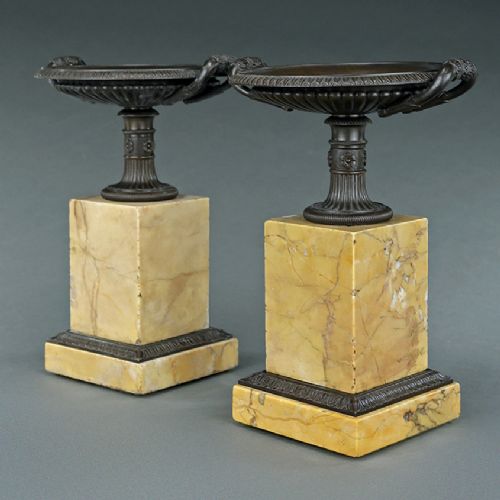
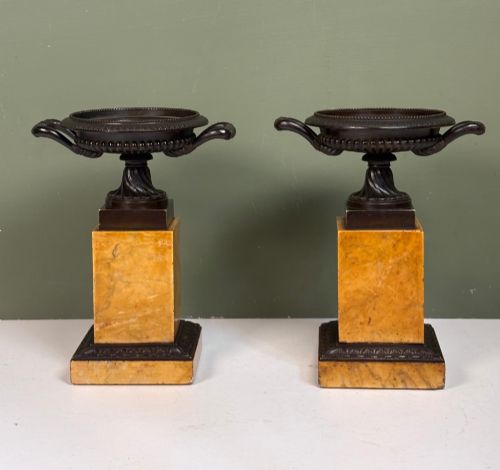
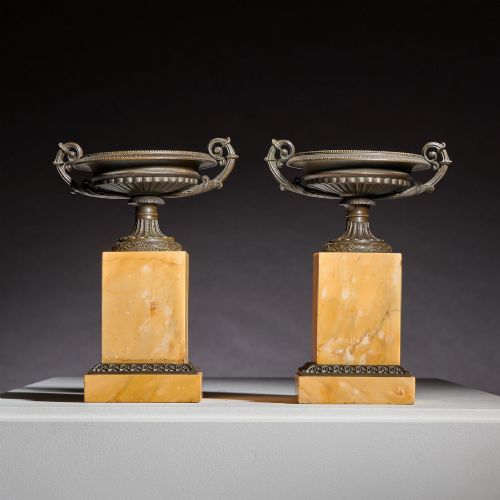
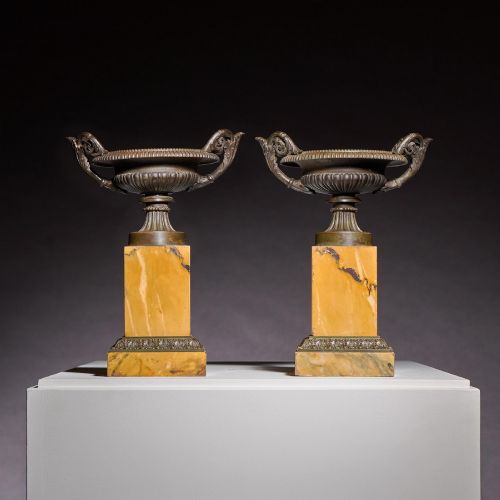
Bronze tazza urns are classical vessel forms cast in metal and set upon stone bases, prized for bringing monumental presence into a room.
Bronze Tazza Urns
When you search for bronze tazza urns, you encounter decorative vessels that blend the shallow form of the classical tazza with the upright presence of the urn. The pieces on this page span the Regency and nineteenth century periods, drawing heavily on French Empire, Neoclassical, and Grand Tour design traditions.
Most examples appear as pairs, functioning as decorative objects, centrepiece bowls, or ornamental vessels. Forms range from twin-handled classical designs to lidded cups and compotes produced as souvenirs or library ornaments.
Origins trace primarily to French and Italian workshops of the eighteen-fifties, eighteen-eighties, and earlier nineteenth century eras. These objects manifest as tazzas, decorative bowls, and vases intended for display on mantelpieces and tables.
Materials and construction methods
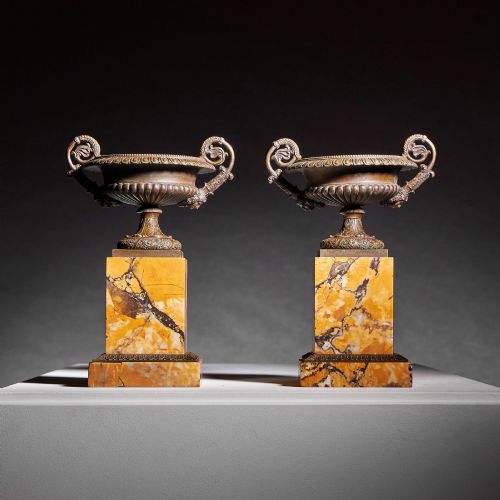
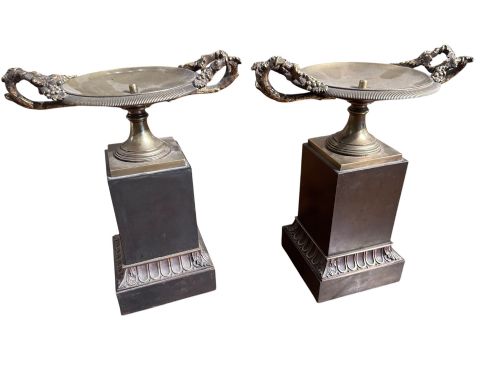
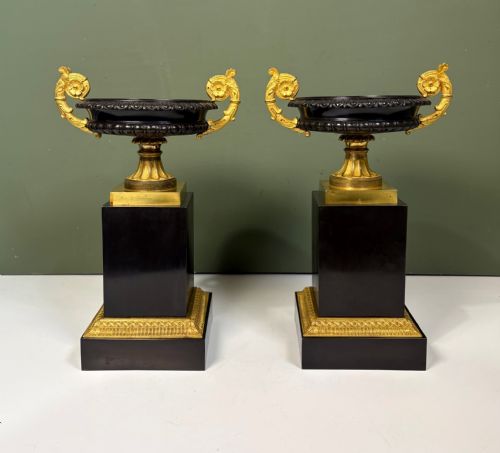
Foundry work combines cast bronze with patinated or gilt finishes, often mounted upon contrasting natural stone plinths. Siena marble, green onyx, and rouge griotte marble feature frequently as supportive bases that elevate the metalwork.
Surface enrichment relies on applied ormolu, champlevé enamel, and silvered details to accentuate handles, borders, and classical friezes. These combined media require skilled foundry casting and stonemasonry to achieve secure joins between metal and mineral.
Certain nineteenth-century compotes carry the label 'Au Bon Sauvage', linking classical bronze tazza forms directly to Regency abolitionist themes.
Factors of quality
Quality rests in the crispness of the bronze casting and the depth of the hand-chasing applied to decorative details. Superior pieces display sharply defined classical motifs and precise finishing on handles and rims.
The selection and turning of the marble or onyx base also distinguish standard production from exceptional examples. Dense, richly figured stones paired with heavy, well-cast ormolu mounts mark the upper tier of these decorative objects.
The Bronze Tazza Urns Glossary
- Tazza
- A shallow cup or bowl mounted on a stem and foot, originating in classical antiquity. This form serves as the primary vessel shape for many decorative urns.
- Ormolu
- Gilding technique using finely ground gold mercury bronze applied to cast brass or bronze. It provides a bright, durable golden surface on nineteenth-century mounts.
- Grand Tour
- Cultural journey of Europe undertaken by wealthy young men in the eighteenth and nineteenth centuries. Souvenirs from these travels included small classical bronzes and architectural marbles.
- Champlevé enamel
- Enamelling technique where troughs or cells are hollowed into the metal surface and filled with vitreous paste before firing. It creates colourful decorative patterns on bronze and gilt metal.
- Siena marble
- Yellowish-brown decorative marble quarried in Italy, featuring dark veining. It provides a warm, contrasting plinth for dark patinated bronzes.
Bronze Tazza Urns: Frequently Asked Questions
What are bronze tazza urns used for?
These pieces function primarily as decorative objects, centrepiece bowls, and ornamental vessels placed on tables, sideboards, and mantelpieces.
Historically, they served as classical ornaments or souvenirs brought back from European travels to display refined taste.
How do I date a bronze tazza?
Dating relies on examining the casting quality, the style of the mounts, and the type of stone used in the base. Nineteenth-century examples often show specific Neoclassical, Empire, or Grand Tour revival characteristics.
Patination styles and manufacturing marks also help narrow the period of production between the Regency era and the late eighteen-eighties.
Are these pieces sold as pairs?
Many listings feature matching pairs of tazzas or urns, which were originally intended to balance decorative schemes on furniture. Single pieces also appear, particularly larger centrepiece bowls or lidded cups.
Pairs generally command stronger interest from collectors seeking symmetry for display purposes.
What does Grand Tour mean?
Grand Tour refers to the traditional trip through France and Italy undertaken by collectors in the eighteenth and nineteenth centuries. Tourists purchased classical bronzes and marble souvenirs to commemorate their travels.
These souvenir items replicated ancient artefacts discovered during archaeological excavations of the period.