




Bronze Soldier Figures
Bronze soldier figures capture historic combatants in cast metal, bringing nineteenth-century martial sculpture and classical heroism into your interior.
Bronze Soldier Figures
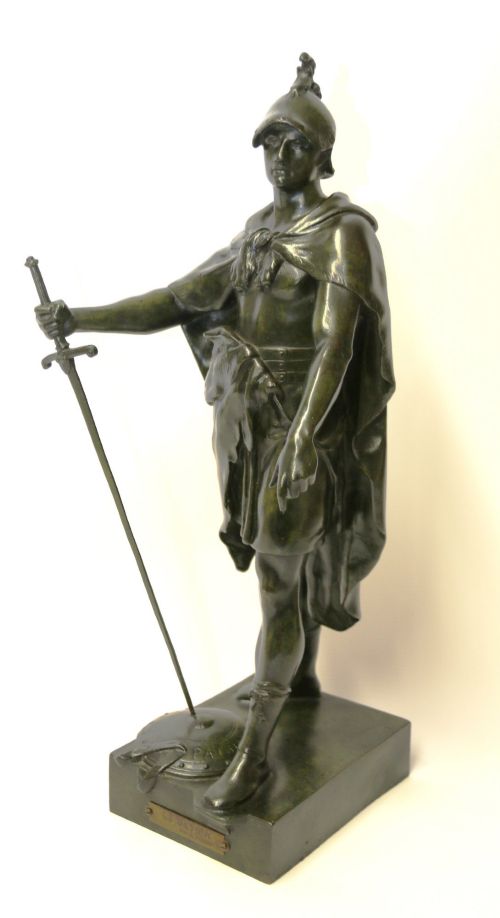
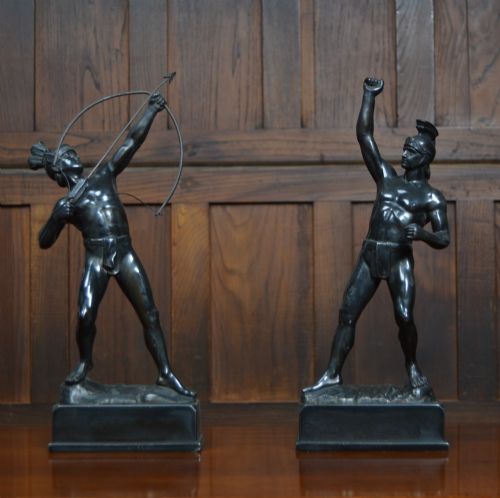
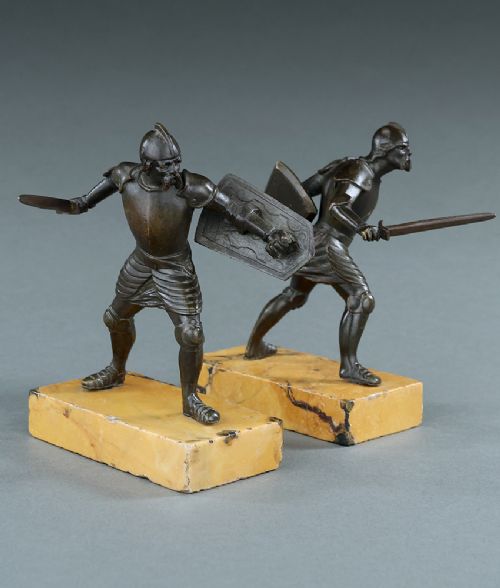
Bronze soldier figures encompass nineteenth-century sculptures and sculptural groups depicting Roman legionaries, Renaissance knights, cavaliers, and Napoleonic troops. These works frequently emerge from French and Austrian workshops during the Victorian era, capturing historic military subjects with dramatic theatricality.
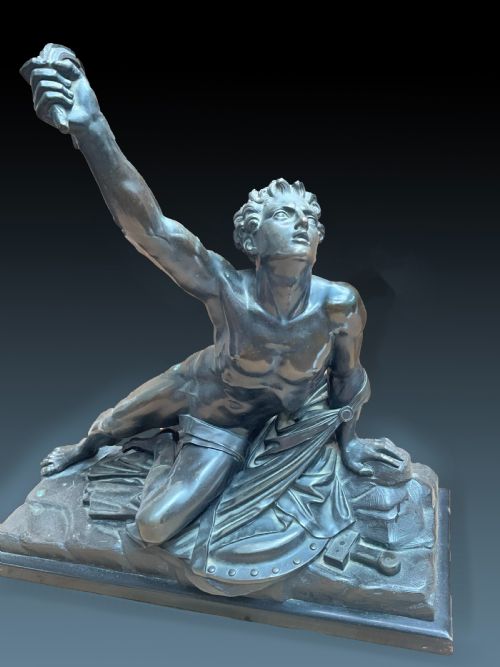
Buyers regularly encounter matched pairs alongside individual statues and figural candlesticks. Subjects range from victorious Roman commanders and duelists to classical figures like the soldier of Marathon announcing victory.
The objects span multiple mid to late nineteenth-century styles, including Neoclassical, Renaissance Revival, and Victorian Historicism. Formats include standalone figures, busts, and functional mantel pieces cast in various metal alloys.
Materials and casting methods
Foundries utilised traditional metalcasting techniques to produce these figures, relying primarily on bronze and patinated bronze for the finer sculptures. Alternative works employed spelter, zinc alloy, and general metal compositions to achieve similar forms at a different scale of production.
Surfaces received applied patinas, sometimes combined with other media such as sienna marble bases and wooden mounts. These chemical and physical treatments created varied tonal effects across armour, drapery, and weaponry.
Listings feature works cast in bronze, patinated bronze, spelter, zinc alloy, and metal, frequently paired with sienna marble and wood.
Assessing quality in the figures
The precision of the casting and the crispness of the chiselling define the upper tier of these sculptures. Superior examples retain sharp facial expressions, distinct chainmail or plate armour, and clearly articulated weaponry without soft edges from worn moulds.
The depth and nuance of the patina contribute significantly to the visual success of the piece. Master founders achieved subtle tonal gradients that accentuate muscle definition and fabric folds, distinguishing artist-signed works by makers such as Émile Louis Picault or E.H. Dumaige from anonymous factory production.
Émile Louis Picault·E.H. Dumaige·Salmson·Richard Aurili·C.Anfrie
The Bronze Soldier Figures Glossary
- Bronze
- A copper alloy traditionally combined with tin, prized by nineteenth-century sculptors for its tensile strength and ability to capture intricate surface detail.
- Spelter
- A zinc-based alloy commonly utilised during the Victorian period as a cost-effective alternative to bronze for figural castings.
- Patina
- The surface coloration or film developed naturally over time or applied chemically by the foundry to enhance the visual depth of the metal.
- Neoclassical
- A nineteenth-century artistic style drawing inspiration from the classical art and culture of ancient Greece and Rome.
- Cavalier
- A supporter of King Charles I during the English Civil War, frequently depicted in seventeenth-century military attire within Victorian sculpture.
Bronze Soldier Figures: Frequently Asked Questions
What is the difference between bronze and spelter?
Bronze is a robust copper alloy that accepts fine detail and chemical patination effectively. Spelter uses a softer zinc base, which feels lighter and requires careful handling.
Spelter figures often served as decorative mantel pieces or candlesticks during the Victorian era. They were frequently painted or bronze-finished to imitate genuine cast bronze.
How were these soldier figures used originally?
Nineteenth-century households displayed these sculptures on mantelpieces, libraries, and studies as symbols of classical learning and martial heroism. Some double as functional items like candlesticks or clocks.
Larger statues stood alone on pedestals or tabletops, while pairs often flanked clocks or decorative architectural ornaments.
How do I identify the period of a figure?
Stylistic clues such as Neoclassical drapery, Renaissance Revival armour, or Victorian historicism point directly to the nineteenth century. Foundries active between eighteen-fifty and nineteen-hundred produced the majority of these pieces.
Signatures or foundry marks stamped into the metal base offer the most reliable confirmation of date and authorship.
How should I care for a patinated metal sculpture?
Dust the surface gently with a soft, dry brush to prevent particulate accumulation. Avoid chemical cleaners or polishing agents, which can strip away the original patina.
Maintain stable indoor humidity and keep the metal away from direct heat sources to preserve the finish.