


Antique Cavalier Statues
Antique cavalier statues capture the romantic swagger and dashing attire of seventeenth-century soldiers in solid bronze, spelter and painted wood.
Antique Cavalier Statues
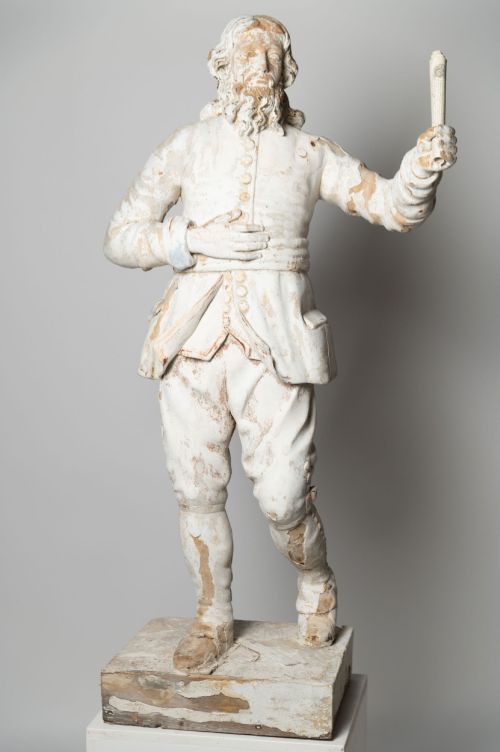
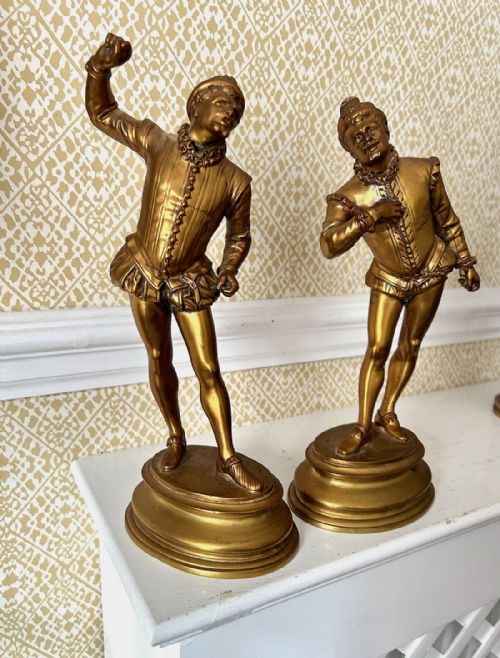
Antique cavalier statues depict armed noblemen, musketeers and soldiers in seventeenth-century dress, appearing across nineteenth-century European sculpture. When you search for antique cavalier statues, you encounter figures cast in bronze and spelter, alongside carved timber and glazed ceramics.
Most examples date from the Victorian era and the later nineteenth century, reflecting a strong historicist interest in past military heroism. French academic makers and Austrian foundries produced many of these striking figures, often modelled as paired companions or individual duelists.
How they were made
Foundries utilised traditional lost-wax or sand-casting methods to shape bronze and spelter, applying patination or gilding to the finished metal surface. Skilled artisans chased the cast metal by hand to sharpen the intricate details of lace collars, leather jerkins and rapier hilts.
Wooden and ceramic iterations required carving, moulding and firing, followed by careful hand-painting to delineate facial expressions and costume details. Metal figures often incorporated mixed media elements, such as mounted wooden bases or contrasting patinated and gilt finishes.
Several seventeenth-century noblemen share shelf space with King Charles spaniels and Staffordshire dogs.
What varies in quality
Artistic attribution plays a major role, with works bearing signatures of known French sculptors commanding greater attention than unsigned commercial castings. The integrity of the original patination and the absence of clumsy repairs preserve the visual balance of the piece.
Emile-Coriolan Guillemin·Edouard Drouot·Antoine Louis Barye·Salmson
The Antique Cavalier Statues Glossary
- Spelter
- A zinc alloy commonly utilised as a less expensive alternative to bronze for nineteenth-century decorative figures. It is frequently given a dark patination to simulate heavier metal.
- Patinated Bronze
- Bronze treated with chemical solutions to produce a controlled surface colour or aged finish. This technique enhances the depth of sculptural details.
- Gilt-Bronze
- Bronze that has been coated with a thin layer of gold or gold-coloured alloy. It provides a bright, reflective finish often seen on high-status nineteenth-century decorative works.
- Historicism
- An artistic movement drawing inspiration from the styles and historical clothing of earlier centuries. It heavily influenced nineteenth-century sculpture and decorative arts.
- Animalier
- A nineteenth-century artistic style focusing on the realistic depiction of animals. It frequently appears alongside human figures in French bronze casting traditions.
Antique Cavalier Statues: Frequently Asked Questions
What materials are these statues made from?
These pieces appear primarily in bronze, patinated bronze, spelter and brass, with occasional examples in painted wood and glazed earthenware.
Foundries selected these materials based on cost and intended detail, with bronze offering the highest durability and crispest surface finish.
How do I date an antique cavalier figure?
Dating relies heavily on stylistic markers, foundry marks and the specific patination methods used during the nineteenth century. Most catalogued examples cluster around the Victorian period and the late eighteen-hundreds.
Examining the underside of the base often reveals casting techniques and wear patterns characteristic of nineteenth-century European workshops.
Where were these sculptures produced?
The majority originate from French and Austrian foundries operating during the nineteenth century, reflecting a broad European interest in historicism. Skilled modellers working within these regions supplied decorative bronze and spelter figures to an international market.
Some ceramic variants also emerge from nineteenth-century English potteries during the same historicist revival.
How should I display a bronze cavalier?
Place statues on stable, level surfaces away from direct heat sources and strong sunlight to protect metal patinas and painted wooden elements. Dust them gently with a dry, soft cloth without applying harsh cleaning agents.
Heavier bronze and spelter sculptures require sturdy furniture capable of supporting concentrated weight safely.