

Bronze Shelf Clock
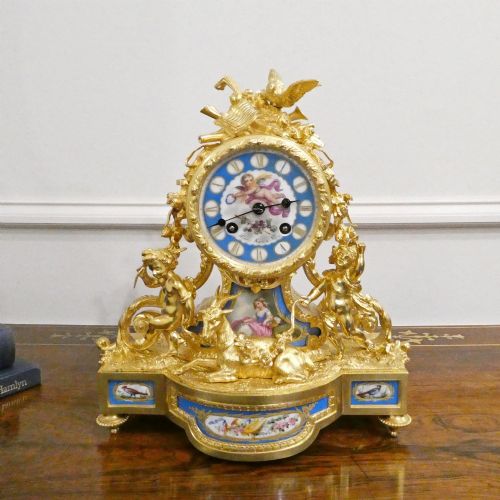
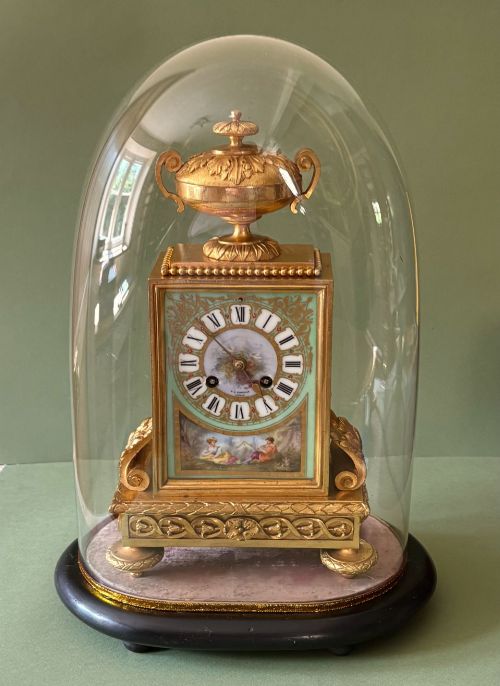
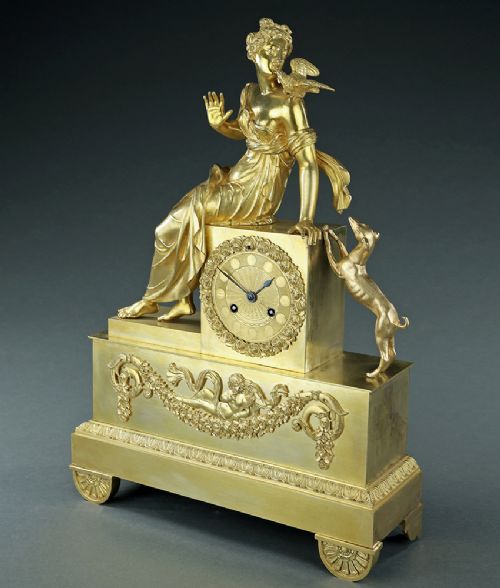
A bronze shelf clock brings substantial weight and classical form to a mantelpiece, drawing the eye with detailed metalwork and enamelled dials.
Bronze Shelf Clock
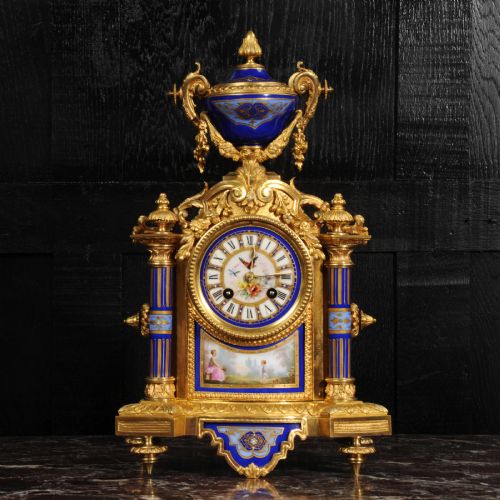
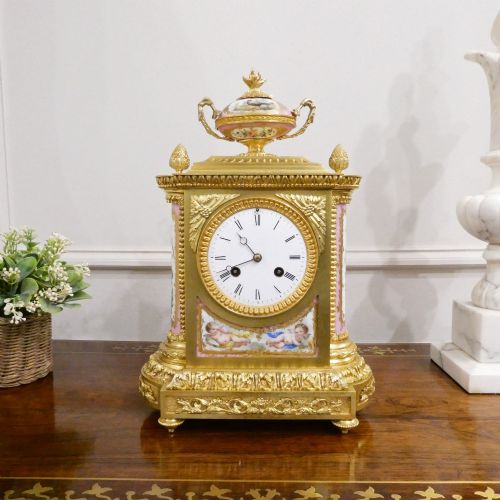
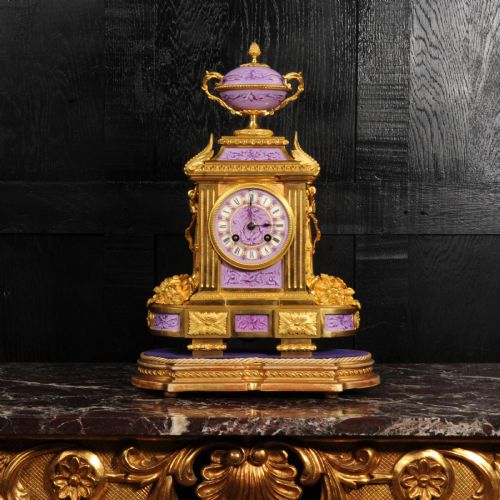
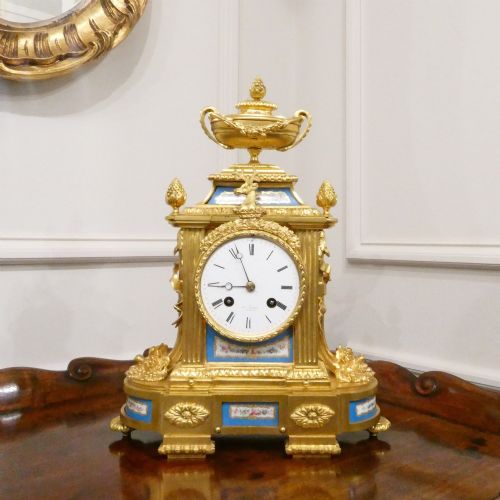
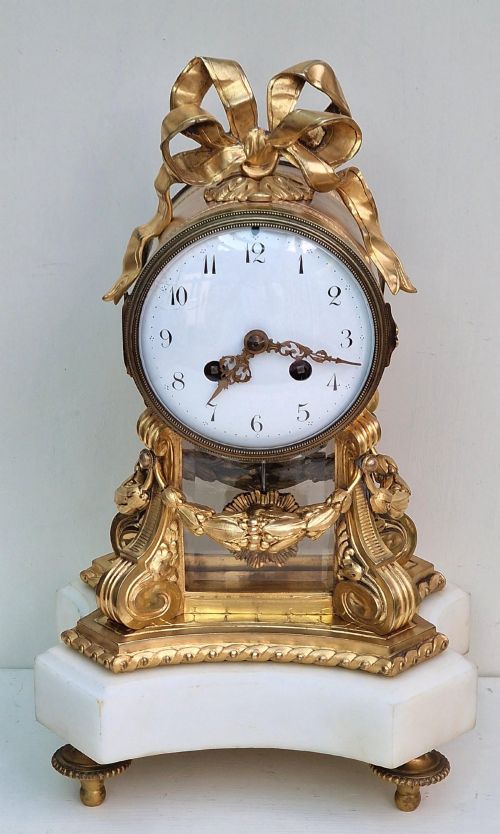
A bronze shelf clock unites heavy metal casting with interior clockwork, functioning both as a timekeeper and an ornamental centrepiece for furniture. Most examples appearing here date from the nineteenth century, spanning Victorian, Regency, and various revival styles originating in France.
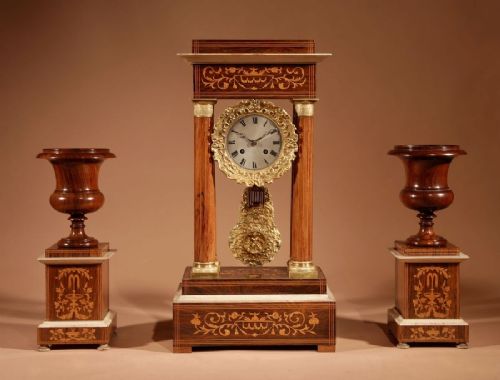
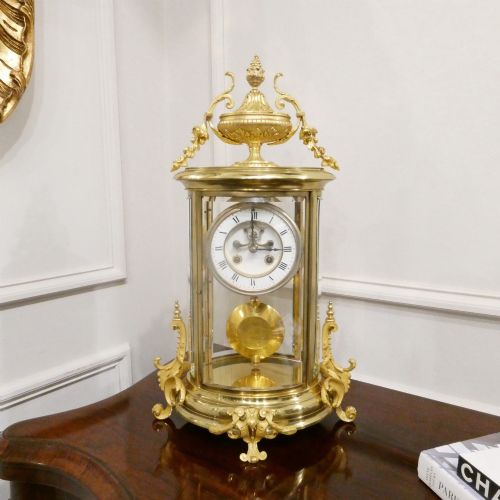
The dominant forms include portico clocks, four-glass clock cases, and elaborate mantel pieces featuring figural or architectural designs. Buyers frequently encounter French movement types housed in combinations of cast bronze, marble, and gilt metal.
How they were made
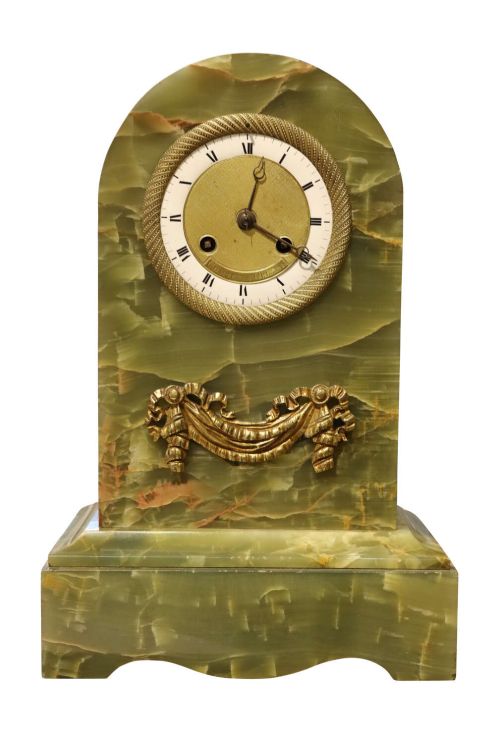
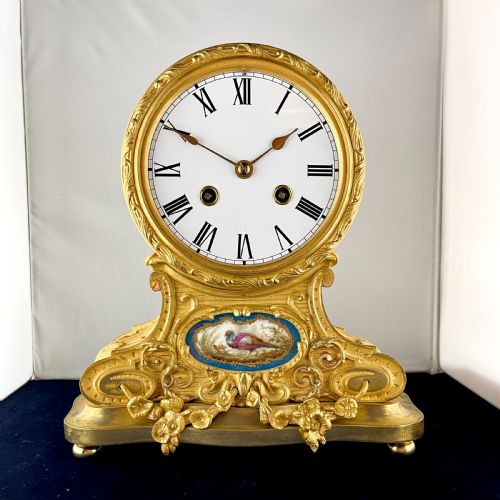
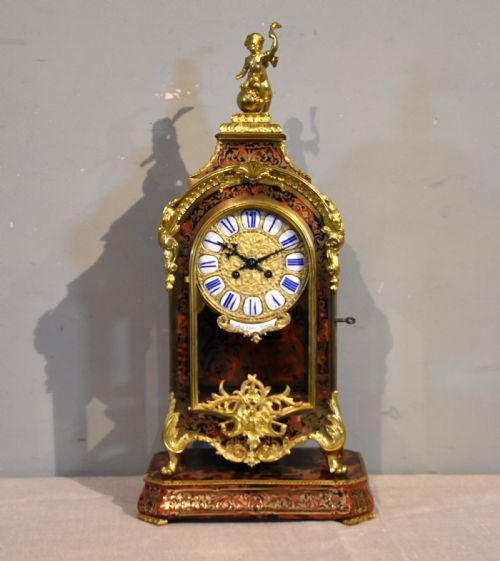
Maker workshops cast bronze, ormolu, and brass components using traditional foundry methods before applying fire gilding or patination by hand. Many cases incorporate contrasting materials such as rouge marble, green onyx, tortoiseshell, or Sèvres porcelain panels.
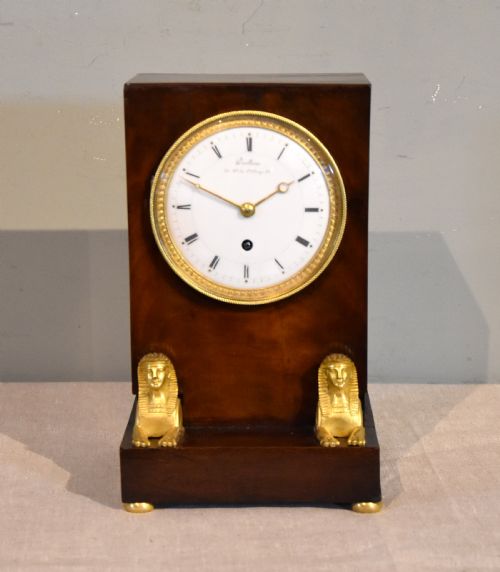
Clockmakers fitted mechanical eight-day brass movements, often paired with white enamel dials featuring Roman numerals. Dial faces frequently sat protected behind bevelled glass panes mounted within heavy cast bezels.
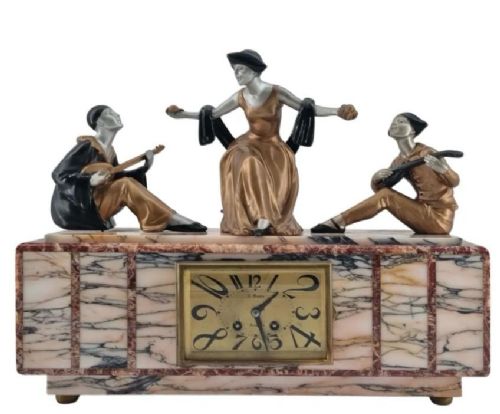
Some Victorian shelf clocks depict romantic figures, architectural porticos, and even literary characters like Pierrot and Columbine.
What varies in quality
Quality rests upon the crispness of the bronze chasing and the depth of the original gilding or cast detail. Sharp definition in scrollwork, foliage, and figures distinguishes superior workshop production from simpler commercial castings.
The integration of the decorative elements dictates overall merit. Clocks that combine signed movements with matching porcelain plaques and uncompromised stone bases hold greater standing among collectors.
Japy Freres·Jean-Baptiste Delettrez·Achille Brocot·Henry Marc·Samuel Marti·Etienne Lenoir
The Bronze Shelf Clock Glossary
- Ormolu
- Gilt bronze produced by applying a mixture of finely powdered gold and mercury to a bronze base and heating it. This historic technique created a rich, durable golden surface.
- Champlevé
- An enamelling technique where troughs are dug into a metal surface and filled with vitreous enamel before firing. It frequently appears on nineteenth-century clock bezels and bezels.
- Four-glass clock
- A timepiece housed in a brass or gilt frame with glass panels on all four sides. This design allows light to pass through and reveals the movement within.
- Portico clock
- A distinct architectural clock style supported by four columns resembling a classical portico. The pendulum typically swings visibly within the central opening.
- Fusee movement
- A conical pulley mechanism connected to a cord or chain that equalises the driving force of the mainspring as it unwinds. It ensures even timekeeping throughout the power reserve.
Bronze Shelf Clock: Frequently Asked Questions
How do I wind my bronze shelf clock?
Use the correct winding key on the dial arbors to turn the spring gently until resistance meets you. Avoid over-winding to protect the historical movement from unnecessary tension.
Ensure you keep the clock on a level surface so the pendulum beats evenly. Uneven placement causes the mechanism to stop shortly after setting.
Where should I place a bronze shelf clock?
Position the clock on a sturdy mantelpiece, sideboard, or heavy shelf capable of supporting its substantial metal and stone weight. Keep it away from direct sunlight and damp environments to preserve the gilding and marble.
Allow enough clearance around portico and four-glass models so the pendulum swings freely without obstruction. Stability is essential for accurate mechanical operation.
How do I date a French bronze clock?
Examine the movement backplate for maker stamps, serial numbers, and exhibition medals. These factory marks often correspond to specific working dates of nineteenth-century French makers.
Compare the decorative style against known periods such as Louis XVI revival or Victorian production. Architectural details and material combinations frequently indicate the decade of manufacture.