


Classical Table Clock
A classical table clock brings architectural presence and precision engineering to a room, offering a tangible link to nineteenth-century design.
Classical Table Clock
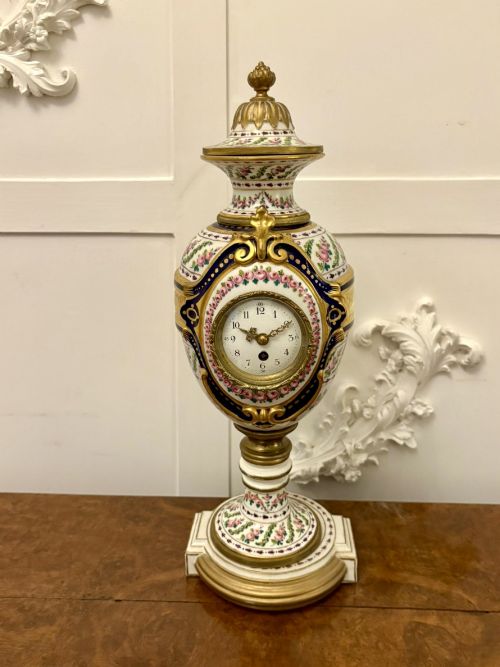
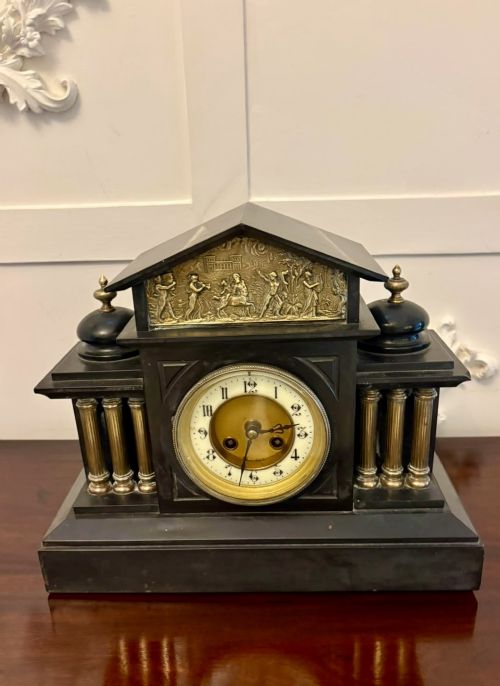
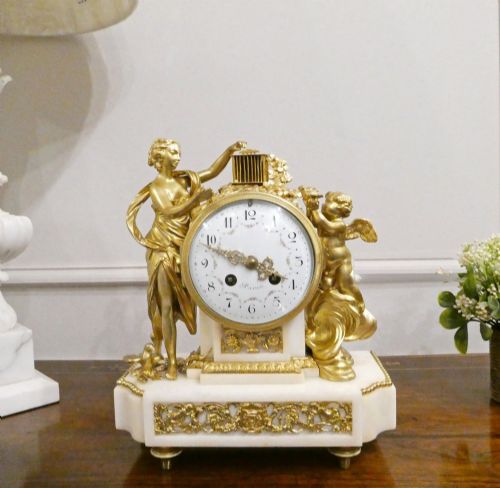
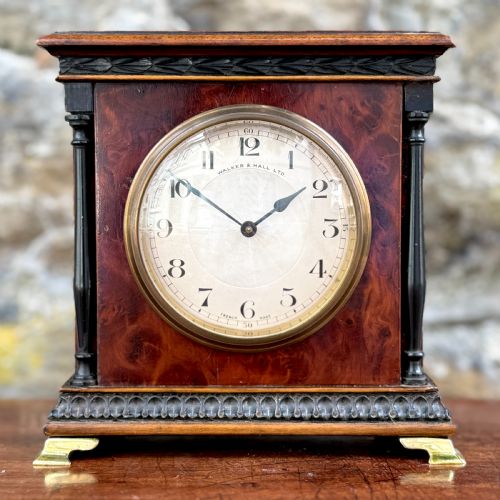
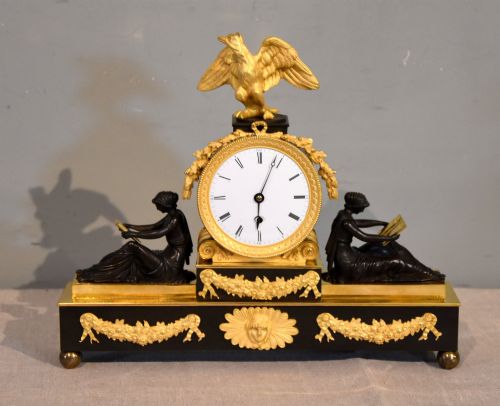
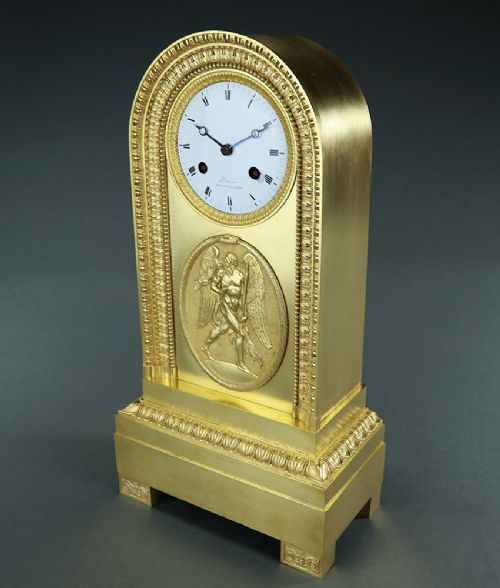
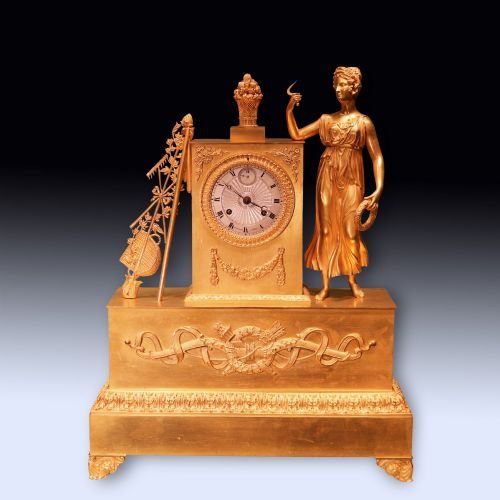
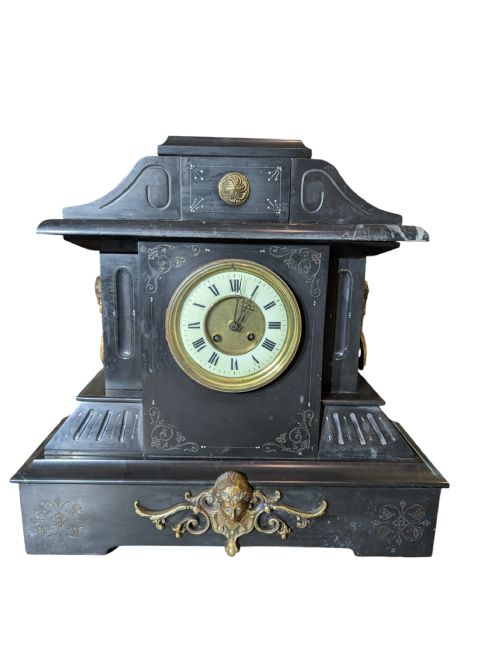
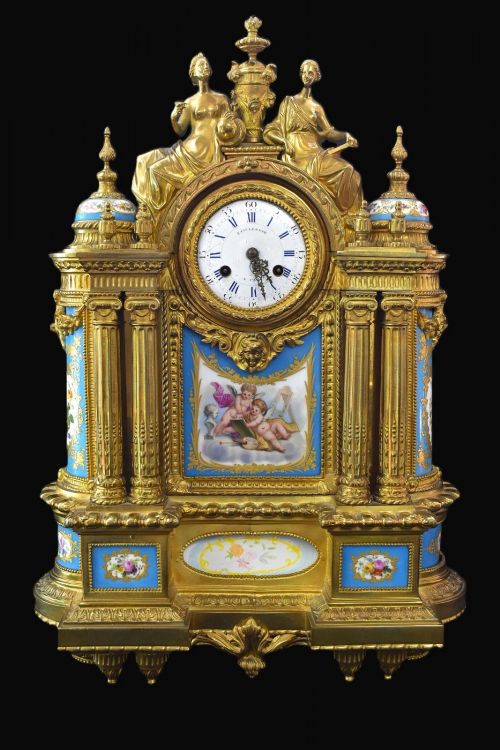
A classical table clock is typically encountered as a mantel clock or mantel clock garniture, housing a mechanical movement within an architectural or figural housing. These pieces emerge predominantly from the nineteenth century, spanning the Regency, Victorian, and Napoleon III eras.
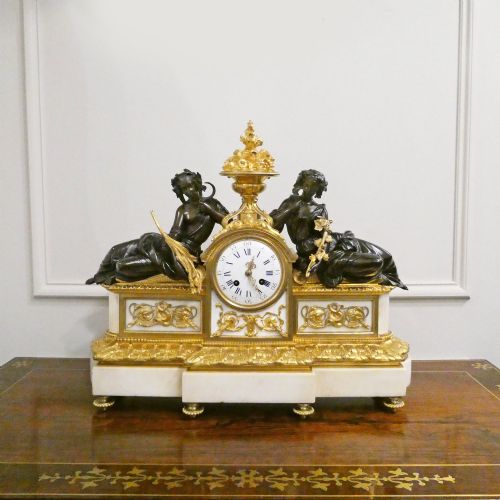
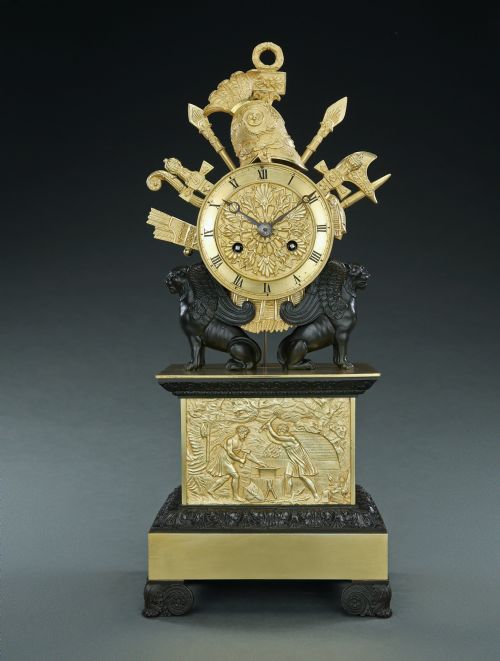
The most common examples on this page are French works executed in marble, bronze, and ormolu, drawing heavily on Louis XVI style and French Empire design. English makers are also represented, providing distinct regional interpretations of the form.
Materials and Construction
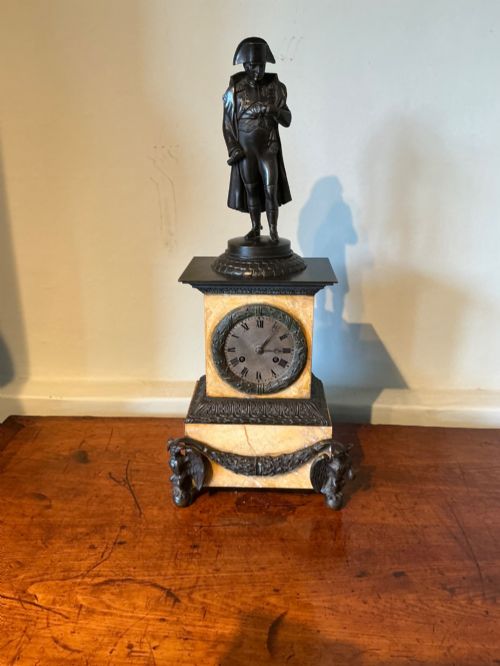
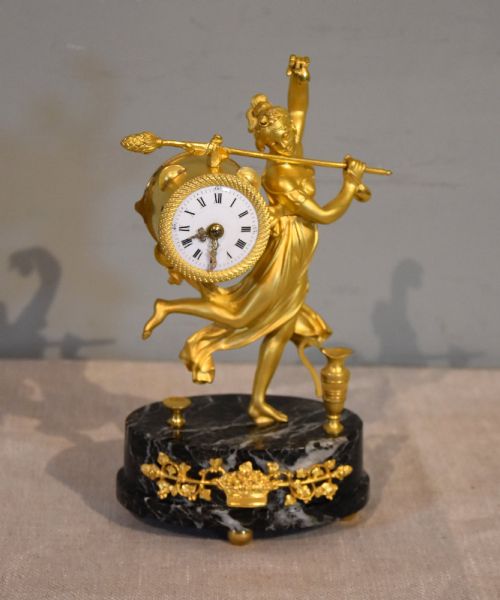
Foundational structures rely on heavy natural stones such as black, green, sienna, and rouge marble, frequently paired with cast metals. Gilt bronze and ormolu provide shimmering surface enrichment, while patinated bronze brings depth to sculptural figures and decorative mounts.
Dials frequently incorporate white enamel with delicate hand-painted numerals, protected behind bevelled glass panes. Movement assembly requires precise brass gearing, often operating on an eight-day striking mechanism within heavy stone or bronze cases.
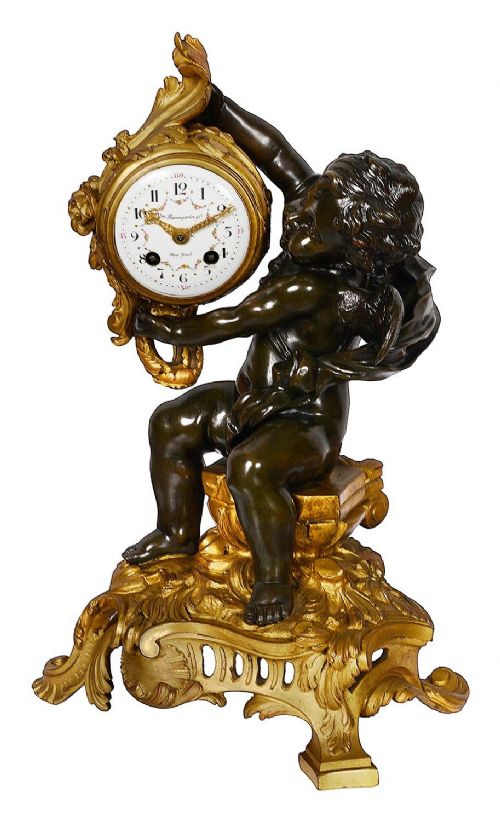
Several clocks on this site incorporate charming sculptural figures of cherubs, lions, and even Napoleon himself guarding the hours.
Quality and Execution
Quality rests primarily in the crispness of the bronze casting and the depth of the mercury gilding or ormolu. Superior examples display sharply chiselled details on sculptural elements and architectural friezes rather than soft, mass-produced contours.
The sophistication of the internal movement and the reputation of the dial maker or retailer elevate a piece significantly. Heavy marble housings fitted with named French or English movements represent the upper tier of the selection.
Vincenti·Walker and Hall·Baetens London·Canaillor of Paris·Etienne Lenoir·Japy Freres·Philippes Paris·Berger Paris·Baby and Jannings·Fritz Marti
The Classical Table Clock Glossary
- Ormolu
- Gilded bronze, where a finely ground high-carat gold amalgam is applied to a cast bronze base through heat. This technique creates a rich, durable golden surface.
- Portico Clock
- A clock housed within a architectural frame supported by four or more columns. They are typically executed in mahogany or marble with central suspended pendulums.
- Garniture
- A set comprising a central clock flanked by matching decorative objects such as urns or candelabra. These sets were designed to create a symmetrical mantelpiece display.
- Timepiece
- A clock that indicates the time without a striking mechanism for hours or quarters. They are typically driven by a simpler eight-day movement.
Classical Table Clock: Frequently Asked Questions
Where should I place a heavy marble clock?
These clocks demand a sturdy, level surface like a sturdy sideboard or a securely anchored mantelpiece. Their substantial weight from marble and bronze requires solid support.
Avoid locations subject to direct sunlight, dampness, or extreme temperature fluctuations, which can affect the delicate oils within the mechanical movement.
How can I tell a French Empire clock from a Victorian one?
French Empire and Neoclassical clocks lean heavily on military trophies, classical mythology, and strict architectural symmetry in ormolu and dark bronze. They date from the early nineteenth century.
Victorian pieces often incorporate rich black marble, porcelain plaques, and floral or rococo revival motifs. They reflect mid to late nineteenth-century British and continental tastes.
What is the difference between a clock and a timepiece?
A traditional clock includes an integrated striking train that chimes the hours or quarters on a bell or gong. These require additional gear trains and hammers.
A timepiece simply measures and displays the hours and minutes without any acoustic striking function. This simpler mechanism often means fewer components to maintain.