
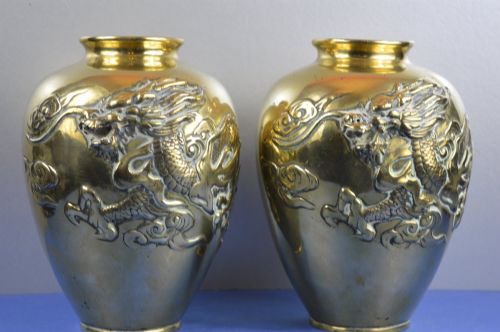
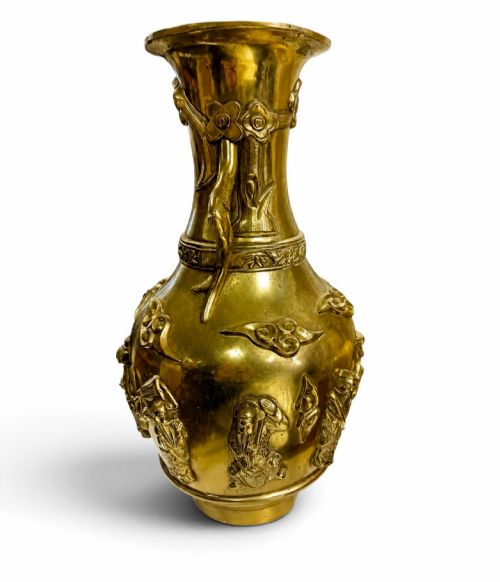
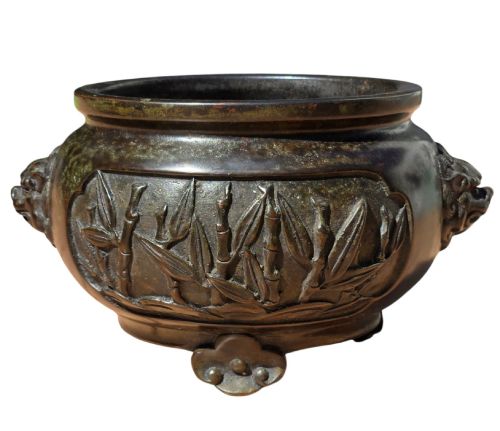
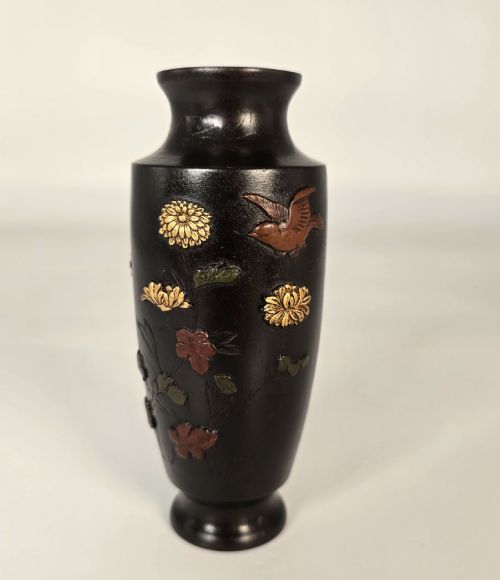




Bronze Relief Vessel
A bronze relief vessel brings the weight and depth of nineteenth-century metalwork into a room.
Bronze Relief Vessel
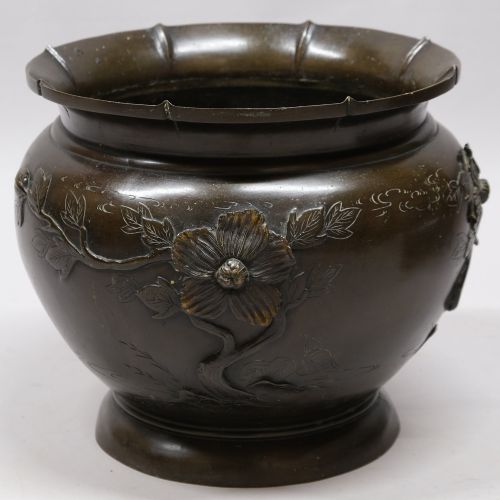
A bronze relief vessel encompasses items shaped for display, ritual, or utility, ranging from Chinese censers and baluster vases to Japanese jardinieres and Italian Grand Tour planters. When searching for a bronze relief vessel, collectors meet pieces primarily originating from nineteenth-century Japanese Meiji workshops and Qing Dynasty China, alongside European interpretations.
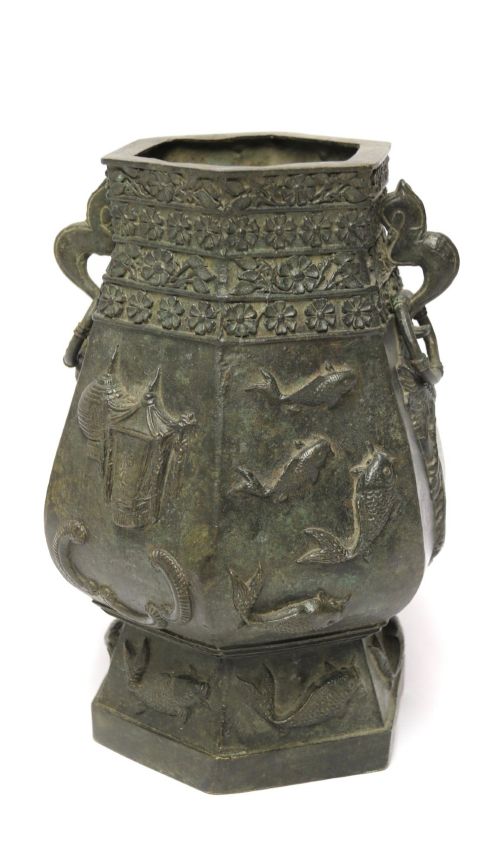
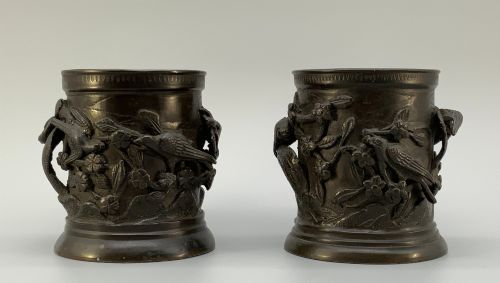
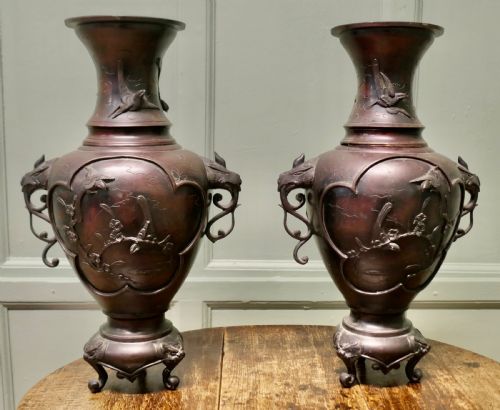
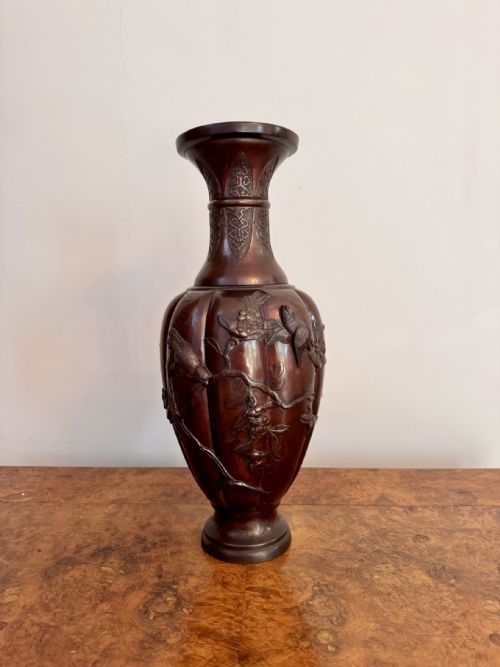
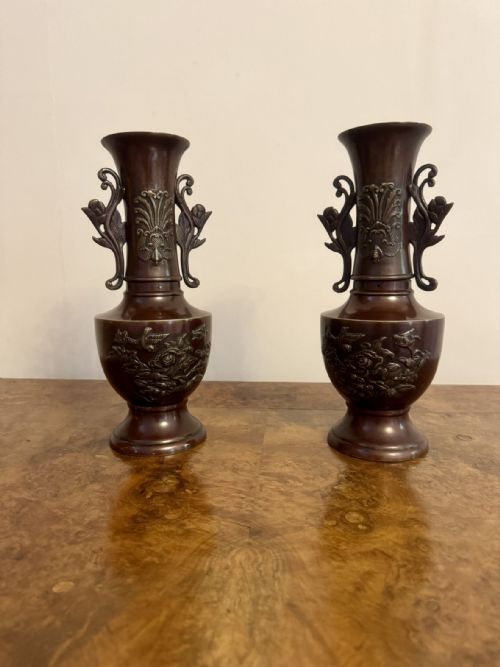
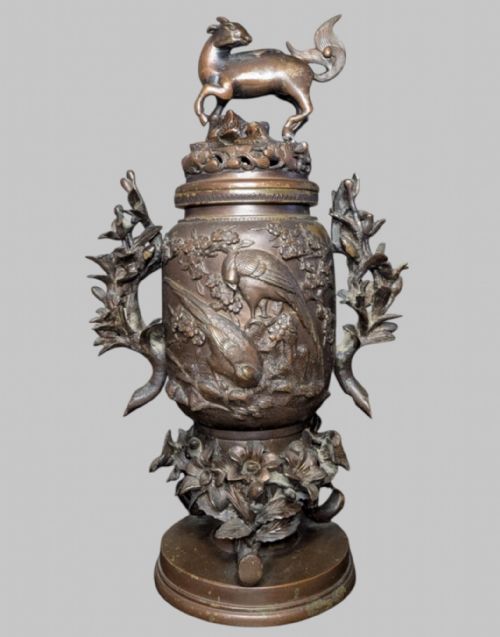
The forms span tall vases, twin-handled urns, incense burners, and open planters, often decorated with birds, floral panels, dragons, or Daoist immortals. Japanese Meiji period examples and Chinese works from the eighteenth and nineteenth centuries dominate the available range.
Earlier items such as sixteenth-century Ming Dynasty scholars' censers also appear, alongside nineteenth-century Gothic mortars and French neo-classical wine-coolers. Each object uses raised surface work to give dimension to figures, foliage, and geometric motifs.
How they were made
Maker utilise casting methods to form the primary body of the vessel, working in bronze, patinated bronze, copper-alloy, and occasionally gilt bronze or silver. Molten metal flows into moulds, creating solid foundations such as hexagonal shapes, baluster urns, and campana profiles.
Relief decoration involves high-relief casting or applied mixed-metal elements, soldering birds, blossoms, and figures directly onto the surface. Patination and chemical treatments bring out deep brown, black, and greenish tones on the metal.
Several heavy censers include sculpted goat finials and guardian lions keeping watch over the lid.
What varies in quality
The integrity of the patination and the balance of the vessel's proportions dictate the visual success of the piece. Superior examples maintain smooth interior walls and secure handles, while mixed-metal applications remain flush and tight to the bronze body.
Kibundo
The Bronze Relief Vessel Glossary
- Meiji Period
- A period in Japanese history spanning from 1868 to 1912, noted for intricate metalwork and high-relief bronze vases exported to the West. Pieces from this era often feature detailed flora and fauna.
- Censer
- A vessel designed for burning incense, frequently fitted with a lid and resting on three legs or a pedestal. Chinese examples often incorporate fu lion finials.
- Jardiniere
- An ornamental pot or bowl used for holding plants or flowers, typically cast in heavy bronze with relief panels. These items sit on tables or pedestals.
- Baluster
- A vertical architectural form with a swelling lower portion, used to describe the curved profile of many vases in this category. This shape offers stability and visual weight.
- Patination
- The natural or chemical alteration of the bronze surface over time, resulting in varied colouration and depth. Skilled patination enhances the contrast of relief panels.
Bronze Relief Vessel: Frequently Asked Questions
What is a bronze relief vessel used for?
These vessels serve primarily as decorative objects, flower holders, or interior planters within a domestic setting.
Historically, specific forms like censers held incense for scholars or ritual spaces, while others functioned as display items on European and Asian tables.
How do I tell Chinese from Japanese pieces?
Chinese vessels often feature imperial motifs such as five-clawed dragons, Daoist immortals, and reign marks on the base. Themes commonly lean towards classical symmetry and heavy archaic forms.
Japanese Meiji period works typically display naturalistic scenes involving birds, blossoms, and asymmetrical compositions. Mixed-metal accents using silver and copper are also more frequent in Japanese items.
What is Grand Tour decor?
Grand Tour pieces are European interpretations of classical antiquity, purchased by travellers visiting Italy during the nineteenth century. These objects frequently copy ancient Roman vases, ewers, and goblets.
They reflect a Victorian fascination with classical history and ornament, rendered in cast bronze.
How should I clean my bronze vessel?
Dust the surface gently with a soft, dry cloth to prevent the accumulation of dirt within the relief panels. Avoid using water, polishes, or chemical cleaners that might strip the original patination.
Allow the natural ageing process to continue undisturbed across the metal.