





Patinated Bronze Dragon Vase
A patinated bronze dragon vase brings coiled mythical beasts and rich metalwork into a room, offering striking form and historical depth.
Patinated Bronze Dragon Vase
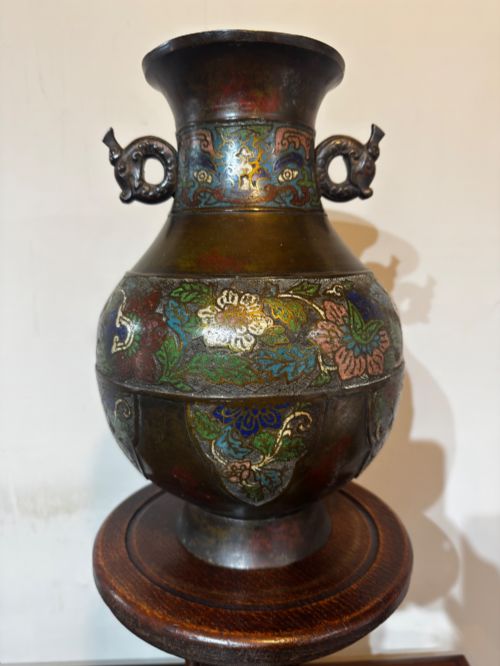
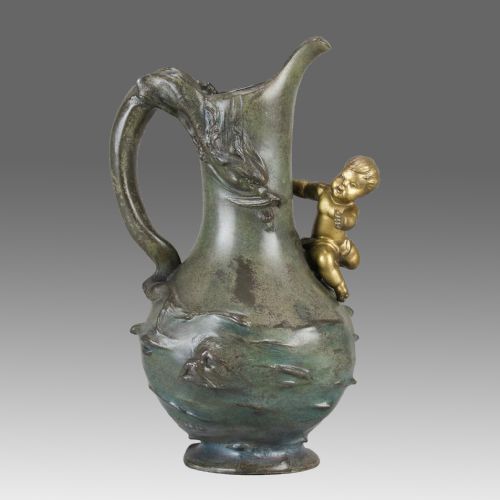
A patinated bronze dragon vase is a sculptural vessel cast in metal and finished with chemical or natural surface treatments, often featuring writhing dragons winding around the body. You will most frequently meet Japanese Meiji period examples and Chinese Qing style vessels among these listings.
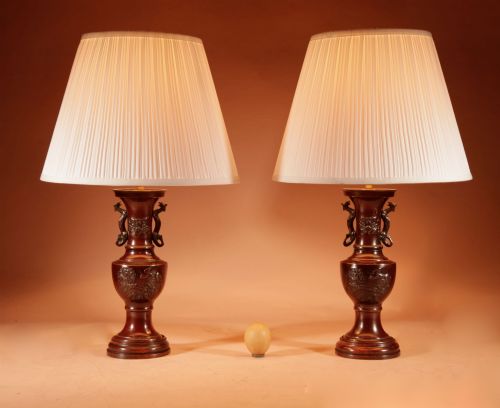
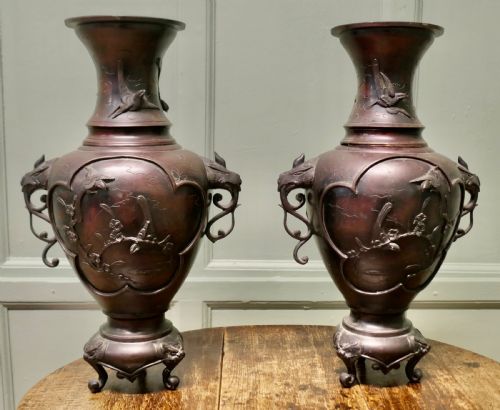
The forms range from monumental temple urns and altar vases down to table lamps and garniture sets. Makers drew upon archaic vessel shapes like the hu, adapting ancient ritual forms for export markets and domestic display.
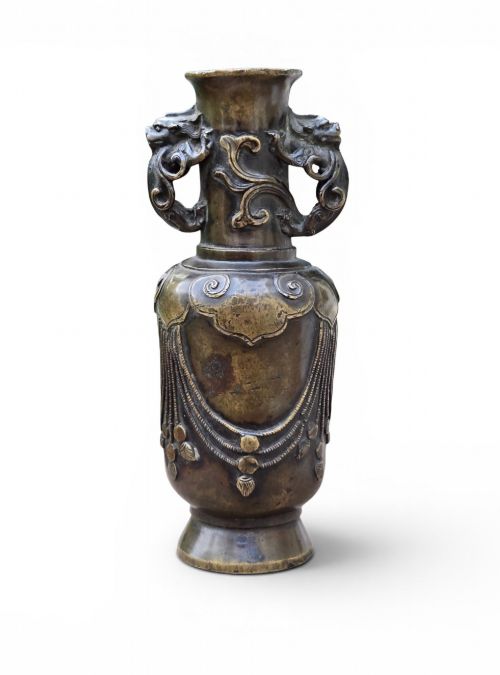
Many pieces incorporate handles shaped as dragons or use intricate cast relief work to bring the creature's scales and claws into sharp relief. These vessels function as dramatic focal points in a traditional or eclectic interior.
How they were made
Foundries utilised lost-wax casting or sectional mould techniques to achieve complex shapes and high-relief dragon motifs. Artisans then refined the raw metal surfaces by hand using chisels and gravers.
The distinctive surface colouration comes from chemical patination processes using compounds like copper acetate or sulfur. Some vessels also incorporate champlevé enamel or gilt bronze highlights to accentuate collars and borders.
Several heavy specimens scale up past three kilograms, proving that ancient dragons possessed considerable heft.
What varies in quality
The crispness of the casting defines the upper tier, where dragon scales, claws and whiskers remain sharp and deeply undercut rather than smooth or blurred. Superior examples display confident, dynamic modelling where the creature appears to wrap organically around the vessel.
The depth and nuance of the patination separate ambitious foundry work from simple commercial production. A rich, multi-layered surface shows deliberate tonal variation rather than a flat, uniform lacquer.
Georges Van De Voorde
The Patinated Bronze Dragon Vase Glossary
- Patinated bronze
- Bronze that has been treated with chemical solutions to produce a stable surface colour ranging from deep brown to verdigris. This process protects the metal while enhancing visual texture.
- Hu
- An ancient Chinese ritual wine vessel form with a pear-shaped body and a constricted neck. Later Japanese and Chinese makers revived this archaic shape for decorative display.
- Champlevé
- An enamelling technique where troughs or cells are hollowed out of the metal surface and filled with vitreous enamel paste before firing. The surrounding bronze lines remain visible as a grid.
- Gilt bronze
- Bronze that has been coated with a thin layer of gold using mercury amalgamation or fire-gilding methods. It provides a bright contrast against darker patinated surfaces.
- Garniture
- A matched set of three or more vases or urns designed to be displayed together on a mantelpiece or sideboard. These sets often share identical casting moulds and patination treatments.
Patinated Bronze Dragon Vase: Frequently Asked Questions
How do I clean a bronze vase?
Dust the surface gently with a soft, dry cloth to prevent dirt accumulation in the recessed areas of the casting. Avoid using commercial metal polishes or water, as harsh chemicals will strip the historic patina.
Apply a very thin coat of microcrystalline wax if the metal requires protection, then buff it off with a clean cloth. This preserves the surface colour without altering its historic character.
Are these vases watertight?
Most antique bronze vessels were created for decorative display rather than holding water for fresh flower arrangements. Internal casting flaws or historic repairs can cause slow leaks if filled.
Place a concealed glass or plastic liner inside the neck if you intend to use the vessel for display with fresh stems. This protects the dry interior metal from moisture damage.
How do I date a dragon vase?
Examine the casting quality, the depth and tone of the patina, and stylistic markers such as Meiji period signatures or Victorian aesthetic movement influences. Archaistic forms often combine ancient Chinese vessel shapes with nineteenth-century manufacturing techniques.
Look closely at the base for foundry marks, school attributions, or wear patterns that indicate age. Comparing the weight and construction methods against known dated examples helps narrow the period.
How do I display a large urn?
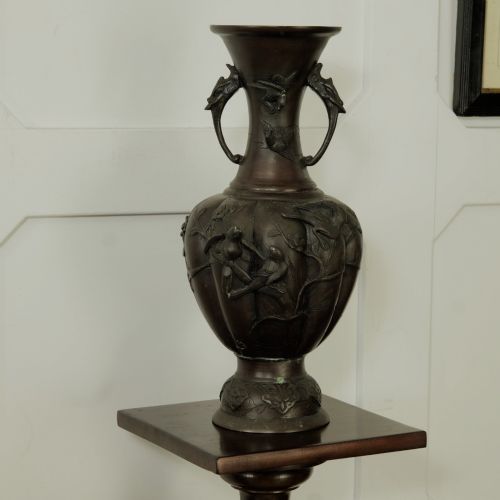
Position heavy bronze urns on sturdy wooden furniture or dedicated plinths capable of supporting significant weight. Ensure the display surface remains level and out of direct, prolonged sunlight.
Keep the surrounding space uncluttered so the complex dragon relief and patinated surfaces can be viewed clearly from multiple angles.