
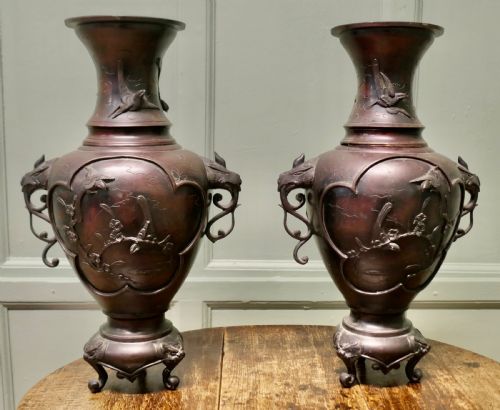
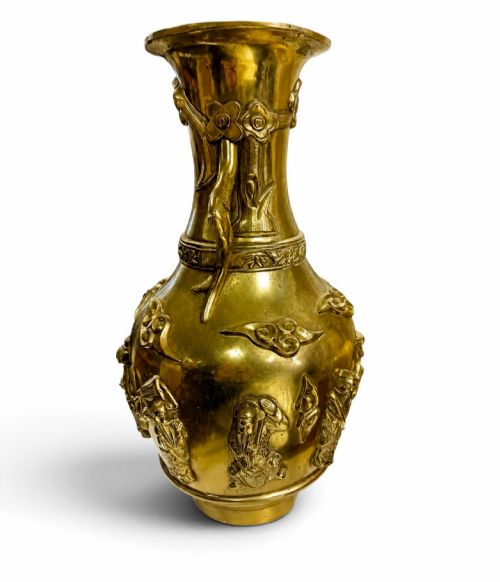


Carved Bronze Dragon Urn
A carved bronze dragon urn brings potent Eastern symbolism and exceptional metalwork into a room, offering both sculptural presence and historical depth.
Carved Bronze Dragon Urn
When you search for a carved bronze dragon urn, you are looking at substantial metal vessels originating from Asian export markets and European collections of the nineteenth and early twentieth centuries. The pieces on this page span the Meiji period, Edo period, and Qing dynasty, alongside British Victorian interpretations.
The primary forms include baluster vases, garniture sets, incense burners, and decorative jardinieres. Japanese Meiji period examples and Chinese copper-alloy vases dominate the selection, frequently featuring high-relief dragon ornamentation.
These vessels functioned variously as ritual objects, scholar's items, and decorative centrepieces for nineteenth-century homes. Their enduring appeal lies in the intricate casting and carving work applied to durable metal alloys.
How they were made
Foundries utilised bronze, brass, patinated bronze, and copper alloy to cast these substantial vessels. Molten metal was poured into moulds before artisans refined the surface details by hand.
Carving and high-relief casting techniques created the elaborate dragon motifs, scales, and background textures visible across the pieces. Chemical patination treatments were subsequently applied to produce varied surface tones ranging from deep brown to aged greenish hues.
Several dragons possess fierce expressions yet obligingly double as candle holders.
What varies in quality
The richness of the original patina and the stability of the metal alloy differentiate standard production items from exceptional workshop pieces. Heavier weights and balanced proportions indicate careful foundry work rather than hasty mass production.
The Carved Bronze Dragon Urn Glossary
- Patina
- The surface coloration and ageing on metal caused by oxidation and handling. A well-preserved patina adds depth to the carved details of the bronze.
- Baluster
- A vase form with a rounded body that tapers toward the neck and stands on a wider base. This silhouette provides a stable canvas for wrapped dragon motifs.
- Censer
- A vessel designed for burning incense during rituals or quiet contemplation. Many examples include pierced covers to allow fragrant smoke to escape.
- Garniture
- A matched set of ornamental vases or jars designed to be displayed together on a mantelpiece or sideboard. These sets often comprise three or five pieces.
Carved Bronze Dragon Urn: Frequently Asked Questions
What is a bronze dragon urn used for?
These vessels originally served as ritual incense burners, decorative flower containers, or formal mantel ornaments in Asian and European interiors.
Today, collectors place them as sculptural focal points in living spaces, studies, or hallways where their metalwork and symbolic imagery can be appreciated.
How do I clean an antique bronze urn?
Dust the surface gently with a soft, dry brush to prevent dirt accumulation within the recessed carved scales and crevices.
Avoid chemical polishes or water, as harsh cleaning strips away the historic patination that contributes significantly to the piece's character and age.
How can I tell Japanese from Chinese bronzes?
Japanese Meiji period pieces often exhibit highly naturalistic, dynamic dragon carvings combined with subtle patination tones. Chinese pieces from the Qing dynasty or Republic period frequently incorporate specific reign marks, such as a Xuande base mark, alongside formal Daoist or imperial iconography.
Are these urns waterproof?
Most antique metal vessels were not manufactured with modern waterproof linings and may develop seepage if filled directly with water for fresh flowers.
Utilise a concealed glass or plastic insert inside the vase if you intend to display cut stems, protecting the historic interior from moisture damage.