





Oriental Bronze Dragon Vases
Oriental bronze dragon vases unite intricate Asian metalwork with mythical beasts, bringing commanding focal points and historical weight to interior spaces.
Oriental Bronze Dragon Vases
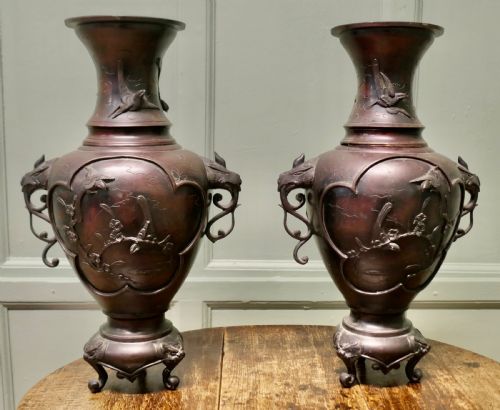
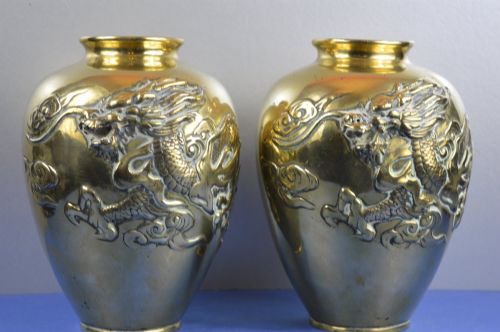
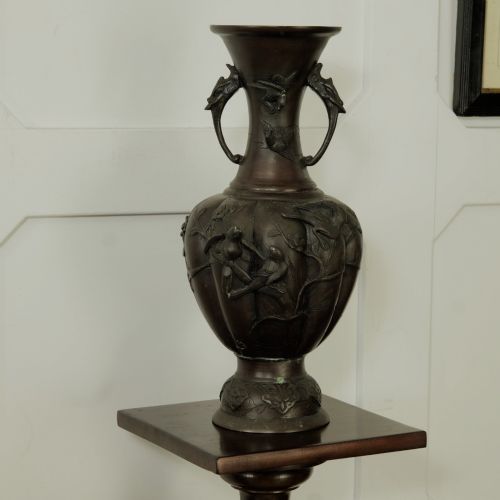
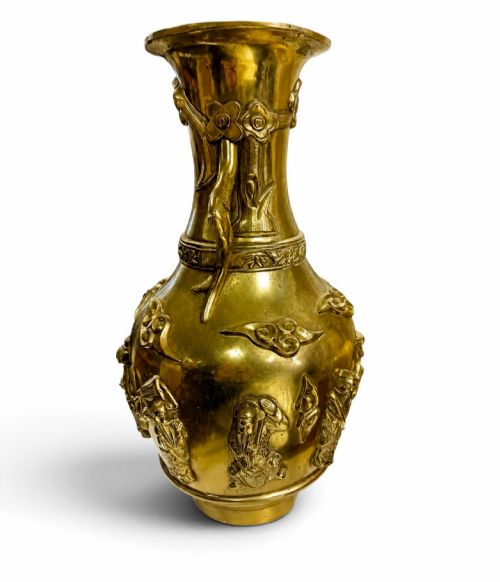
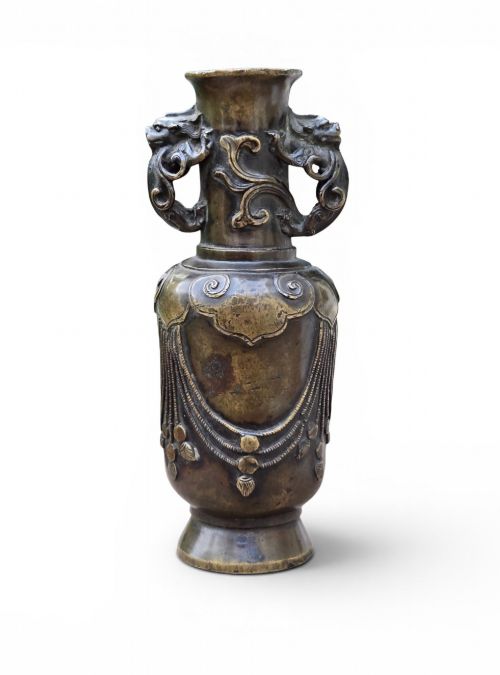
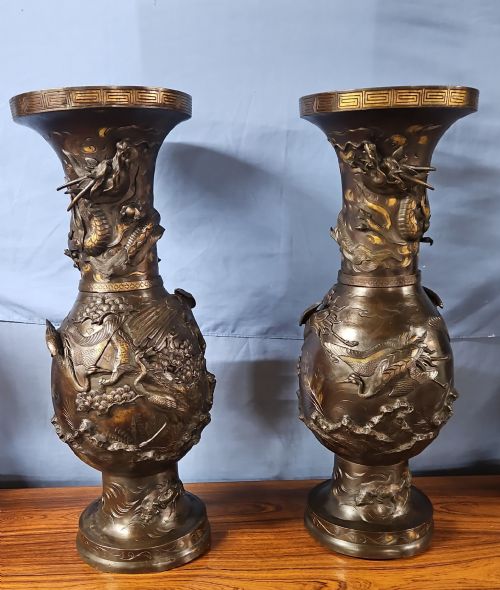
Oriental bronze dragon vases encompass sculptural vessels shaped from copper alloys, featuring dragon motifs cast in high relief, applied as handles, or etched into the metal surface. These pieces emerge predominantly from nineteenth-century Japanese Meiji workshops and Chinese Qing dynasties, spanning baluster forms, altar vessels, and garden urns.
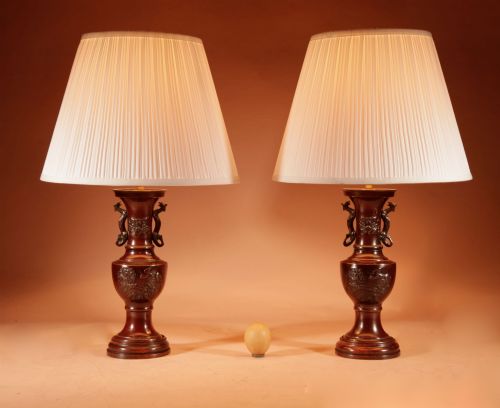
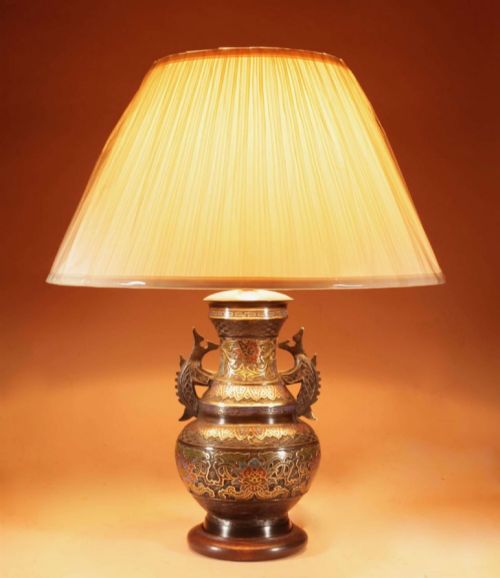
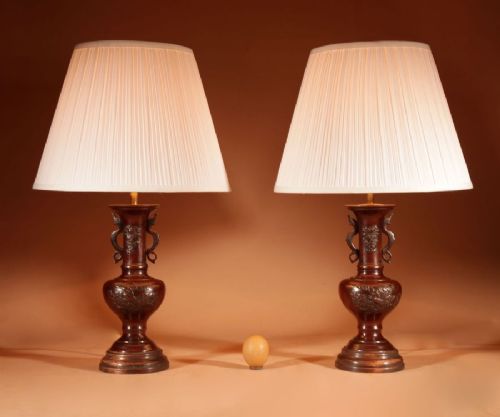
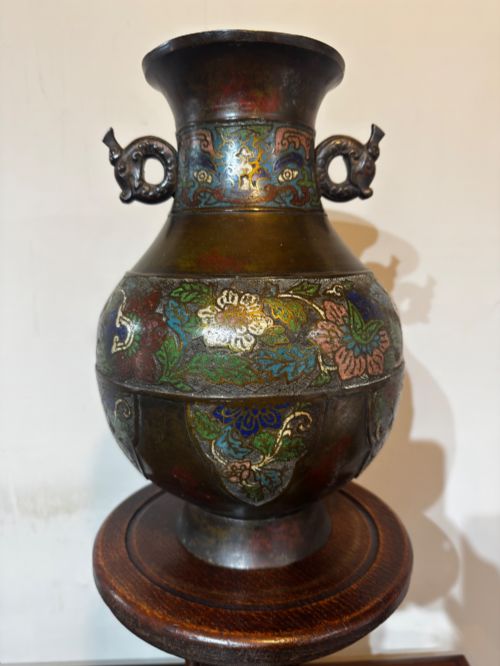
Buyers frequently encounter pairs of large vases from the late nineteenth century alongside table lamps converted from similar vessels. Japanese Meiji period examples and Chinese Qing dynasty pieces dominate the selections, appearing alongside champlevé enamel variants and archaic-style hu vases.
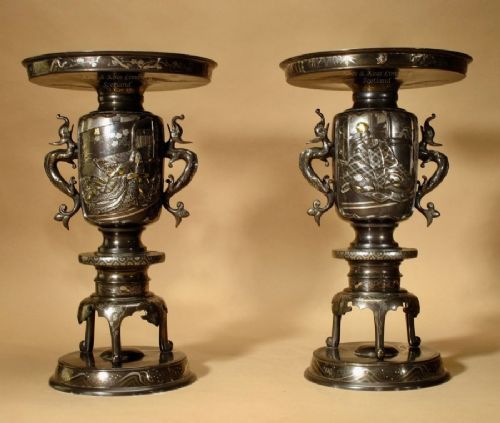
Vessels take various utilitarian and decorative forms, functioning as flower pots, display urns, incense burners, and garniture sets. The presence of dragon handles or dragon base marks defines the grouping, connecting domestic display pieces with traditional East Asian symbolism.
Assessing Quality
Quality rests upon the crispness of the casting and the depth of the relief work on the dragon motifs. Sharp detailing in the claws and scales separates superior foundry output from softer, mass-produced commercial items.
The weight of the metal and the integrity of the patina indicate the care taken during production. Integrated elements, such as applied dragon handles and stable bases, demonstrate structural competence that sustains a piece across centuries.
Listings feature pieces spanning the seventeenth through the early twentieth centuries, dominated by nineteenth-century Victorian and Meiji period examples.
The Oriental Bronze Dragon Vases Glossary
- Meiji Period
- The era in Japanese history spanning from 1868 to 1912, characterised by opening trade and exceptional metalwork output. Pieces from this time often display intricate bronze casting and high-relief decoration.
- Champlevé
- An enamelling technique where troughs or cells are hollowed out in the bronze surface and filled with vitreous enamel before firing. This method creates colourful geometric or floral patterns contrasting with the dark metal.
- Hu Vase
- An archaic ritual vessel form featuring a pear-shaped body, often adapted for domestic display or flower arranging in later periods. These vessels frequently incorporate animal-shaped handles.
- Usubata
- A traditional Japanese bronze flower container featuring a wide shallow basin supported by a pillar base. Garden urns and display pieces of this type suit ceremonial arrangements.
- Patinated Bronze
- Metal treated with chemical solutions to produce a specific surface coloration and aged appearance. This finish protects the alloy while enhancing the visual depth of chased decorations.
Oriental Bronze Dragon Vases: Frequently Asked Questions
How were dragon vases used historically?
These vessels functioned primarily as decorative display pieces, flower holders, and ceremonial altar items within affluent homes and temples. Larger urns stood in gardens or grand reception rooms.
Over time, many surviving examples were adapted into table lamps while retaining their original bronze bodies and sculptural dragon handles.
How do I identify Meiji period bronzes?
Meiji period bronzes, produced between 1868 and 1912, typically exhibit exceptional casting precision, distinct patination, and dynamic relief work. The era marked a peak in Japanese decorative metal artistry for export.
Look for signature foundry marks, heavy copper-alloy construction, and naturalistic dragon motifs that reflect the artistic standards of that specific window.
How do I care for antique bronze?
Antique bronze requires minimal intervention, needing only gentle dusting with a soft, dry cloth to preserve the historical patina. Avoid using commercial metal polishes that strip protective surface layers.
Keep the pieces away from excessive moisture and direct heat sources to maintain the stability of the alloy and any enamel inlays.