


Patinated Bronze Dragon Urns
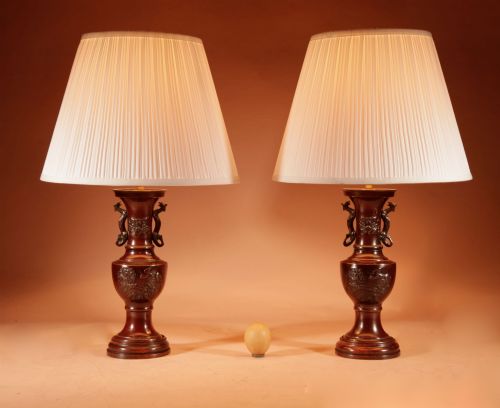
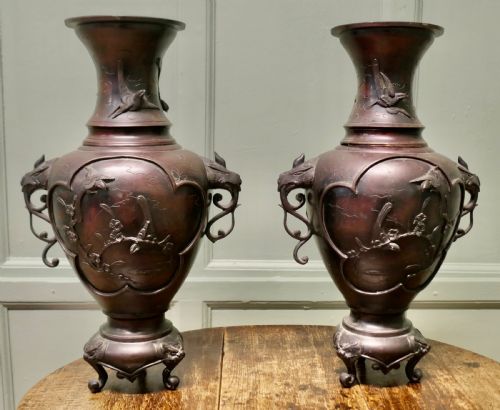
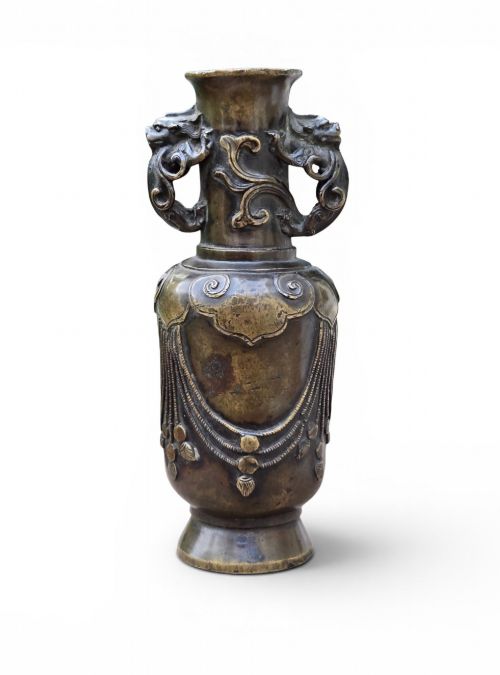
Patinated bronze dragon urns bring commanding presence to a room, cast in heavy metal and finished with dark oxidised surfaces.
Patinated Bronze Dragon Urns
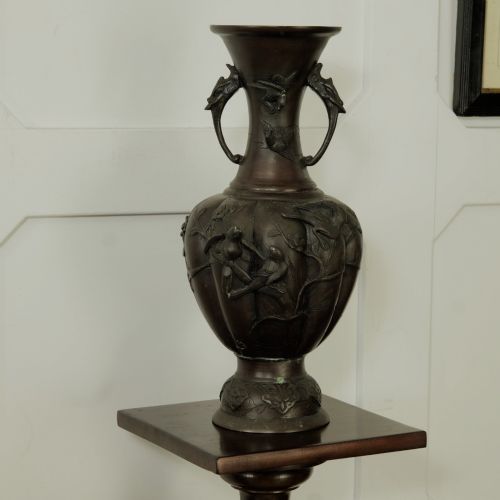
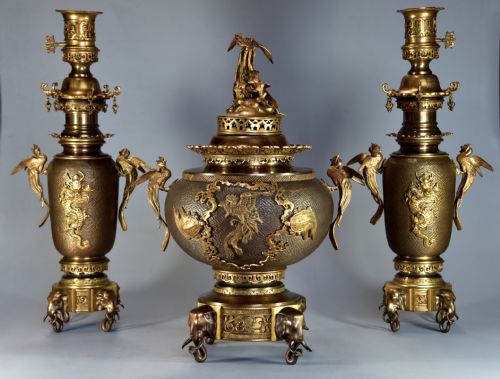
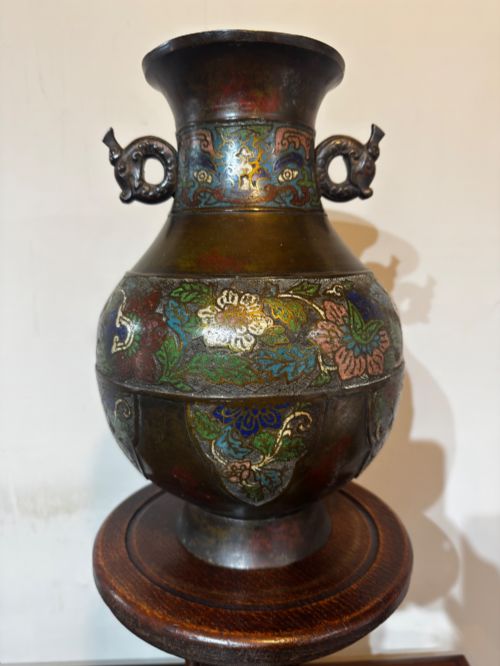
When searching for patinated bronze dragon urns, buyers encounter heavy metal vessels originating primarily from 19th-century Japan during the Meiji period, alongside Chinese Qing style pieces and French Japonisme creations. These items manifest as large decorative vases, altar vessels, incense burners, and garden urns, often featuring sculptural dragon handles or cast relief work. The form draws heavily on traditional Oriental designs, ranging from archaic bronze hu shapes to monumental temple vases.
The pieces on this page lean heavily towards Japanese Meiji period manufacture, alongside Chinese examples dated to the 17th and 19th centuries. Buyers frequently discover pairs suited for mantelpieces or larger floor-standing garden ornaments designed for display. These objects combine utilitarian vessel forms with intricate dragon motifs cast directly into the bronze structure.
Materials and construction
Makers utilised cast bronze, frequently applying a deliberate chemical patination to achieve dark, weathered surface tones. Some pieces incorporate gilt bronze highlights or champleve enamel decoration set directly into the metal body. The combination of heavy bronze casting and applied patina creates the characteristic tactile finish seen across these vessels.
The construction relies on traditional lost-wax casting methods to achieve complex relief details such as dragon handles and meandering bands. Workshops also integrated applied elements like incense burner lids or candle holders into the main vase structures. The metal was then hand-finished, chased, and patinated to accentuate the sculptural dragon motifs.
Materials recorded across the inventory include standard bronze, patinated bronze, gilt bronze, and champleve enamel accents.
Evaluating craftsmanship and execution
The standard of a piece depends largely on the crispness of the cast dragon details and the depth of the applied patina. Finer examples display sharp, undercut relief work on the dragon handles and body, whereas simpler items show softer, generalised casting. The weight of the vessel and the precision of the chasing work further distinguish standard production from exceptional examples.
Artisanal schools, such as the Takaoka School, produced work where the balance of the vessel and the integrity of the patination remain remarkably consistent. Pieces featuring integrated champleve enamel or combined gilt work demand a higher degree of technical skill from the foundry. The overall presence, scale, and preservation of the original surface finish determine the standing of each urn.
The Patinated Bronze Dragon Urns Glossary
- Patinated bronze
- Bronze that has been treated with chemical solutions to produce an aged, darkened, or coloured surface oxidation. This finish protects the metal while enhancing visual depth.
- Meiji period
- The era of Japanese history spanning from 1868 to 1912, known for the widespread export of high-quality metalwork and decorative arts to the West.
- Champleve
- An enamelling technique where troughs are dug into the bronze surface and filled with vitreous enamel before firing. It creates vibrant colour contrasts against the dark metal.
- Archaic bronze
- A style that emulates the ritual vessel forms of ancient Chinese dynasties, particularly the Shang and Zhou periods, revived in later centuries.
- Hu vase
- A traditional pear-shaped vessel form originating in ancient China, typically featuring a constricted neck and sturdy ring handles or animal-mask mounts.
Patinated Bronze Dragon Urns: Frequently Asked Questions
What distinguishes Japanese Meiji bronze urns?
Japanese Meiji period bronze urns are defined by exceptional metallurgical skill, often featuring dynamic dragon motifs and meticulous surface chasing. The era saw workshops pushing the boundaries of lost-wax casting to produce highly sculptural decorative pieces.
These items frequently blend traditional Asian forms with Western aesthetic preferences, reflecting the booming export market of the late 19th century.
How do I care for patinated bronze?
Patinated bronze requires minimal maintenance, primarily gentle dusting with a soft, dry cloth to prevent the accumulation of grime. Avoid using abrasive metal polishes or chemical cleaners that can strip away the original aged surface.
Keeping the pieces in a stable environment away from excessive moisture preserves the integrity of the patination and any underlying enamel work.
How can I tell Chinese and Japanese bronzes apart?
Chinese bronze urns often reference archaic vessel forms and imperial motifs, such as intricate taotie masks or complex yingluo patterns. Japanese Meiji pieces from the 19th century tend to display more naturalistic animal forms, high-relief dragon handles, and varied patination techniques.
Stylistic cues and specific casting signatures often point directly to the cultural origin of the foundry.