




Bronze Dragon Table Vase
These bronze dragon table vase pieces bring nineteenth-century oriental metalwork into your home, offering striking sculptural forms and intricate dragon motifs.
Bronze Dragon Table Vase
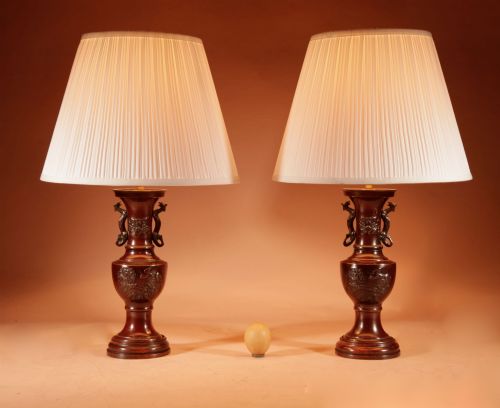
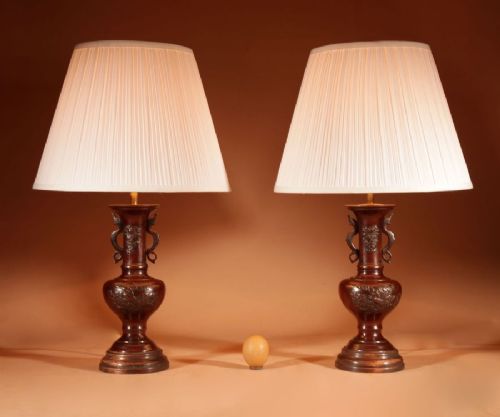
A bronze dragon table vase combines cast metalwork with mythical creature ornament, frequently adapted into table lamps or paired as garniture sets during the nineteenth century. When you search for a bronze dragon table vase, you encounter Japanese Meiji period examples and Chinese items that utilise patinated bronze or gilt bronze.
The forms span from decorative vases and two-dragon candle holders to converted lamps featuring fabric shades. The pieces on this page mostly date from the nineteenth century, including specific years like 1890, 1900, and 1910, alongside broader periods such as the Meiji period and Qing dynasty.
How they were made
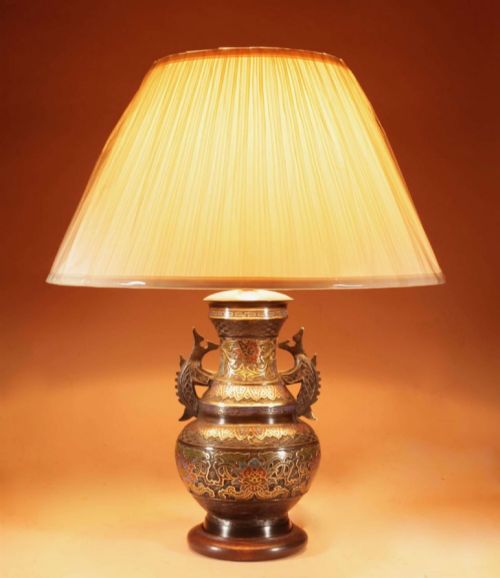
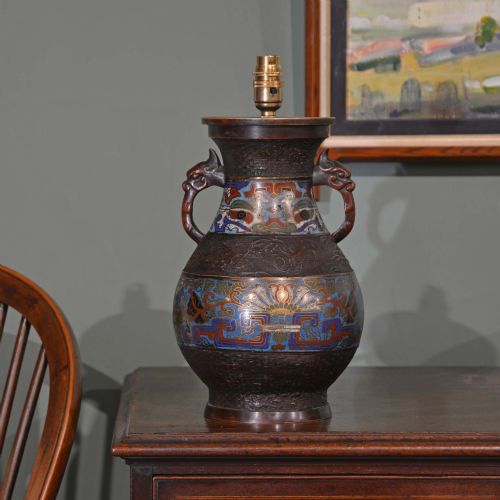
Artisans cast these objects using bronze, patinated bronze, and brass, often incorporating detailed dragon figures modelled in relief. The fabrication process combines metal casting with decorative surface treatments, including champlevé and cloisonné enamel work.
Many items integrate additional materials such as wood and fabric, particularly in examples adapted for illumination as table lamps. The physical structure relies on traditional foundry methods native to nineteenth-century Japanese and Chinese workshops.
Some dragon vases come armed with two candle holders, ensuring the mythical beast guards both the flowers and the flame.
What varies in quality
The depth and consistency of the bronze patina also distinguish superior objects from simpler ones, alongside the overall harmony of proportions in paired garniture sets or converted lamp bases.
The Bronze Dragon Table Vase Glossary
- Champlevé
- An enamelling technique where troughs are dug into the metal surface and filled with vitreous enamel before firing. This method creates rich coloured patterns alongside the exposed bronze lines.
- Cloisonné
- A technique where wire compartments are soldered to a metal body and filled with enamel paste. It produces intricate cellular designs common on oriental decorative vessels.
- Meiji Period
- The era in Japanese history spanning from 1868 to 1912, noted for metalwork exported to Western markets. Pieces from this time frequently feature naturalistic and mythological subjects.
- Gilt Bronze
- Bronze that has been coated with a thin layer of gold or gold amalgam for a lustrous finish. This treatment highlights relief ornament on decorative vases and lamp bases.
- Patinated Bronze
- Metal treated with chemicals or heat to produce a stable coloured surface layer. The resulting tones range from deep browns to dark greens on nineteenth-century objects.
Bronze Dragon Table Vase: Frequently Asked Questions
What is a bronze dragon table vase?
A bronze dragon table vase is a nineteenth-century metal vessel decorated with dragon motifs, frequently adapted into a table lamp or found within garniture sets.
These pieces originate primarily from Japanese Meiji workshops and Chinese periods, combining sculptural casting with decorative enamel or patination.
How were these bronze vases used?
They served as decorative display objects in nineteenth-century interiors, occasionally incorporating candle holders or acting as centrepieces.
Many examples were later converted into table lamps using fabric shades while retaining their original bronze and brass bodies.
How do I date a bronze dragon vase?
Dating relies on stylistic markers associated with the Meiji period or Qing dynasty, alongside manufacturing techniques like champlevé and patinated bronze casting.
Evidence in the listings points predominantly to nineteenth-century production, with specific years such as 1890, 1900, and 1910 appearing across items.
Are these pieces Japanese or Chinese?
The evidence shows items from both traditions, with Japanese Meiji period examples being prominent alongside Chinese cloisonné and famille rose elements.
Both cultural origins utilise bronze, brass, and enamel work to depict traditional motifs including dragons.