


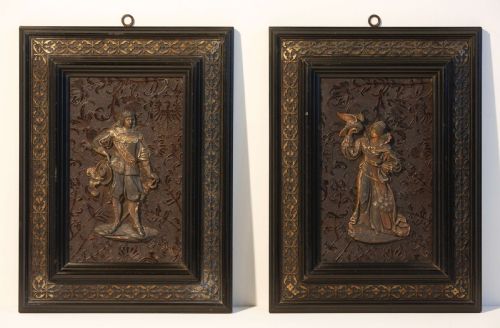


Bronze Relief Plaque
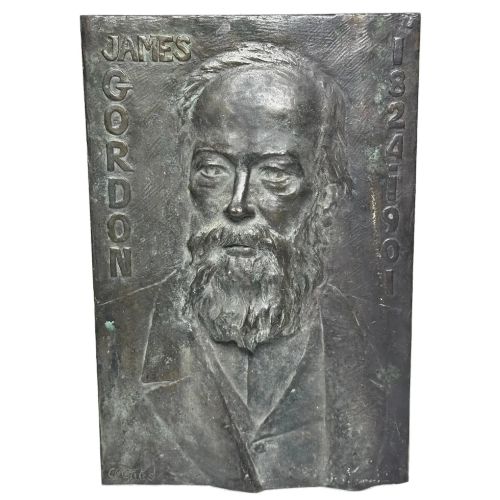
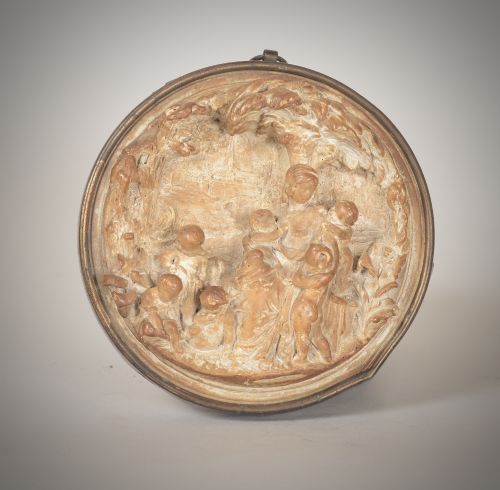
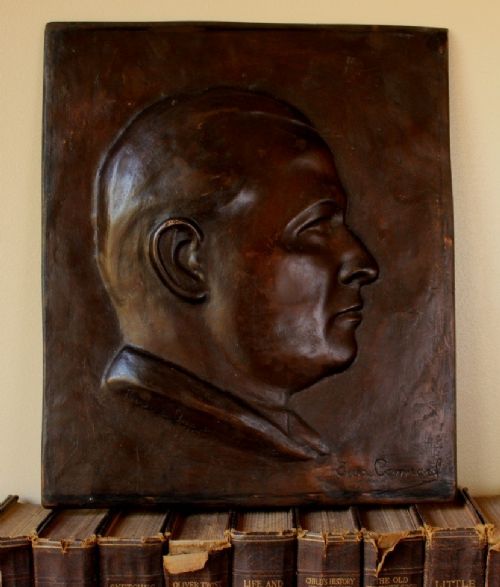
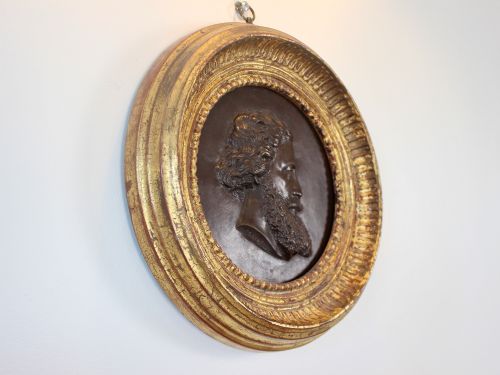
When you handle a bronze relief plaque, you hold a cast metal picture that brings classical portraits and mythological scenes straight to the wall.
Bronze Relief Plaque
A bronze relief plaque is a sculptural wall piece cast or hammered in three dimensions, showing portraits, heraldry, or classical scenes. When collectors search for this phrase, they encounter works ranging from Victorian commemorative pieces to grand tour souvenirs.
The versions most common on this page date from the nineteenth century and span styles from Neoclassical and Art Nouveau to Victorian and Edwardian revivals. They appear mounted in wood, set in brass frames, or cast as standalone panels for interior display.
Formats vary from circular medallions and rectangular wall plaques to exhibition medals and architectural friezes. Subjects draw heavily on mythology, historical figures, and royal jubilees.
How they were made
Makers cast these pieces primarily in bronze, copper, brass, and white metal, frequently applying gilt or dark patination to highlight the raised sculptural details. Terracotta, plaster, and cast iron also appear in the record, sometimes mounted within turned mahogany frames.
Bronze Relief Plaque Retail Price Guide 2026
Typical asking prices for bronze relief plaque among the pieces listed under this phrase on Sellingantiques today, from the lower quarter to the upper quarter. They describe what is for sale here now, not the wider market.
Listings include materials spanning bronze, copper, brass, terracotta, plaster, and cast iron across nineteenth-century and early twentieth-century periods.
What varies in quality
The integrity of the original patina and the quality of secondary materials, such as matched turned wood frames or gilt mounts, dictate the overall standing of an individual plaque.
Eugene Canneel·Ernst Wahliss·Smith Beck and Beck·Mainfroy·Gustav Grohe·De Grave Short and Fanner·Akira Tanaka·J Lavergne
The Bronze Relief Plaque Glossary
- Relief
- Sculpture in which figures project from a flat background. High relief stands out strongly, while low relief sits closer to the surface.
- Patina
- The surface coloration and sheen developed over time through age or chemical treatment. It protects the metal and adds depth to the cast details.
- Grand Tour
- A cultural journey undertaken by wealthy Europeans in the eighteenth and nineteenth centuries. Travellers collected small bronzes and classical plaques as souvenirs.
- Medallion
- A circular or oval plaque bearing a portrait or commemorative design. They frequently appear framed for wall display.
- Cast
- Formed by pouring molten metal or liquid material into a mould. This technique allows intricate sculptural scenes to be replicated.
Bronze Relief Plaque: Frequently Asked Questions
How were bronze wall plaques displayed?
Historical wall plaques were typically hung directly in parlours, studies, or libraries to display taste, lineage, or scholarly interests. Many were framed in turned mahogany, set into brass borders, or mounted on velvet panels.
Larger architectural friezes and coat of arms plaques were integrated into interior woodwork or placed above fireplaces as permanent decorative fixtures.
How do I care for a bronze plaque?
Bronze plaques require minimal intervention to preserve their historic patination and surface detail. Dusting gently with a soft, dry cloth prevents particulate accumulation without disturbing the metal.
Harsh chemical cleaners and abrasive polishes must be avoided entirely, as they strip away the authentic aged surface and damage delicate cast details.
How can I tell the period of a plaque?
Dating relies on stylistic clues, costume details, and lettering styles associated with movements like the Victorian, Art Nouveau, or Neoclassical periods. Signatures, foundry marks, and exhibition stamps provide concrete temporal anchors.
The choice of framing materials and the character of the metal patination also offer reliable indicators of age.