
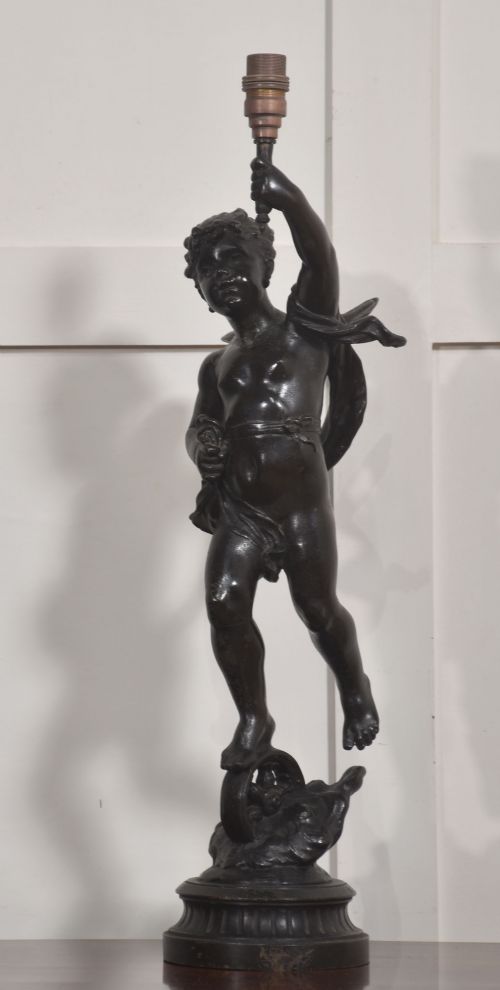


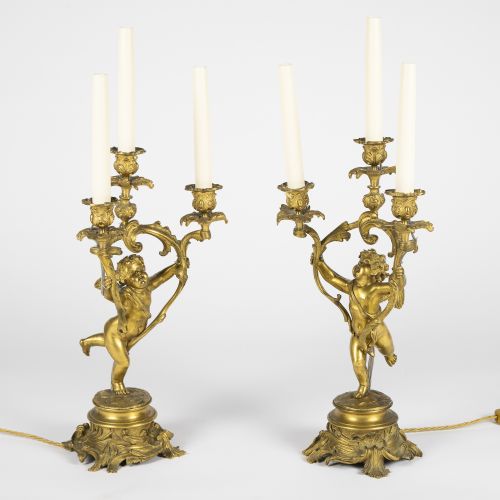
Bronze Putto Desk Lamp
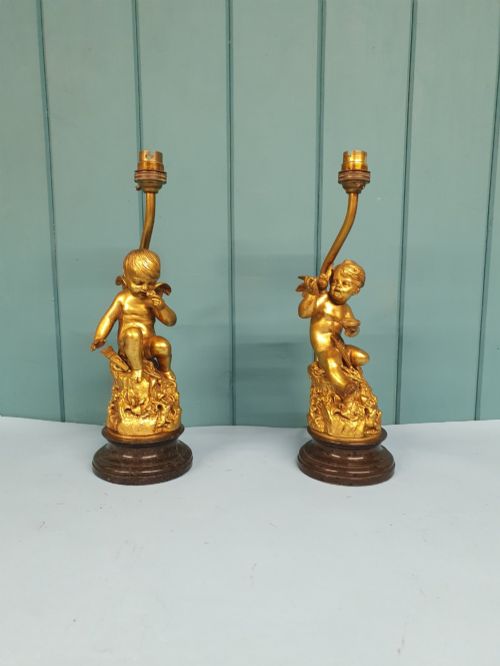
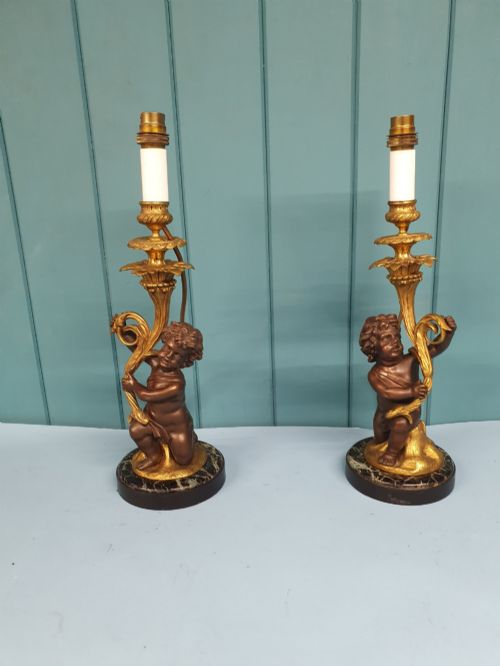
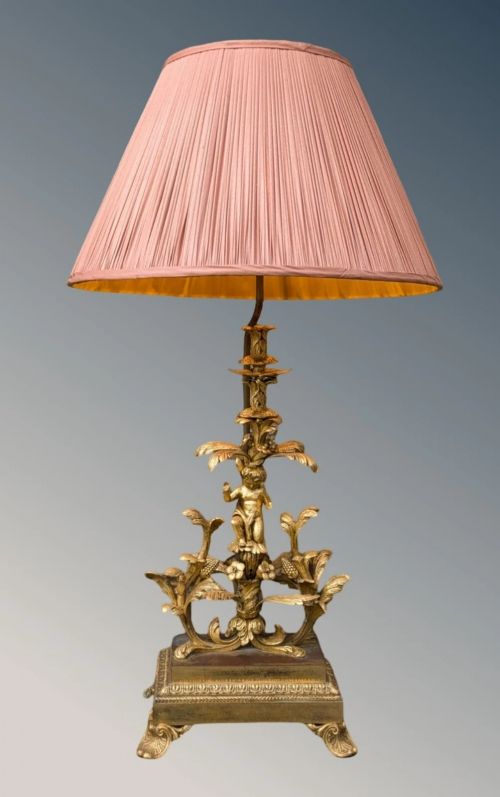
A bronze putto desk lamp brings 19th-century sculptural charm to a room, combining classical figures with functional illumination.
Bronze Putto Desk Lamp
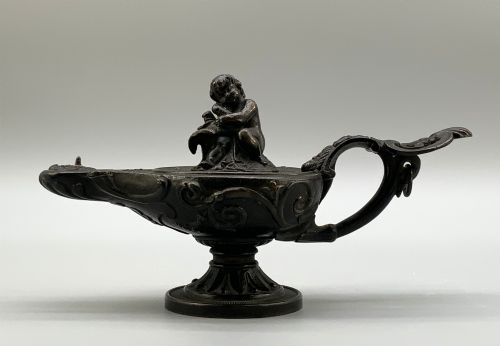
Most examples originate from French workshops adhering to styles such as French Rococo Revival, Louis XVI, Neoclassical, and French Empire. Buyers will find table lamps and converted oil lamps that place these winged figures at the centre of the design.
Compositions range from single statuettes adapted for electrical use to monumental pairs set on sturdy bases. These domestic objects reflect nineteenth-century interior tastes for classical mythology rendered in metal.
Materials and casting methods
The primary material used is bronze, often patinated to a dark finish or gilded to create ormolu effects. Makers also incorporated marble, onyx, porcelain, brass, fabric, and tole peinte to enrich the bases and shades of these lamps.
Foundries employed traditional casting techniques to shape the figures, followed by manual chasing to sharpen the details of the wings, hair, and drapery. Ormolu surfaces required mercury gilding or electrogilding to achieve the bright golden lustre seen on the French pieces.
The listings span the 19th century into the early 20th century, featuring materials such as gilt bronze, ormolu, marble, onyx, and porcelain.
Assessing quality in figural lamps
The choice of secondary materials, such as heavy solid marble plinths or fine porcelain reservoirs, elevates the standing of an object. Integrated proportions between the figural bronze base and the lighting fittings also determine the visual balance of the piece.
The Bronze Putto Desk Lamp Glossary
- Putto
- A chubby male infant, often winged, derived from classical art and frequently depicted in Renaissance and revival decorative pieces.
- Ormolu
- Gilded bronze, produced by applying a gold-mercury amalgam or gold leaf to a bronze base, common in French decorative arts.
- Grand Tour
- A cultural journey undertaken by wealthy young Europeans in the 18th and 19th centuries, often resulting in the acquisition of classical bronzes and antiquities.
- Tole peinte
- Painted sheet metal, frequently utilised for decorative lamp shades or containers in 19th-century interiors.
- Patination
- The surface coloration of metal achieved through age, chemical treatment, or controlled oxidation.
Bronze Putto Desk Lamp: Frequently Asked Questions
What is a putto?
A putto is a motif depicting a small, plump child, frequently winged, originating from classical mythology and art.
In 19th-century lighting, these figures often support lamp stems or hold attributes related to light and music.
Were these always electric lamps?
Most older pieces began as oil lamps or decorative statuettes before receiving modern electrical conversions.
Adaptations allow these antique bronze sculptures to function safely as desk and table lighting.
How do I identify French revival styles?
French revival pieces incorporate ornate scrolls, naturalistic foliage, and classical symmetry drawn from earlier periods like Louis XVI and the Rococo.
Foundries in the 19th century reinterpreted these historical motifs with high craftsmanship.
Where should I place a figural lamp?
These lamps suit study desks, sideboards, or prominent tables where their sculptural details remain visible.
Pairing them with appropriate fabric shades helps balance the weight of the metal base.