



Bronze Putti Statues
Bronze putti statues capture winged mythological children in classical poses, bringing French and Italian foundry work into domestic spaces.
Bronze Putti Statues
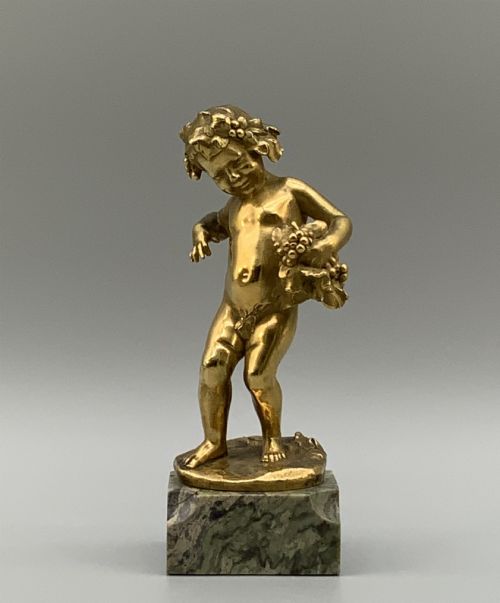
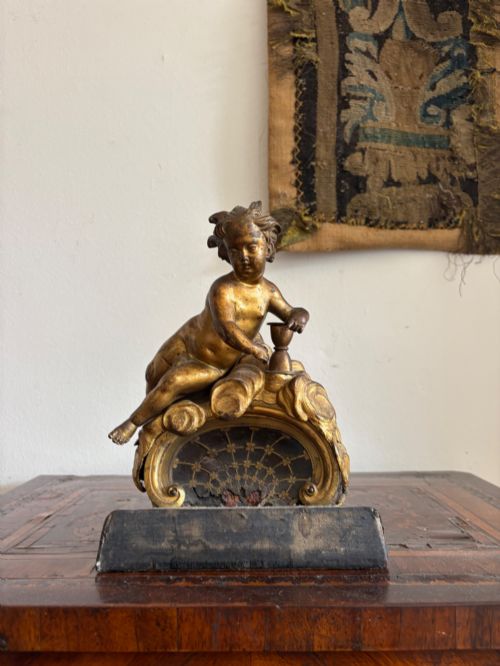
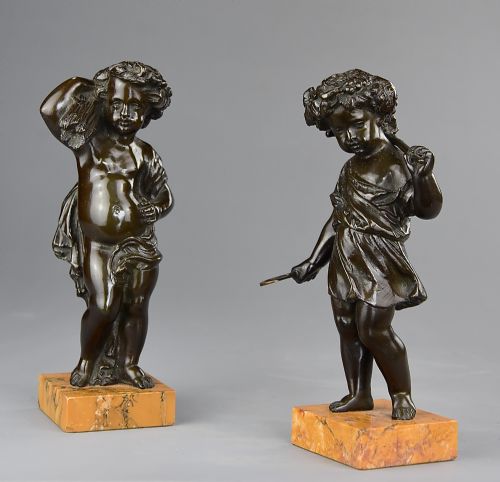
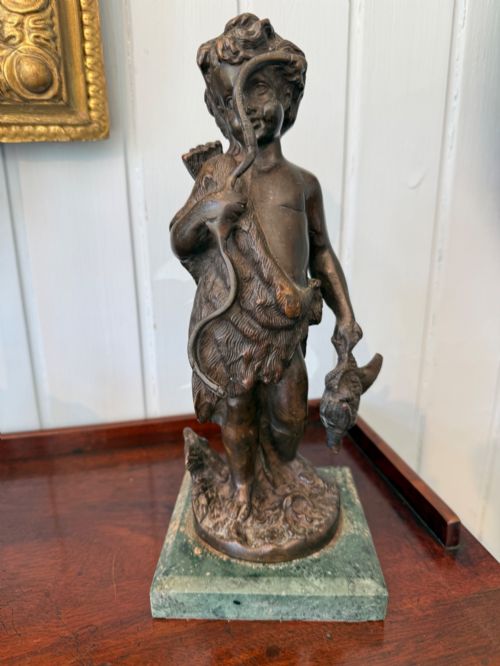
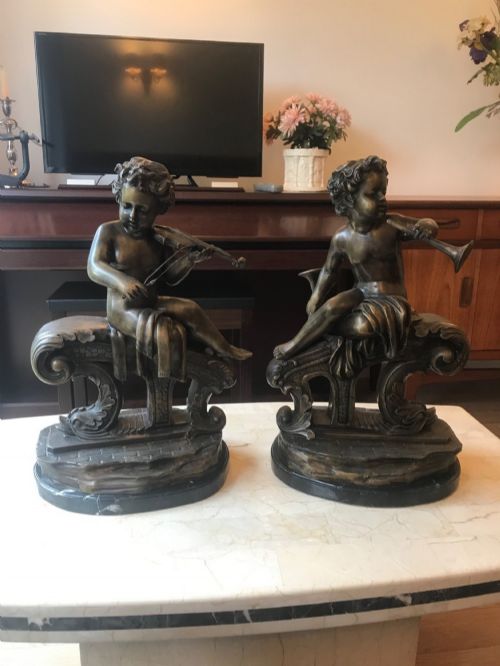
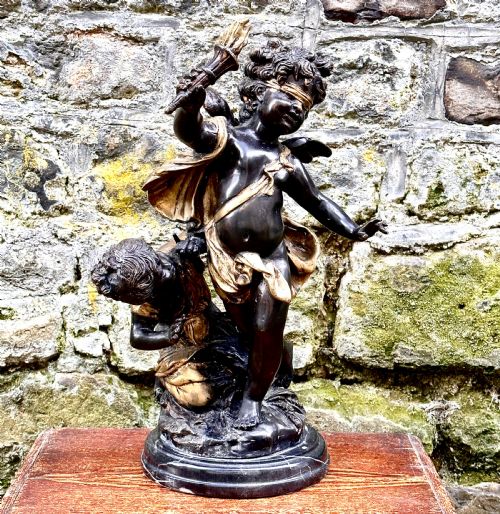
When you search for bronze putti statues, you encounter figures cast as standalone statuettes, finial ornaments, lamp bases, and clock components. These pieces typically date from the nineteenth century, drawing heavily on Neoclassical and Rococo Revival aesthetics popular in France and Italy. Figures often appear singly or in pairs, depicting mythological youths engaged in musical pursuits, harvest allegories, or play.
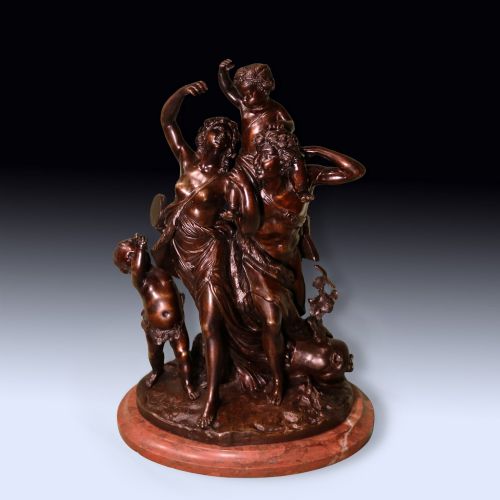
Italian Grand Tour pieces and French foundry casts dominate the selection, frequently mounted on marble plinths. Subjects range from infant Bacchus figures holding grapes to cherubs with musical triangles or hunting motifs. You also find larger sculptural groups after classical models by sculptors such as Clodion.
Foundry methods and materials
Secondary materials play a key supporting role, with white or coloured marble frequently serving as heavy supporting bases. Items such as timepieces and candelabras integrate enamel dials, glass elements, and carved wooden plinths alongside the primary metalwork.
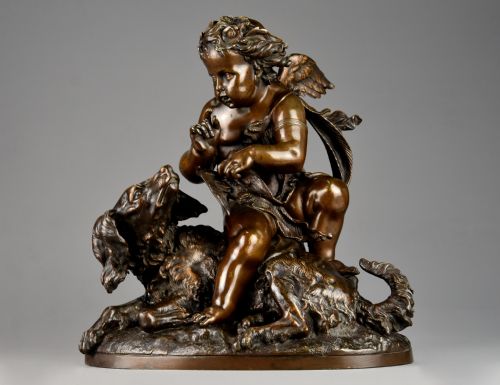
Putto expressions range from solemn musicians to cheeky toddlers wrestling with unruly harvest grapes or household spaniels.
Standards of execution
The crispness of the chasing distinguishes superior casts from softer reproductions. High-quality works retain sharp detail in the hair, wing feathers, and facial expressions, whereas lesser examples lose definition in the post-casting cleanup. The precision of the joinery where individual cast elements meet also marks out better studio production.
The quality of the patination and gilding dictates visual depth. Rich, layered patinas and properly applied fire-gilding or ormolu age with distinct warmth, unlike flat modern chemical finishes that lack tonal variation.
Charles Louis Malric·Susse Frères·Louis Auguste Moreau·Charles Cumberworth·Bellenot Paris
The Bronze Putti Statues Glossary
- Putto
- A plump, naked male child, frequently winged, appearing in classical and Renaissance art. These figures evolved into cherubs and amorini in later decorative schemes.
- Ormolu
- Gilded bronze produced by applying a mercury and gold amalgam to a bronze base. This technique creates a durable golden finish seen on French decorative mounts and clock cases.
- Grand Tour
- A cultural journey undertaken by wealthy young Europeans through France and Italy to collect art and antiquities. Souvenirs from these travels included small bronze sculptures.
- Patination
- The surface coloration of metal achieved through age, handling, or chemical treatment. Dark brown, green, and black patinas protect the bronze while defining its visual character.
- Finial
- A decorative ornament fixed to the top of an object, such as a clock, piece of furniture, or lamp. These elements often take the form of small cast figures.
Bronze Putti Statues: Frequently Asked Questions
How do I identify a Grand Tour bronze?
Grand Tour bronzes typically originate from nineteenth-century Italian or French workshops catering to travellers visiting classical sites. They often feature distinct green or dark brown patinas and are mounted on heavy marble bases.
These pieces frequently replicate famous classical sculptures or mythological themes, scaled down for domestic display as mantel ornaments or desk accessories.
What is the difference between putti and cherubs?
Art history distinguishes putti as secular mythological figures derived from classical antiquity, often representing cupid or playful spirits. Cherubs carry more specific religious connotations from biblical tradition, though decorative arts often use the terms interchangeably.
In nineteenth-century bronze sculpture, both names generally describe winged infant figures engaged in everyday or allegorical activities.
How should I clean antique bronze?
Antique bronze requires minimal intervention to preserve its original patina and surface character. Dusting gently with a soft, dry cloth prevents grime accumulation without disturbing the metal finish.
Avoid commercial metal polishes, water, or abrasive cleaners, as these strip away historical patination and gilt highlights permanently.
Why are some figures mounted on marble?
Marble bases provide structural stability for top-heavy bronze sculptures while adding an element of neoclassical elegance. French and Italian foundries frequently paired dark patinated bronze with white or contrasting marble plinths during the nineteenth century.
This mounting style also elevates the artwork, framing it as a finished decorative object for display on tables and mantelpieces.