
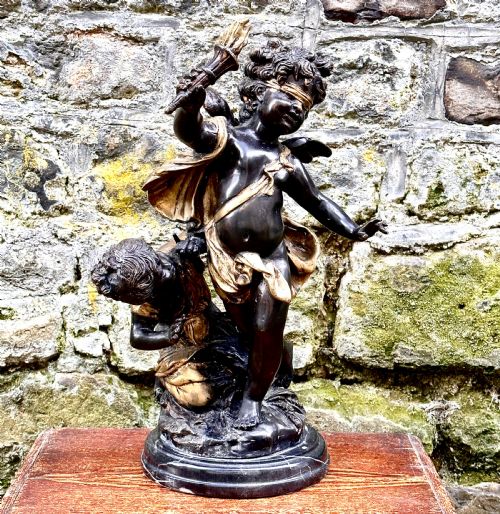


Cherub Table Ornaments
Cherub table ornaments bring lively classical figural charm to interiors through bronze, porcelain and marble.
Cherub Table Ornaments
Cherub table ornaments comprise sculptural figures, centrepieces, ewers, and vases populated by winged putti and children. These pieces stem mainly from the nineteenth century, including specific dates across the 1850s, 1880s, 1890s, and 1910.
The aesthetic draws heavily on Rococo Revival, Victorian Neoclassical, and French nineteenth-century design idioms. Buyers encounter pairs of musical figures, chariot vases, and decorative ewers designed for display.
Origins span French and German traditions, showcasing makers such as Royal Worcester and Meissen alongside unmarked works. These objects serve as focal points for tables and mantelpieces, blending mythological themes with decorative utility.
How they were made
Makers utilised cast bronze, gilt bronze, and cast metal to create durable sculptural groups, frequently mounting the metal figures onto solid marble bases. Others employed fine ceramic and porcelain, incorporating delicate enamel and gold leaf detailing.
Techniques combined traditional foundry casting for bronze putti with meticulous hand-painting and modelling for porcelain figures and centrepieces. This integration of metalwork and ceramics defined the production standards of the period.
Listings demonstrate a strong divide between cast bronze sculptural groups on marble and delicate German porcelain centrepieces.
What varies in quality
The refinement of the modelling distinguishes superior sculptural work, particularly in the expression and anatomy of the putti. Crispness in cast bronze details or hand-painted ceramic execution elevates certain pieces above standard production.
Material combinations, such as pairing cast bronze with veined marble bases or applying genuine gold leaf, indicate finer craftsmanship. The presence of established factory marks further differentiates notable works from anonymous manufacturing.
Royal Worcester·Kerr and Binns·Meissen·Clodion
The Cherub Table Ornaments Glossary
- Putti
- Plumed male infant figures often depicted in classical art and sculpture. They appear frequently in bronze groups and porcelain compositions.
- Ewer
- A large jug with a wide spout and handle, used historically for pouring water or displayed purely for decoration. Victorian examples often incorporate cherub motifs.
- Centrepiece
- A large ornamental object placed in the middle of a dining table or sideboard. These items frequently feature porcelain bowls supported by figural groups.
- Rococo Revival
- A nineteenth-century design style inspired by eighteenth-century French art, characterised by asymmetry, scrollwork, and naturalistic motifs. It heavily influences the curves of these decorative items.
- Neoclassical
- A style rooted in classical antiquity, focusing on symmetry, restraint, and mythological subjects. It shapes the architectural lines of many nineteenth-century vases and sculptures.
Cherub Table Ornaments: Frequently Asked Questions
What materials make up cherub table ornaments?
These decorative objects appear in cast bronze, gilt bronze, and various cast metals, frequently mounted upon solid marble bases. Ceramic and porcelain versions also feature prominently.
Additional embellishments include enamel work and gold leaf accents applied to both figures and vessels.
When were these decorative pieces manufactured?
The available examples date predominantly from the nineteenth century, spanning from the 1850s through to approximately 1910.
Key periods represented include Victorian Rococo Revival and nineteenth-century French and German production eras.
How were these ornaments utilised historically?
Owners displayed these items centrally on tables, sideboards, and mantelpieces as decorative conversation pieces during the Victorian era. Ewers and chariot vases also served ornamental display functions rather than practical service.
Figural groups and centrepieces added classical elegance and mythological themes to formal interior spaces.
How do I identify French versus German pieces?
French pieces often manifest as bronze sculptures and putti groups influenced by sculptors like Clodion, sometimes set on marble plinths. German examples tend to utilise fine porcelain craftsmanship, as seen in Meissen and large centrepieces.
Examining the base material and manufacturing marks provides clear clues to the regional origin.