



Bronze Military Figure
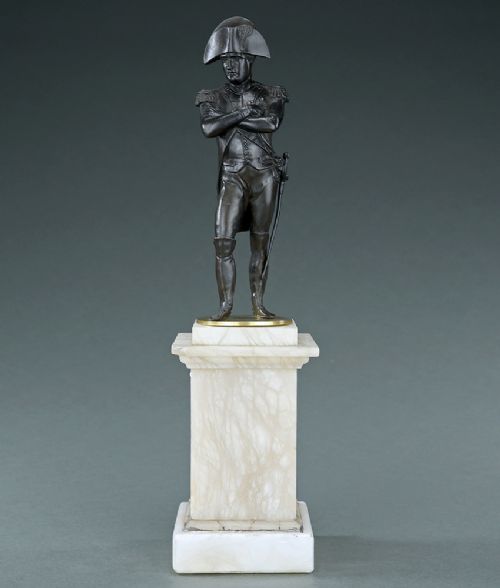
A bronze military figure brings historical command into a room, capturing commanders and common soldiers through enduring metal work.
Bronze Military Figure
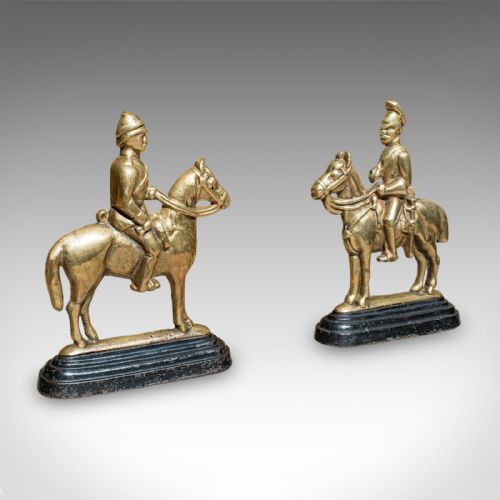
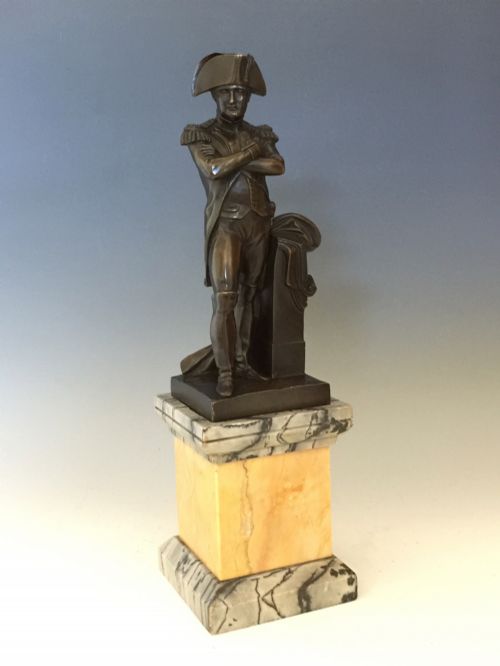
A bronze military figure represents historical commanders, cavalrymen, and foot soldiers cast in metal during the nineteenth and early twentieth centuries. These works emerge from French, Russian, and Austrian workshops, taking the form of library desk bronzes, mantel clock adornments, and substantial equestrian sculptures.
Materials and casting methods
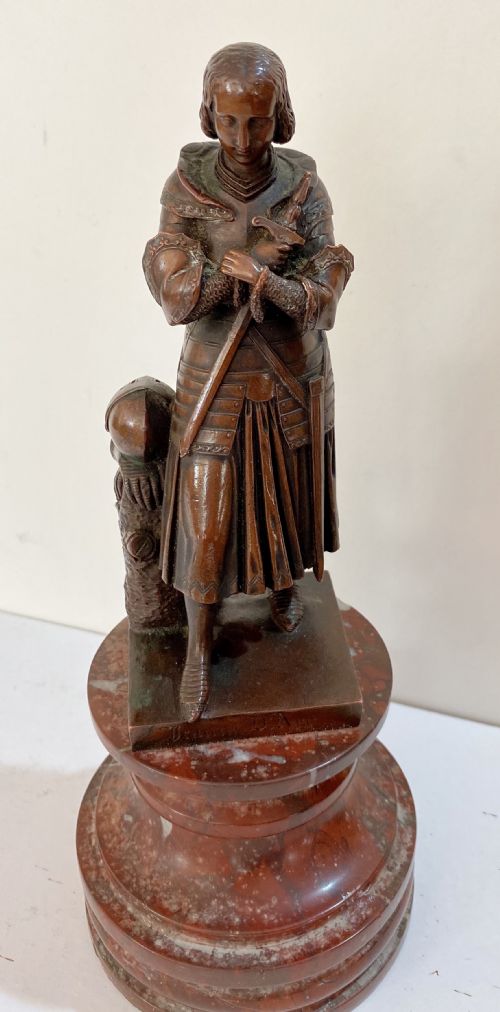
Many sculptures incorporate complementary materials such as veined marble for heavy plinths, ormolu mounts, and enamel details. Cast metal alternatives also appear in the record, offering similar sculptural forms through different alloy compositions.
A St. Petersburg policeman stands at attention among the generals, frozen in cold-painted bronze from the final years of Imperial Russia.
Distinctions in craftsmanship
The precision of the chasing work after casting dictates how sharply uniform buttons, weapon harnesses, and facial expressions emerge from the metal. Superior examples preserve crisp detail in the horse tack and tunic braid without softening during the final finishing stages.
The integration of the figure with its base, whether a fitted marble plinth or an architectural clock case, reveals the workshop standard. Solid weight, careful patination without surface pitting, and legible foundry or artist signatures separate masterworks from commercial production pieces.
Emile Guillemin·E.H. Dumaige·Fabergé·James Pradier·C. Anfrie·L. A Bayeux
The Bronze Military Figure Glossary
- Patinated bronze
- Bronze treated with chemical solutions to produce a specific surface colour and tone. This process protects the metal while enhancing the definition of clothing and armour.
- Cold-painted bronze
- Pigment applied to finished bronze surfaces without subsequent firing in a kiln. This technique allows for vibrant uniform colours, particularly seen in early twentieth-century Russian works.
- Grand Tour
- Souvenirs collected by affluent travellers touring European cultural sites during the nineteenth century. These often included small-scale bronze copies of famous public monuments and historical figures.
- Ormolu
- Gilded bronze produced by applying a mercury and gold amalgam to the metal base and heating it. This technique creates a rich golden finish often used for mounts and decorative accents.
- Spelter
- A zinc alloy frequently utilised as a less expensive alternative to bronze during the nineteenth century. It accepts patination and metallic paint finishes to mimic heavier bronze sculptures.
Bronze Military Figure: Frequently Asked Questions
What periods do these figures date from?
The pieces span the nineteenth and early twentieth centuries, capturing Victorian historicism, French Empire styling, and Grand Tour tastes. Workshops across France, Russia, and Austria produced these military subjects during periods of intense interest in historical commanders.
Dates range from mid-century neoclassical interpretations through to late nineteenth-century equestrian bronzes and pre-First World War cold-painted figures.
How were these figures displayed originally?
Many figures served as library desk ornaments, heavy bookends, or decorative elements mounted upon marble plinths and mantel clocks. Larger equestrian sculptures stood upon pedestals in studies and drawing rooms to denote historical interests.
Smaller variants functioned as desk accessories or travel souvenirs collected by wealthy individuals touring European capitals.
How do I distinguish bronze from spelter?
Bronze offers a heavier weight and a resonant sound when tapped, whereas spelter feels lighter and softer. Examining the underside or unpainted interior reveals the paler, greyish hue of the zinc alloy compared to warm copper-toned bronze.
Spelter also tends to show fatigue cracks more readily under stress due to its lower tensile strength.
What subjects are most common?
Napoleon Bonaparte dominates the selection, appearing on foot, on horseback, and in library busts by various French sculptors. Other frequent subjects include medieval knights, Joan of Arc, Austrian cavalrymen, and Russian policemen.
Equestrian monuments after famous Italian Renaissance commanders also feature strongly in the larger sculptural works.