

French Empire Style Bronze
These french empire style bronze objects bring neoclassical formality to a room through heavy gilt metal and classical ornament.
French Empire Style Bronze
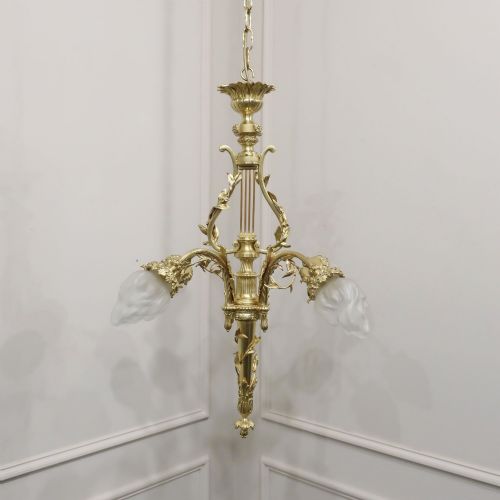
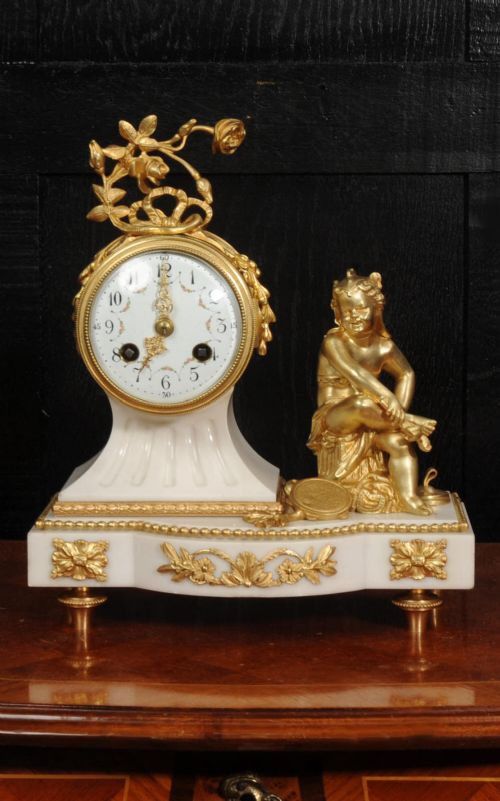
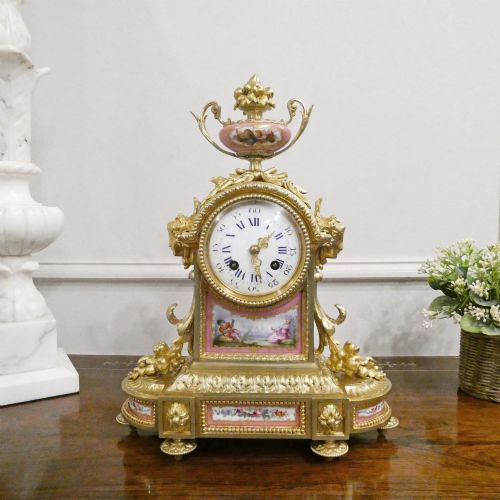
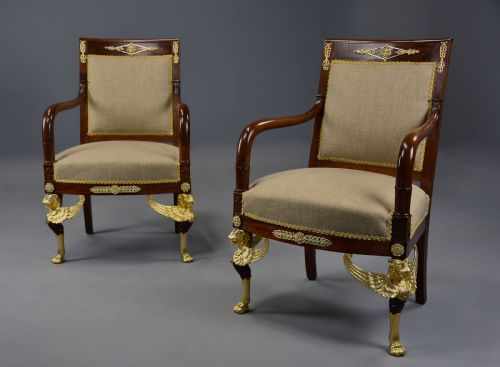
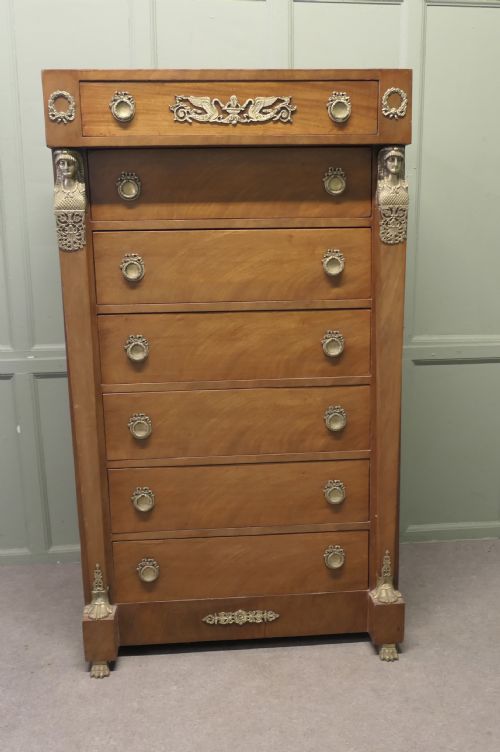
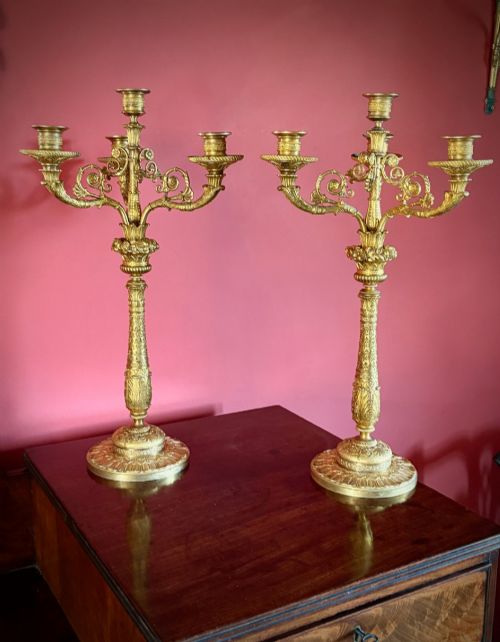
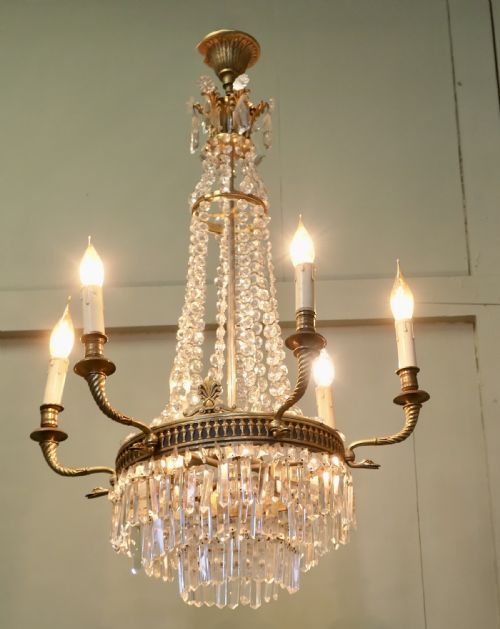
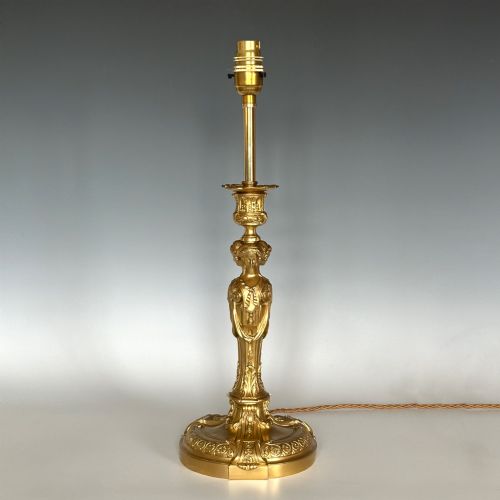
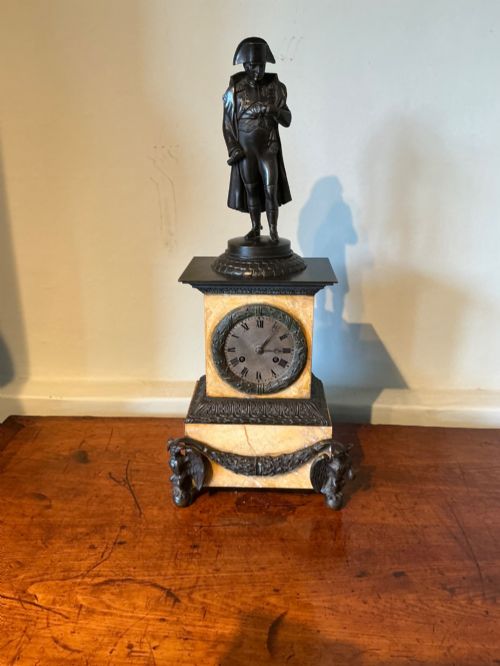
When searching for french empire style bronze, you encounter heavy decorative works spanning lighting, timepieces, and furniture mounts. The selection centres on candelabra, mantel clocks, and chandeliers alongside mahogany furniture fitted with gilt metal mounts.
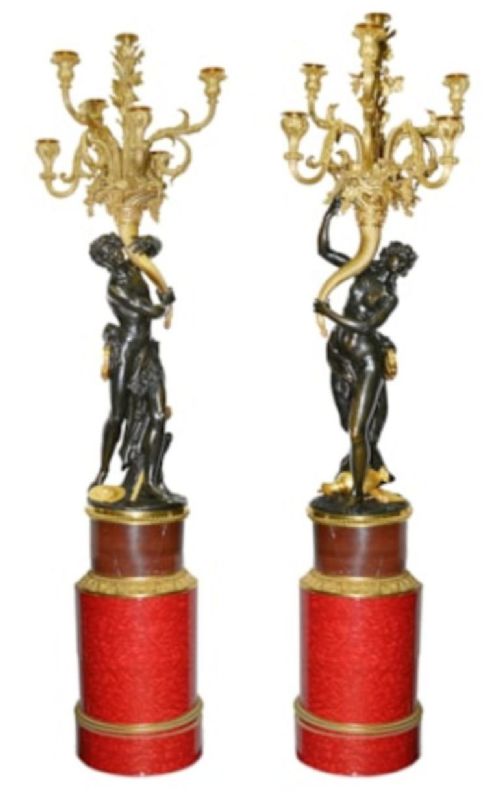
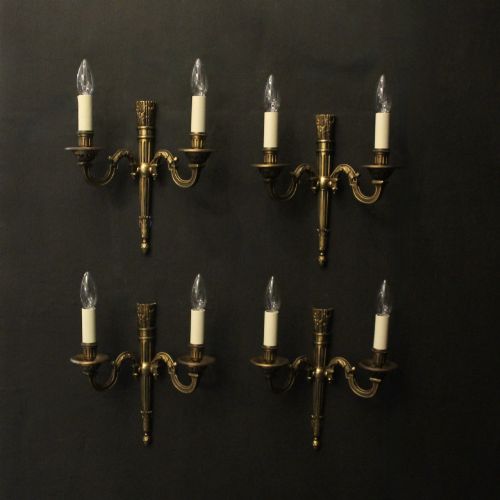
Most examples date to the nineteenth century, reflecting nineteenth-century interpretations of classical antiquity. You will regularly find matched pairs of candelabra and wall lights designed for symmetrical room placement.
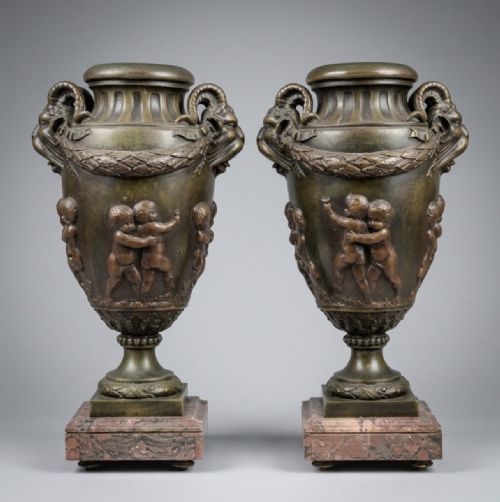
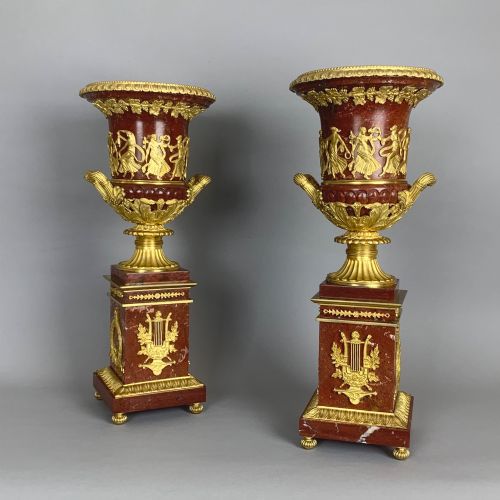
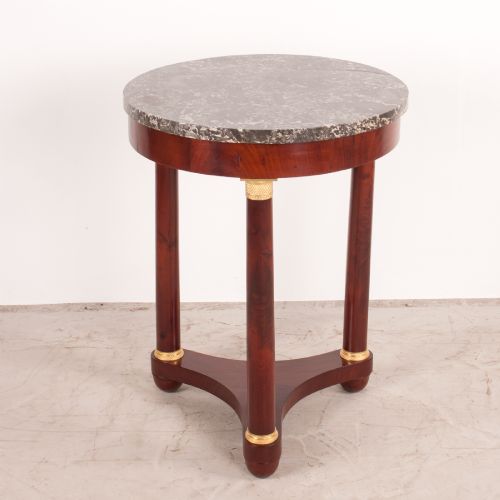
Beyond metalwork, the forms extend to marble-based urns, crystal centrepieces, and occasional tables. These objects combine cast bronze and ormolu with materials like mahogany, marble, and glass.
How they were made
The construction relies heavily on cast bronze and brass, finished with ormolu gilding or chemical patination to create contrasting metallic surfaces. These metal elements are frequently combined with carved mahogany, white or green marble bases, and cut glass inserts.
Makers integrated cast mounts onto timber cabinetry and stone plinths using precision mechanical fixings. Enamel dials and porcelain plaques were incorporated into mantel clocks, while chandeliers utilised crystal drops and delicate brass framing.
Hercules once shared a candelabrum with Hesione.
What varies in quality
The crispness of the chasing and the depth of the gilding separate standard production from exceptional studio output. Superior castings display sharp architectural details and animated figural work rather than softened edges.
Material selection also dictates the tier of the piece, with dense marbles and heavy mercury gilding marking out the finest examples. Attributions to known makers like Japy Freres or Pierre Philippe Thomire elevate the standing of individual works.
Japy Freres·Pierre Philippe Thomire·Mercier Frères·Krieger Paris
The French Empire Style Bronze Glossary
- Ormolu
- A technique of applying finely ground high-carat gold to a bronze base using a mercury amalgam. This gilding method produces a rich, durable lustre typical of luxury nineteenth-century metalwork.
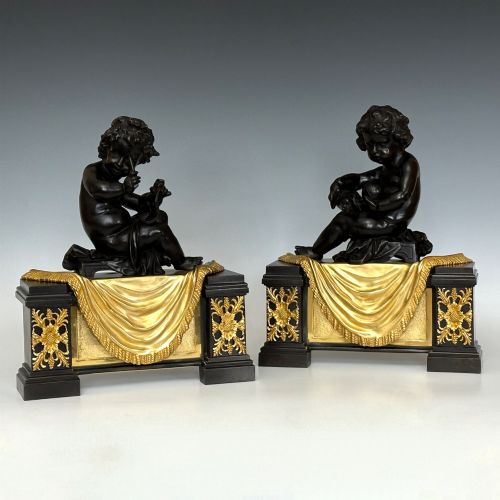
- Chenets
- Decorative firedog irons placed at the front of a fireplace to support logs. In this style, they often feature classical figures and heavy gilt mounts.
- Gueridon
- A small round occasional table supported by a central pillar or columns. These pieces frequently incorporate mahogany and marble tops.
- Boulle
- A form of marquetry using brass and tortoiseshell inlaid into an ebonised carcase. The technique creates intricate patterned surfaces on cabinets and desks.
- Tazza
- A shallow saucer-like ornamental cup raised on a stem and foot. They appear in marble and bronze as centrepieces.
French Empire Style Bronze: Frequently Asked Questions
How do I clean gilt bronze?
Dust gently with a soft dry brush to protect the delicate metallic finish. Avoid chemical polishes that strip the surface layer.
Water and harsh detergents can damage underlying patination and exposed mercury gilding. Professional conservation is advised for heavily tarnished pieces.
Are mantel clocks fully working?
Many retain their original bell-striking movements and come in working order. Mechanical checks confirm if the escapement functions properly.
Some require professional servicing after transit to keep accurate time. Pendulums and keys are standard inclusions when original.
Where should I place candelabra?
Candelabra look best displayed on mantelpieces, sideboards, or large console tables in pairs. Their height adds vertical balance to formal reception rooms.
Keep them away from direct heat sources and strong sunlight. This protects any marble bases and polished wood surfaces underneath.
How do I identify nineteenth century pieces?
Examine the casting quality, fastener types, and material ageing signs on the bronze and marble. Nineteenth-century items often show hand-chased surface details after casting.
Maker stamps on bronze mounts or clock movements provide definitive period markers. Comparing timber construction methods helps confirm the production era.