





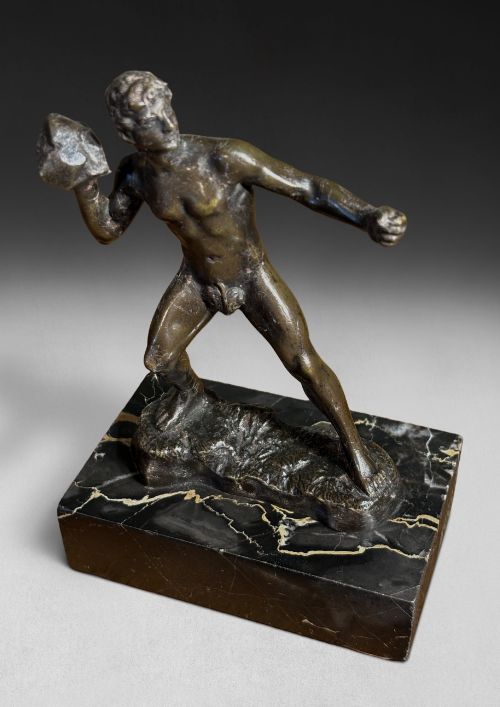

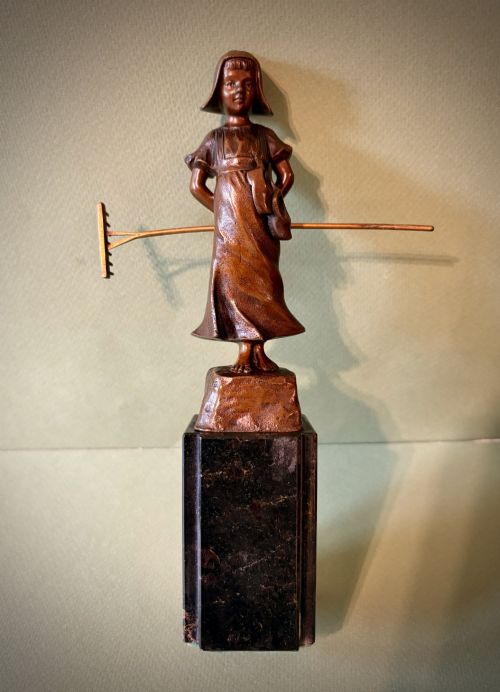
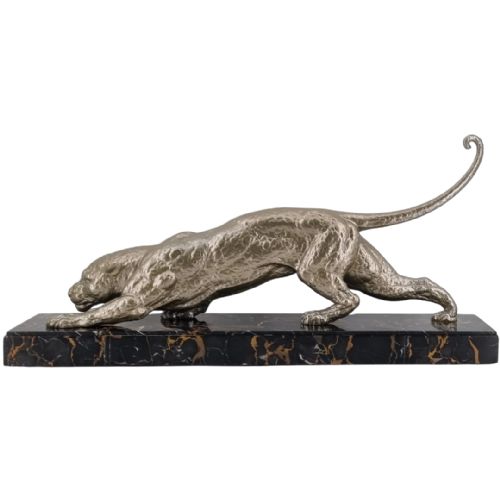
Bronze Figurine on Marble Base
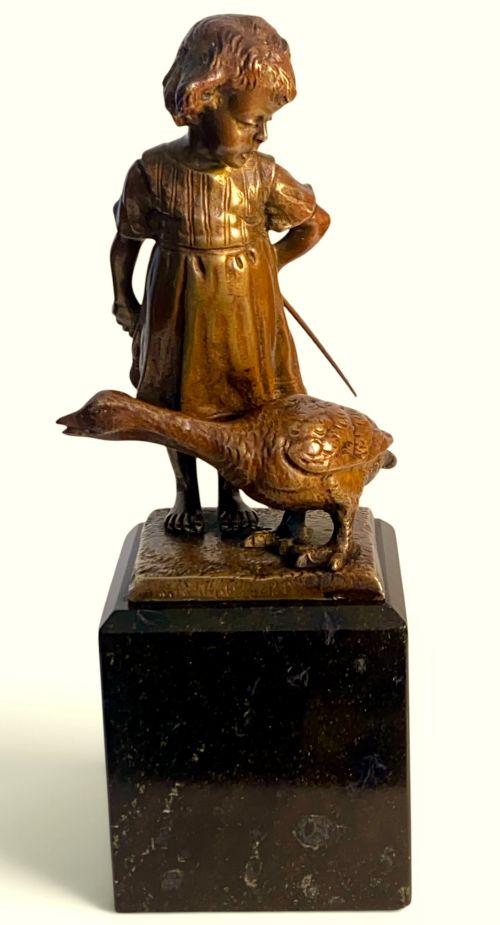
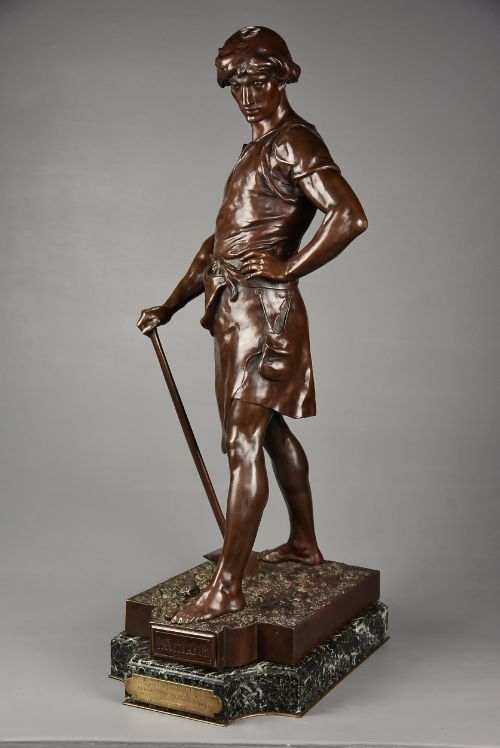
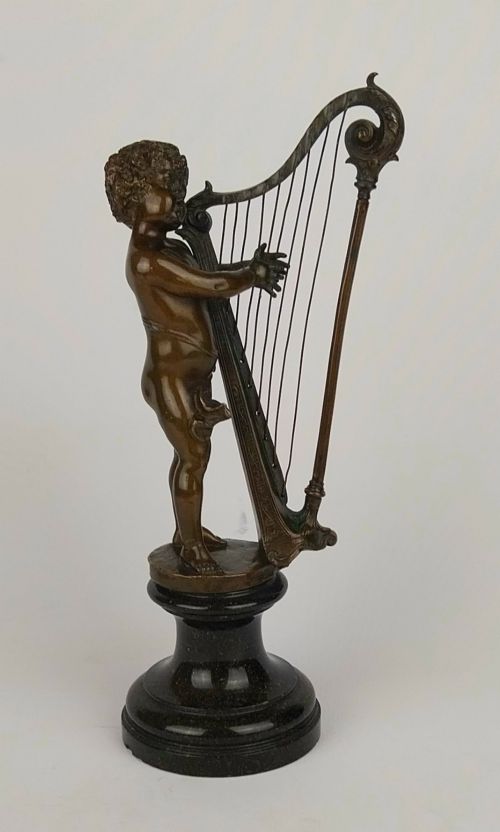
A bronze figurine on marble base brings together heavy metal casting and polished stone, offering tactile weight and distinct period character for a mantelpiece or desk.
Bronze Figurine on Marble Base
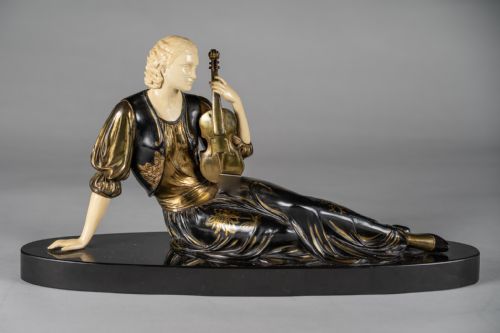
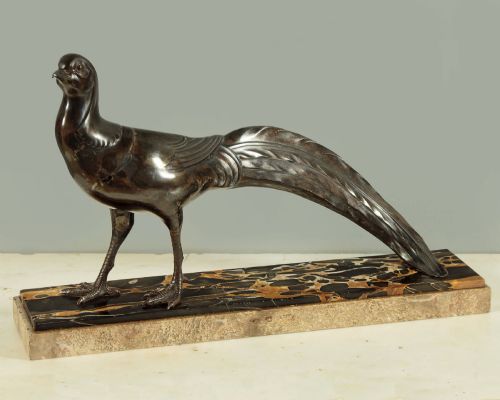
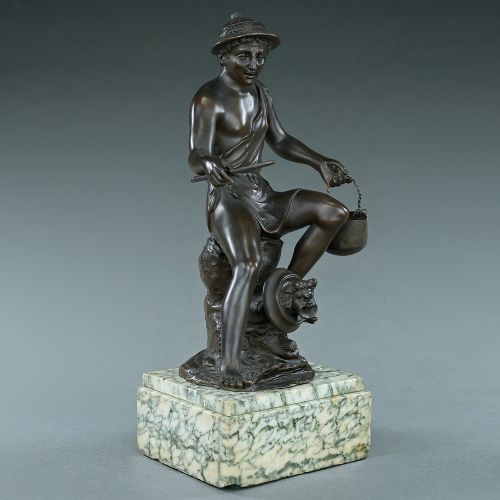
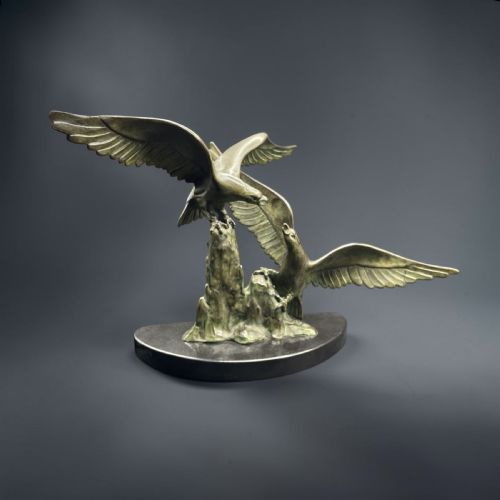
A bronze figurine on marble base covers subjects ranging from classical mythology and animalier studies to Art Deco dancers and theatrical figures. These works span the nineteenth century through the early decades of the twentieth century, with French and Austrian origins appearing frequently.
The combination pairs cast metal figures securely mounted onto heavy plinths, utilising plain rectangular blocks, stepped tiers, or variegated stones such as antico verde.
Buyers encounter both solid cast metal works and patinated metal or spelter alternatives paired with ivorine elements, reflecting the shifts in material availability across different decades.
Materials and casting
Foundries utilised traditional lost-wax casting and sand-casting techniques to shape molten metal into detailed figures, which were subsequently hand-finished with chisels and files.
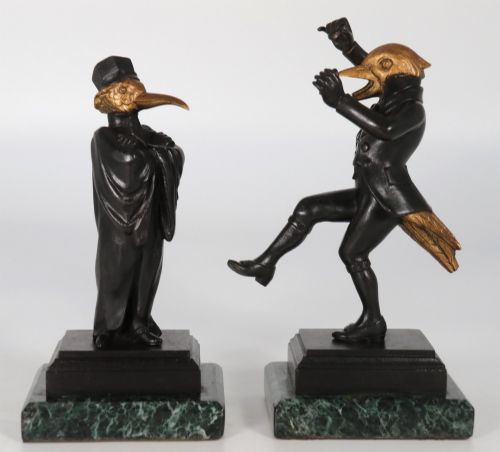
Surfaces received various chemical patinations, cold-painted polychrome finishes, or gilding to create depth and texture on drapery, feathers, and skin.
Mounts were carved from natural stone, polished to a smooth finish, and fitted with threaded rods or pins to anchor the heavier metal sculptures firmly in place.
Bronze Figurine on Marble Base Retail Price Guide 2026
Typical asking prices for bronze figurine on marble base among the pieces listed under this phrase on Sellingantiques today, from the lower quarter to the upper quarter. They describe what is for sale here now, not the wider market.
Several Victorian sculptors devoted immense technical precision to casting surprisingly dignified theatrical birds.
Casting and mounting quality
Superior examples display crisp chiselling on the metal surface that preserves fine details in hair, clothing, and musculature without soft edges from worn moulds.
The relationship between figure and plinth matters greatly, where higher-grade works employ dense, solid marble bases properly proportioned to support the weight of the metal above.
Emile Louis Picault·Guillemin·Bruno Zach·D. H. Chiparus·Hans Müller
The Bronze Figurine on Marble Base Glossary
- Animalier
- A nineteenth-century artistic genre focused on the realistic depiction of animals, particularly predators, horses, and birds in natural poses.
- Patination
- The chemical treatment applied to the surface of metal to produce a specific colouration, ranging from deep brown and green to black.
- Spelter
- A zinc alloy commonly used as a less costly alternative to bronze, frequently painted or patinated to imitate heavier metals.
- Grand Tour
- Souvenirs and small-scale replicas of classical antiquities collected by travellers during educational tours of Europe through the eighteenth and nineteenth centuries.
- Ivorine
- A synthetic material utilised in figure production during the early twentieth century to replicate the appearance of ivory for faces and hands.
Bronze Figurine on Marble Base: Frequently Asked Questions
Are spelter figures considered bronze?
Spelter is a zinc-based alloy rather than copper and tin bronze. It is lighter in weight and softer to the touch.
While both materials were mounted on stone plinths, spelter generally dates toward the later nineteenth and early twentieth centuries.
What is a Grand Tour sculpture?
Grand Tour sculptures are nineteenth-century reductions of famous classical monuments, ruins, and mythological figures collected by travellers.
These pieces usually feature dark patination and rest on distinctive marble plinths representative of Italian quarries.
How do I date an Art Deco piece?
Art Deco figures typically date from the 1920s and 1930s, featuring streamlined silhouettes, stylised drapery, and geometric marble steps.
Look for material combinations like silvered metal paired with multi-tiered contrasting stone bases.