


Bronze Compote Bowl
A bronze compote bowl brings sculptural weight and classic display to a table, combining cast metal with stone, crystal, or porcelain.
Bronze Compote Bowl
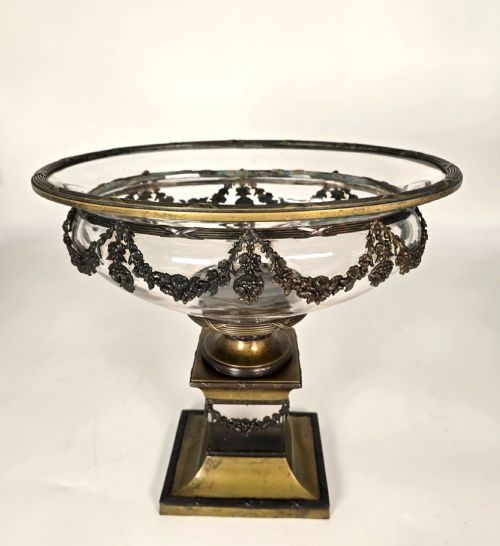
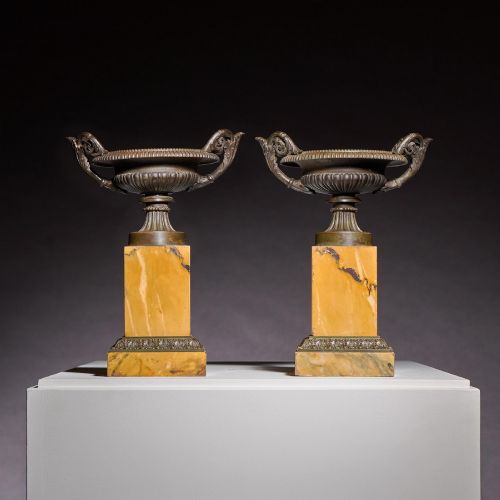
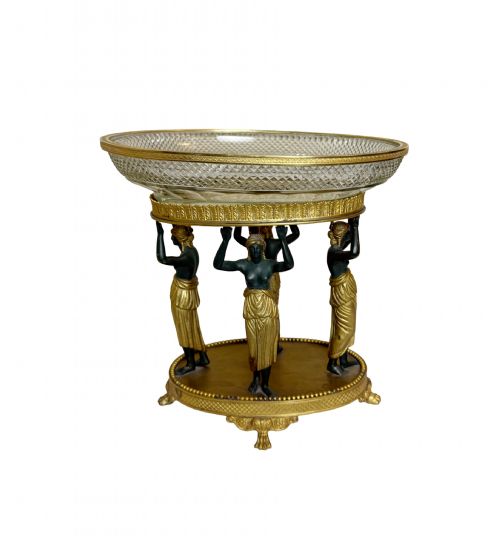
A bronze compote bowl, often catalogued as a tazza or centrepiece, serves as an elevated vessel for display upon a table or sideboard. These pieces combine a stout or slender pedestal base with a shallow or deep dish, frequently designed to draw the eye as a principal decorative focal point.
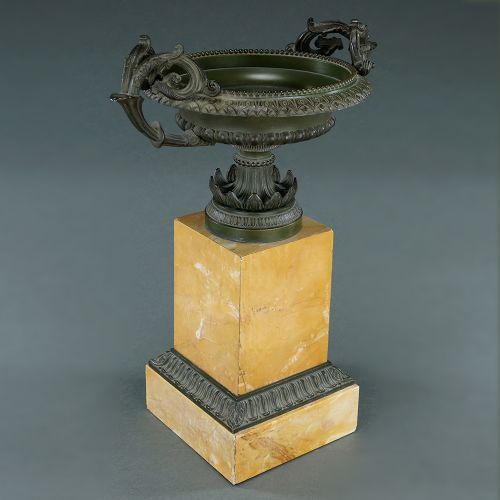
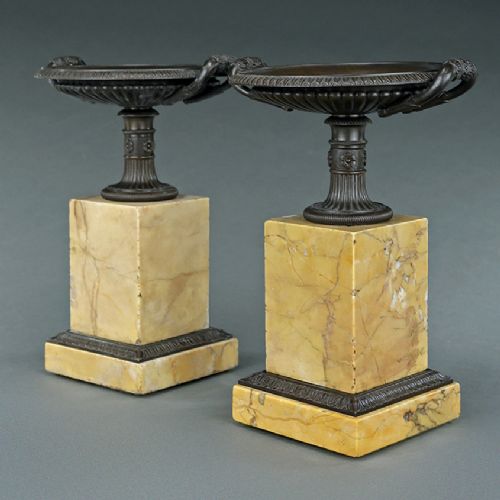
The selections available range from French Empire and Rococo revival models to Grand Tour classical derivations and nineteenth-century Regency designs. Buyers most frequently encounter nineteenth-century French examples featuring cast metal mounts paired with marble, porcelain, or glass.
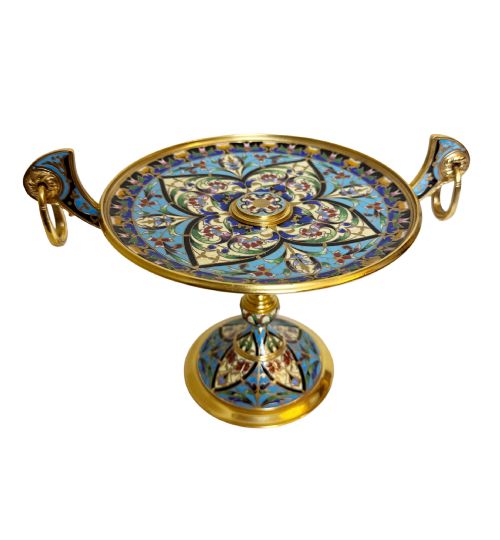
Beyond Western European workshops, the category extends to Japanese Edo period pieces and Chinese Qing dynasty cloisonné enamel vessels that share the elevated pedestal form. These diverse origins provide collectors with options spanning classical revivalism and refined Asian craftsmanship.
Materials and construction methods
Foundry workers utilised bronze, gilt bronze, and ormolu for the structural mounts, pedestals, and figural supports of these vessels. These metals were shaped through casting and chasing, then finished with patination or mercury gilding to achieve contrasting surface textures.
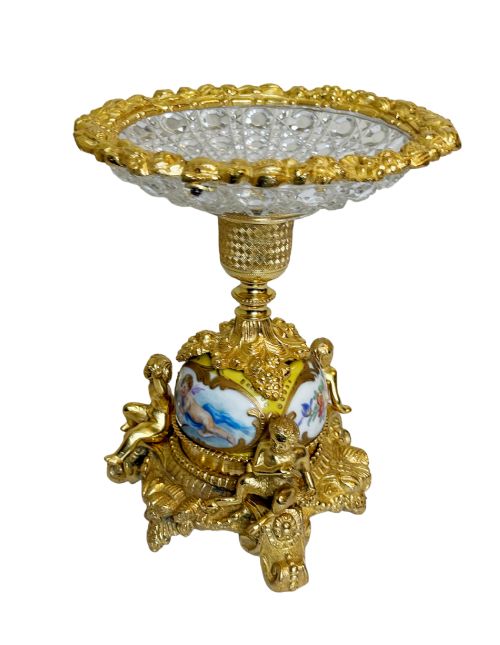
The bowls themselves incorporate a variety of contrasting media, including cut crystal, Paris and Sevres style porcelain, mother-of-pearl, and hardstones such as Siena marble, malachite, and Blue John. Enamel techniques, including champlevé and cloisonné, frequently adorn the surfaces with intricate coloured patterns.
Assembly typically involved mechanical fixings, such as threaded bolts and nuts, to secure the heavy metal mounts to fragile stone bases or delicate glass and ceramic dishes.
The selection includes various forms of elevated display vessels, from tazzas and comports to lidded pedestal bowls.
Factors that define quality
The crispness of the chased detail on figures such as cherubs and mermen separates superior castings from softer, more repetitive production work. Metal surfaces that retain their original fire gilding or nuanced patination demonstrate higher standard workshop output.
The choice and integration of secondary materials dictate the standing of a piece, where flawless cut crystal or genuine hardstones like malachite and Siena marble elevate the overall execution. Superior design relies on the harmonious balance between the heavy metal foot and the delicate dish it supports.
Christofle Paris·Christofle et Cie
The Bronze Compote Bowl Glossary
- Compote
- An elevated vessel with a base and stem, used traditionally for serving fruit or sweets but primarily valued today as a decorative centrepiece.
- Ormolu
- Finely chopped and pounded gold leaf dissolved in mercury, applied to a bronze base and heated to leave a rich gold coating.
- Champlevé
- An enamel technique where troughs or cells are hollowed out of the metal surface and filled with vitreous paste before firing.
- Grand Tour
- A cultural journey undertaken by wealthy young Europeans in the nineteenth century, acquiring classical bronzes and architectural marbles as souvenirs.
Bronze Compote Bowl: Frequently Asked Questions
What is a bronze compote bowl used for?
These vessels were originally designed to hold fruit, sweetmeats, or floral arrangements on formal dining tables and sideboards. Today, they function primarily as decorative centrepieces that add architectural height and sculptural interest to a room.
Because of their shallow form and delicate materials like crystal or porcelain, modern owners usually display them empty or use them to hold decorative objects rather than serving food.
How do you date a nineteenth century tazza?
Dating relies on examining the stylistic clues of the cast mounts, such as the distinct neoclassical restraint of Regency pieces versus the ornate curves of French Rococo revival models. The integration of materials like Siena marble, champlevé enamel, or Sevres style porcelain also points toward specific decades within the nineteenth century.
Maker marks, where present on the bronze or silvered metal, provide a more exact attribution to workshops operating in Paris during the period.
What is the difference between an ormolu and a gilt bronze mount?
Ormolu strictly refers to pieces finished with mercury gilding, a dangerous historical technique that leaves a deep, warm golden lustre on the bronze surface. Gilt bronze is a broader term that can encompass mercury gilding as well as later electrolytic gilding methods.
Both finishes were used extensively on nineteenth-century decorative vessels to provide a rich contrast against patinated bronze and dark stone bases.
How should I care for a bronze and marble centrepiece?
Dust the metal and stone gently with a soft, dry microfibre cloth to prevent the accumulation of grime in the chased details. Avoid using liquid polishes or chemical cleaners, as these can strip historical patination from the bronze or stain vulnerable materials like marble and porcelain.
Keep the piece away from direct sunlight and damp environments to protect delicate elements such as mother-of-pearl insets and enamel work.