


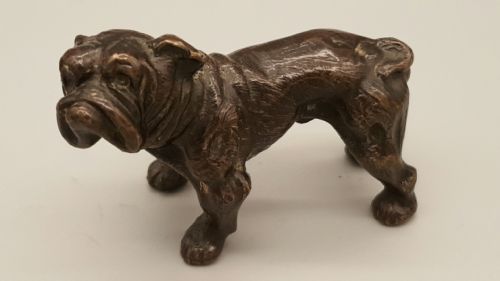
Bronze Animal Paperweight
These heavy, desk-bound castings anchor papers with creatures shaped in metal from the nineteenth and early twentieth centuries.
Bronze Animal Paperweight
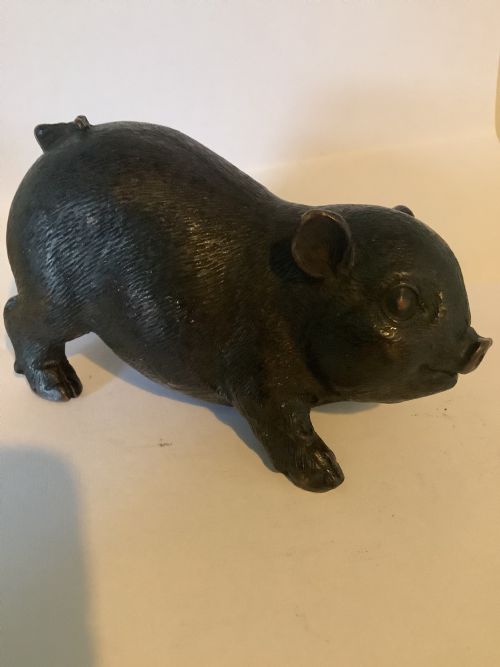
A bronze animal paperweight brings sculptural wildlife to a writing desk, combining utility with decorative metalwork. These pieces capture creatures ranging from domestic dogs and farm animals to exotic wild beasts.
The selections on this page draw heavily from the Animalier movement of the nineteenth century and the whimsical workshops of Vienna. French studios and Austrian foundries dominate the origins here, alongside Chinese and Japanese examples.
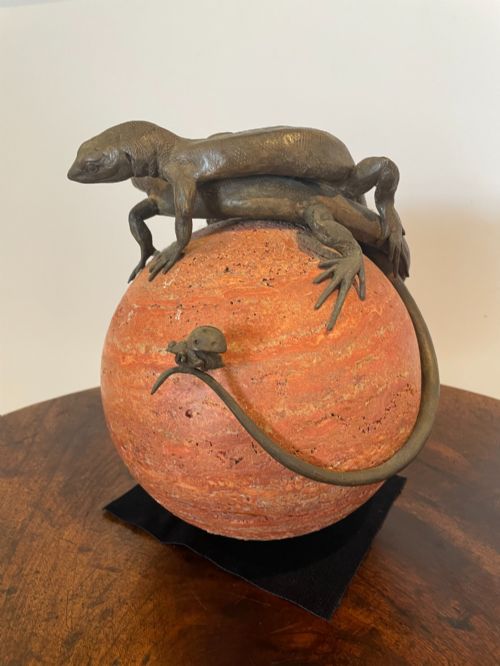
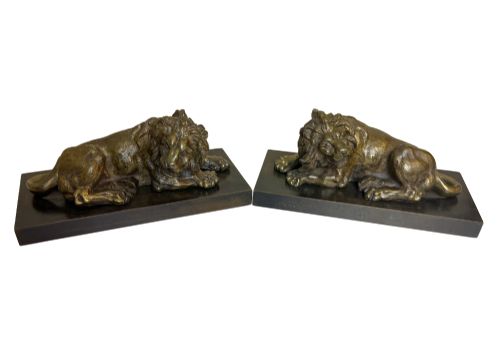
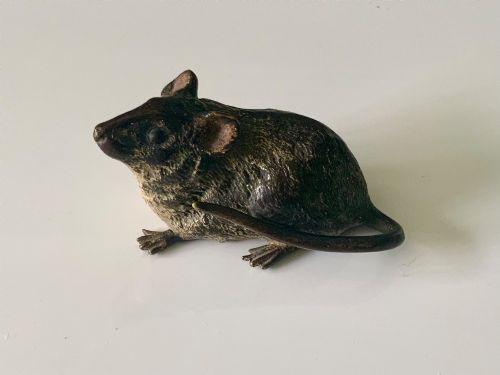
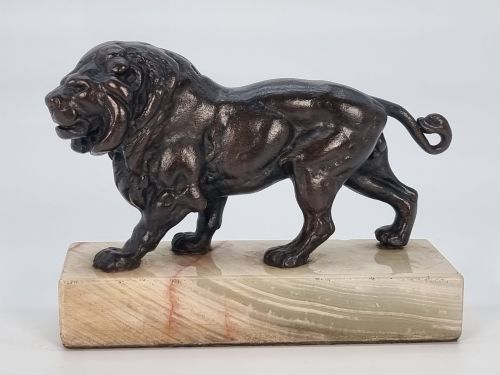
Forms vary from recumbent lions and resting hounds to tiny cold-painted mice and frogs perched on stone bases. Many function as straightforward desk ornaments or small sculptures designed to secure loose papers.
How they were made
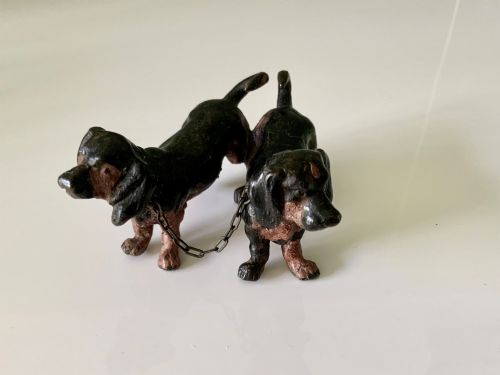
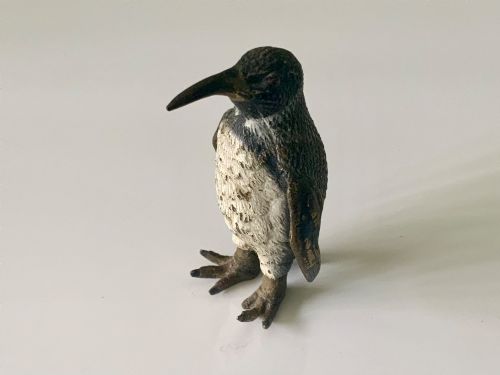
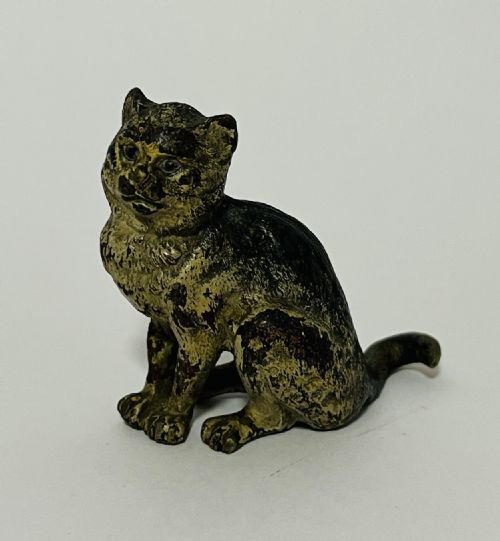
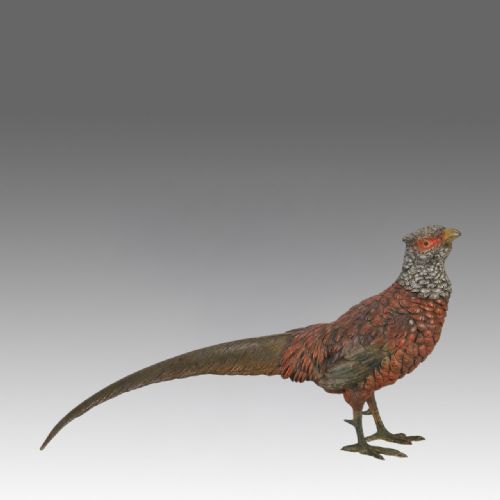
Foundries cast these figures in bronze using traditional methods, often applying patinated, gilt, or silvered surfaces to the metal. Austrian workshops favoured cold-painting, applying layers of polychrome paint over a warm bronze base rather than firing the pigment.
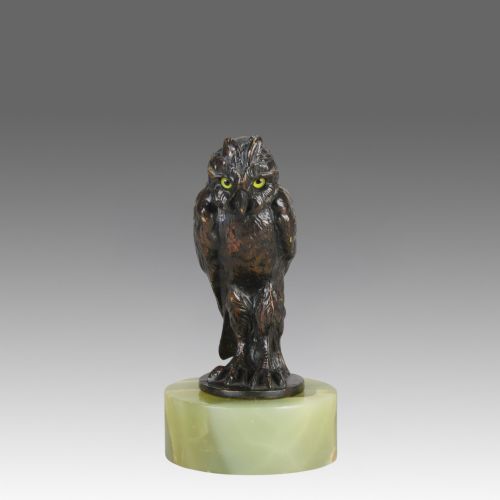
Many smaller studies are mounted directly onto bases of marble, onyx, or green stone to give them weight and stability on a desk. Larger French Animalier casts rely on the dense weight of the bronze itself to hold papers in place.
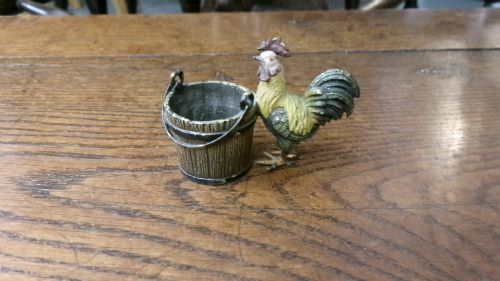
A tiny bucket accompanies a diminutive cockerel, proving that even desk paperweights harbour secret domestic chores.
What varies in quality
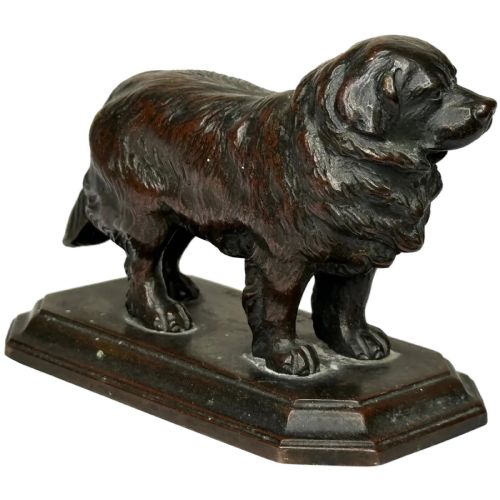
Quality rests upon the fidelity of the casting and the crispness of the chisel work applied after the metal leaves the sand or lost-wax mould. Superior examples retain fine musculature, fur texture, and facial expression without soft edges.
In cold-painted pieces, the preservation and original skill of the hand-applied polychrome paint dictate the standard. Finer specimens display subtle shading and minimal flaking across the surface of the animal.
Franz Bergman·Antoine Louis Barye·Isidore Jules Bonheur·Anna Vaughn Hyatt Huntington·Barbedienne
The Bronze Animal Paperweight Glossary
- Animalier
- A nineteenth-century artistic movement focused on the realistic depiction of animals. Sculptors in this tradition studied living creatures closely at menageries.
- Cold-painted bronze
- A technique where bronze figures are painted with naturalistic polychrome colours without high-temperature firing. This method flourished in Austrian foundries during the late nineteenth and early twentieth centuries.
- Patination
- The chemical treatment or natural weathering applied to the bronze surface to create colour and depth. Common finishes range from deep brown to golden hues.
- Geschützt
- A German term meaning protected or registered, often stamped on Austrian bronzes to indicate a reserved design. It appears frequently on metalwork from Vienna workshops.
Bronze Animal Paperweight: Frequently Asked Questions
What is a cold-painted bronze?
Cold-painted bronze refers to metal sculptures coated in natural oil paints that dry without kiln firing. This technique allowed Austrian makers to render birds and dogs in vivid, realistic colours.
Over decades, handling can cause this delicate surface paint to chip or thin. Collectors prize pieces where the original polychrome finish remains largely intact.
How do I date a bronze animal?
Dating relies on stylistic clues, foundry marks, and the choice of mounting materials. Nineteenth-century French works often display rich patination and distinct signature stamps.
Later pieces from the twentieth century frequently feature bright cold-painted finishes or simplified onyx bases. Comparing the subject matter to known foundry catalogues helps narrow the decade.
Are these figures meant for desks?
Many of these metal animals were cast specifically to serve as functional paperweights on Victorian and Edwardian writing tables. Their substantial weight kept loose correspondence and ledgers secure.
Smaller figures function equally well as cabinet ornaments or miniature desk accessories. Their compact size suits placement among inkwells and blotters.
What distinguishes French Animalier bronzes?
French Animalier bronzes emphasise anatomical accuracy and muscular tension in wild and domestic beasts. Artists observed lions, dogs, and hares directly from life to capture authentic movement.
Foundries like Barbedienne translated these models into heavy, finely chased bronze castings. The resulting sculptures prioritise sculptural form over bright surface decoration.