

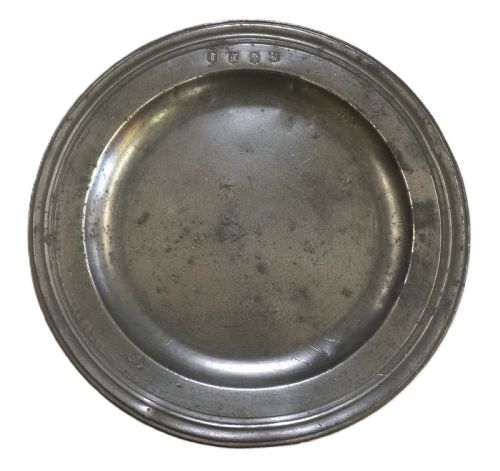


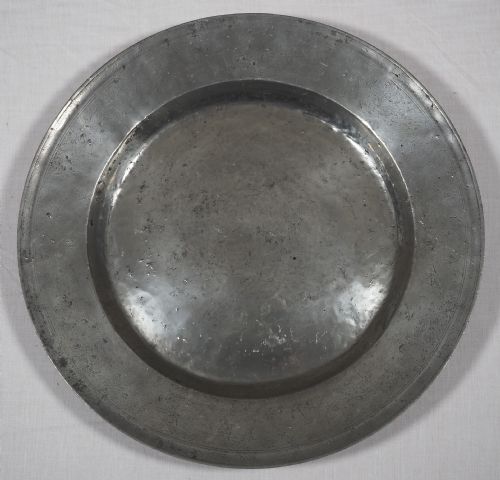


Broad Rim Dish
A broad rim dish is a substantial metal plate with an expansive flat border, designed to display food or adorn a grand table.
Broad Rim Dish
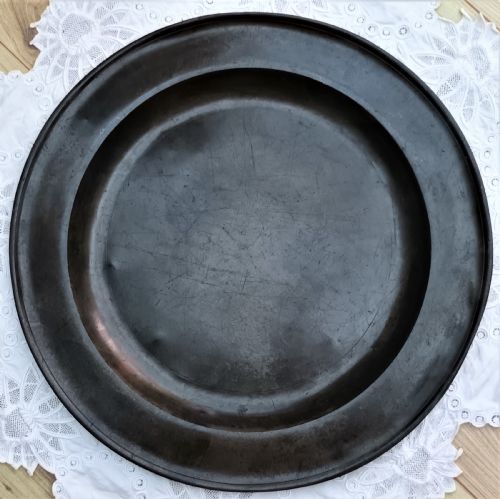
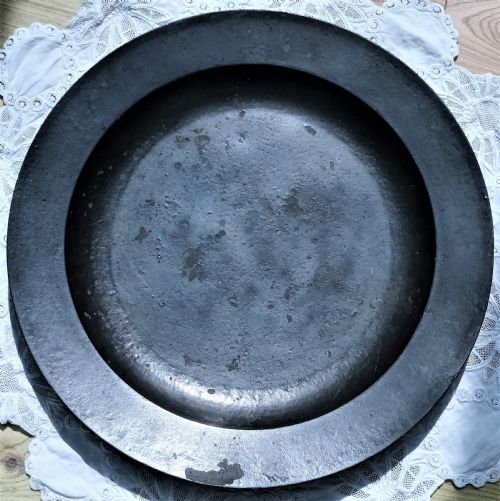
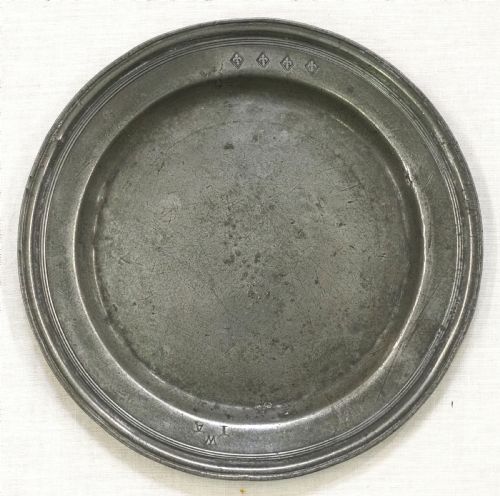
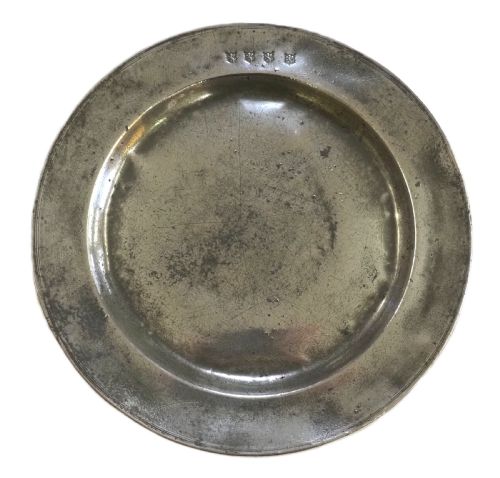
A broad rim dish is a substantial metal plate featuring an expansive flat border, designed for display or dining in historical settings. The pieces seen here span the seventeenth and eighteenth centuries, connecting the Stuart, William and Mary, Queen Anne, and Georgian eras.
Most items on this page belong to the wider families of chargers and platters, reflecting the domestic and ceremonial needs of English country houses. Makers utilised soft metal alloys to shape these wide-bordered vessels, which often measure significantly larger than standard dinner plates.
Buyers will encounter plain surfaces alongside examples decorated with incised rims or multiple reedings. Certain pieces carry family crests or bear the marks of notable pewterers who worked during the late seventeenth and early eighteenth centuries.
How They Were Made
Craftsmen shaped these vessels from pewter, an alloy consisting primarily of tin combined with lead or copper to achieve stability. The metal was cast into flat sheets or basic plate forms before being hammered extensively to harden the alloy and shape the broad brim.
Beaters and finishers turned the surfaces on lathes to smooth tool marks and polished the metal to a subdued lustre. Edges were finished with single or multiple reeded lines, or marked with incised decoration cut directly into the surface.
Broad Rim Dish Retail Price Guide 2026
Typical asking prices for broad rim dish among the pieces listed under this phrase on Sellingantiques today, from the lower quarter to the upper quarter. They describe what is for sale here now, not the wider market.
Listings on this page span the seventeenth century and the eighteenth century, featuring pewter vessels in styles from Charles II to Georgian.
What Varies in Quality
Quality in a broad rim dish rests upon the crispness of the maker's touchmarks stamped into the metal and the overall balance of the wide border. Pieces hammered all over demonstrate a higher degree of artisan labour than simpler cast surfaces.
The survival of original surface patination and the legibility of engraved heraldic crests distinguish superior examples from heavily polished or later altered pieces.
John Duncomb·Samuel Smith·John Trapp II·John Tubb·Robert Moulins II·Lawrence Dyer·Thomas Haward·Thomas Powell·Edward Leapidge I
The Broad Rim Dish Glossary
- Charger
- A large ornamental plate or platter, typically placed beneath smaller courses or displayed upright on a dresser. These vessels formed the centrepiece of formal dining during the seventeenth century.
- Reeding
- Parallel raised moulding encircling the rim of a plate or dish. Multiple reedings added both structural rigidity and decorative depth to wide borders.
- Touchmark
- The private stamp or hallmark impressed by a pewterer to guarantee the purity of the metal. These marks enable modern collectors to identify individual makers and workshops.
- Pewter
- A malleable metal alloy composed mainly of tin, traditionally used for tableware. The exact mixture determined the weight and durability of the finished dish.
- Incised rim
- A border decorated by lines cut directly into the metal surface rather than raised in relief. This technique created subtle geometric patterns around the perimeter of the dish.
Broad Rim Dish: Frequently Asked Questions
What is a broad rim dish used for?
These large vessels served as centrepieces for serving meat or displaying wealth on dining tables in English country houses.
In modern interiors, they function well as decorative wall plates or table centerpieces that showcase historic metalwork.
How do I date a pewter dish?
Dating relies on stylistic clues such as the width of the border, the presence of reeding, and the format of the maker's touchmark stamped into the metal.
Earlier examples from the seventeenth century tend to feature wider rims and heavier hammer marks compared to eighteenth-century equivalents.
Can I use antique pewter for dining?
Historic pewter often contains lead and other elements that make modern food use inadvisable, particularly with acidic foods.
These pieces are best preserved as decorative items for display rather than active tableware.
What does hammered all over mean?
The phrase describes a manufacturing technique where the artisan hammered the entire surface of the metal to increase its density and strength.
This labor-intensive process leaves subtle facets across the metal that catch the light differently than smooth cast plates.