



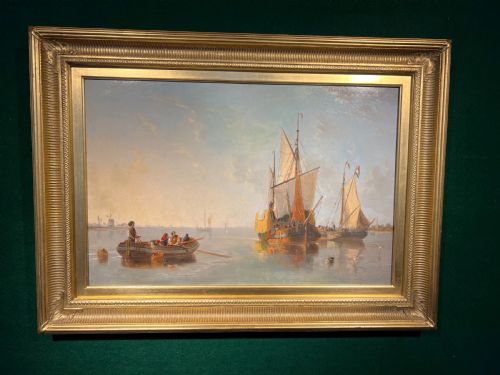
British Maritime Oil Landscape
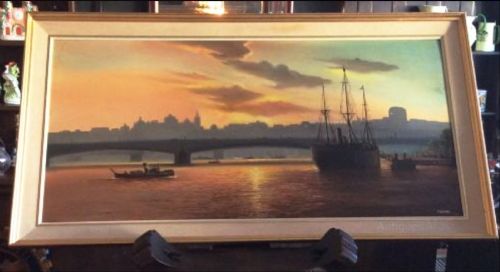
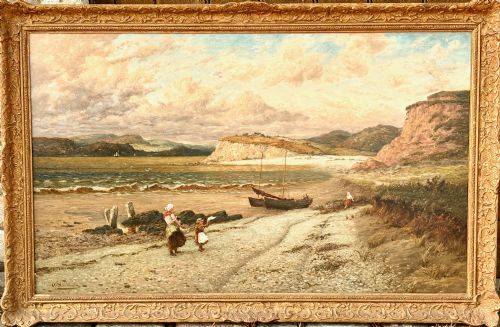
British maritime oil landscape paintings capture coastal waters, busy rivers and harbour scenes from the nineteenth and twentieth centuries.
British Maritime Oil Landscape
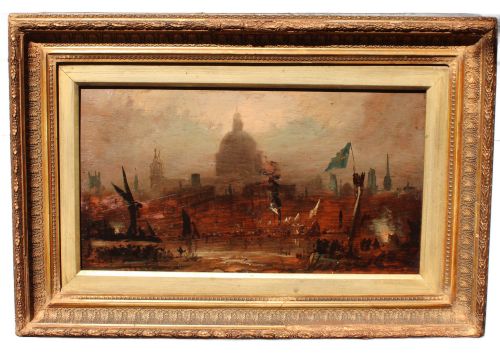
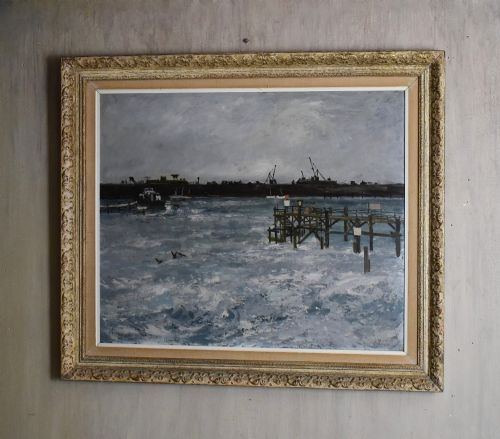
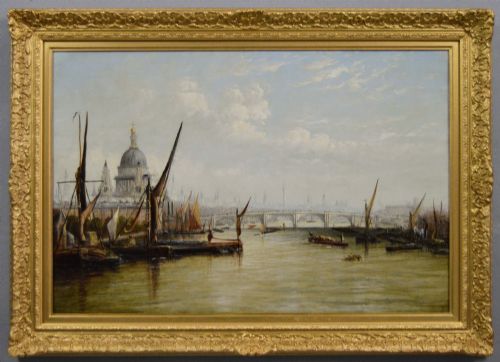
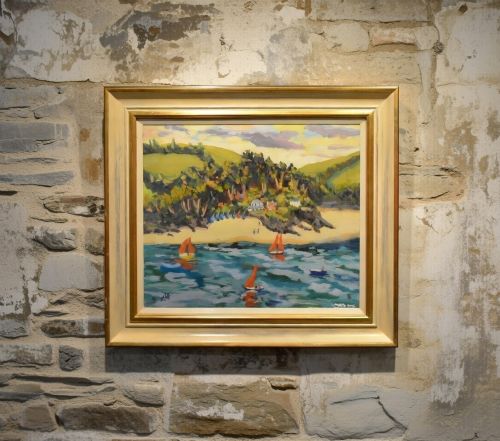
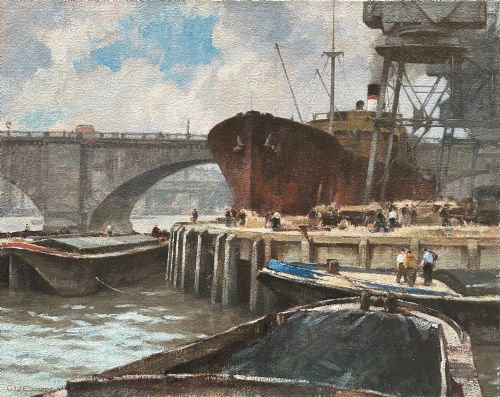
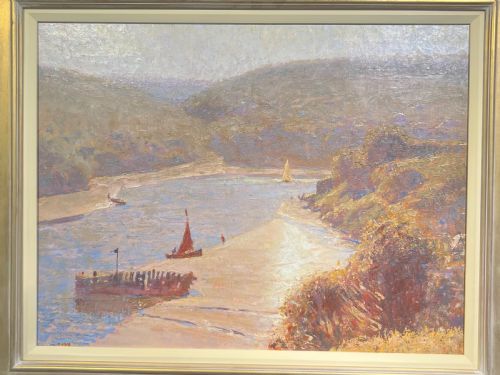
A british maritime oil landscape combines coastal topography, river views and harbour scenes executed in oil medium by artists working across the nineteenth and twentieth centuries. These works range from intimate studies of estuaries and village ports to large topographical panoramas of the River Thames in London.
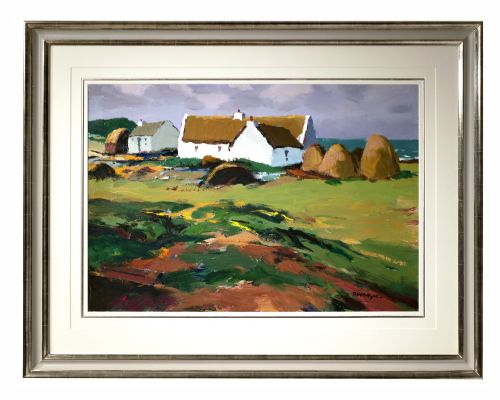
The material forms on this page include oil on canvas and oil on board, frequently housed in giltwood frames that reflect the aesthetic tastes of Victorian, Edwardian and mid-century periods. Buyers will encounter both named academic painters and anonymous regional works belonging to British Impressionism, Victorian marine painting and Modern British styles.
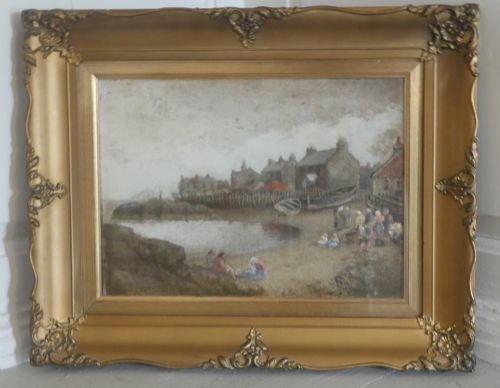
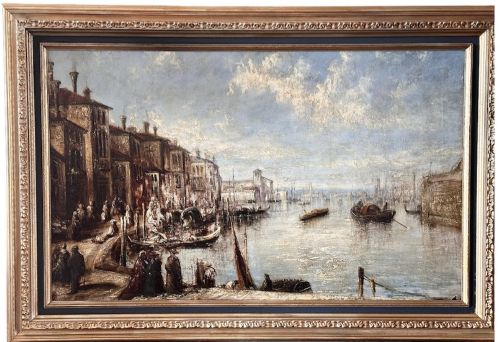
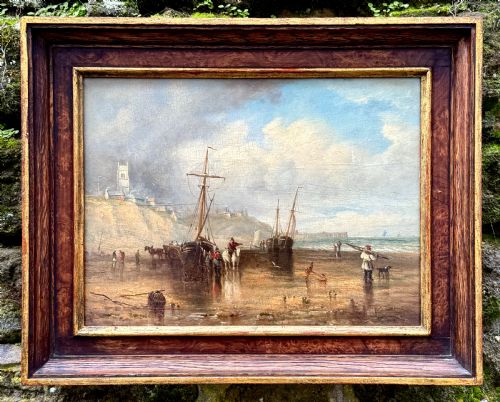
Subjects stretch from northern fishing stations and southern Cornish harbours to Venetian canals and tidal estuaries filled with barges and sailing craft. This mix provides a comprehensive record of maritime life, coastal weather and industrial river traffic across multiple generations.
Materials and technique
Artists built these compositions using oil paint applied to stretched canvas or rigid board supports, sometimes employing thick impasto to create textured surfaces on water and cliffs. Pigments were layered to capture changing light conditions, moonlight effects and the turbulent movement of coastal seas.
Support materials range from traditional woven canvas to wood panels, often paired with carved or moulded giltwood frames that complement the painting style. Technical execution spans the precise academic draftsmanship of the nineteenth century and the looser brushwork associated with British Impressionism and mid-century modernism.
Several canvases capture horses assisting with coastal smuggling operations, proving that nineteenth-century contraband required heavy lifting.
Assessing quality
Quality rests upon the artist's ability to render light, atmosphere and spatial depth within the marine environment, distinguishing skilled observation from mechanical reproduction. Stronger examples demonstrate confident brushwork, particularly in the treatment of shifting water, skies and architectural detail along river banks.
The handling of perspective and the integration of figures, vessels and coastal topography elevate certain canvases above standard topographical records. Additionally, the condition of the original paint layer and the presence of a period-appropriate giltwood frame contribute to the overall integrity of the piece.
Kenneth Cozens·Peter Brannan·Francis Moltino·Bernard Benedict Hemy·Thomas Creswick·Cyril Walduck Edwards·Donald McIntyre·Cecil Allan Mould·John Wilson Carmichael·Abraham Cooper·Thomas Hodgson Liddell·William Henry Williamson·John Holland·Charles William Wyllie·Edward Matthew Elliott·James Fry·Stanley Leader·Edward Henry Eugene Fletcher·William Greaves·Edward Seago·William Pitt·George Dodgson Callow·Claude Thomas Stanfield Moore·Alfred Henry Vickers·William Lambert Bell
The British Maritime Oil Landscape Glossary
- Impasto
- Paint applied thickly to a canvas or board, leaving visible brush or palette knife marks that catch the light. This technique adds tactile dimension to representations of rough seas and rocky coastal surfaces.
- Giltwood
- Wood carved and covered with a thin layer of gold leaf or metallic gilt, commonly used for traditional picture frames. These frames help date the artwork and protect the edges of the canvas.
- Marine painting
- Artwork depicting ships, shipping, naval engagements or coastal views. This genre encompasses both commercial harbour scenes and dramatic open sea storms.
- British Impressionism
- A painting style developed in Britain focusing on light, fleeting moments and loose brushwork rather than rigid academic finish. Works in this group often feature outdoor coastal and river settings.
- Estuary
- The tidal mouth of a large river where the tide meets the current, frequently featured in nineteenth-century London Thames views. These locations provided artists with complex arrangements of shipping and bridges.
British Maritime Oil Landscape: Frequently Asked Questions
What subjects do these maritime paintings show?
These works depict coastal vistas, busy river ports, tidal estuaries, fishing vessels and urban waterfronts such as the River Thames in London. Artists recorded both tranquil rural harbours and dramatic coastal weather across Britain and beyond.
Scenes range from nineteenth-century sailing barges near industrial bridges to quiet twentieth-century Cornish coves and moonlit seascapes executed by regional British schools.
How do I identify the period of a painting?
Dating relies on a combination of costume, vessel types, framing styles and the specific handling of paint characteristic of movements like Victorian marine art or mid-century impressionism. Signatures, artist dates and exhibition records further narrow the timeframe of creation.
Many works carry biographical details or gallery labels on the reverse of the canvas or board that establish the exact decade in which the artist was active.
Where were these maritime scenes typically painted?
Painters worked along the extensive coastline of Britain, focusing on active fishing ports in Cornwall, Yorkshire and Scotland, as well as major tidal rivers like the Thames. Specific locations include St Ives, Poole Harbour, Venice and various London bridges.
Artists frequently travelled to established artist colonies or coastal villages to capture direct observations of maritime commerce and local shipping traffic.
How should I care for an oil painting on canvas?
Preservation involves keeping the artwork away from direct sunlight, high humidity and sudden temperature fluctuations that can cause the canvas to slacken or the paint to crack. Gentle dusting with a soft, dry brush keeps the surface clean without disturbing the pigment.
Original giltwood frames require careful handling and should be inspected periodically to ensure the canvas remains secure within the rebate.