
British Figurative Artwork
British figurative artwork captures people in oil and canvas across centuries of domestic and social life.
British Figurative Artwork
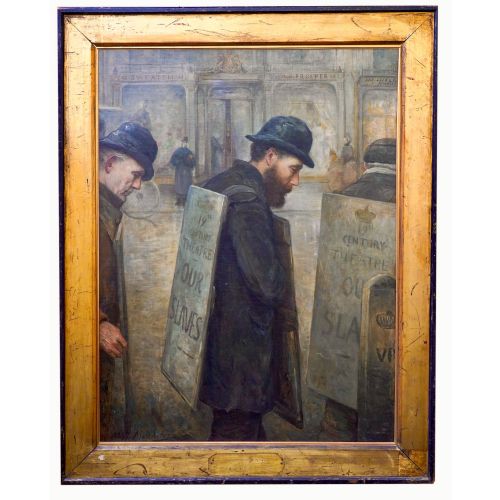
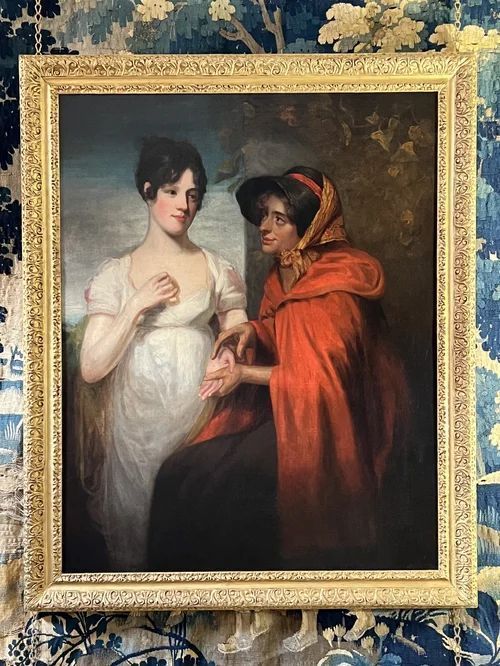
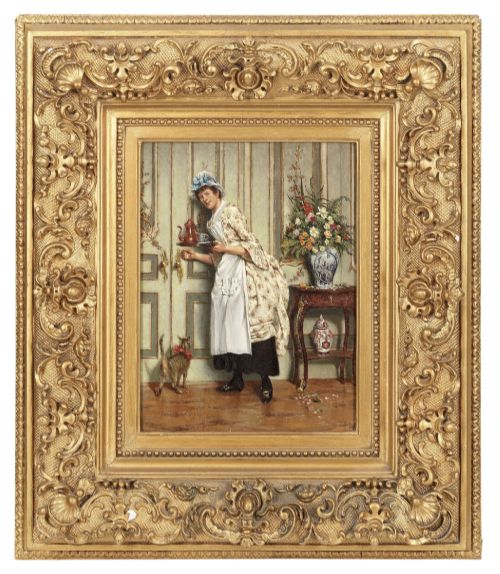
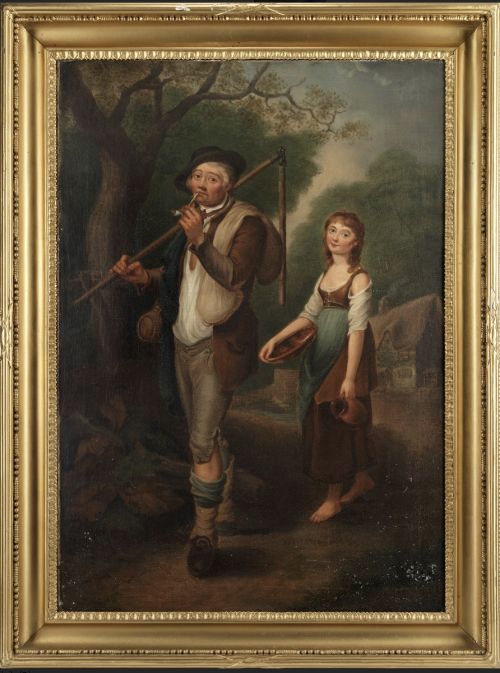
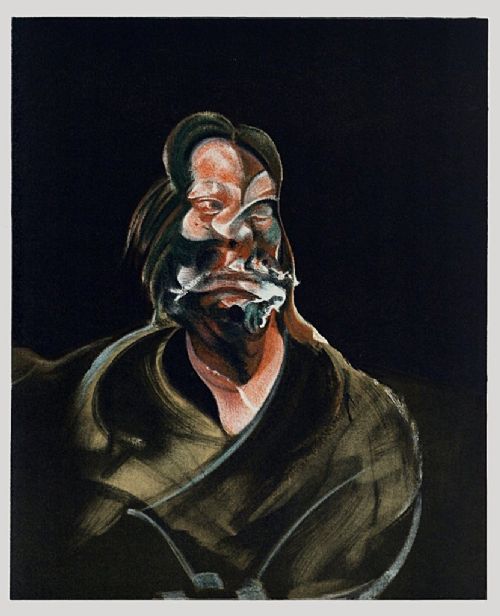
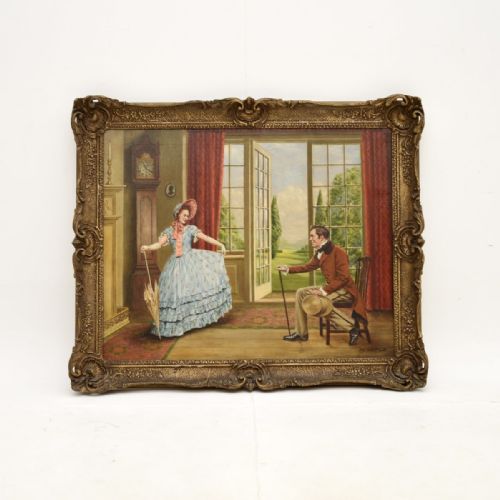
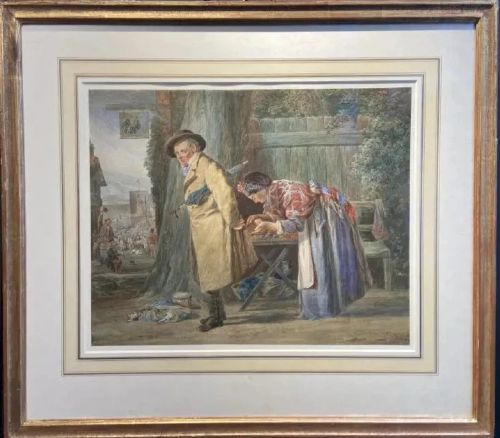
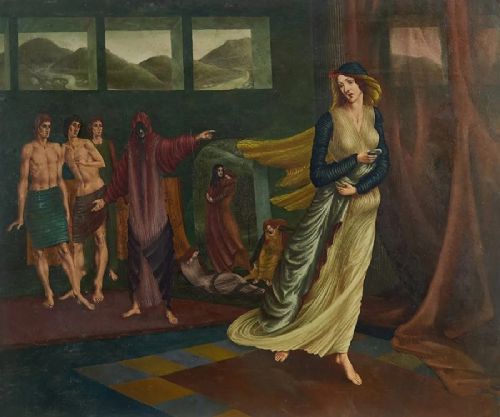
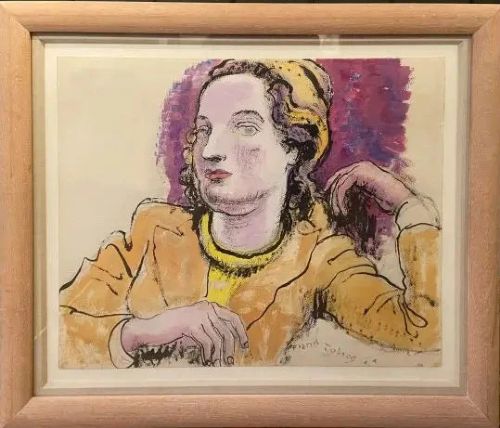
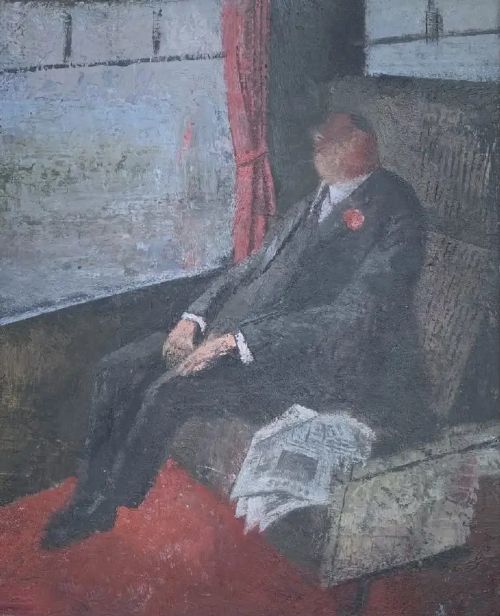
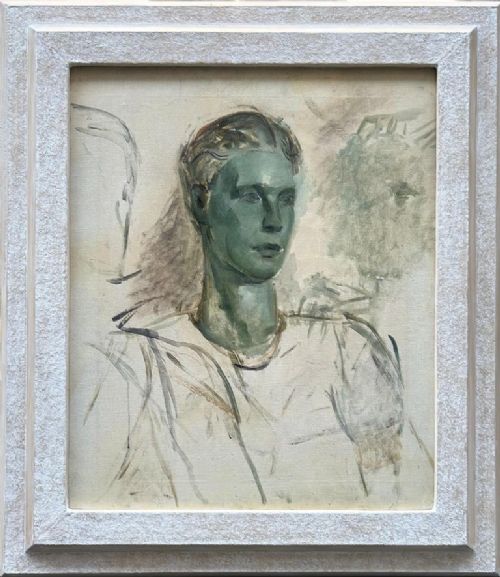
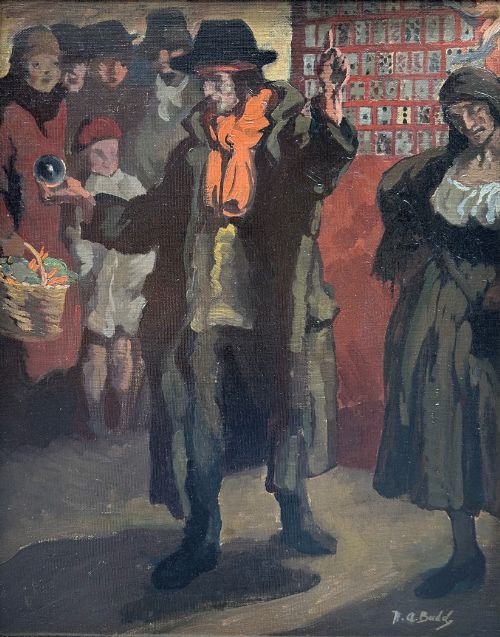
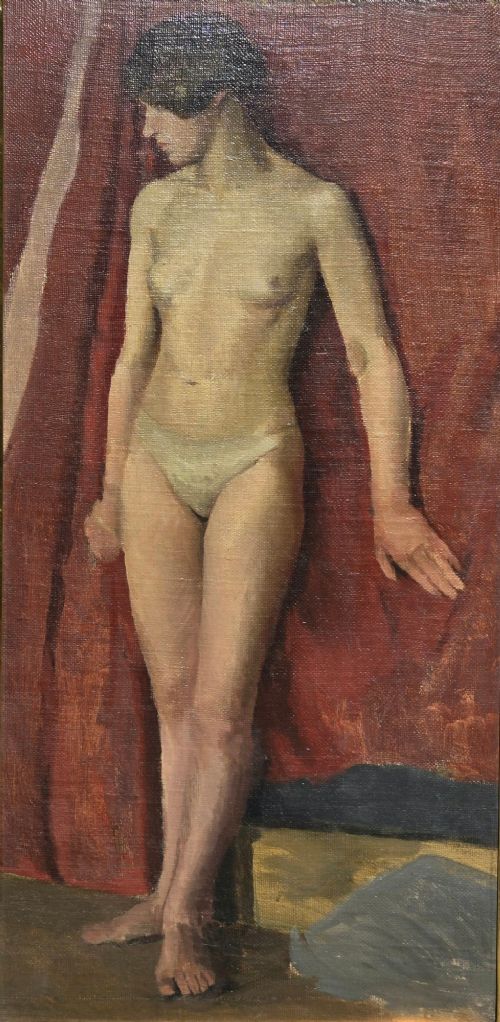
When you search for british figurative artwork, you are looking at paintings and portraits depicting people, from Victorian genre scenes to mid-century compositions. The selection centres heavily on nineteenth-century oil paintings and twentieth-century modernist pieces.
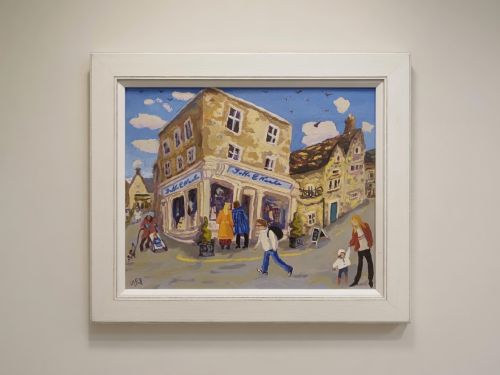
You will encounter framed canvases and panels showing domestic interiors, labourers, children, and individual sitters. These works reflect the changing styles of British art from the Georgian era through to the post-war period.
How they were made
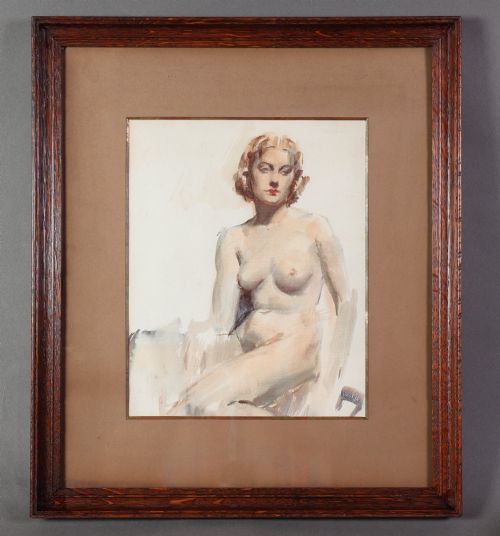
Artists painted primarily in oil on canvas or wooden panel, sometimes working with watercolour and lithography on paper. Giltwood and gesso frames frequently house these pieces, showing period framing techniques.
Brushwork ranges from the tight, descriptive realism of Victorian genre painters to the looser, more expressive handling seen in mid-century British works.
Among the painted company, a mischievous goat plays panpipes while a snooker game unfolds in quiet mid-century oil.
What varies in quality
Quality rests in the confidence of the draughtsmanship and the psychological depth of the human subject. Masterly handling of light and shadow distinguishes an engaging portrait from a stiff likeness.
The integrity of the original surface, the harmony of the composition, and the appropriateness of the period frame elevate certain examples above standard decorative works.
Felix Stone Moscheles·John Opie·Stephen Samuel Lewin·Thomas Barker of Bath·Francis Bacon·Alfred Lyndon Grace·Lucy Pratt·Joseph H Barnes·Francis Plummer·Frank Dobson·James Stroudley·Herbert Ashwin Budd·Winifred Rymer·William Jones of Bath·Charles James McCall·Percy Lancaster·Philip Naviasky·Lilian Colbourn·Ronald Ossory Dunlop·Charles Edward Wilson·Harry Brooker·Byam Shaw·Margaret Maitland Howard·Harry Freckleton·Allan Douglas Davidson
The British Figurative Artwork Glossary
- Genre painting
- A pictorial representation of scenes from everyday life, typically depicting ordinary people at work or leisure. These works offer social history alongside artistic merit.
- Oil paint
- A slow-drying paint made by mixing pigments with a drying oil, most commonly linseed oil. It allows for rich blending and deep colour saturation.
- Gesso
- A paint mixture consisting of a neutral binder mixed with chalk, gypsum, or pigment used as a preparation for wooden panels or canvas frames. It provides a smooth surface for gilding and painting.
- Lithography
- A planographic printing process based on the repulsion of oil and water, used to produce prints from a flat stone or metal plate. It became popular for reproducing detailed illustrative works.
- Mid-Century British
- A design and art movement spanning the middle decades of the twentieth century, marked by a shift towards modernism and simplified forms.
British Figurative Artwork: Frequently Asked Questions
What is British figurative artwork?
It encompasses paintings, portraits, and prints created by British artists focusing on human subjects. The styles range from nineteenth-century realism to twentieth-century modernism.
These pieces document changing social attitudes, fashions, and domestic scenes through the centuries.
How do I identify the period of a painting?
Look at the stretcher bars, canvas weave, framing style, and the clothing or hairstyles of the sitters. Signatures and exhibition labels on the reverse also offer clues.
Comparing the painting technique to dated works by similar schools helps narrow down the decade.
Are these works original?
The selection includes original oil paintings on canvas and panel, alongside period watercolours and vintage lithographs. Each listing specifies the exact medium used by the artist.
Original works bear the direct brushstrokes and hand of the maker from the stated period.