
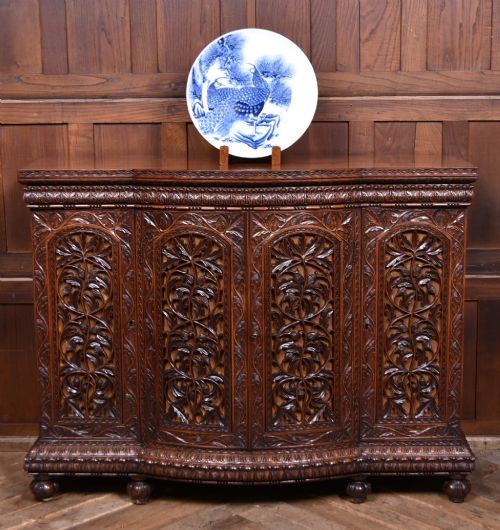

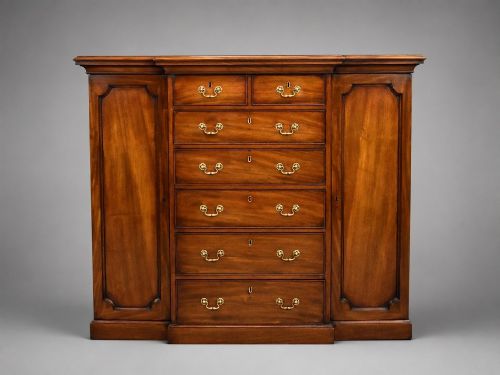
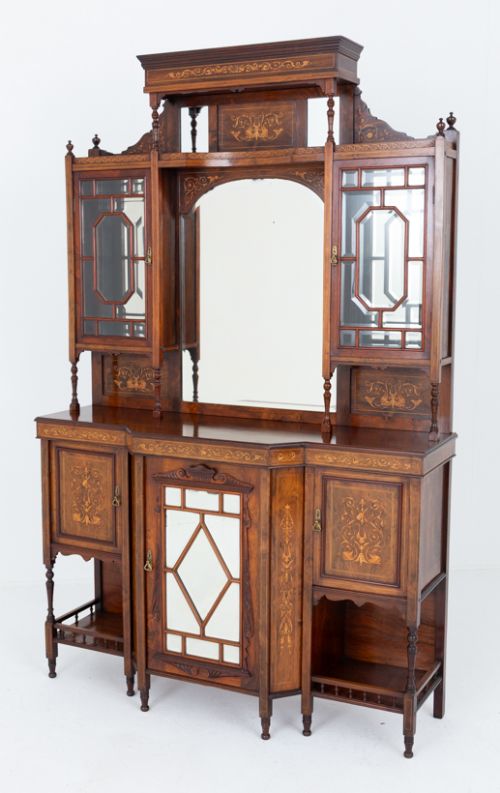


Breakfront Chiffonier Cabinet
These breakfront chiffonier cabinet pieces offer substantial storage with a characteristic stepped facade, bringing nineteenth-century utility and presence into modern rooms.

Breakfront Chiffonier Cabinet
A breakfront chiffonier cabinet combines the low-profile storage of a chiffonier with a prominent central or projecting section characteristic of breakfront design. Buyers searching for a breakfront chiffonier cabinet encounter nineteenth-century pieces spanning the Regency, William IV, and Victorian periods.
The form appears in various configurations, including side cabinets, credenzas, and bookcase hybrids. Rosewood and mahogany dominate the structural timber choices across these decades.
Most examples date from the Victorian era and the Regency period, featuring structural variations from simple two-door carcases to multi-door pedestals with mirror backs.
Materials and Technique
Cabinet makers utilised dense exotic timbers such as rosewood, padouk, and mahogany as foundations for fine cabinet work. Marquetry, brass inlay, and elaborate carving define the decorative surface treatments.
Glass panels, mirrored backs, and marble surfaces appear frequently, supported by Ormolu mounts and turned columns. The construction relies on traditional joinery methods suited to heavy timber carcases.
The archive records multiple variations combining bookcase tops with breakfront chiffonier cabinet bases.
Evaluating Quality
The standard of execution separates workshop production from standard commercial output. Refined brass inlay, intricate marquetry, and choice burr walnut veneers indicate higher ambition.
Attribution to documented makers elevates the standing of a piece significantly. The integrity of original glass, marble, and timber surfaces dictates the ultimate standing of any example.
Gillow·Lamb of Manchester·Edwards and Roberts·Howard and Sons·Holland and Sons
The Breakfront Chiffonier Cabinet Glossary
- Breakfront
- A piece of furniture where the central section projects forward from the flanking wings. This architectural arrangement creates depth and shadow across the facade.
- Chiffonier
- A low sideboard or cabinet, traditionally fitted with shelves or drawers beneath. It evolved during the nineteenth century into a primary living room storage piece.
- Marquetry
- Decorative patterns formed by inserting pieces of contrasting wood, ivory, or shell into a veneered surface. Craftsmen used this technique to create elaborate floral or geometric designs.
- Ormolu
- Gilt bronze mounts applied to furniture for decorative effect. The technique involves coating brass or bronze with a gold amalgam.
- Padouk
- A heavy, durable tropical hardwood with a reddish hue used in fine cabinet making. It resists decay and takes a high polish.
Breakfront Chiffonier Cabinet: Frequently Asked Questions
What is a breakfront chiffonier cabinet?
A breakfront chiffonier cabinet is a low nineteenth-century storage piece featuring a projecting central section. It combines the surface utility of a sideboard with enclosed cabinet space.
These items served primarily in dining rooms and parlours for displaying porcelain and storing linens or silverware.
How do I date a chiffonier cabinet?
Dating relies on timber choices, decorative motifs, and overall architectural style. Regency and William IV pieces often display clean classical lines with rosewood and brass inlay.
Victorian examples frequently incorporate heavier carving, mirror backs, and walnut veneers as aesthetic preferences shifted later in the century.
Were these cabinets used in dining rooms?
These cabinets functioned as principal serving and storage furniture in nineteenth-century dining spaces. The interior shelving accommodated tableware, while the top surface held serving dishes.
Library and parlour placements also occurred, particularly for glass-fronted display variants holding books or collections.
How do I care for rosewood furniture?
Rosewood requires stable humidity and protection from direct sunlight to prevent timber movement and fading. Dusting with a dry, soft cloth maintains the polished surface without chemical buildup.
Occasional applications of appropriate wax preserve the natural oils within the dense grain of antique hardwoods.