

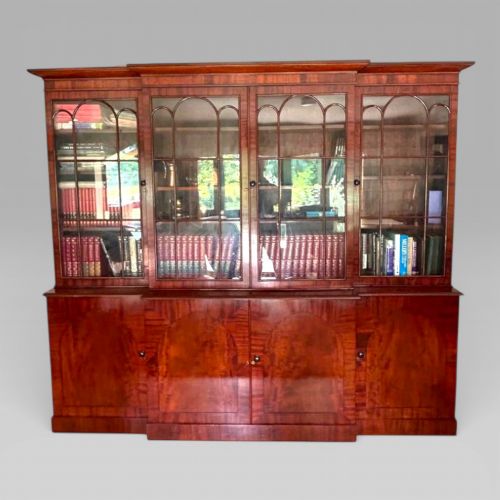
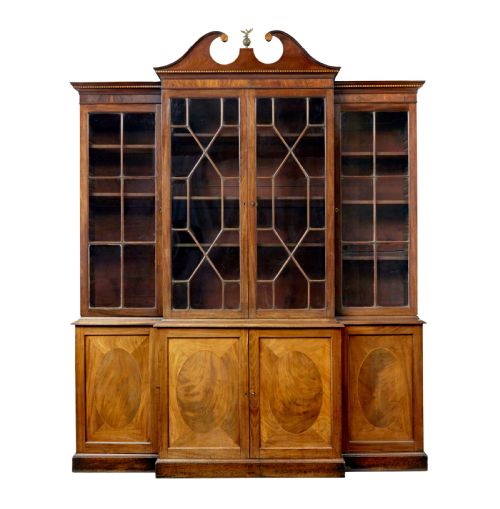

Breakfront Bookcase Cupboard
A breakfront bookcase cupboard projects forward in its central section, providing generous storage and display space for serious libraries.
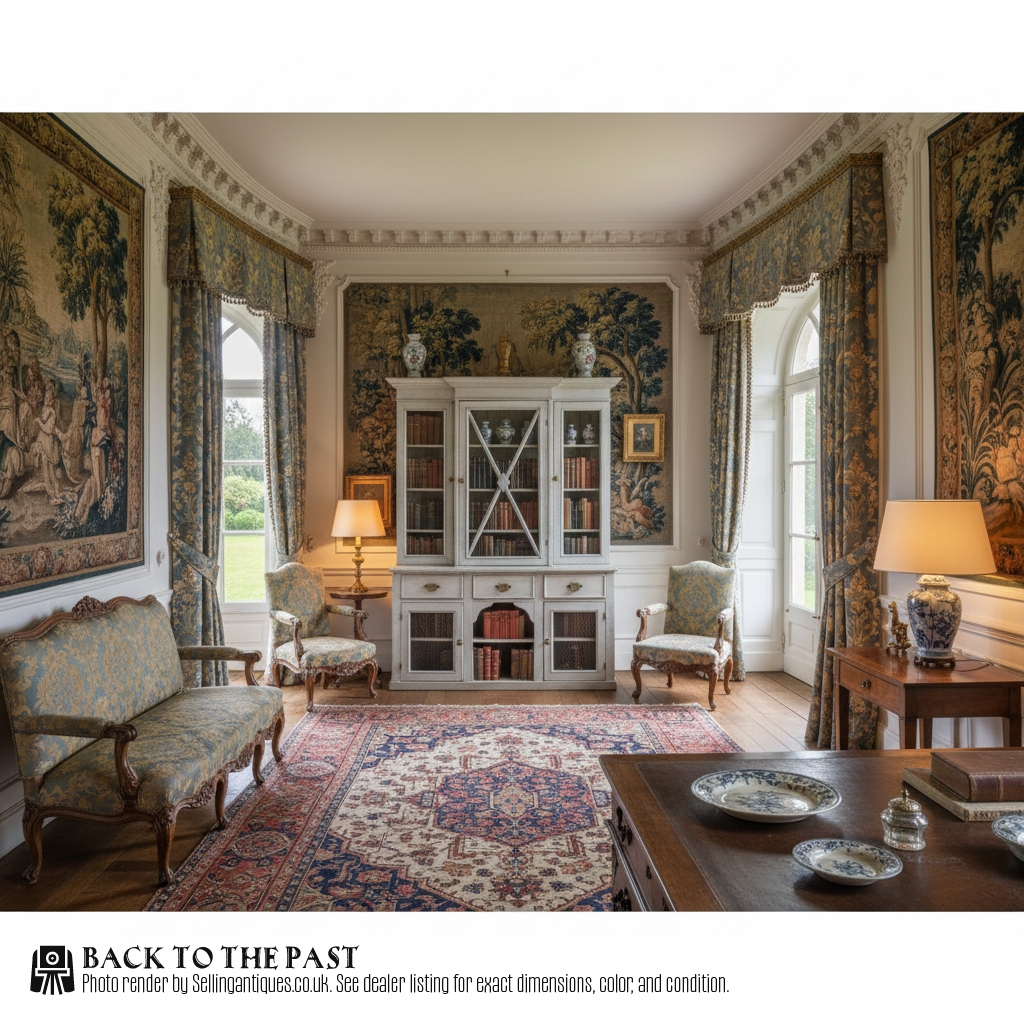
Breakfront Bookcase Cupboard
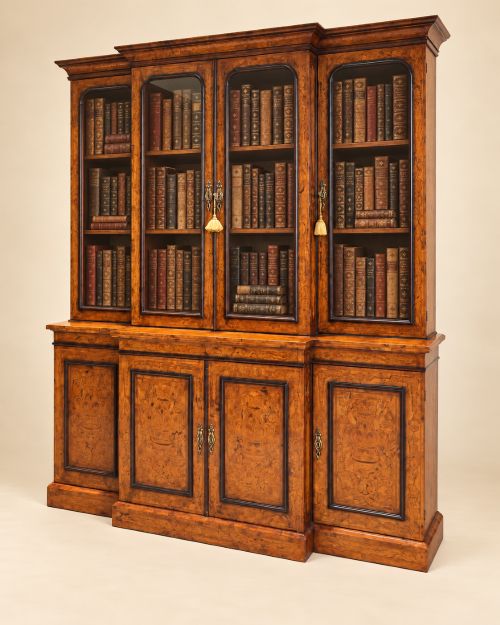
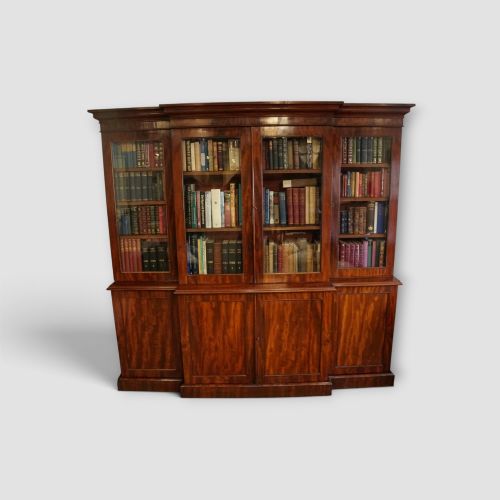
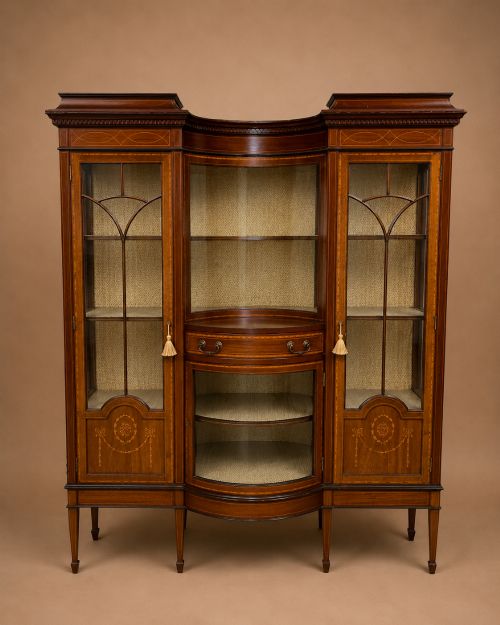
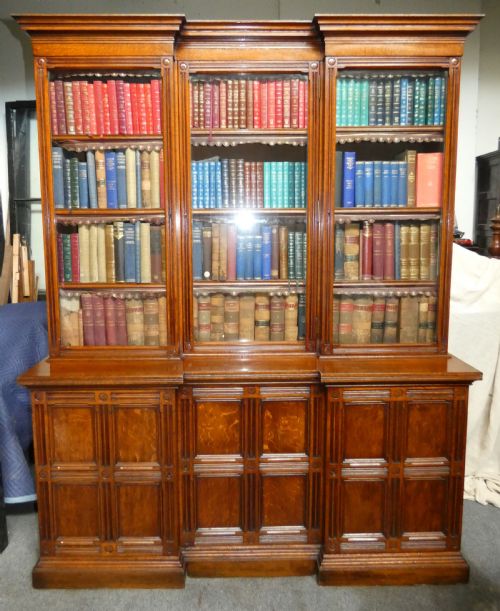
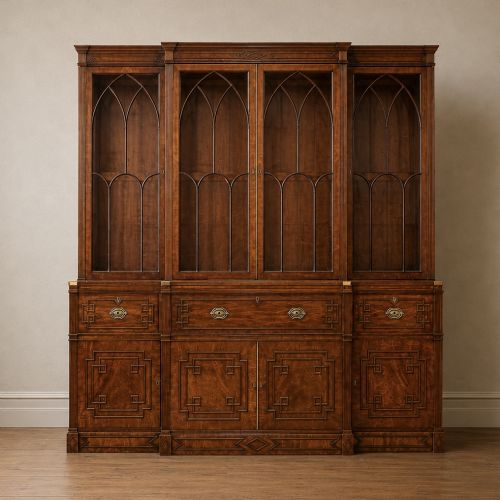
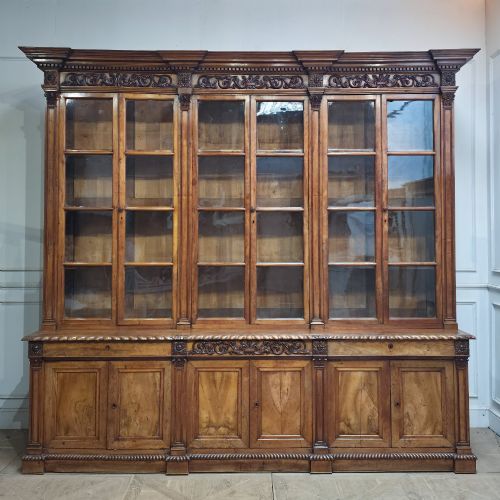
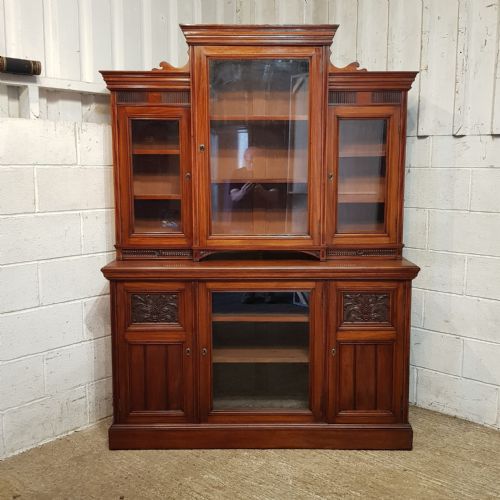
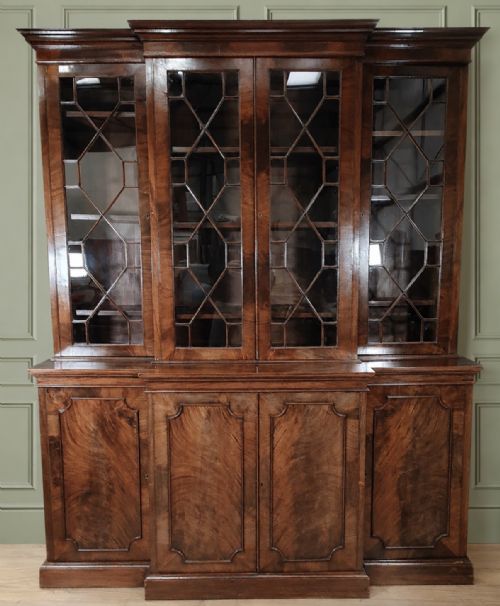
A breakfront bookcase cupboard presents a stepped architectural facade where the central portion extends further forward than the flanking wings, offering a commanding presence in a room. These pieces emerge predominantly in mahogany, walnut, and oak from periods spanning the Georgian era through the Victorian age and Edwardian times. The most common examples met here are large library bookcases and glazed display cabinets featuring lower wooden cupboards.
Makers such as Gillows, Jas Shoolbred, Edwards and Roberts, and Maple & Co. produced notable iterations of the breakfront bookcase cupboard, utilising styles that include Regency, Gothic Revival, and Sheraton Revival. Regional variations also appear, including Irish and Northern European examples, alongside kitchen dressers adapted for similar dual storage purposes. The proportion typically relies on lower solid doors paired with upper glazed sections designed to protect volumes.
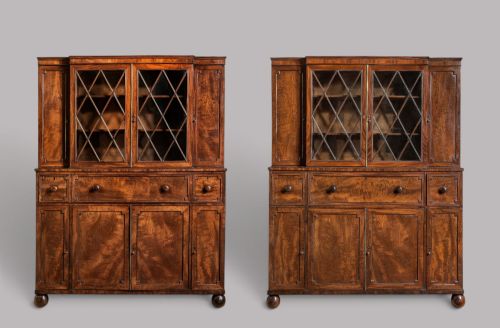
The layout accommodates both concealed storage behind panelled doors and open display behind glass panels, merging the function of a credenza or sideboard with that of a traditional bookcase. Smaller dwarf versions and diminutive formats also occur alongside monumental library editions, ensuring options for varied interior scales. Every specimen maintains the characteristic tripartite projection that defines the group.
Materials and Technique
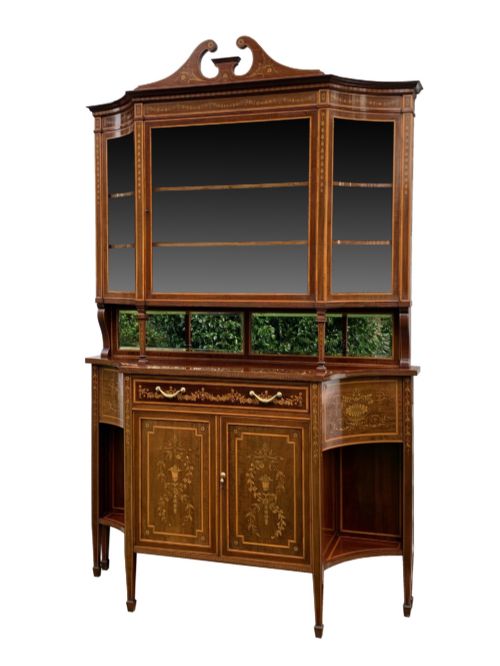
Cabinet makers constructed these breakfront bookcase cupboards using dense native and imported timbers, notably figured mahogany, walnut, oak, and rosewood, often enhanced with satinwood inlay or marquetry details. Brass hardware frequently secures the doors and mounts the glazing bars, while fabric linings occasionally back the display shelves. Joinery relied on traditional techniques to stabilize the substantial carcasses required for deep libraries and heavy glass doors.
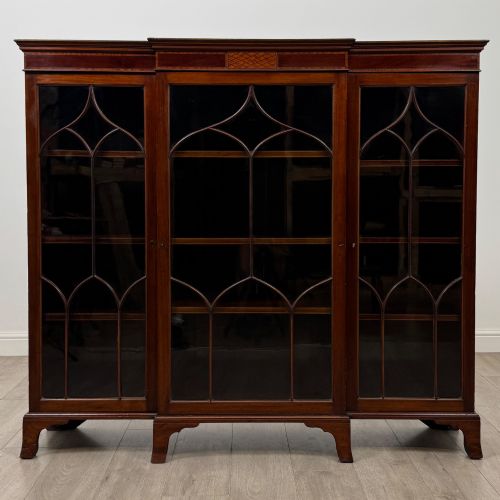
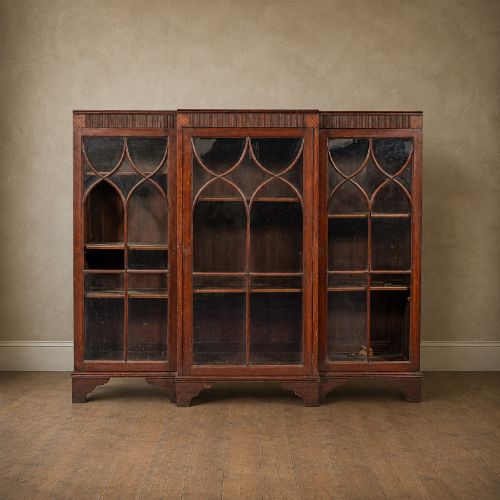
Surface finishing involved French polishing or hand-waxing to accentuate the natural grain patterns of figured mahogany and burr walnut veneers. Glazing methods utilised individual glass panes held by intricate wooden bars, supporting styles from plain Georgian gridwork to elaborate Gothic revival tracery. Carved elements, where present, were executed directly into solid oak, mahogany, or pollard oak.
Listings feature breakfront bookcase cupboards executed in mahogany, walnut, oak, satinwood, and rosewood across Georgian, Regency, and Victorian periods.
Standards of Execution
Quality in a breakfront bookcase cupboard rests upon the selection of timber veneers, where highly figured mahogany or matched walnut grain sets the upper tier apart from plain boards. The precision of the inlay work, such as delicate satinwood banding or complex marquetry, indicates the level of craftsmanship invested by houses like Edwards and Roberts or Gillows. Superior construction shows in the seamless alignment of the stepped central section and the smooth movement of heavy panelled doors.
The refinement of the glazing bars and the clarity of the original glass panes further separate standard production from exceptional library pieces. Architectural details, ranging from finely carved cornices to intricate Gothic tracery, reflect the ambition of the workshop. Internal fittings, including adjustable shelving and clean secondary woods like oak or pine, complete the measure of execution.
Jas Shoolbred·Gillows·Edwards and Roberts·Robert Strahan·Maple and Co
The Breakfront Bookcase Cupboard Glossary
- Breakfront
- An architectural furniture design where the middle section projects forward from the side wings. This creates visual depth and distinct zones across the facade.
- Glazing bars
- The narrow strips of wood or metal that hold individual panes of glass within a sash. Elaborate arrangements often define specific stylistic revivals.
- Marquetry
- Decorative veneer patterns formed by fitting together small pieces of wood, shell, or ivory. It creates pictorial or geometric surface designs.
- Dwarf bookcase
- A low-standing bookcase designed to sit below window height or to allow display on top. These pieces offer accessible shelving without towering over a room.
- Cornice
- The moulded projection that crowns the top of a cabinet or bookcase. It provides a finished architectural transition to the ceiling.
Breakfront Bookcase Cupboard: Frequently Asked Questions
What is a breakfront bookcase cupboard?
A breakfront bookcase cupboard is a large piece of furniture featuring a central section that steps forward from the flanking outer sections. It combines upper glass-fronted shelves for books or display with lower wooden cupboards for concealed storage.
These cabinets developed during the eighteenth century and remained popular through the Victorian and Edwardian periods. They serve as major architectural focal points in libraries and large studies.
How do I tell Regency from Victorian pieces?
Regency pieces often display classical restraint, featuring rosewood, brass inlay, and clean architectural lines inspired by antiquity. Victorian examples tend to be heavier and more imposing, frequently utilising figured mahogany, elaborate carvings, or Gothic revival motifs.
Examining the secondary woods and construction methods inside the cupboards also helps confirm the period of manufacture. Cabinet makers of the Victorian era frequently embraced eclectic revivals, whereas Regency design remained tied to neoclassical principles.
How should I care for mahogany and walnut?
Maintain mahogany and walnut surfaces by dusting regularly with a soft, dry cloth and applying traditional beeswax periodically to nourish the wood. Keep the furniture away from direct sunlight and heat sources to prevent the wood from drying out and the veneers from lifting.
Ensure stable humidity levels in the room to protect both the solid timbers and the intricate inlay work. Gentle care preserves the original French polish and deepens the patina over time.
Were these always used for books?
While primarily designed for libraries to house leather-bound volumes, these cupboards frequently served multiple domestic purposes. The lower cabinets stored papers, linens, or household goods, while the upper glazed sections displayed porcelain and curiosities.
Variations like kitchen dressers and display cabinets adapted the same architectural layout for dining rooms and service areas. Their dual nature made them versatile storage solutions for affluent households.