

Brass Wall Appliques
Brass wall appliques bring ambient illumination to a room, appearing across styles from French Rococo to English traditional.
Brass Wall Appliques
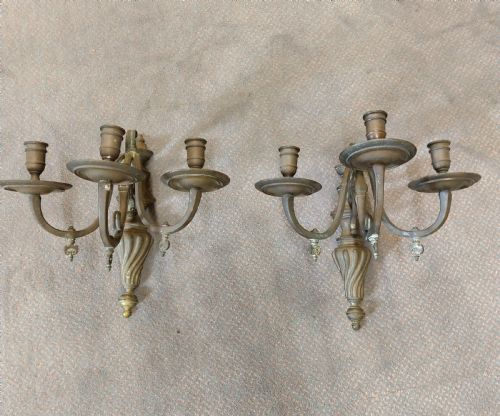
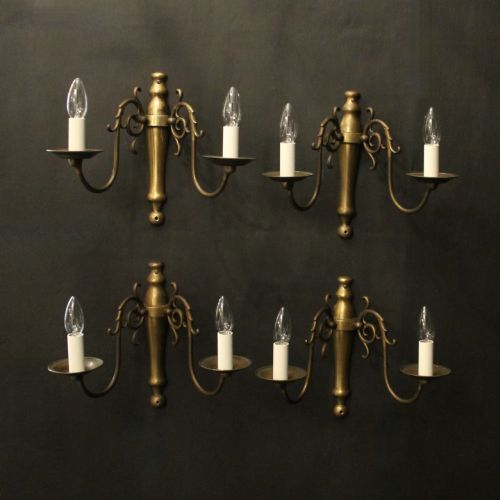
Brass wall appliques encompass wall lights, wall sconces, and furniture mounts designed to fix directly to interior surfaces. When buyers search for brass wall appliques, they typically encounter wall lights and sconces featuring twin, triple, or single arms configured for candlelight or electrical wiring.
The pieces on this page originate predominantly from the nineteenth and early twentieth centuries, spanning periods from Georgian and Victorian eras through to the 1920s and 1930s. French workshop output heavily populates the selection, alongside English traditional examples.
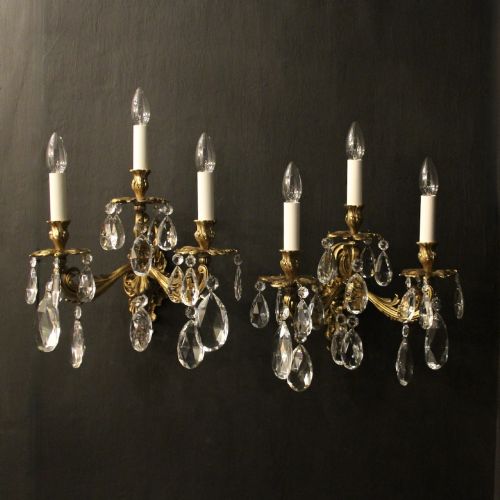
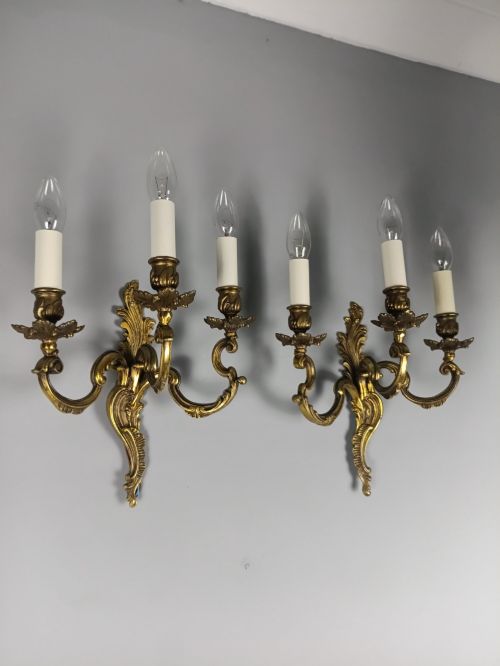
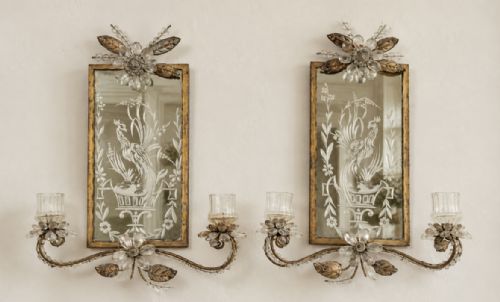
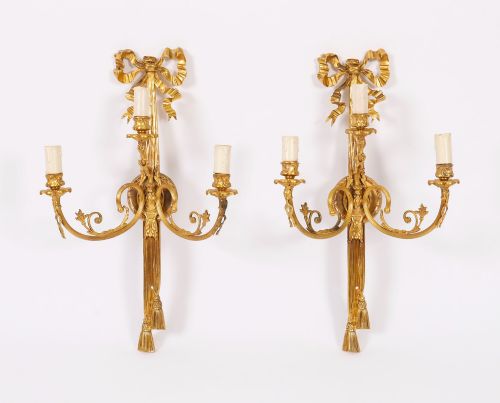
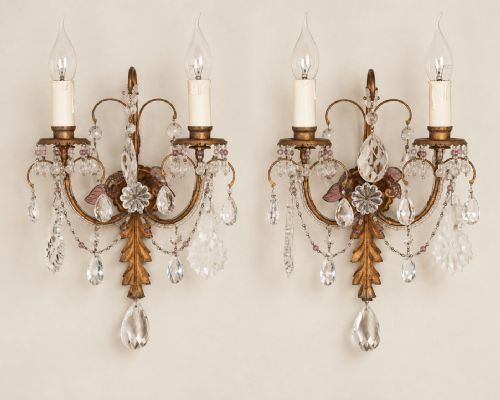
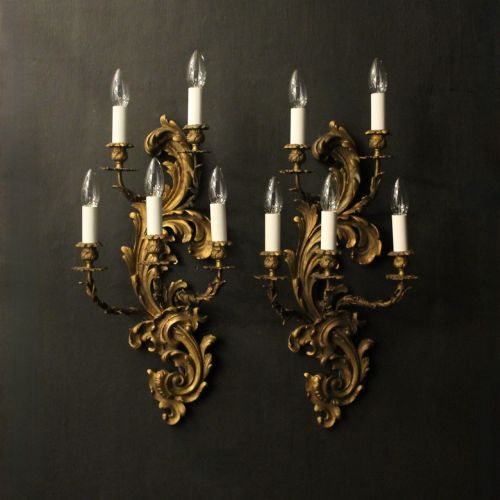
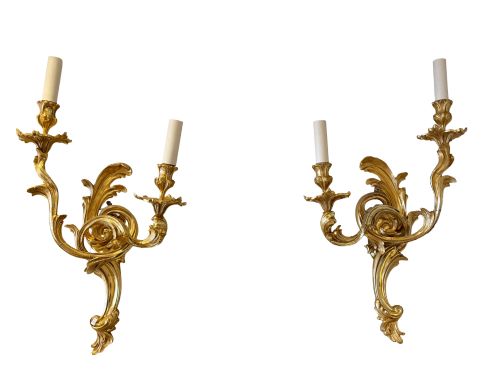
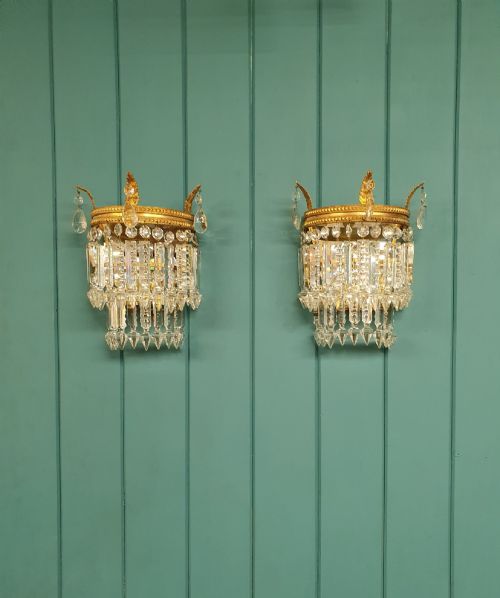
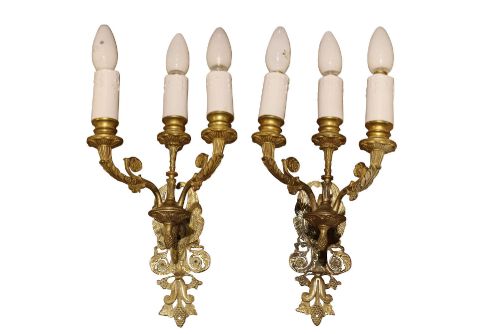
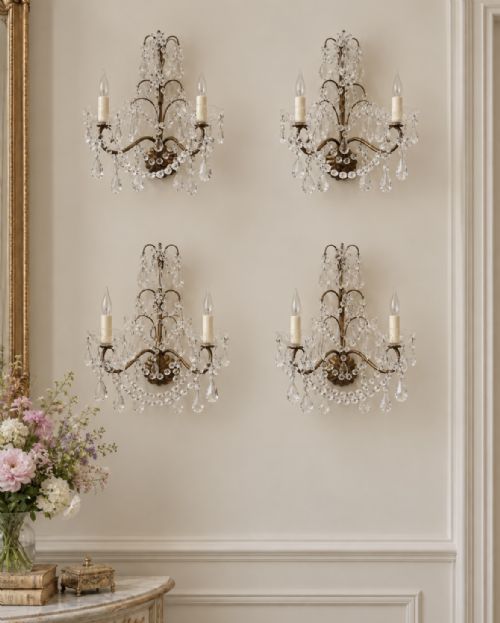
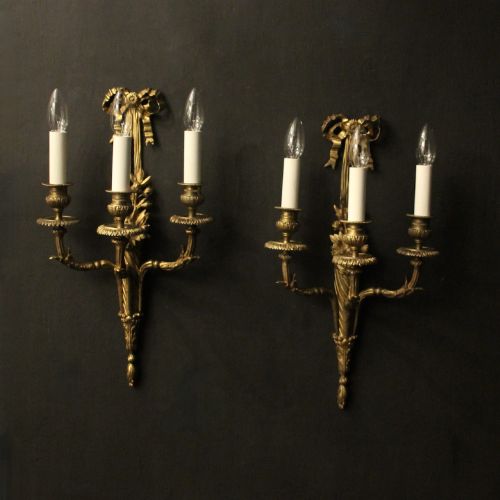
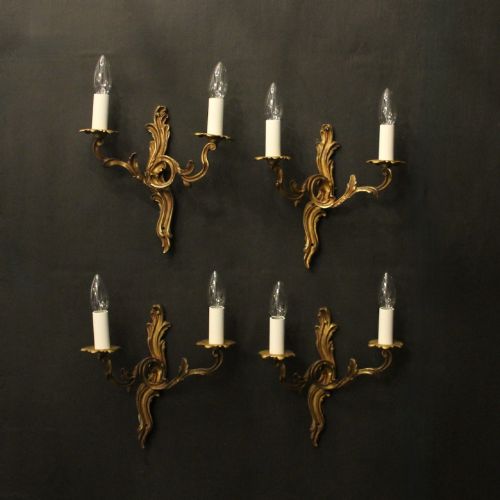
Stylistic variations range from French Empire and Louis XIV revivals to elaborate Rococo forms decorated with scrolling foliage and ribbons. Buyers also find pieces incorporating cut crystal drops, porcelain flowers, and burr walnut backplates.
Materials and construction methods
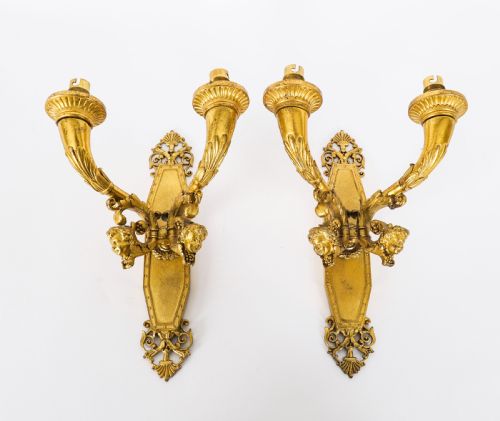
Makers utilised brass, bronze, and ormolu as the primary structural metals for casting arms, backplates, and sconce pans. Gilded finishes, whether applied through fire gilding or gold leaf, provide the characteristic reflective surface on gilt bronze and gilded brass pieces.
Detailing often involved intricate metal casting in the French Rococo or Neoclassical styles, complemented by hand-cut crystal prisms and decorative elements such as porcelain flowers. Metal components were joined mechanically or soldered to create sturdy wall fixtures capable of supporting multiple candle branches.
Brass Wall Appliques Retail Price Guide 2026
Typical asking prices for brass wall appliques among the pieces listed under this phrase on Sellingantiques today, from the lower quarter to the upper quarter. They describe what is for sale here now, not the wider market.
Assessing quality and craftsmanship
Quality in these pieces rests upon the crispness of the metal casting and the depth of the chased detail. Finer examples display sharp, hand-finished foliage and well-defined sculptural motifs rather than soft or blurred edges.
The weight of the metal and the integrity of the gilding further separate standard production from superior workshop output. Original surface treatments and substantial mounting plates indicate higher manufacturing standards.
Poix Blin
The Brass Wall Appliques Glossary
- Applique
- A wall-mounted light fixture or decorative bracket. These pieces fix directly to vertical surfaces to provide illumination.
- Ormolu
- Finely ground high-carat gold mercury-gilded onto a bronze base. This technique creates a rich, durable metallic finish.
- Sconce
- A wall light designed to hold candles or electric lamps. They frequently feature backplates that reflect the light into the room.
- Rococo
- An ornate design style characterised by asymmetry, scrolling curves, and naturalistic plant motifs. It appears widely on nineteenth-century French light fittings.
- Candelabra
- A multi-branched lighting fixture. In wall-mounted formats, these support two or more individual candle nozzles.
Brass Wall Appliques: Frequently Asked Questions
What periods do these wall lights come from?
The pieces span the nineteenth and early twentieth centuries, including Victorian, Georgian, and 1930s designs. French revival styles from the eighteen-forties onward appear frequently.
Craftsmanship reflects the prevailing aesthetic of each decade, from Empire neo-classicism to ornate Rococo revival forms.
Are these lights wired for electricity?
Many pieces have been adapted for modern electrical use while retaining their historic appearance. Some retain candle-holders or half-lantern formats.
Buyers should inspect individual listings to confirm the current wiring status of each fixture.
What materials are used in these fittings?
Construction relies primarily on brass, bronze, gilded metals, and ormolu. Certain examples incorporate cut crystal drops and porcelain elements.
Surface finishes range from polished brass to heavy gold leaf and mercury gilding.
How do I identify French styles?
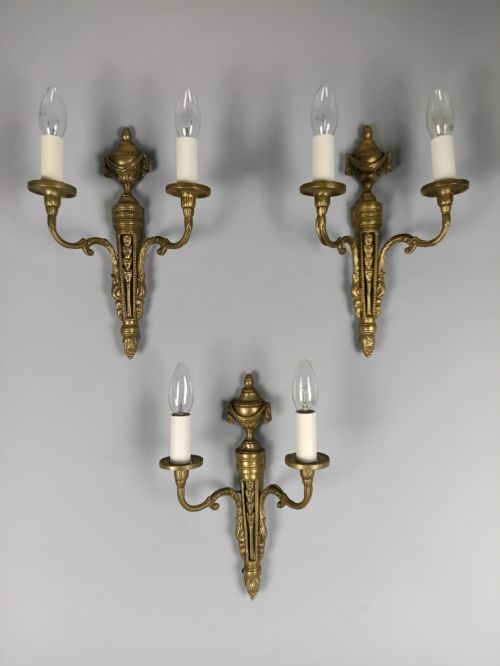
French pieces often display distinctive Rococo scrolls, Neoclassical symmetry, or Empire motifs such as laurel wreaths and urns. Workshops in France produced extensive variations in gilt bronze.
Stylistic markers correspond closely to Louis XIV, Louis XVI, and nineteenth-century revival periods.