
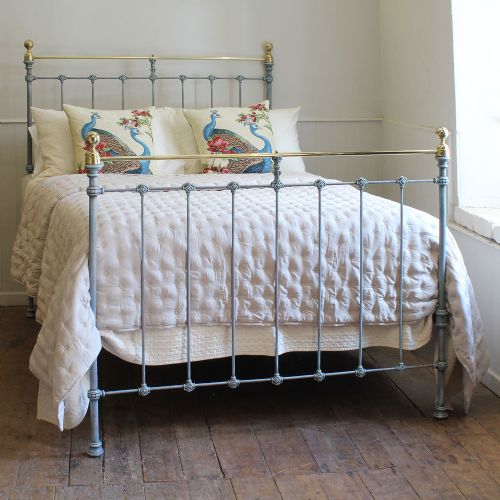
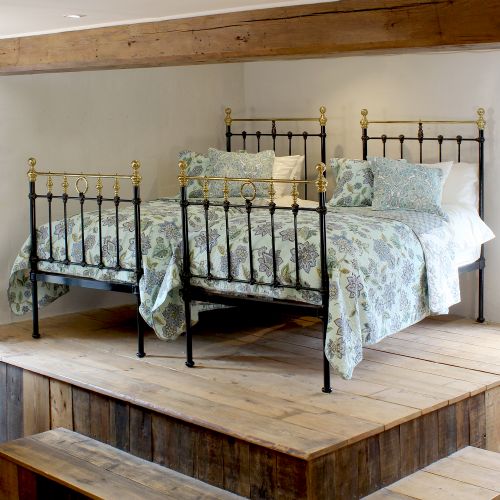
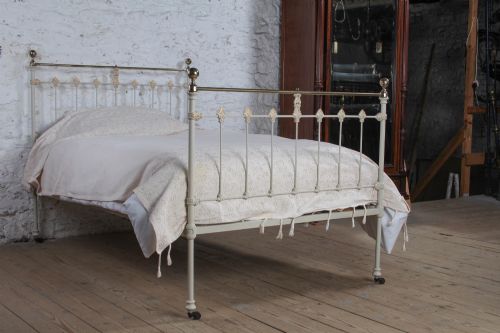
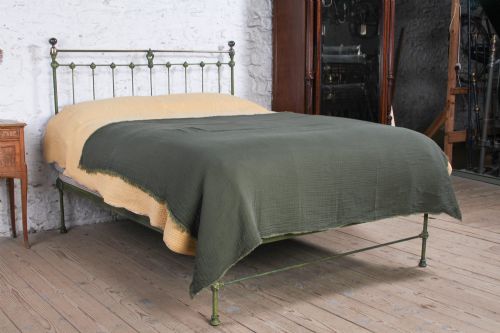
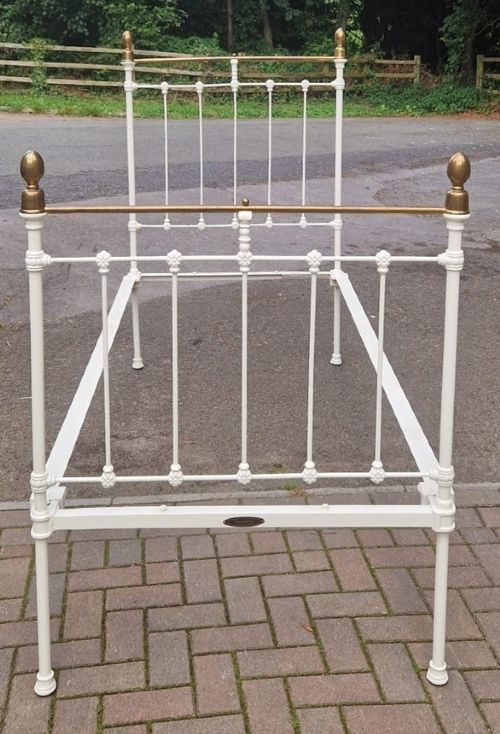
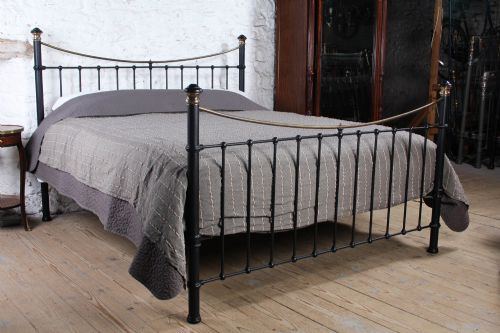


Brass Top Iron Bedstead
A brass top iron bedstead combines heavy metal stability with bright decorative metalwork, offering a sturdy frame that anchors a bedroom.
Brass Top Iron Bedstead
A brass top iron bedstead is what a buyer seeks when looking for a traditional combination of dark metal and polished trim. These pieces date from the nineteenth century into the early twentieth century, spanning Victorian and Edwardian periods.
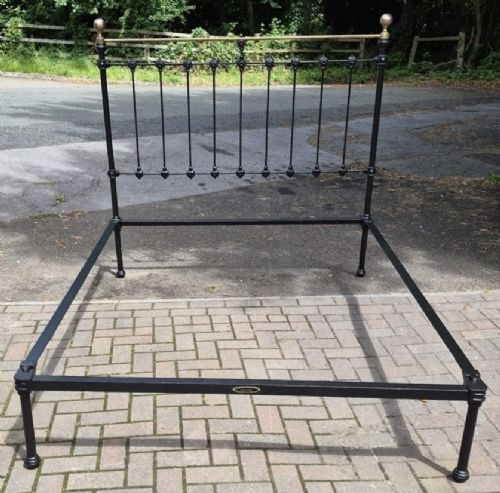
The most common examples on this page are Victorian and Edwardian items in single, double, king, and super king sizes. Formats include straight rail designs, dip rail profiles, and no end configurations suited to modern mattress proportions.
Construction and materials
Makers built these frames using cast iron and wrought iron for the structural support, finished with paint or toleware surfaces. Brass components formed the decorative top rails, finials, and castings.
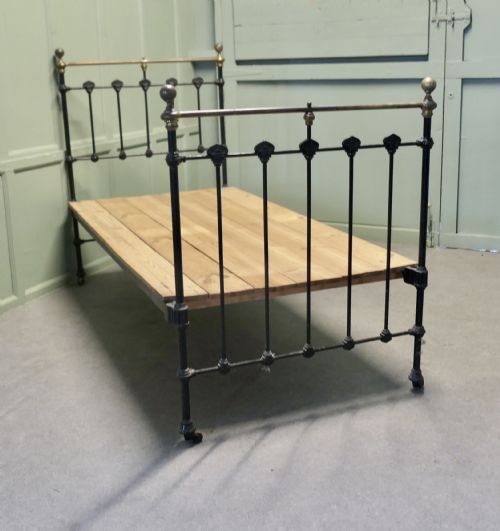
Individual sections join through mechanical fasteners or slot-in joints, while specific examples incorporate castors for mobility. Wood sometimes appears in internal or supporting elements.
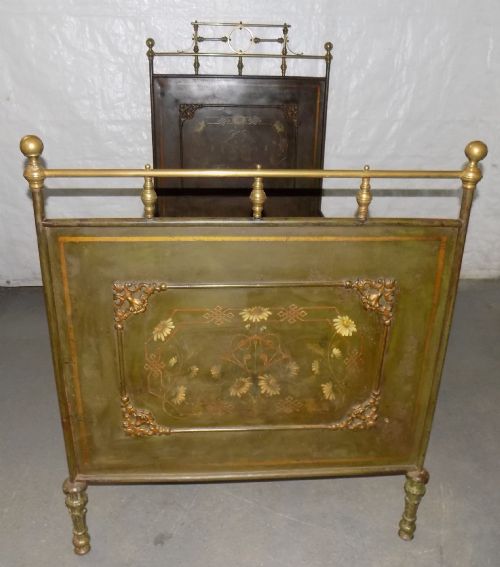
Current listings feature pieces spanning the 1850s to 1910, including Victorian and Edwardian styles alongside 19th-century Austrian examples.
Assessing quality and detail
Quality rests upon the crispness of the brass castings and the weight of the iron framework. Finer examples display more intricate brass decoration, robust corner brackets, and substantial metal thickness.
The finish of the painted surfaces and the structural integrity of the joints distinguish standard production from superior pieces. Original components throughout indicate a higher grade of preservation.
The Brass Top Iron Bedstead Glossary
- Dip rail
- A headboard or footboard rail that curves downward in the centre. This configuration provides a distinct silhouette often seen on Victorian and Edwardian designs.
- Cast iron
- Iron poured into a mould to create rigid shapes and decorative details. It forms the heavy structural components of these beds.
- Toleware
- Metalware painted and baked with a durable finish. It appears on specific continental bedframes from the nineteenth century.
- No end
- A bedstead configuration featuring a high headboard but no matching footboard. This layout suits modern rooms where space is limited.
Brass Top Iron Bedstead: Frequently Asked Questions
How do I fit a modern mattress?
Many nineteenth and early twentieth-century frames accommodate standard modern sizes such as double, king, and super king. Some proportions vary slightly from contemporary manufacturing standards, so checking the internal dimensions is essential.
Modern slat bases or custom bed bases often sit inside the original iron rails to support contemporary mattresses securely without altering the antique frame.
Can these beds be taken apart?
Most iron and brass bedsteads dismantle into four main pieces: the headboard, the footboard, and two side rails. This modular construction made transport and room placement straightforward during the Victorian period.
Wedges or slot joints lock the side rails into the posts without requiring complex tools, though a rubber mallet helps loosen tightly set historical joints.
How do I clean the brass?
Brass components respond well to gentle dusting and occasional cleaning with a non-abrasive metal polish formulated for vintage items. Avoid harsh chemical cleaners that strip the aged patina from the metal.
Preserving the surface sheen keeps the contrast sharp between the polished brass top rails and the dark painted iron structure below.
Are pairs common?
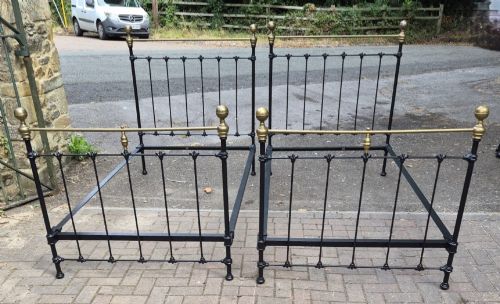
Matching pairs of single beds appear occasionally in Victorian and Edwardian inventories. These were often produced for guest rooms or shared chambers.
Certain pairs retain similar brass decorations and paint finishes, and some single formats are adaptable to be joined together.