

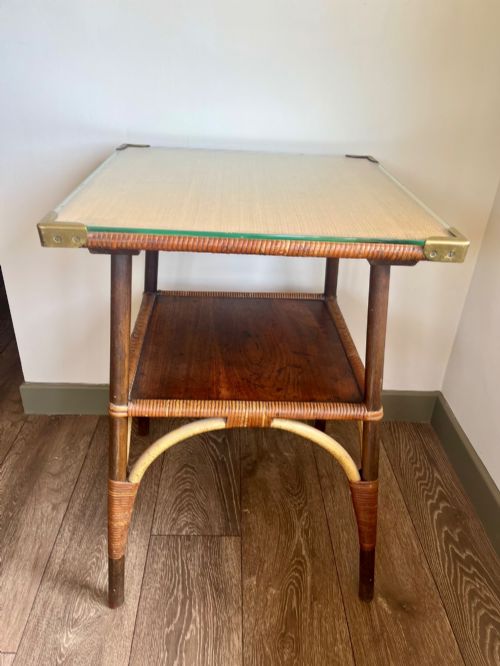
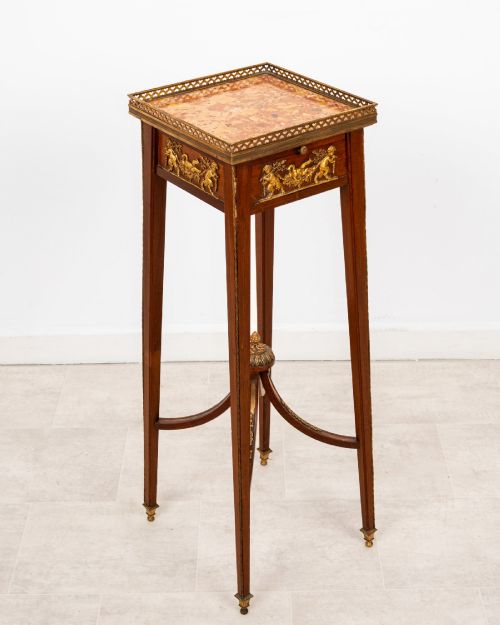
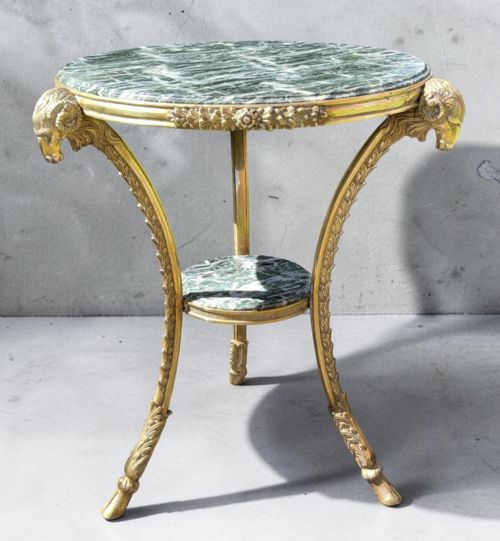


Brass Top Accent Table
A brass top accent table brings a refined metallic surface and practical form to a room, drawing on nineteenth and early twentieth century European design.
Brass Top Accent Table
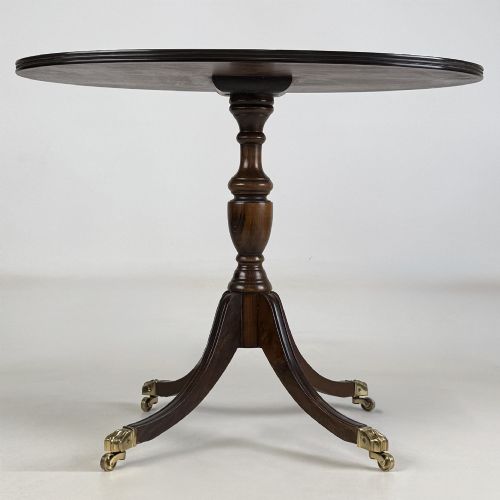
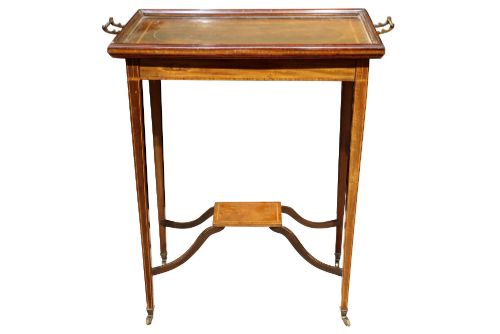
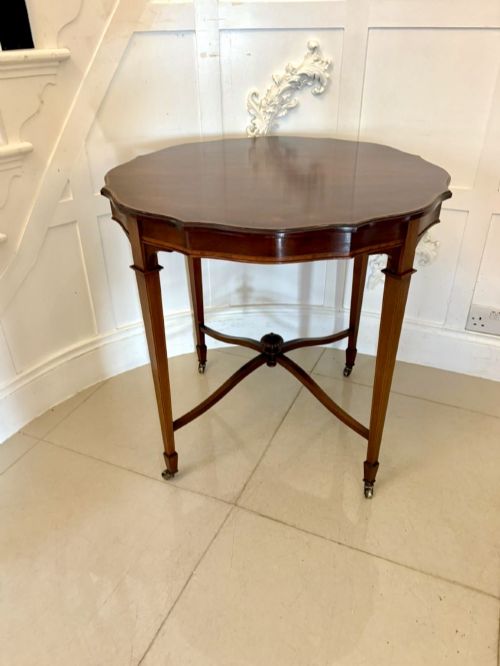
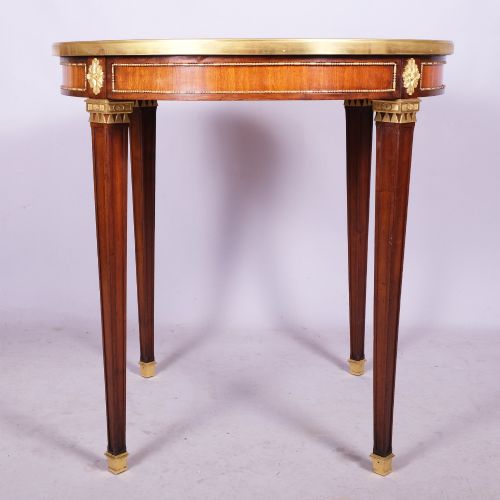
A brass top accent table encompasses compact occasional, side, and lamp tables designed for flexibility within domestic interiors. These pieces frequently pair a polished metallic surface with structural timbers such as mahogany, walnut, or satinwood, alongside stone insertions.
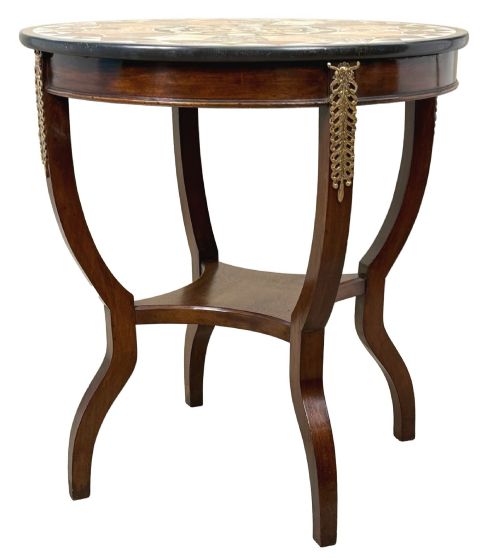
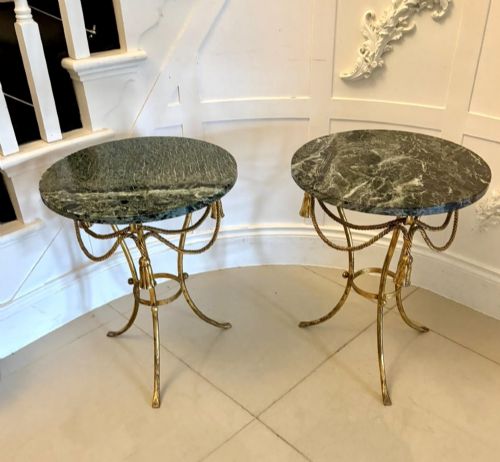
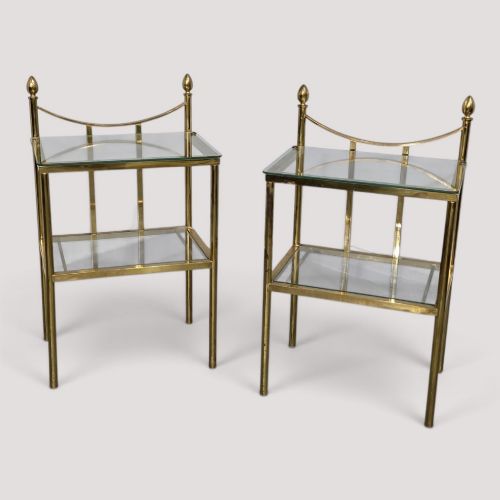
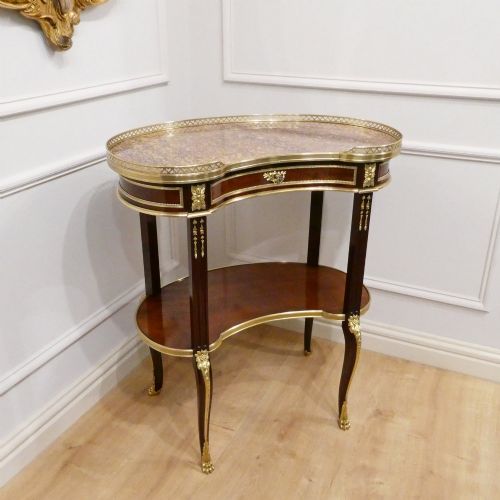
The selections on this page draw heavily from nineteenth century Victorian production and early twentieth century French styles, including Louis XVI revivals and Empire designs. Forms range from small circular gueridons to multi-tiered plant stands and kidney-shaped bedside tables.
Makers and workshops across Britain and France produced these items to serve diverse functions, operating as reading stands, dumb waiters, and display furniture. Their enduring appeal lies in their capacity to combine compact proportions with decorative metalwork.
Materials and Construction Methods
Makers built the structural frameworks of these tables using dense hardwoods like mahogany and walnut, frequently incorporating marquetry, inlay, and Ormolu or gilt-metal mounts. The integration of brass and gilt bronze demanded precise cabinetmaking to secure the metal elements to timber carcasses without warping.
Table surfaces frequently utilise polished marble, onyx, or specimen stone inset within brass galleries or cast metal rims. Cast brass components, such as ram heads and decorative feet, were shaped using traditional foundry techniques before being hand-finished and fitted to the frames.
Some tables incorporate marine-themed designs with adjustable book rests, proving that nineteenth-century readers also enjoyed balancing a volume at sea.
Distinctions in Quality and Execution
Quality rests upon the crispness of the metal casting and the precision of the joinery uniting timber and brass. Superior examples exhibit finely chased gilt-metal mounts and tightly fitted marble or onyx inserts that sit flush within their surrounds.
The integrity of the timber framework, whether in the grain selection of the mahogany or the execution of intricate marquetry, separates standard production from exceptional pieces. Attention to detail in secondary timbers and the retention of original surface patination indicate superior craftsmanship.
James Shoolbred·Maison Millet·François Linke·Dryad Leicester
The Brass Top Accent Table Glossary
- Guéridon
- A small French table, typically round and supported by a central pillar or three legs. These frequently feature marble tops and brass galleries.
- Ormolu
- Gilded bronze used for decorative mounts on furniture. It provides a rich metallic contrast to dark hardwoods like mahogany.
- Bouillotte table
- A small French neoclassical occasional table with a raised edge or gallery designed to keep items from sliding off. They often incorporate marble tops and candle arms.
- Galleried top
- A low rail surrounding the edge of a table top, typically cast in brass or pierced from wood. It prevents objects placed on the surface from falling.
- Marquetry
- Decorative patterns formed by the insertion of pieces of wood, shell, or ivory into a veneer. This technique adorned many French side and occasional tables.
Brass Top Accent Table: Frequently Asked Questions
What is a gueridon table?
A gueridon is a small, circular French occasional table that typically stands on a central column or three slender legs. These tables frequently combine timber frames with marble tops and cast brass mounts.
Historically utilised for holding candles or serving small items, they function today as versatile lamp or side tables in sitting rooms and bedrooms.
Where should I place a brass top accent table?
These compact tables suit living rooms as lamp or side surfaces beside seating, or bedrooms as small bedside tables. Their reflective metallic tops and narrow proportions allow them to fit into tight spaces without crowding a room.
Consider pairing them with traditional or eclectic interiors where the warm tones of brass and timber can complement existing furnishings.
How do I care for a marble and brass top?
Clean marble surfaces gently using a soft, damp cloth and mild soap, avoiding acidic cleaners that can etch the stone. Polish brass components sparingly with a dry cloth to maintain their finish without stripping patination.
Using coasters and mats helps protect both the stone and metal surfaces from moisture and heat damage over time.
How can I tell the period of a table?
Dating relies on examining the construction techniques, timber choices, and stylistic markers such as Louis XVI revival motifs or Edwardian inlay. Nineteenth-century pieces often feature hand-cut joints and heavy cast bronze mounts, while later twentieth-century examples display different assembly methods.
Comparing the specific hardware, such as the casting quality of the brass gallery, helps place the piece within its historical era.