




Victorian Brass Tray Table
A victorian brass tray table brings tactile warmth and refined utility to a room through beaten metal and polished timber.
Victorian Brass Tray Table
A victorian brass tray table combines portable metal top surfaces with folding or fixed wooden stands for everyday service. These pieces emerge primarily from the nineteenth century, reflecting global design influences through domestic furniture.
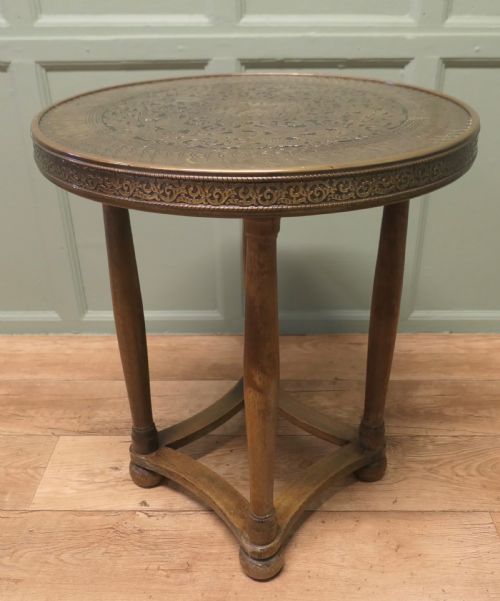
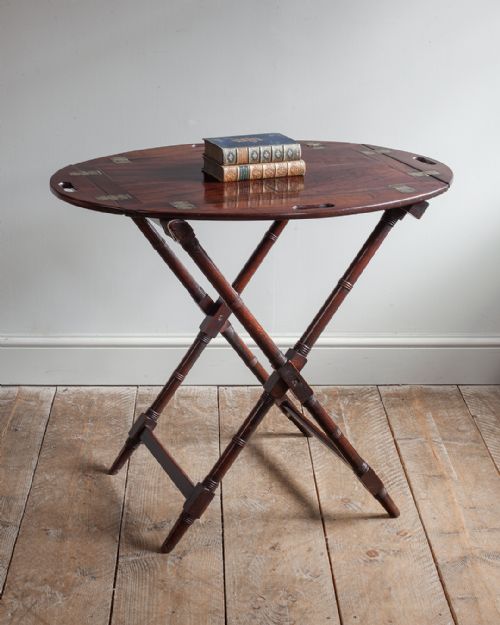
The most common examples on this page feature circular or rectangular trays resting upon collapsible frames or side tables. Makers combined brass, copper, and mixed metals with native and exotic woods to create these functional furnishings.
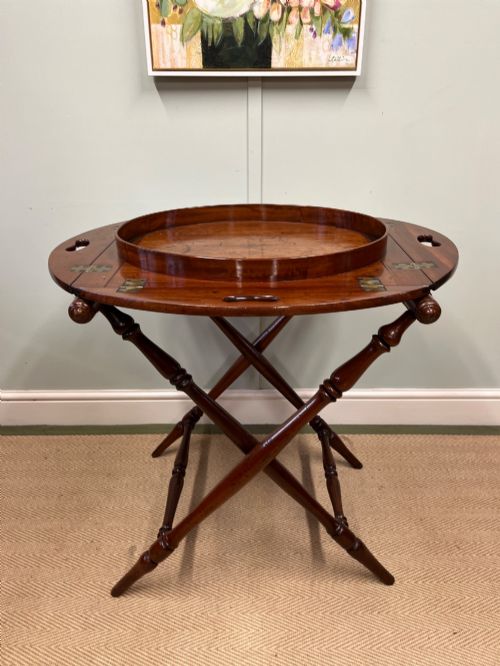
Originating as practical butler service items or occasional display pieces, these tables adapt easily to modern interiors as coffee or side tables. Their versatility stems from the removable nature of the trays themselves, which double as serving pieces.
How they were made
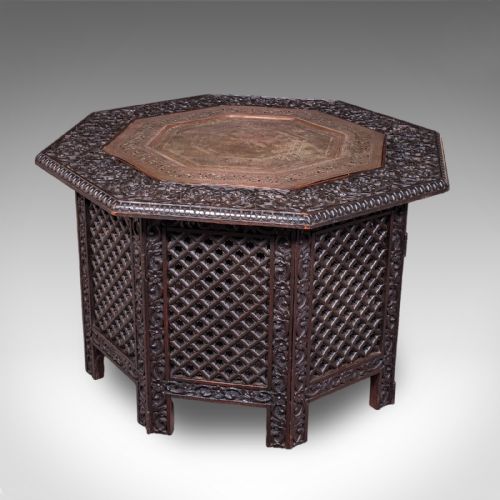
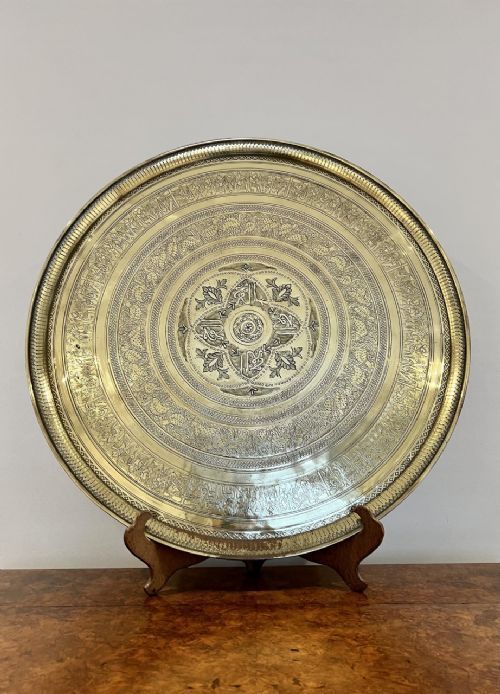
Craftsmen shaped brass and copper sheets using hand-beating and engraving techniques to create intricate surface patterns. Artisans in Anglo-Indian and Mamluk Revival styles etched elaborate geometric and floral motifs directly into the metal.
Cabinetmakers utilised dense timbers such as mahogany, satinwood, rosewood, and hardwood for the supporting stands and folding bases. Joinery methods relied on traditional mortise and tenon construction to ensure stability for the heavy metal tops.
Victorian Brass Tray Table Retail Price Guide 2026
Typical asking prices for victorian brass tray table among the pieces listed under this phrase on Sellingantiques today, from the lower quarter to the upper quarter. They describe what is for sale here now, not the wider market.
Some trays double as portable drinks service, proving that nineteenth-century hosts took their evening entertainment just as seriously as we do.
What varies in quality
The depth and crispness of the hand engraving on the metal surface distinguish standard production from finer examples. Deep, precise chisel work retains its definition and character under handling, whereas superficial stamping appears flat.
The choice of timber for the stand indicates the original tier of manufacture, with figured mahogany and satinwood representing superior workshop output. Structural integrity in the folding mechanisms and the precise fit of the tray to the base mark better construction.
Halls Patent
The Victorian Brass Tray Table Glossary
- Butlers tray
- A portable wooden or metal tray with hinged or handled sides designed for carrying service items. These trays lift off their folding stands for independent use.
- Anglo-Indian
- A nineteenth-century style combining British furniture forms with traditional South Asian decorative techniques. Pieces often feature dense brass and copper surface carving on native hardwoods.
- Mamluk Revival
- A decorative style inspired by medieval Islamic metalwork from Egypt and Syria. It employs intricate inlaid patterns and calligraphic brass ornamentation.
- Etagere
- A piece of furniture comprising a set of open shelves for displaying small objects. This form integrates tray surfaces for elevated display and service.
- Mixed metal
- The combination of different metallic elements such as brass, copper, and bronze within a single design. This technique creates contrasting tones across engraved surfaces.
Victorian Brass Tray Table: Frequently Asked Questions
Are the brass trays removable?
Most trays lift off their supporting stands independently to function as serving pieces or standalone decorative chargers. This portable design originated from the practical need to transport items between rooms.
Securing mechanisms vary, with some resting on simple folding X-frames while others slot into fixed wooden surrounds. Checking how the tray anchors to the base helps determine its original purpose.
What woods were used for the stands?
Cabinetmakers utilised dense timbers such as mahogany, satinwood, rosewood, and mixed hardwoods for the supporting tables. These woods provided the necessary structural strength to hold heavy metal tops safely.
Regional workshops selected native or imported timber depending on the intended market and prevailing nineteenth-century fashions. Mahogany and satinwood frequently appeared in finer domestic commissions.
How do I distinguish regional styles?
Anglo-Indian and Mamluk Revival pieces display deep, dense hand engraving covering the entire brass surface with intricate geometric motifs. Standard Victorian interpretations often feature simpler floral borders or plain polished brass centres.
Inspecting the timber frame alongside the metalwork reveals whether a piece follows British cabinetmaking traditions or imported overseas styles. The pairing of woods like satinwood with etched brass points toward specific nineteenth-century revival movements.