





Brass Table Centrepiece
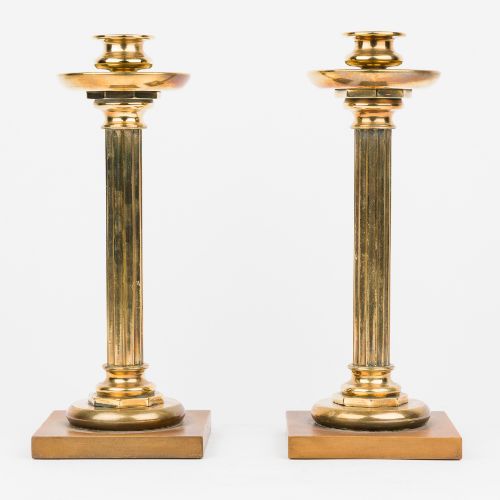
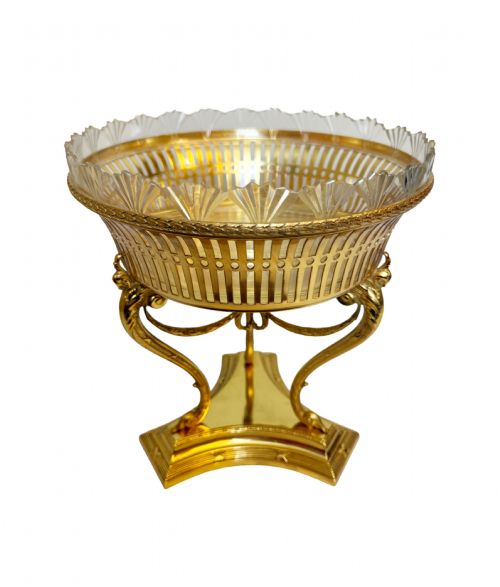
A brass table centrepiece anchors a dining table or sideboard with polished metal, glass inserts or flanking candelabra.
Brass Table Centrepiece
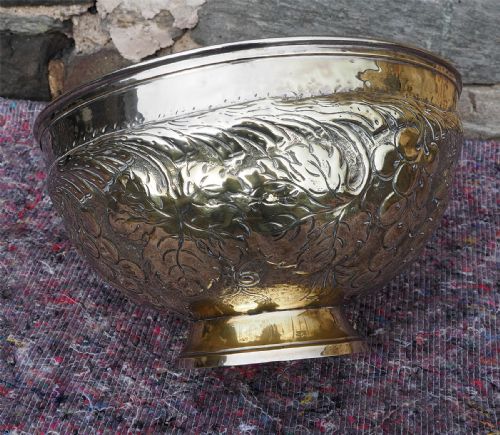
A brass table centrepiece brings a formal presence to dining rooms, drawing rooms and sideboards through varied forms including decorative bowls, tazzas, punch bowls and display trays. These pieces serve as the physical focus of a room, often designed to hold flowers, fruit or candles during gatherings.
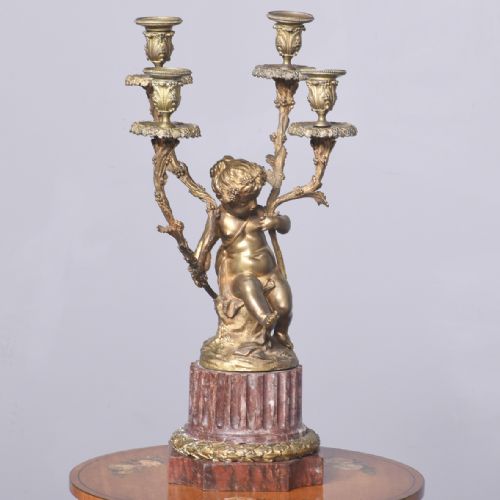
The versions met most frequently on this page span the nineteenth century into the early twentieth century, taking the form of cast brass table centrepieces, decorative bowls and glass-inserted vessels. Makers also produced matching candelabra, candlesticks and multi-stem lighting to accompany the central display.
Stylistic influences range widely across the selection, encompassing French Rococo Revival, French Empire, Neoclassical, Art Deco and Late Victorian aesthetics. Buyers encounter pieces utilising combinations of brass, gilt bronze, ormolu, cut glass, porcelain and marble.
How they were made
Foundry work relied on casting brass, bronze and ormolu into intricate forms, creating structural frames for bowls, candlesticks and candelabra. Artisans combined these metals with turned elements like barley twist stems or adjustable arms.
Decorative glass inserts, cut glass drops and porcelain bodies were integrated into metal mounts, secured by pins or threaded fittings. Gilt finishes and patination added surface depth to the cast elements.
Listings feature brass, gilt bronze, ormolu, cut glass, porcelain and marble across nineteenth-century and early twentieth-century periods.
What varies in quality
The refinement of the casting and chasing separates standard production from finer examples, visible in the crispness of foliate motifs and the smoothness of turned brass. Superior items maintain solid proportions and secure joints across multi-part assemblies like candelabra arms and pedestal bases.
The integration of secondary materials dictates overall character, distinguishing simple brass forms from elaborate compositions combining cut glass inserts, porcelain figures and heavy gilt bronze mounts.
Samson Porcelain
The Brass Table Centrepiece Glossary
- Ormolu
- Gilded bronze applied to decorative objects and furniture mounts. This technique was widely utilised by nineteenth-century French makers to impart a bright gold finish.
- Candelabra
- Branched lighting fixtures designed to hold multiple candles. These often form matching pairs alongside central bowls on dining tables.
- Tazza
- A shallow bowl or plate raised on a pedestal stem. Such vessels serve as decorative fruit dishes or centrepieces.
- Barley Twist
- A spiral column turning resembling twisted rope. This turned wooden or metal form appears frequently on nineteenth-century candlesticks.
Brass Table Centrepiece: Frequently Asked Questions
What is a brass table centrepiece used for?
These metal vessels sit in the middle of dining tables or sideboards to hold floral arrangements, fruit or decorative displays. Many incorporate glass inserts or bowls designed to contain water and stems.
Matching candelabra and candlesticks extend the display across a dining surface, providing both ambient candlelight and architectural symmetry.
How do I clean a brass centrepiece?
Dust the metal regularly with a soft dry cloth to prevent grime accumulation in chased details and crevices. Avoid harsh chemical polishes that strip historical patination.
Glass inserts and porcelain bowls lift out of their metal mounts for separate washing in warm soapy water.
Are these pieces French or English?
The selection includes numerous French pieces executed in gilt bronze, ormolu and crystal, reflecting nineteenth-century continental design trends. English production is represented by heavy cast brass candlesticks and Victorian table wares.
Stylistic markers such as Rococo Revival curves or Empire symmetry often point toward specific continental workshops.
Can I use candles in these candelabra?
Most antique candelabra and candlesticks accept standard taper candles within their drip pans or sockets. Check the diameter of the nozzles before inserting candles to ensure a stable fit.
Keep burning candles away from draughts and do not leave lit multi-arm candelabra unattended on dining tables.