
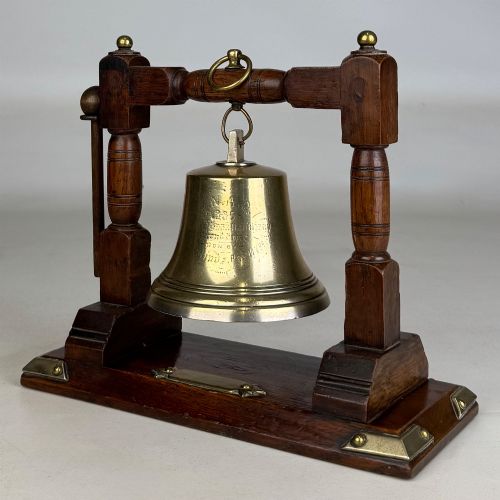


Brass Table Bell
A brass table bell provides a clear, resonant signal from domestic and commercial service, pairing solid metal with stands of oak or mahogany.
Brass Table Bell
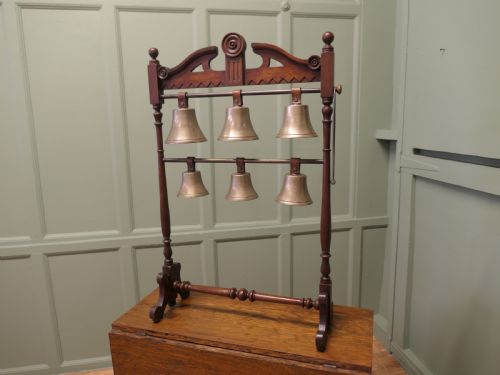
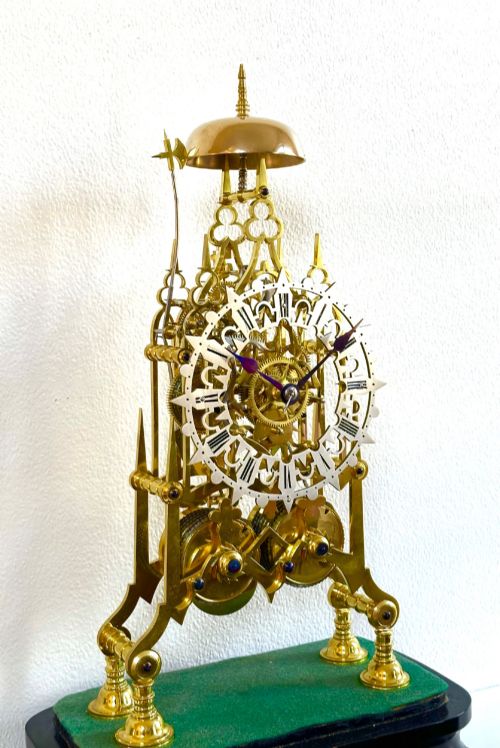
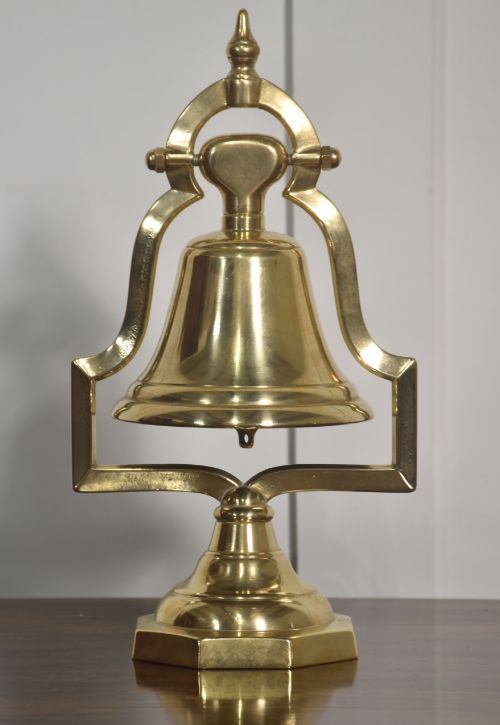
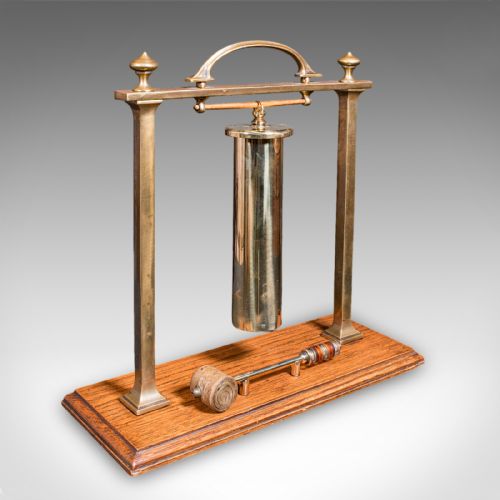
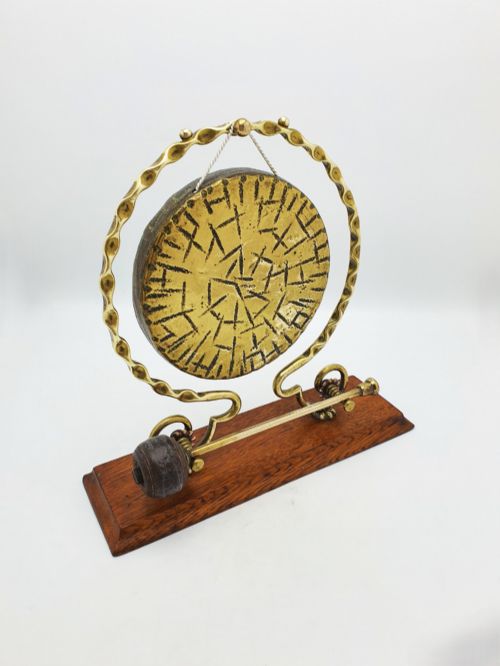
When you search for a brass table bell, you encounter functional items designed for summons or service, appearing frequently in Victorian, Edwardian, and early twentieth-century editions. These pieces range from simple desk and counter variants to mounted gongs paired with wooden bases and strikers.
The materials span brass, bronze, oak, mahogany, and ebonised wood, reflecting both domestic parlours and commercial counters. Many incorporate stands or carved frames, aligning with the periods seen in nineteenth and twentieth-century examples.
Materials and construction
The primary metal components involve cast brass or bronze, shaped to achieve a clear tone when struck. Bases and supporting frames utilise seasoned hardwoods such as oak and mahogany, often carved or polished.
Assembly methods combine metal fixings with wood joinery, securing the bell to its platform or suspension arm alongside handheld strikers.
Brass Table Bell Retail Price Guide 2026
Typical asking prices for brass table bell among the pieces listed under this phrase on Sellingantiques today, from the lower quarter to the upper quarter. They describe what is for sale here now, not the wider market.
Certain nineteenth-century models incorporate miniature bronze elephants at the base to hold the bell aloft.
Manufacturing standards
Quality rests in the purity of the metal casting and the resonance of the tone produced. Finer examples display clean, precise moulding on the bell and substantial, well-finished wooden stands.
The integration of the striker and the stability of the mounting platform determine the durability and acoustic performance of each piece.
Thomas Langley·Windmills and Bennet·William Barrow·Paul Garnier·Andrew Marchant·William Withers·John Fletcher·Mathias Bauerle·John Taylor·Somersall
The Brass Table Bell Glossary
- Brass
- A copper and zinc alloy utilised for the construction of bells and structural fittings. It provides durability and a bright acoustic resonance.
- Bronze
- An alloy predominantly of copper and tin, seen in heavier bells and gongs. This material yields a deeper tone than standard brass variants.
- Fusee
- A conical pulley used in clockwork mechanisms to maintain even tension on the drive chain. It appears in complex timepieces associated with bell-striking movements.
- Verge escapement
- An early clock mechanism regulating the speed of the gear train. It controls the release of power in period clocks and timepieces.
Brass Table Bell: Frequently Asked Questions
How do you clean a brass table bell?
Maintenance involves gentle dusting and the occasional application of a soft cloth to preserve the metal surface. Avoid harsh abrasive cleaners that remove the natural patina accumulated over the decades.
Wooden bases require simple wiping with a dry or slightly damp cloth, keeping moisture away from any metal joints or attached strikers.
What were brass table bells used for?
These items served primarily to summon domestic staff in nineteenth and early twentieth-century households. They functioned in dining rooms, drawing rooms, and studies for afternoon tea or general service.
Commercial variants operated on shop counters to alert staff to the arrival of customers. Desk models provided a similar signaling function in professional offices.
How can you date a brass table bell?
Dating relies upon the style of the mounting, the typography of any markings, and the accompanying materials like oak or mahogany. Victorian and Edwardian examples often feature specific decorative motifs or standard turned wooden stands.
Construction techniques, such as the method of casting the bell and fixing the handle, also indicate the manufacturing period.
Are all table bells made entirely of brass?
Many examples combine a brass bell with a wooden base, oak stand, or bronze elements. Some incorporate glass, ebonised wood, or iron frameworks depending on the specific period and design.
Counter and desk models frequently pair metal bells with wooden or cast bases to provide stability during use.