

Brass Stationery Box
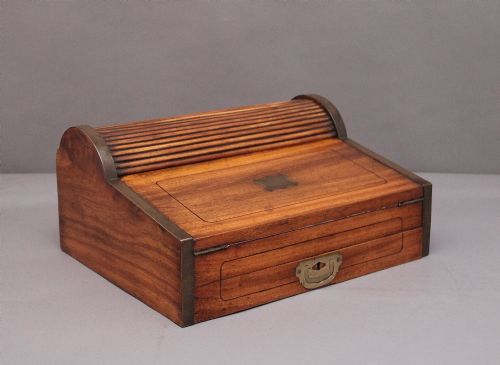
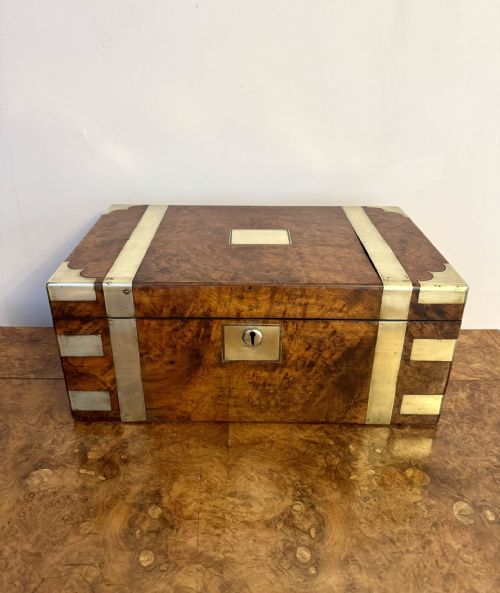
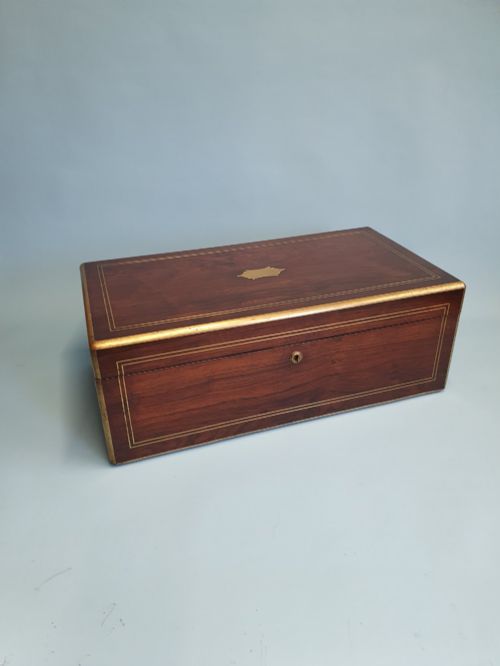
A brass stationery box brings heavy mounts, strapwork and bound edges to the desk, turning everyday correspondence into an organised, tactile desktop display.
Brass Stationery Box
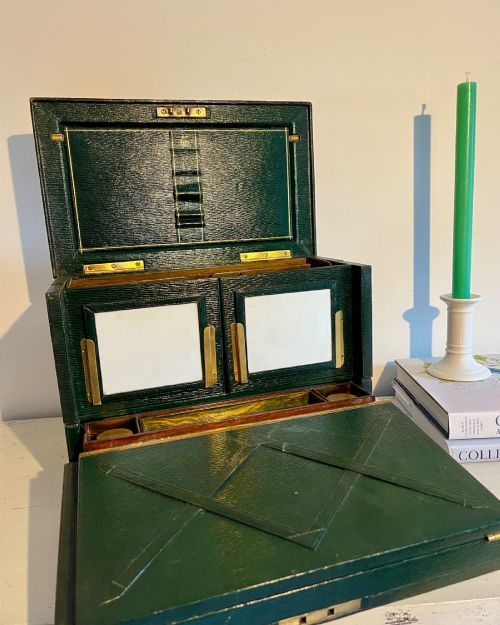
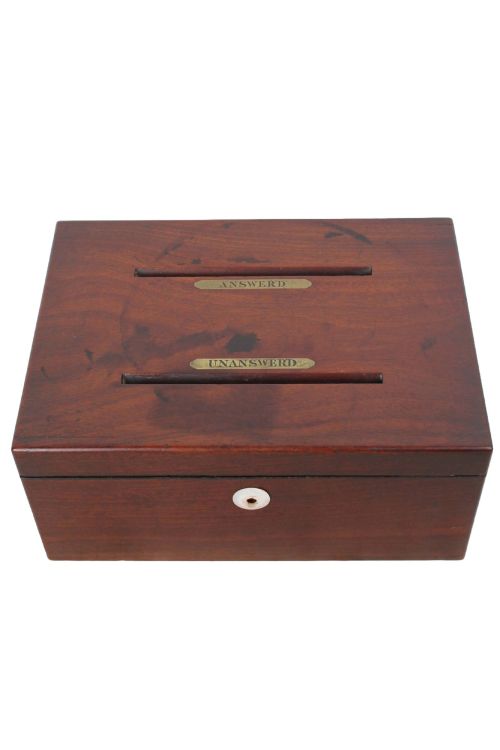
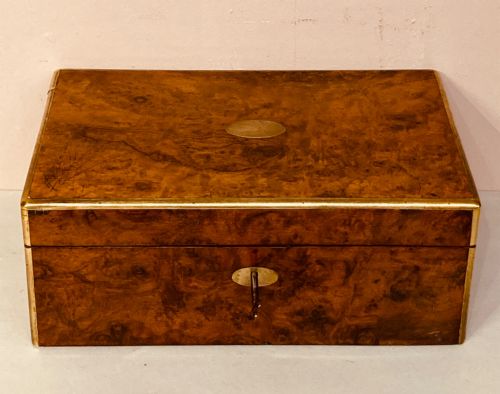
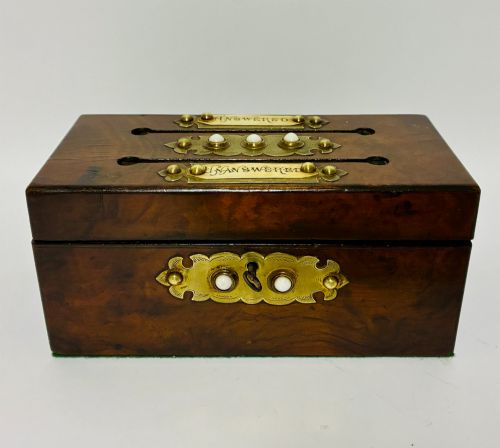
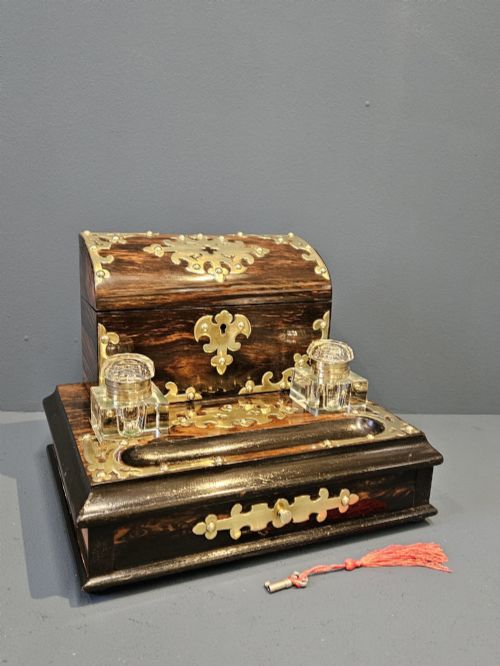
A brass stationery box encompasses desktop storage containers designed to hold letters, envelopes and writing equipment securely. The search phrase reveals diverse forms, including fall-front cabinets, domed caskets, letter boxes and slope-front combinations originating from the Georgian, Victorian and Edwardian periods.
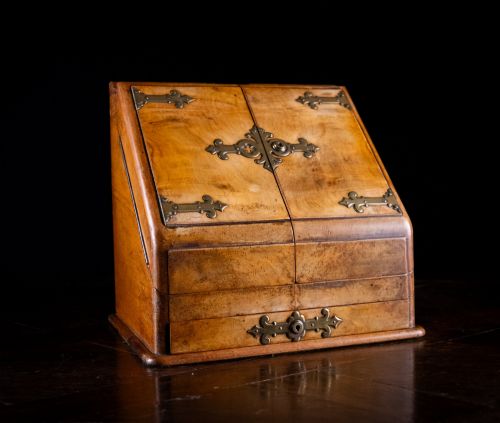
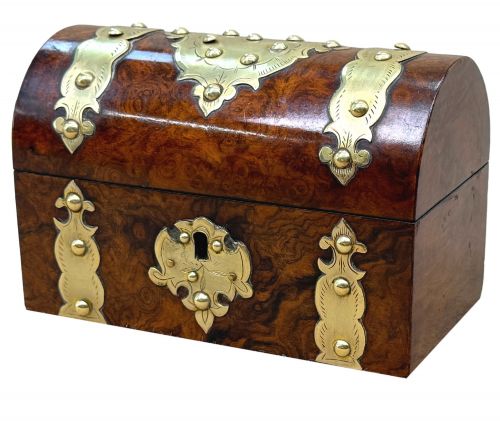
Most examples encountered on this page date from the nineteenth century, reflecting an era when correspondence required dedicated housing. Walnut, mahogany and oak carcasses appear frequently, heavily reinforced with brass corners, straps and inlay to withstand daily use in country houses and studies.
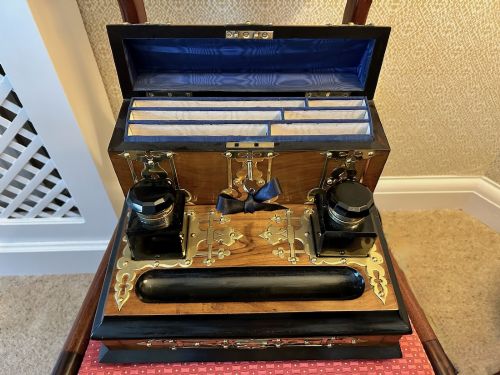
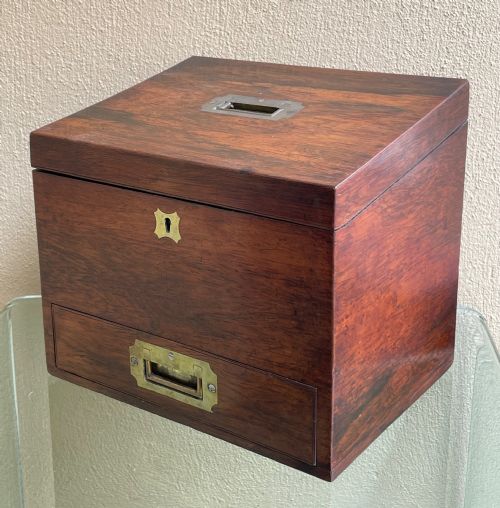
Beyond standard desk tidies, the listings demonstrate considerable variation in function, ranging from slope-front writing boxes with secret drawers to multi-section letter racks and campaign boxes. These pieces served travellers and stationary homeowners alike, combining robust structural timber with ornamental metalwork.
How they were made
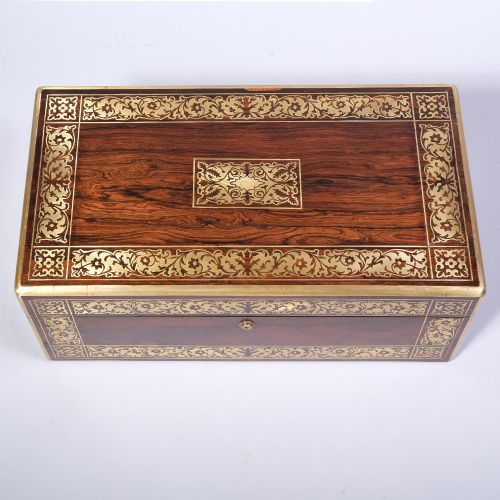
Constructed primarily from dense hardwoods such as burr walnut, rosewood, mahogany and oak, these boxes rely on stable joinery to support heavy timber carcases. Richly grained veneers like coromandel and burr walnut are frequently applied to exterior surfaces, providing a figured backdrop for metal ornamentation.
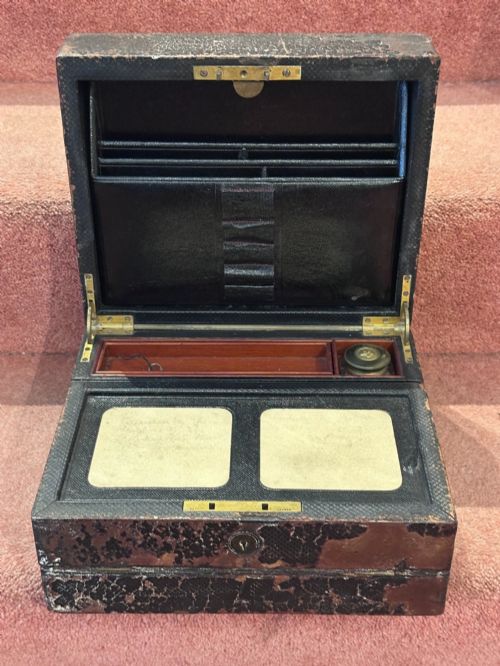
Interiors reveal careful woodworking, featuring fitted compartments for pens, inkwells, stamps and stationery dividers, occasionally complemented by tooled leather surfaces and velvet linings. Secret drawers and spring-loaded mechanisms are integrated seamlessly into the timber framework of finer slope forms.
The archive records stationery boxes enhanced with unusual decorative elements including agate cabochons, mother of pearl and alabaster mounts.
What varies in quality
Quality rests significantly on the selection of timber veneers and the precision of the brass integration. Superior boxes utilise richly figured burr walnut, coromandel or rosewood with matched grain patterns across the lid and panels, rather than plain or poorly joined timber.
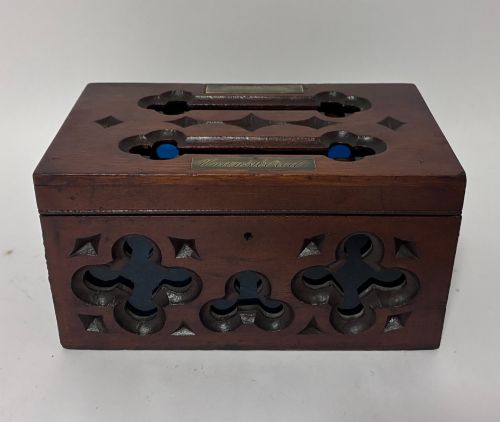
The execution of the metalwork distinguishes standard utility items from exceptional workshop output. Heavy cast brass mounts, flush-fitting strapwork, and intricate fretted designs demonstrate superior craftsmanship compared to thin, stamped metal sheets pinned superficially to the wood.
Interior architecture and mechanism complexity further separate tiers of production. Fully fitted compartments with working locks, secret drawers, matched glass inkwells and intact leather or velvet surfaces indicate higher original commission standards.
Erhard and Soehne
The Brass Stationery Box Glossary
- Strapwork
- Decorative metal bands applied across the exterior of a box to reinforce corners and joints. It frequently appears in brass or gilt brass on nineteenth-century caskets.
- Campaign box
- Portable writing or stationery furniture designed for travel. These pieces typically feature recessed brass drop handles and robust corner bindings.
- Fall-front
- A hinged front panel that drops downward when opened to provide access to interior letter slots and stationery tiers. This mechanism is common in upright desktop cabinets.
- Escutcheon
- A protective plate surrounding a keyhole. On these boxes, they are usually cast or engraved brass, often matching the corner brackets and strapwork.
- Burr walnut
- A highly prized timber veneer harvested from walnut tree growths, producing swirling, knotty grain patterns. It forms the primary exterior surface for many mid-Victorian desktop boxes.
Brass Stationery Box: Frequently Asked Questions
What is a brass stationery box used for?
These boxes were designed to hold writing paper, envelopes, correspondence and stamps neatly on a desk or table. They kept personal and business writing materials protected from dust and neatly sorted.
Many incorporated dedicated compartments for inkwells and pens, serving as self-contained writing stations in Victorian and Edwardian studies.
How do I date a Victorian stationery box?
Dating relies on combining timber choices, brass mount styles and construction methods. Mid-century pieces often feature heavy brass strapwork on burr walnut, while later Edwardian examples tend toward simpler oak designs.
Interior fittings and lock types also provide clues, as mass-produced hardware replaced hand-cast brasses toward the end of the nineteenth century.
Are writing slopes and stationery boxes the same?
While both serve correspondence, writing slopes feature an angled surface designed for writing upon directly, often opening to reveal a sloping desk platform and internal storage.
Stationery boxes are primarily upright cabinets or caskets meant for storing paper, letters and envelopes rather than providing a writing desk surface.
What woods were used for these boxes?
Cabinetmakers utilised dense, decorative hardwoods capable of supporting heavy brass mounts. Burr walnut, rosewood, mahogany and oak are the most common timbers found across these listings.
Exotic decorative veneers such as coromandel, zebrano and camphor wood also appear on select nineteenth-century pieces to create striking visual contrast.