

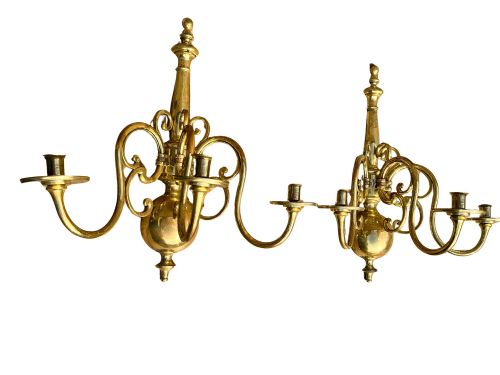


Brass Sconce Candle Holders
These brass sconce candle holders bring warm, reflective light to a room through cast metal and mirrored mounts.
Brass Sconce Candle Holders
When you search for brass sconce candle holders, you find wall-mounted lighting and matching table pieces spanning the Georgian, Victorian, and Edwardian periods.
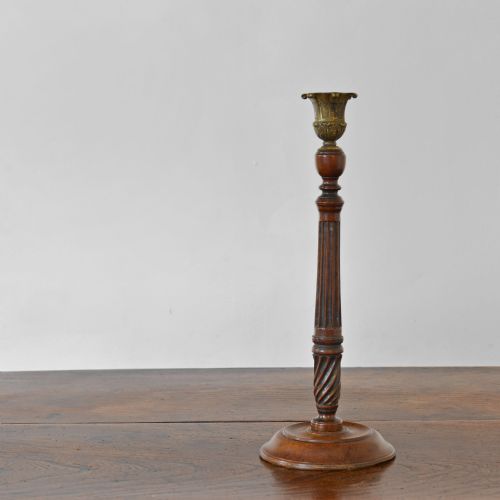
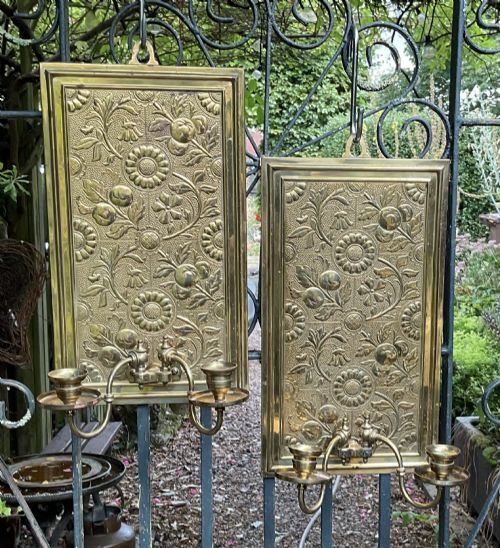
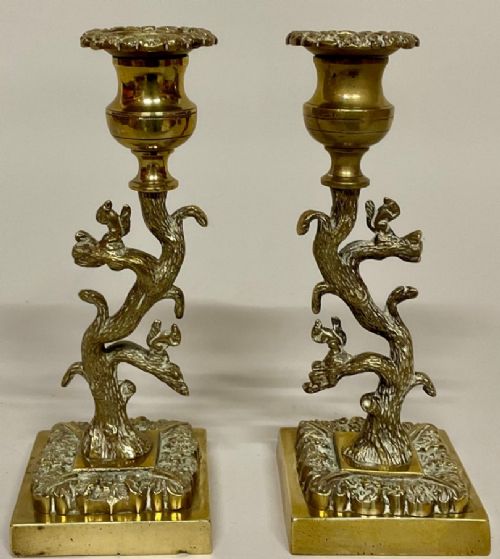
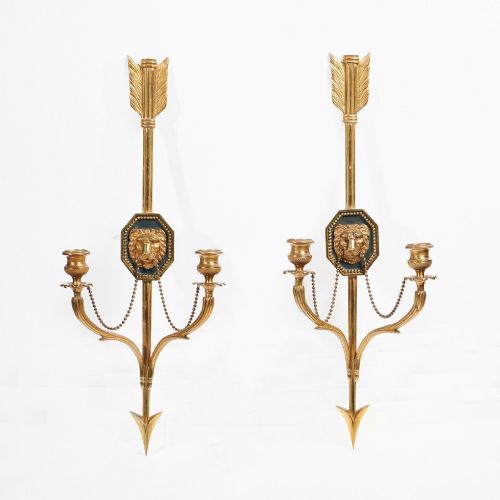
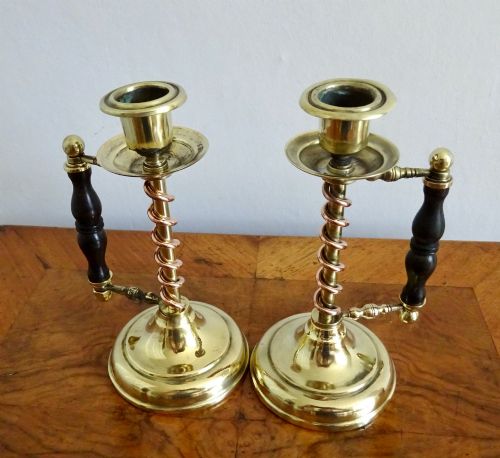
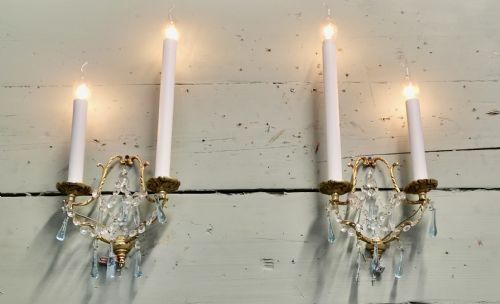
The selections on this page range from simple church candlesticks and twisted brass stems to elaborate French Empire wall lights and mirrored girandoles.
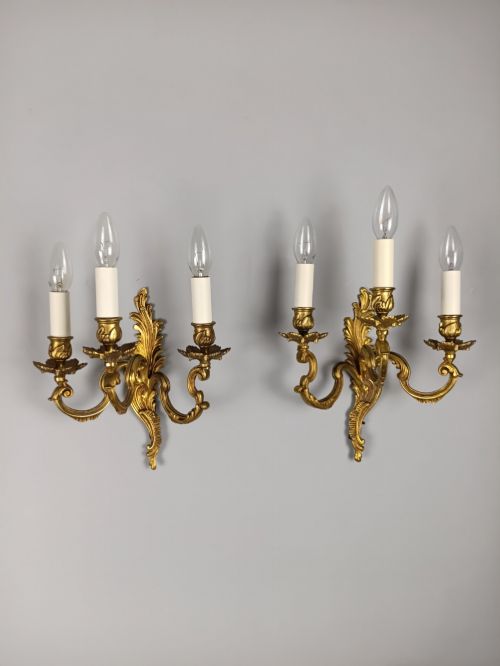
Makers and designers of these fixtures utilised varied styles including Gothic Revival, Aesthetic Movement, and Rococo to suit period interiors.
Materials and construction
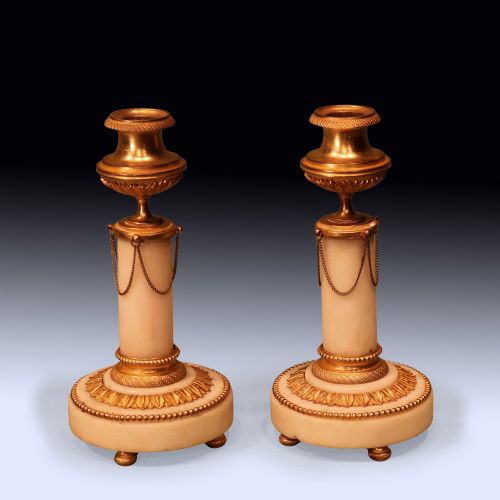
The pieces combine cast brass, gilt bronze, and ormolu with supportive elements of mahogany, oak, and white marble.
Metalwork techniques involve casting, chasing, and mounting, often pairing polished brass with copper, glass, and velvet details.
The inventory includes items from the eighteenth, nineteenth, and early twentieth centuries, featuring wood, glass, and velvet alongside brass.
Factors of quality
Quality rests in the crispness of the metal casting and the depth of the chasing on gilt bronze and brass surfaces.
Refinement appears in how securely secondary materials like marble, onyx, and mirrored glass integrate with the primary metal structure.
Bruce Talbert·Gillows·Liberty
The Brass Sconce Candle Holders Glossary
- Girandole
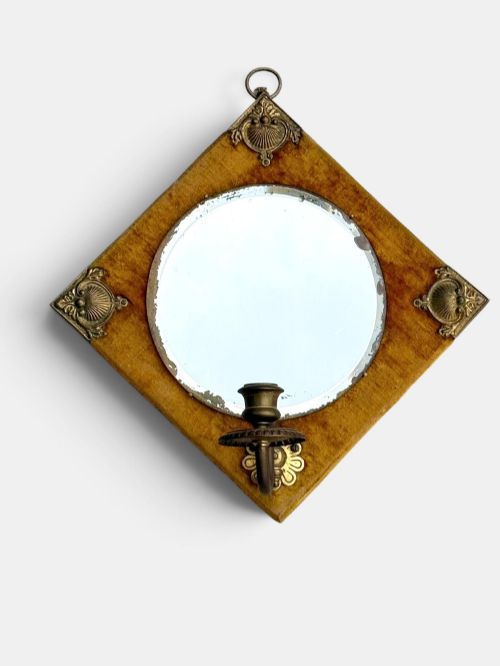
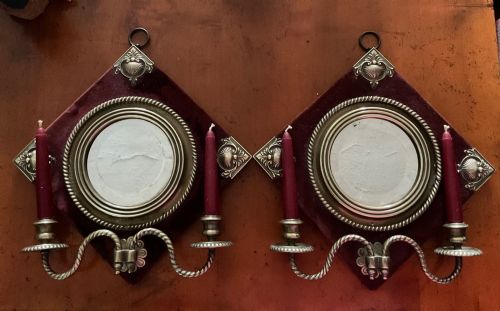
- A branched wall light or sconce fitted with a mirror to reflect the candlelight. These pieces often feature ornate gilded frames.
- Ormolu
- Gilded bronze popular in French and English decorative metalwork. The technique involves applying a gold amalgam to a bronze base.
- Campana
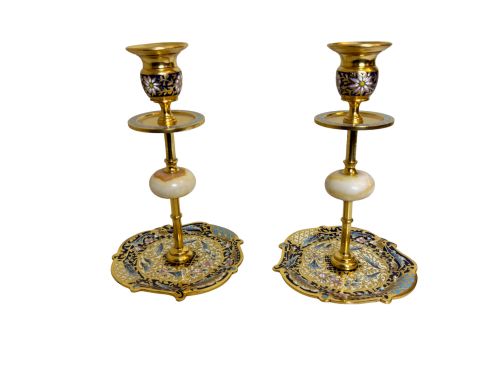
- A vase-shaped candle socket resembling an inverted bell. This form appears frequently on classical candlesticks.
- Champlevé
- An enamelling technique where troughs are dug into a metal surface and filled with vitreous colour before firing.
Brass Sconce Candle Holders: Frequently Asked Questions
How do I mount a wall sconce?
Wall sconces attach securely to walls using integrated brackets, hanging loops, or backplates designed to support the weight of the metal and glass.
Heavier examples cast in bronze or paired with marble require solid wall anchors to bear the load safely.
What is the difference between a sconce and a candlestick?
Sconces mount directly onto vertical surfaces such as walls or wooden panels to project light outward into a room.
Candlesticks possess a base designed to stand upright on flat horizontal surfaces like tables, mantelpieces, or altars.
How do I date an antique brass candlestick?
Dating relies on manufacturing marks, assembly methods, and stylistic cues such as the turn of the stem or the shape of the base.
Georgian and Regency examples show different casting textures and proportions compared to later Victorian and Arts and Crafts productions.
Were mirrors always part of candle sconces?
Mirrored glass plates frequently backed wall sconces and girandoles to multiply the illumination cast by a single candle.
The reflective surface amplified the warm light before electricity became common in domestic interiors.