
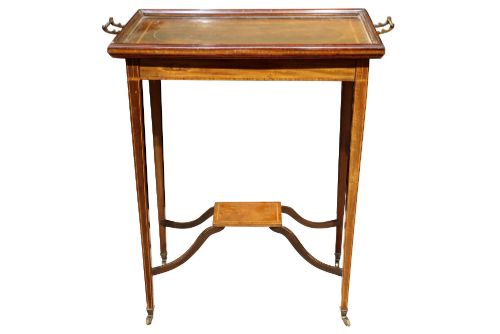
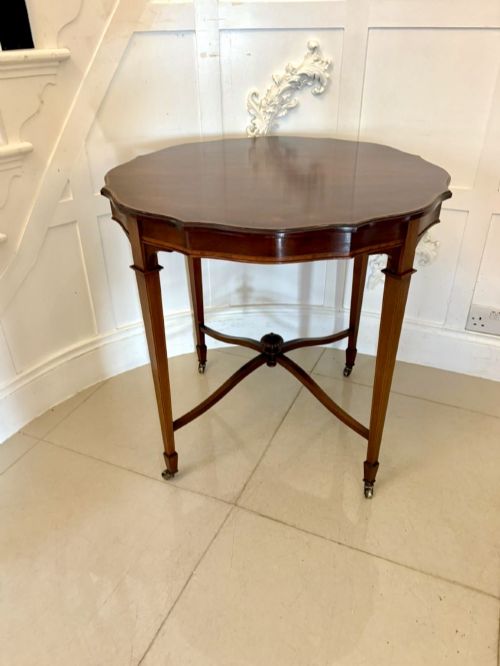
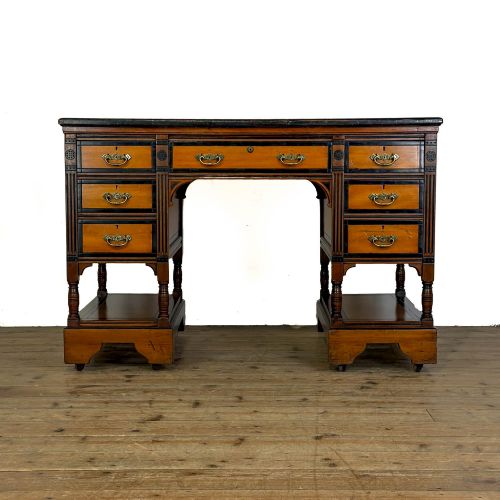
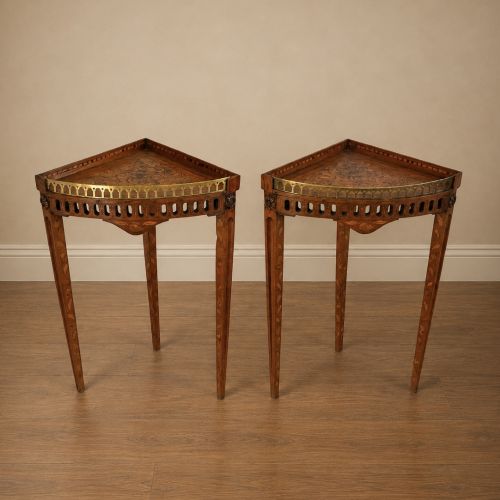

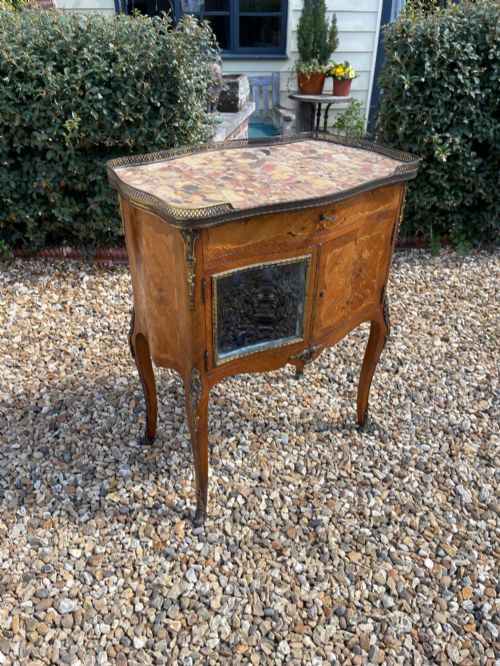


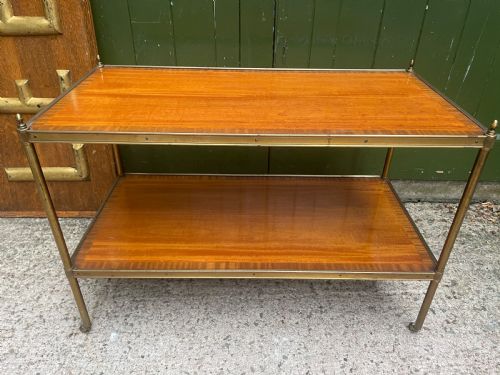
Brass Satinwood Side Table
A brass satinwood side table brings golden timber and metal detail together, offering a compact surface suited to a drawing room or study.
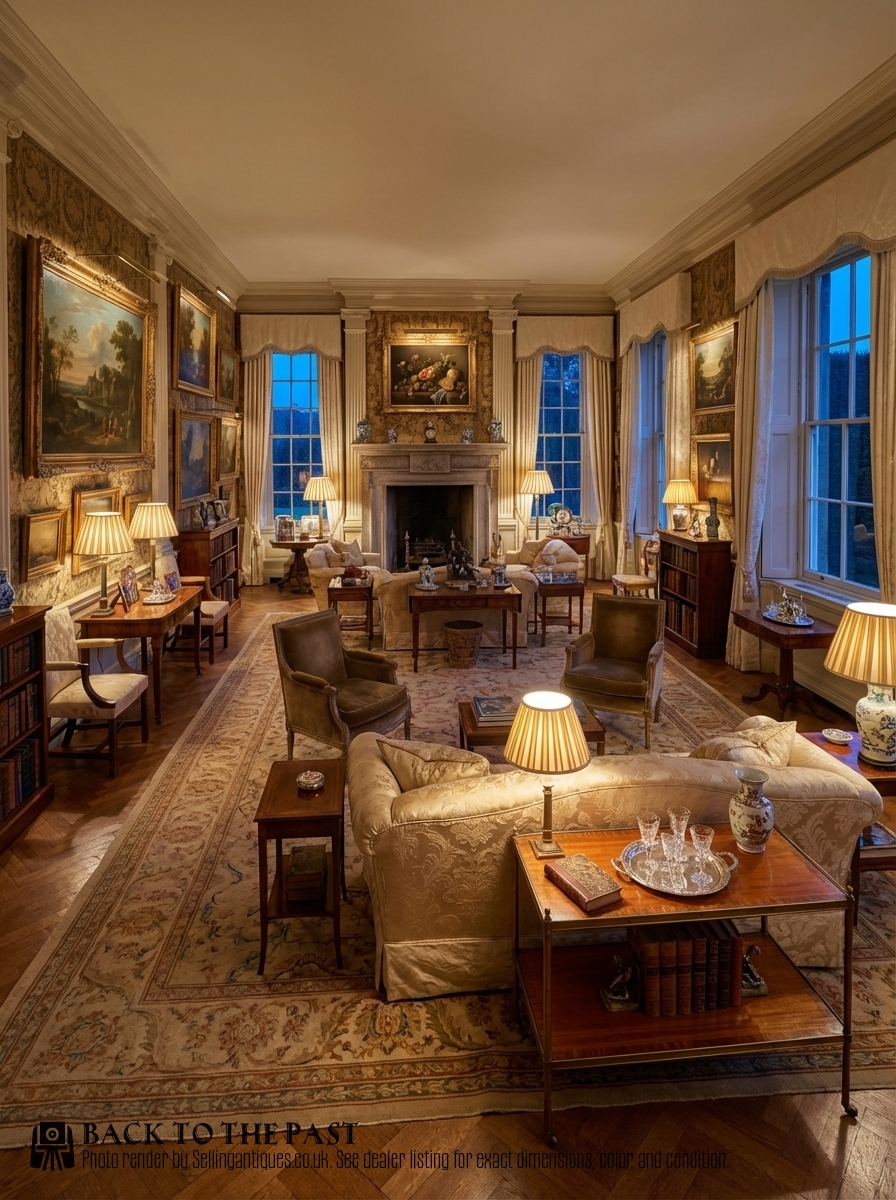
Brass Satinwood Side Table
When you search for a brass satinwood side table, you encounter smaller occasional furniture spanning the Georgian, Regency, Edwardian and late nineteenth century periods. These pieces take forms such as Pembroke tables, tray tables, etagères and lamp tables, often accented with contrasting banding or marquetry.
The satinwood used on these tables provides a pale, reflective yellow ground that catches the light differently than darker timbers like mahogany or rosewood. They frequently incorporate brass galleries around the top edge or brass framing along the legs and tiers.
While some examples date to the eighteenth and early nineteenth centuries in the Sheraton or Regency taste, a significant portion on this page originates from the Edwardian period and the early twentieth century revival eras. These later iterations frequently employ Sheraton Revival or French revival styles while maintaining the characteristic brass and satinwood palette.
Judging quality and craftsmanship
Quality in these tables rests on the crispness of the timber selection and the precision of the inlay work. Finer examples show tight, symmetrical figuring in the satinwood veneer and clean junctions where the brass gallery meets the wooden top.
Construction methods also separate standard production from superior cabinetwork. Better pieces retain original brass fittings, smooth-running drawer linings where applicable, and joinery that remains tight despite changes in household humidity.
Listings span the eighteenth century through to the 1920s, encompassing Georgian, Regency, Edwardian and French Rococo Revival styles.
The Brass Satinwood Side Table Glossary
- Satinwood
- A dense, lustrous timber from tropical trees displaying a characteristic golden-yellow sheen and fine grain. It was heavily utilised during the eighteenth and nineteenth centuries for veneering high-status furniture.
- Pembroke table
- A small rectangular table featuring two hinged drop leaves on opposing sides. It typically includes one or two small drawers and rests on four legs, often fitted with castors.
- Étagère
- A set of open shelves or tiers supported by columns or a metal frame, designed for displaying small objects or lamps. In the evidence, these frequently incorporate brass framing and multiple satinwood shelves.
- Marquetry
- The art of applying thin veneers of different coloured woods to a structural panel to create decorative patterns or pictures. It differs from inlay by covering the entire surface rather than being set into recesses.
Brass Satinwood Side Table: Frequently Asked Questions
What is a brass satinwood side table?
A brass satinwood side table is a small occasional piece of furniture featuring golden satinwood timber combined with brass galleries, framing or mounts. These tables include forms such as Pembroke tables, tray tops and etagères.
They were designed for decorative and functional use in principal rooms, providing a light-reflecting surface for lamps, books or tea services.
Where were these tables placed originally?
These tables sat primarily in drawing rooms, parlours and boudoirs as convenient surfaces for daily use. Drop-leaf and Pembroke versions could be moved easily and expanded when needed.
Tiered etagères and lamp tables held lighting, ornaments or writing materials within easy reach of seating areas.
How do I care for satinwood furniture?
Satinwood requires stable indoor humidity and protection from direct sunlight to prevent the pale timber from darkening unevenly or drying out. Gentle dusting with a dry or very slightly damp cloth preserves the polished surface.
Avoid silicone-based polishes and keep the brass elements clean using appropriate metal maintenance methods that avoid touching the surrounding wood.