


Brass Drinks Table
These brass drinks table pieces combine metal frames with timber trays to serve refreshments across Georgian, Victorian, and Edwardian periods.
Brass Drinks Table
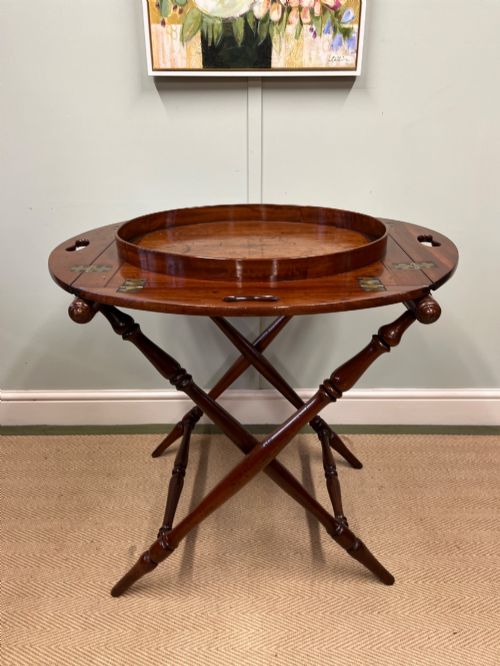
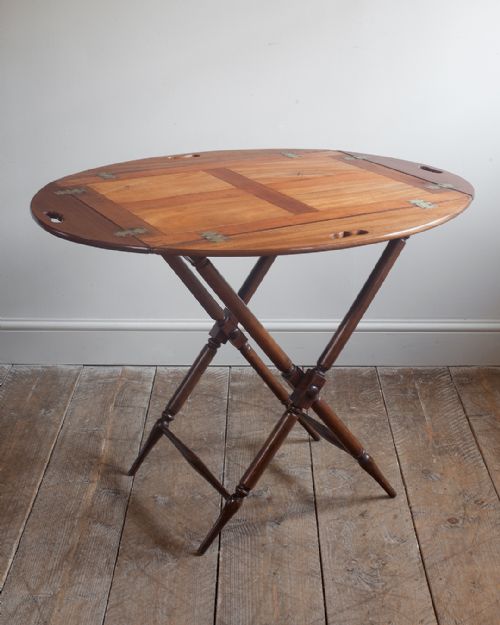
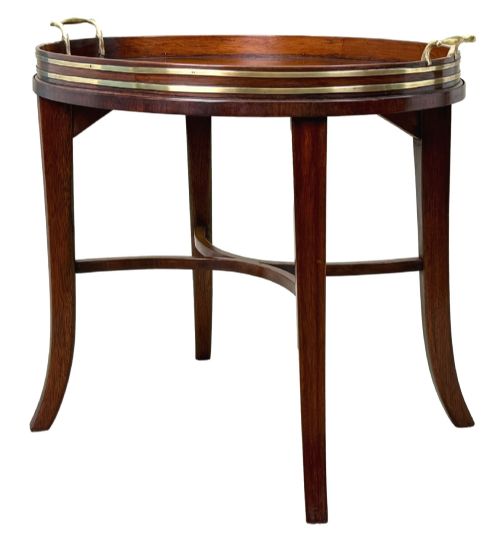
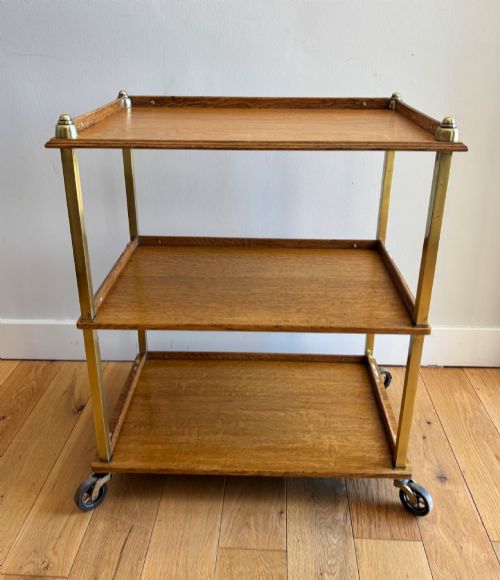
A brass drinks table serves as a portable or stationary surface for serving beverages, taking the form of etageres, trolley tables, and butler trays on stands. These pieces appear across 18th century, Georgian, Victorian, Edwardian, and 1930s periods, reflecting shifting social habits around hospitality and entertaining.
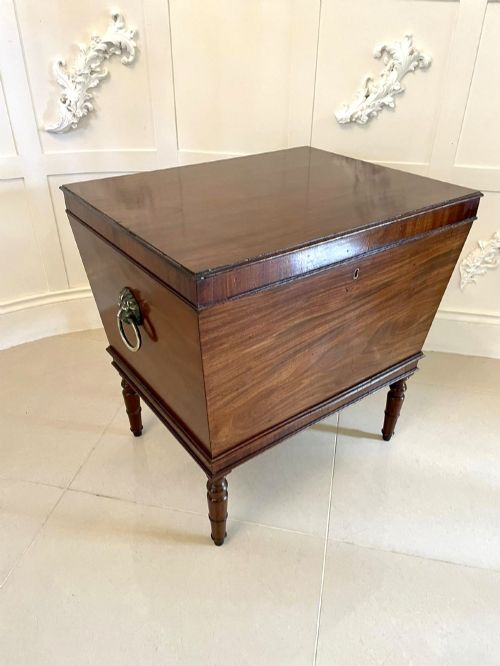
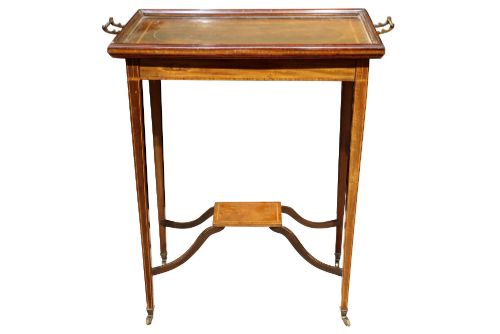
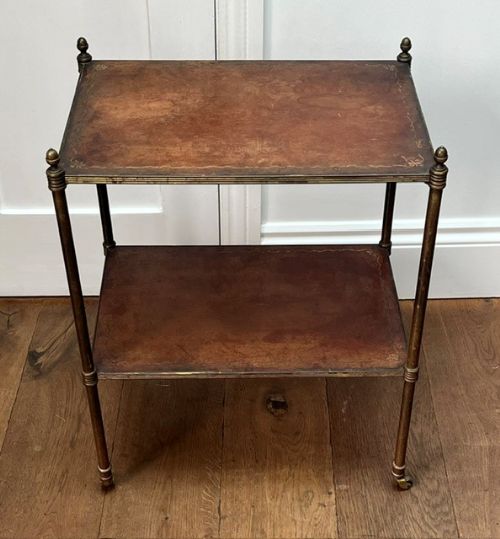
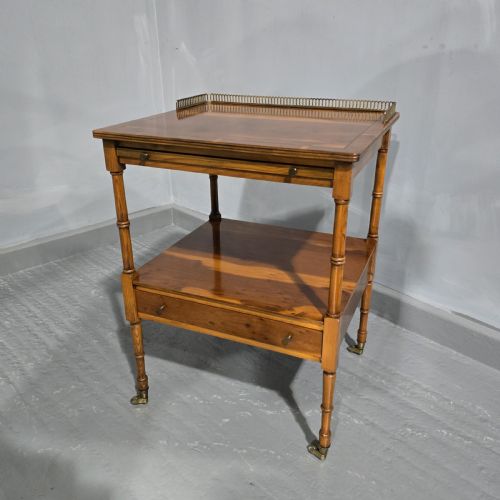
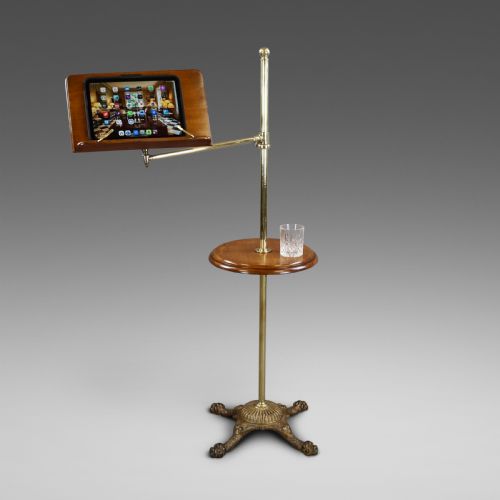
The most frequent examples on this page pair brass frames or mounts with timber surfaces such as mahogany, satinwood, and oak. Forms range from two-tier serving stands and drop-flap trays to wine cellarettes and occasional wine tables.
Origins span English cabinetmaking traditions alongside French-influenced designs like Louis XV styles and pieces associated with makers such as Maison Baguès and Mallett of London.
Materials and Technique
Construction relies heavily on structural metals paired with dense hardwoods, utilising brass for framing, bound edges, and castors alongside mahogany, satinwood, oak, and yew for the main surfaces. Joinery techniques support removable tray tops and folding or fixed stands.
Surface decoration incorporates tooled leather inserts, marquetry inlay, lacquered finishes, glass tiers, and ebonised detailing. Metalwork utilises cast brass frames and protective bound decoration around timber edges.
Craft and Proportion
Quality rests in the precision of the metal framing, the integrity of the timber veneers such as quarter-veneered mahogany, and the crispness of marquetry or inlaid decoration. Better examples maintain rigid structural stability in folding mechanisms and tier supports.
Material selection divides standard utilitarian items from finer decorative works, seen in the use of solid brass versus plated alternatives, and cabinet timbers like Cuban mahogany or figured satinwood.
Mallett of London·Maison Baguès
The Brass Drinks Table Glossary
- Etagere
- A set of open shelves or tiers used for displaying or serving items. These often feature two or three levels framed in brass with timber or glass surfaces.
- Butlers Tray
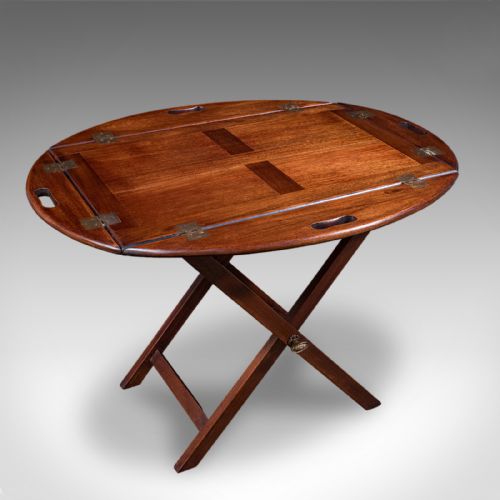
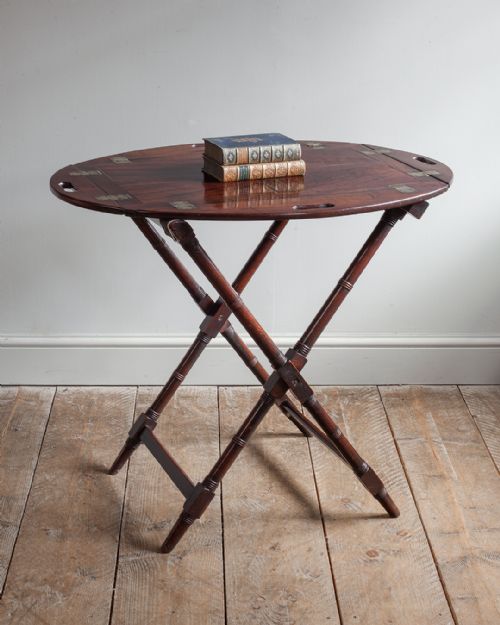
- A removable wooden tray with raised sides, frequently fitted with cut-out carrying handles, designed to rest on a folding or fixed stand.
- Cellarette
- A lockable container or cabinet used for holding bottles of wine and spirits. Examples from the Georgian period often incorporate brass bound decoration.
- Marquetry
- Decorative veneer work arranged in geometric or pictorial patterns using various coloured woods. This technique appears on Edwardian tray tops and occasional tables.
Brass Drinks Table: Frequently Asked Questions
What is a brass drinks table?
A brass drinks table is a small surface designed for serving beverages, typically constructed with a metal frame and a timber or glass top.
These pieces include etageres, tray tables, and trolleys originating from the Georgian, Victorian, and Edwardian eras.
How were butler trays used?
Butler trays were utilised to carry food and drinks from kitchens to entertaining rooms before being placed upon a separate folding stand.
The removable tray top allowed servants to transport items efficiently while keeping the main frame stationary.
How do I date a drinks table?
Dating depends on observing timber species, construction methods, and stylistic cues such as Georgian bracket feet or Edwardian inlaid marquetry.
Comparing hardware like brass binding and castors against known period examples helps narrow down the decade of manufacture.
Are these tables sturdy enough for daily use?
Most antique serving tables and trolleys are built from hardwoods like mahogany and oak supported by brass frames, making them durable for regular placement of glassware.
Care should be taken with folding mechanisms on antique stands to preserve the original joinery.