
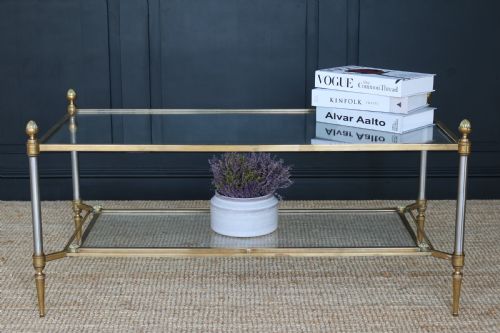


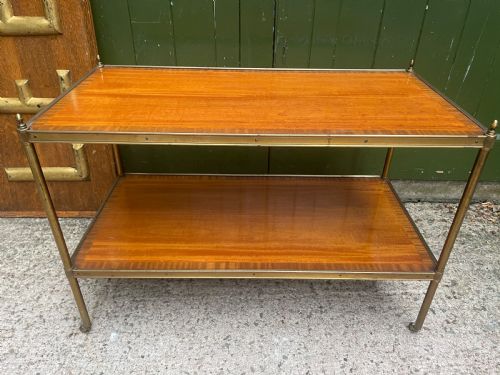

Low Two Tier Table
A low two tier table offers doubled surface space without bulk, making it a clever choice for compact sitting rooms.
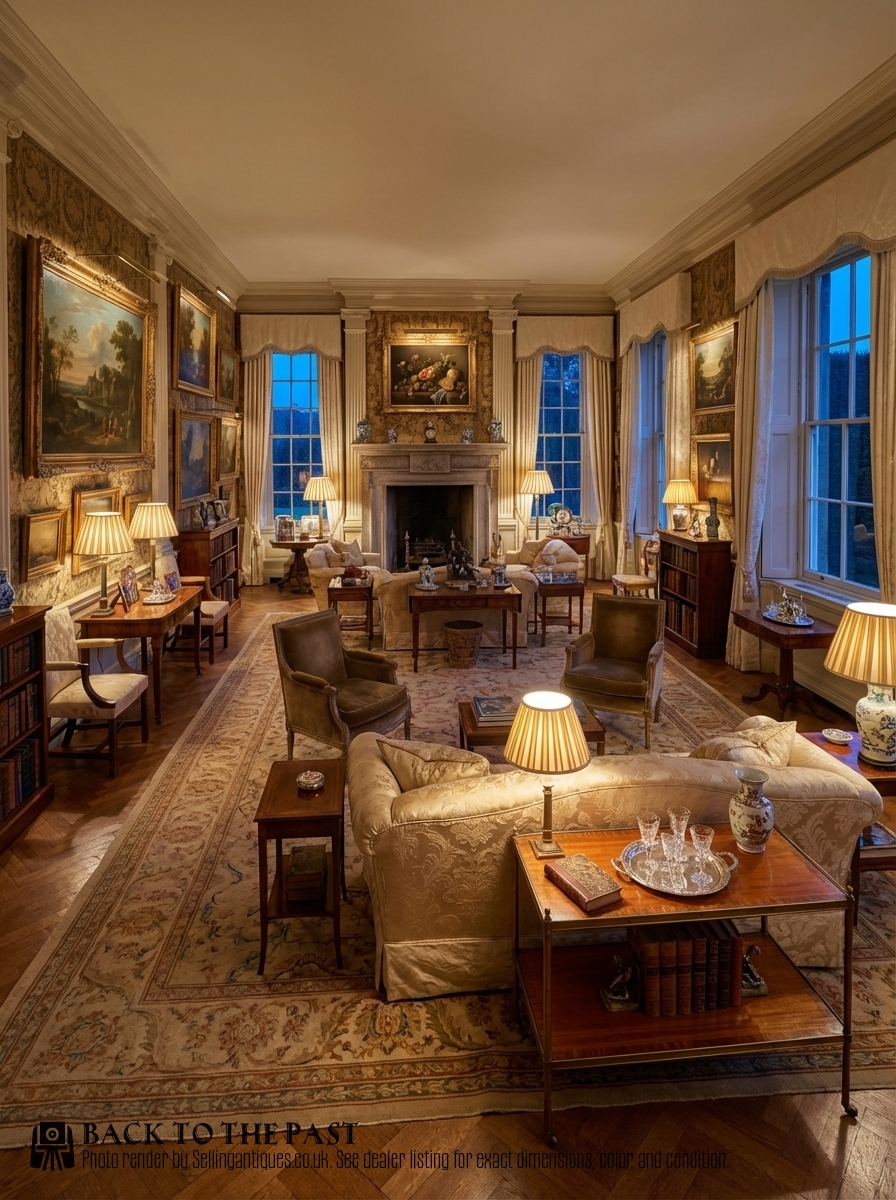
Low Two Tier Table
When you search for a low two tier table, you find multi-level surfaces designed to sit beside sofas or hold lamps in a living space. These pieces provide an upper deck for daily use and a lower shelf for books or smaller objects.
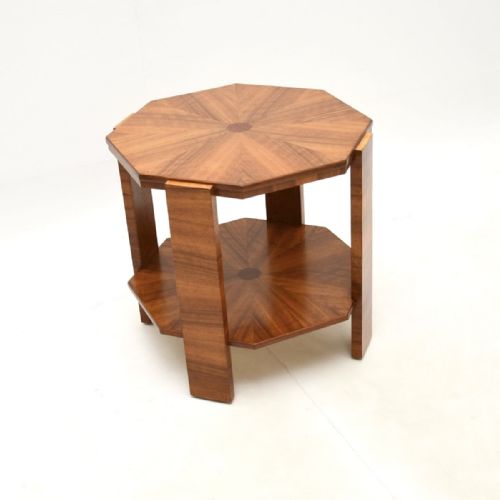
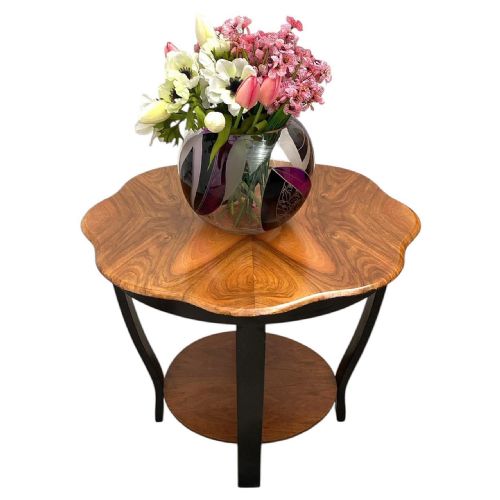
The versions you meet most often on this page date from the 1930s and lean heavily into Art Deco design. They appear in walnut and oak, offering practical utility with distinct period character.
How they were made
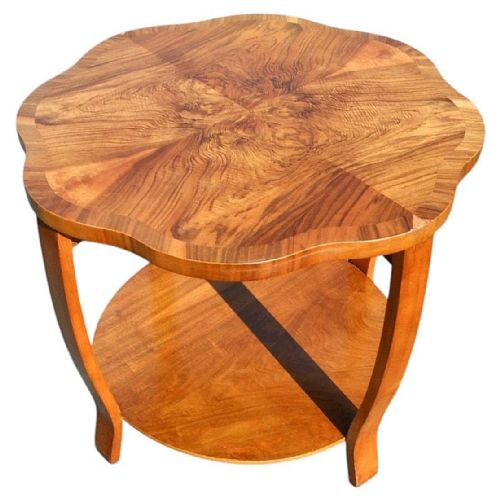
Cabinet makers utilised solid timbers alongside veneer techniques to construct these frames. Walnut, figured walnut, and oak form the structural backbone of the period pieces, often paired with glass or metal accents.
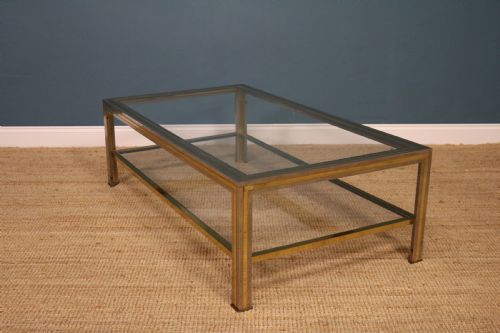
Metal-work also plays a distinct part in the construction of mid-century examples. Brass and chrome elements appear alongside wood to create lighter, reflective frameworks.
The listings on this page span several decades, featuring materials ranging from figured walnut and oak to brass and chrome.
What varies in quality
The selection of timber grain largely dictates the visual merit of each piece. Figured walnut and satin birch display deliberate patterning that separates standard utility items from more ambitious commissions.
Construction methods and hardware integration also set examples apart. Well-executed joints and polished metal framing indicate a higher standard of workshop production.
Gilbert Rohde·Majorelle·Maison Jansen·Romeo Rega
The Low Two Tier Table Glossary
- Tier
- A stacked level or shelf within a piece of furniture. It doubles the usable surface area without increasing the footprint.
- Veneer
- A thin slice of superior wood applied over a stable secondary timber. This technique allows makers to display striking grain patterns economically.
- Etagere
- A set of open shelves designed for display. These low formats provide accessible storage close to floor level.
- Art Deco
- A design style spanning the 1920s and 1930s characterised by geometric symmetry and streamlined forms. It remains the dominant aesthetic for these tables.
Low Two Tier Table: Frequently Asked Questions
How do I use a two tier table?
Place the table beside a sofa or armchair to keep drinks on the top surface while storing magazines or books on the lower shelf.
The stacked design keeps daily items within arm's reach while reducing clutter on the main top board.
What periods do these tables come from?
The selection spans from the nineteenth century through the 1920s and 1930s up to mid-century modern designs.
Art Deco examples from the 1930s dominate the offerings, alongside occasional earlier oak pieces and later metal-framed designs.
Which woods are most common?
Walnut, figured walnut, and oak appear frequently across the period listings. Cabinet makers also utilised satin birch and rosewood for distinctive surfaces.
These timbers are sometimes paired with brass, chrome, or glass to alter the weight of the design.
How do I care for walnut veneer?
Keep the timber away from direct sunlight and excessive heat sources to prevent the thin surface layer from drying out.
Dust regularly with a dry cloth and avoid harsh chemical polishes that can degrade the original finish.