
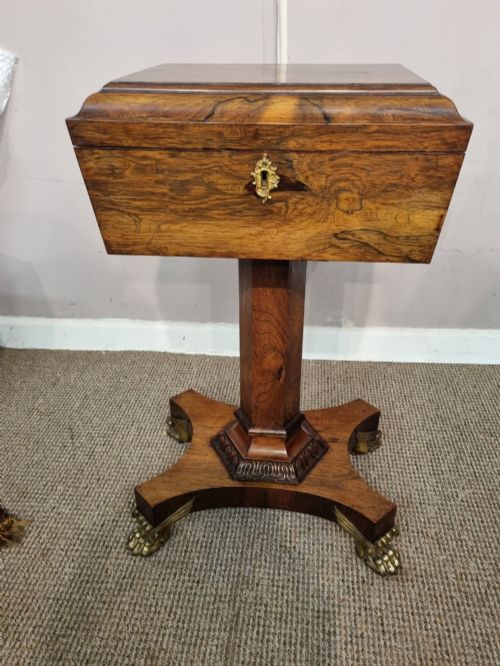


Brass Rosewood Tea Caddy
A brass rosewood tea caddy is a refined wooden box designed to store loose tea leaves securely, prized for its warm grain and decorative metalwork.
Brass Rosewood Tea Caddy
A brass rosewood tea caddy is a decorative storage container for dried tea leaves, originating mainly from the Regency and Victorian periods. Most examples encountered here take the form of oblong boxes, sarcophagus shapes, or tea caddies mounted on stands known as teapoys.
The objects combine dense, dark tropical timber with bright metal embellishments, reflecting the high status of tea in historical households. Alongside standard caddies, the selection includes related items such as sewing boxes sharing the same materials and period styling.
Materials and technique
Cabinetmakers constructed these pieces using rosewood as the primary timber, valued for its rich colour and prominent grain patterns. Surfaces frequently incorporate brass inlay, forming geometric lines, scrolls, or figurative motifs across the lids and panels.
Additional detailing often involves contrasting materials such as boxwood stringing, bone escutcheons, and mother-of-pearl accents. Many examples also feature interior compartments and fitted mixing bowls made from glass or crystal.
Some caddies include tiny secret compartments hidden beneath the tea canisters for storing spare keys and small notes.
What varies in quality
The distinction between standard and superior pieces rests on the precision of the cabinetwork and the intricacy of the metal inlay. Finer examples display meticulous hand-cut brass work embedded flush into the timber, accompanied by secondary woods and complete internal fittings.
Proportion and form also determine distinction, with sarcophagus silhouettes and caddies raised on dedicated stands representing the more ambitious designs. Preservation of original internal components, locks, and mixing bowls elevates the standing of an individual piece.
The Brass Rosewood Tea Caddy Glossary
- Teapoy
- A pedestal table or large caddy designed to hold tea canisters and a mixing bowl. These pieces usually stand on a central pillar with tripod feet or a platform base.
- Sarcophagus
- A coffin-like container shape with a domed or peaked lid, popular during the Regency period for tea caddies. This form allows for generous interior storage capacity.
- Inlay
- A technique where pieces of contrasting material, such as brass or boxwood, are inserted into depressions in the wood surface. This creates a flat, decorative pattern across the exterior.
- Escutcheon
- A small plate surrounding a keyhole, often made from bone, ivory, or brass. It protects the surrounding wood from wear caused by the key.
- Stringing
- Thin inlay lines of contrasting wood used to outline panels and edges. This linear detail defines the structural geometry of the box.
Brass Rosewood Tea Caddy: Frequently Asked Questions
What is a brass rosewood tea caddy?
A brass rosewood tea caddy is a period wooden box created to preserve precious tea leaves from moisture and air. The dark grain of the timber pairs with polished brass decoration to sit handsomely on a sideboard.
Historically, tea was an expensive commodity kept under lock and key by the head of the household. These containers combined security with decorative elegance for the formal reception rooms of the house.
How were tea caddies used?
These boxes held different varieties of loose tea inside separate internal compartments, preventing the aromas from mingling. A central glass bowl often served for blending leaves or spooning sugar.
The containers stayed in the dining room or drawing room, where the host prepared the brew for guests. Servants usually kept the main stock elsewhere while the caddy remained accessible for daily use.
Where should I place a tea caddy at home?
Tea caddies suit placement on a side table, console, or bookshelf where the timber grain and brass details catch the light. Their compact size allows them to integrate easily into various interior settings.
Keep the wood away from direct sunlight and strong heat sources to prevent the rosewood from drying out. Periodic gentle dusting maintains the finish without harming the historic surfaces.