


Brass Porch Lantern
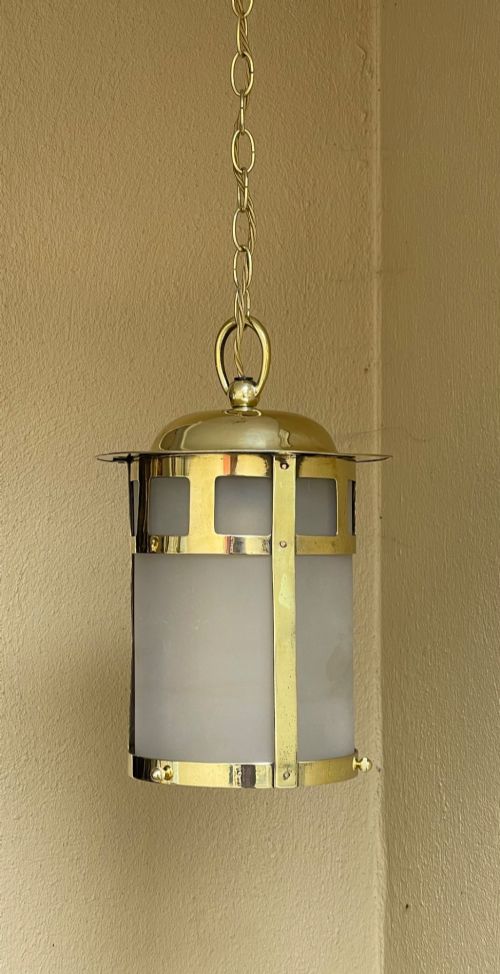
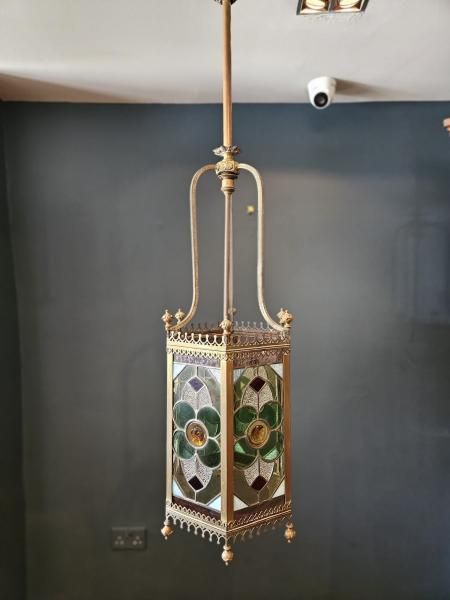
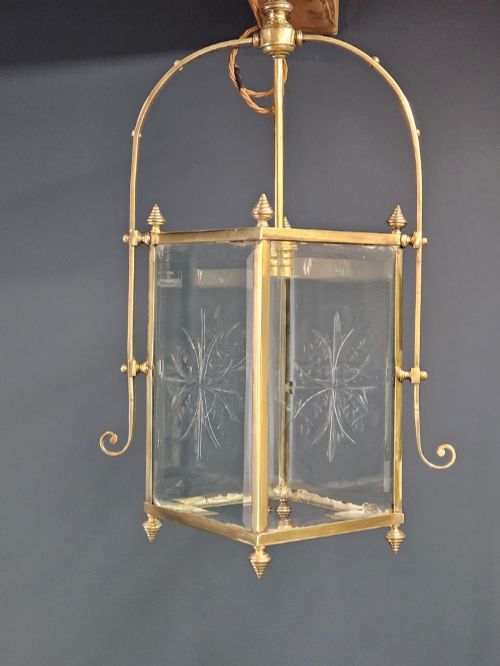
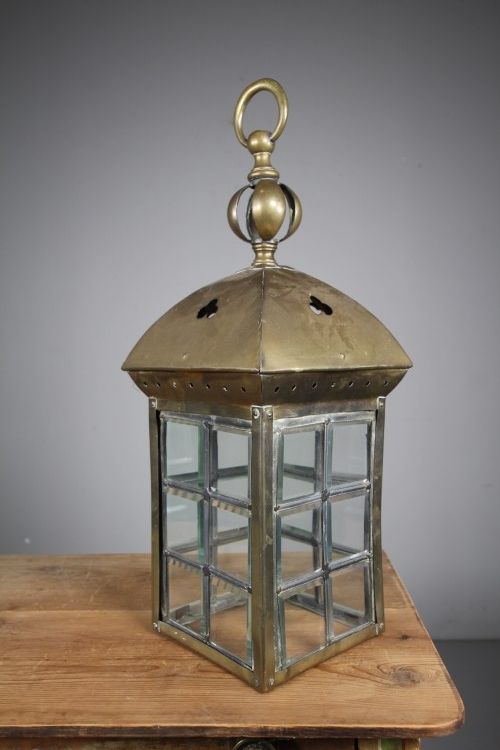
A brass porch lantern sets the threshold tone, casting a warm illumination through leaded or bevelled glass panels.
Brass Porch Lantern
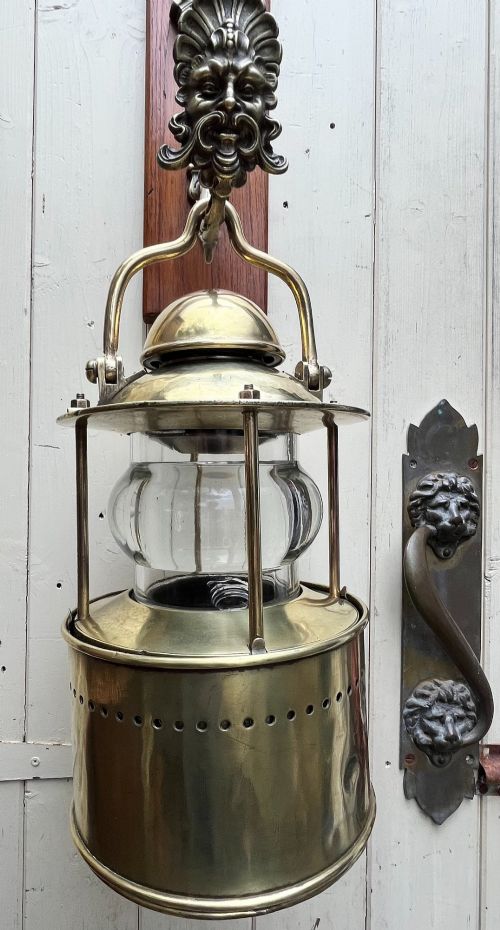
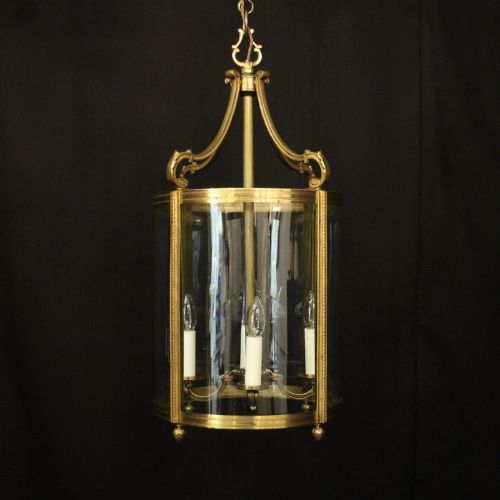
A brass porch lantern provides exterior or entrance illumination in pendant, hanging, wall-mounted, and carriage configurations. These fixtures appear across Victorian, Edwardian, Arts and Crafts, and Art Deco periods, establishing a welcoming approach to a property.
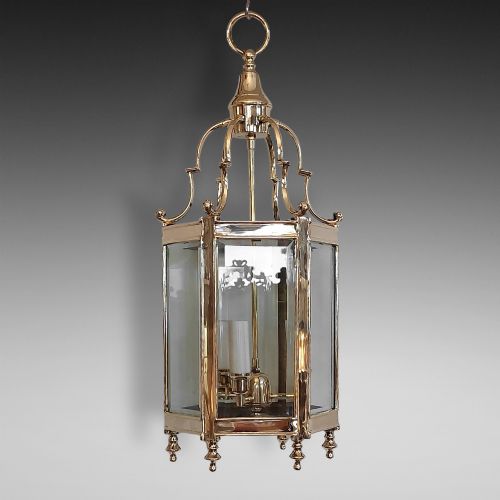
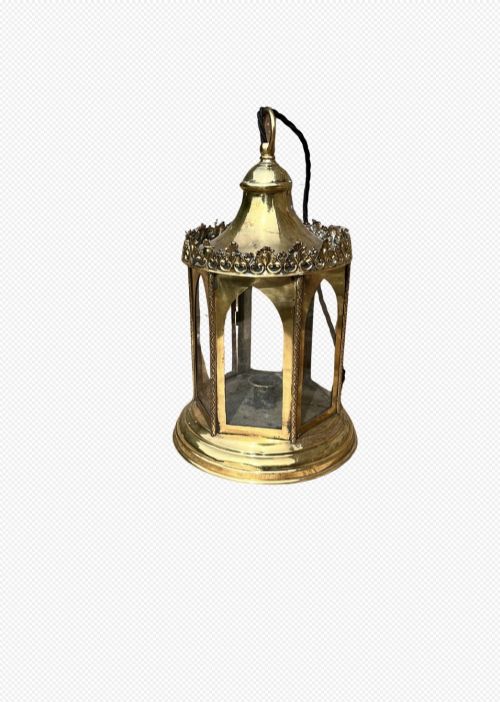
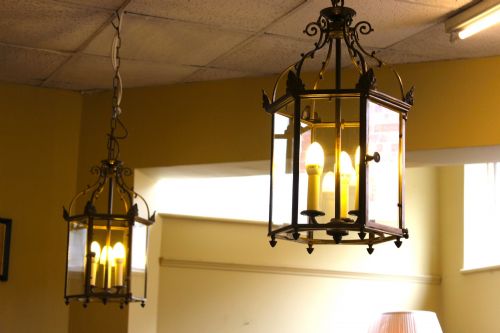
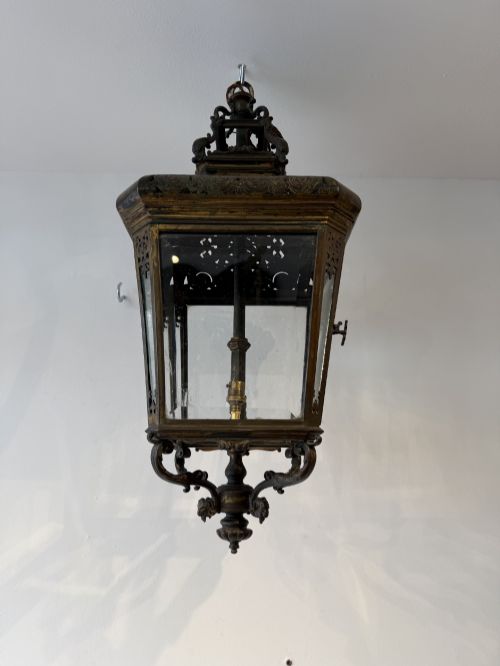
The domestic entrance finds itself lit by hexagonal, rounded, or square hanging lanterns suspended on chains or mounted flush against exterior masonry. Specimens from the late nineteenth and early twentieth centuries dominate the selection, showing distinct regional tastes from English workshops and French foundries.
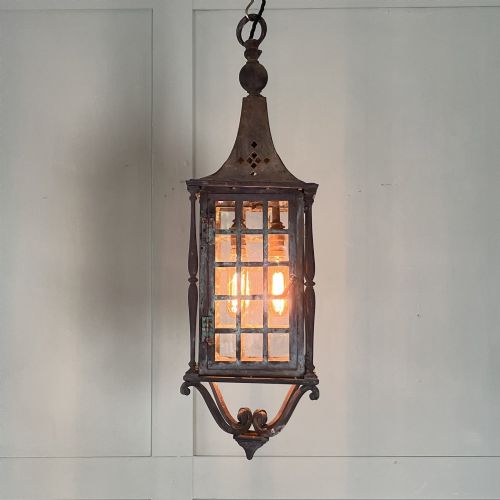
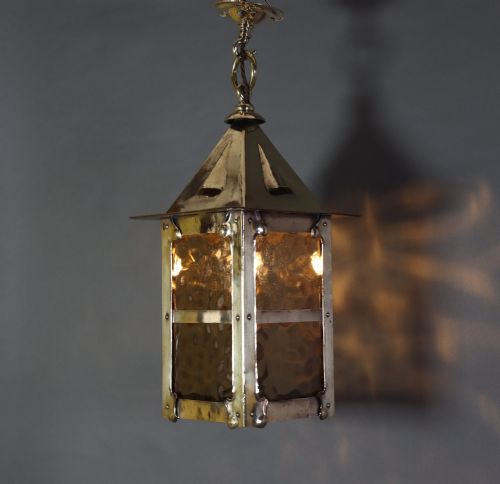
Makers of the Arts and Crafts era applied straightforward geometric frames, whilst Victorian and Gothic Revival examples lean towards architectural tracery and ecclesiastical details. Buyers encounter everything from compact hall lanterns to grand coaching lights designed for country house entrances.
Materials and Construction
Makers constructed these lanterns primarily using brass, bronze, and copper frames joined by soldered seams or mechanical fastenings. Heavy cast or spun metal components provide structural integrity to withstand exterior exposure.
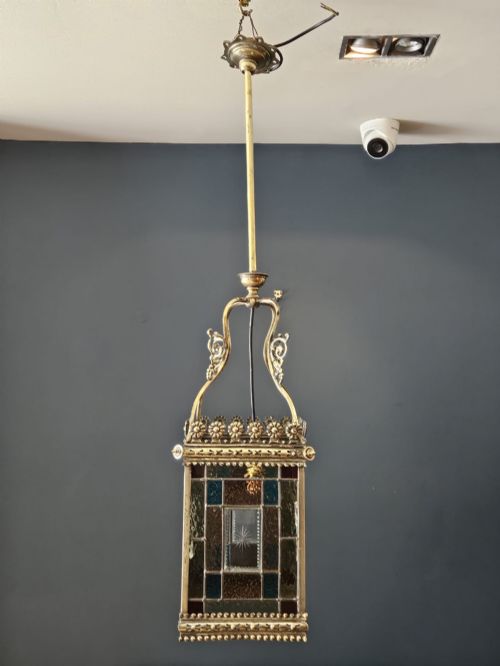
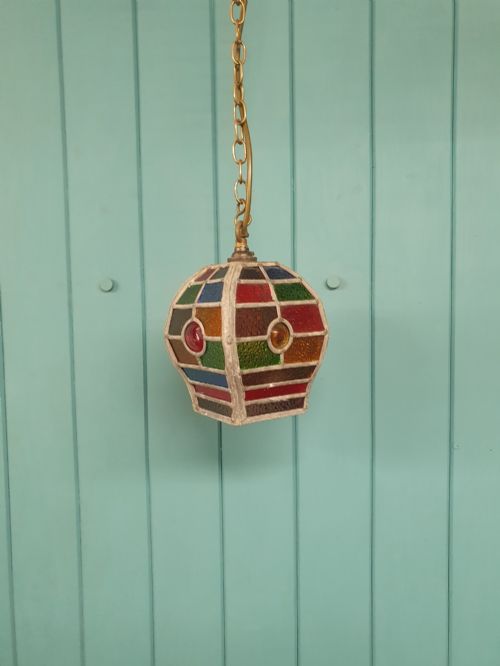
Glazing techniques involve leaded glass, stained glass, cut glass, and plain transparent panels secured within metal rebates. Artisans frequently combined brass frames with copper elements or lead came to hold coloured and textured panes securely in place.
The selection includes French carriage lights, English Arts and Crafts pendant fixtures, and Gothic Revival wall lanterns.
Quality and Craftsmanship
Superior examples distinguish themselves through heavier metal gauges, substantial cast brass mounts, and crisply soldered lead cames holding the glass panels. Finer lanterns display hand-finished details on the metalwork and deliberate proportions that balance the weight of the frame against the glass.
Lighter production pieces or utilitarian carriage lights utilise simpler folded sheet metal and basic mechanical joints. The distinction lies in the architectural ambition of the frame and the quality of the glasswork, from simple clear panes to intricate leaded stained glass.
The Brass Porch Lantern Glossary
- Hexagonal lantern
- A lighting fixture featuring a six-sided frame that distributes light evenly across an entrance hall or porch. This geometry was favoured during the Edwardian period for hanging pendants.
- Leaded glass
- Panes of glass held together by strips of lead, known as cames, soldered at the joints to form decorative patterns. It appears frequently in Arts and Crafts and Victorian lanterns.
- Carriage light
- A wall-mounted lantern originally designed to illuminate the exterior of horse-drawn vehicles or building entrances. Many surviving examples translate this sturdy format to residential porches.
- Gothic Revival
- An architectural and decorative style drawing on medieval ecclesiastical motifs such as pointed arches and quatrefoils. Lanterns in this style often incorporate heavy brass framing and stained glass.
- Hall lantern
- An interior or sheltered exterior pendant light designed to hang in a narrow corridor or entryway. They provide focused vertical illumination through glass panels.
Brass Porch Lantern: Frequently Asked Questions
How do I hang a heavy brass lantern?
Hanging a heavy brass or bronze lantern requires securing the suspension hook directly into a ceiling joist or solid masonry support rather than relying solely on plasterboard. A professional electrician should verify that the ceiling box and wiring can bear the total weight of the metal frame and glass.
Ensure the hanging chain and electrical flex are properly balanced so the lantern suspends level. Outdoor installations require appropriate weather sealing to protect the internal electrical components from moisture.
Can these antique lanterns be used outdoors?
Many surviving lanterns served originally on exterior porches, coaching entrances, and doorways, meaning their brass, bronze, and copper construction naturally resists weathering. However, wiring standards from earlier decades must be updated to modern electrical codes for safe exterior operation.
Check whether the specific fixture has enclosed glass panels and adequate sealing against driving rain before mounting it in an exposed outdoor location.
How do I clean antique brass and glass?
Dust brass frames gently with a soft, dry cloth to preserve the natural patina built up over decades of exposure. Avoid harsh metal polishes that strip away the aged surface character valued by collectors.
Glass panels can be removed if the cames permit, or wiped in place using a mild glass cleaner applied to a cloth rather than sprayed directly onto the metal framework.
What period does my lantern belong to?
Dating a brass porch lantern involves examining the decorative motifs, such as the geometric simplicity of Arts and Crafts pieces or the pointed arches of Gothic Revival designs. Construction methods, including the style of leaded glass joints and the composition of the brass or copper frame, also point toward specific manufacturing eras.
Comparing the form and weight of the metalwork against dated examples from the Victorian, Edwardian, and Art Deco periods helps narrow down the decade of production.