



Brass Newspaper Holder
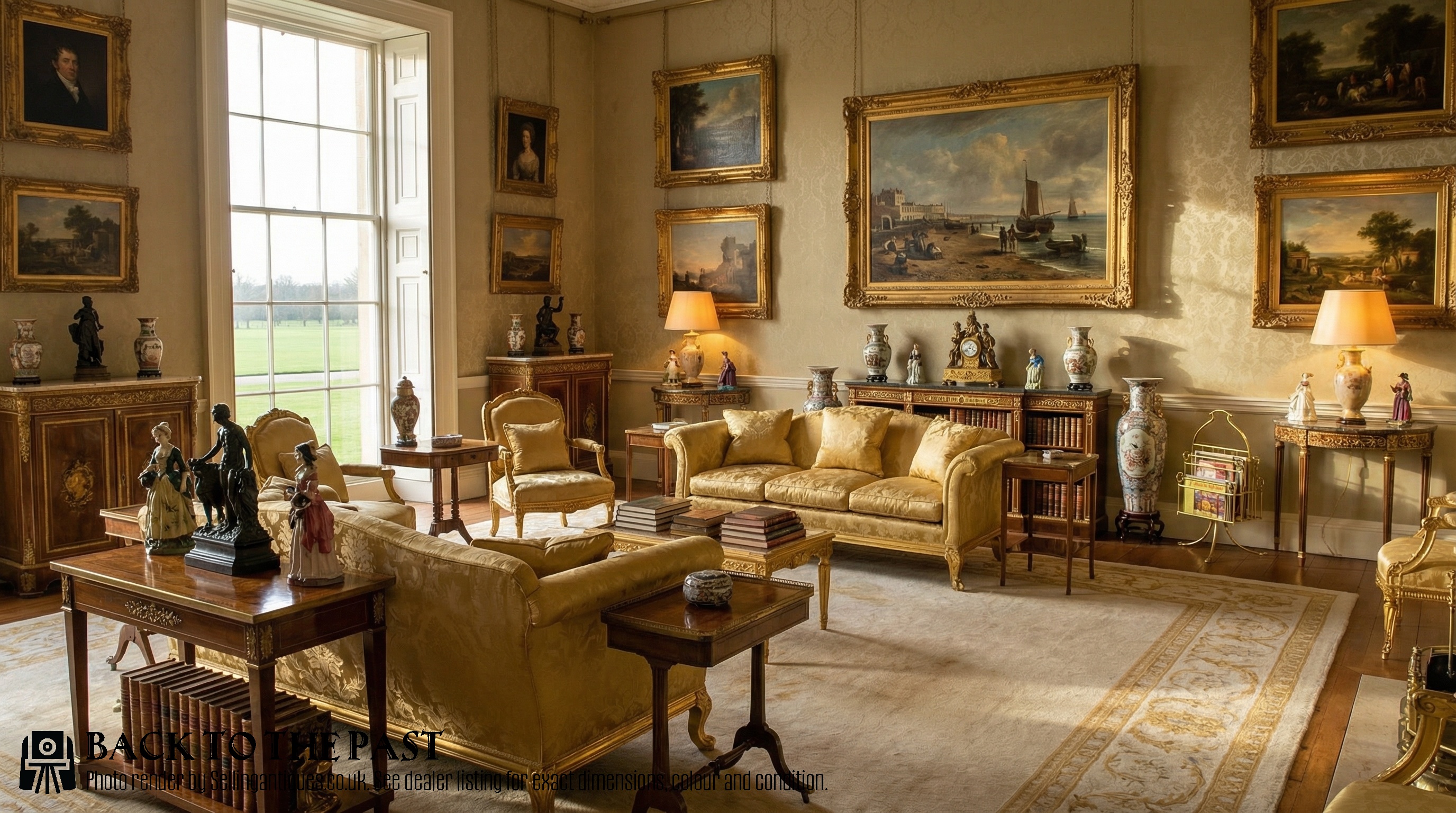
A brass newspaper holder keeps journals and sheets tidy by the hearth, bringing bright metalwork and warm timber into a sitting room.
Brass Newspaper Holder
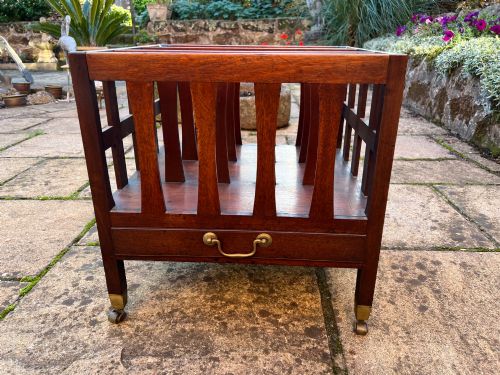
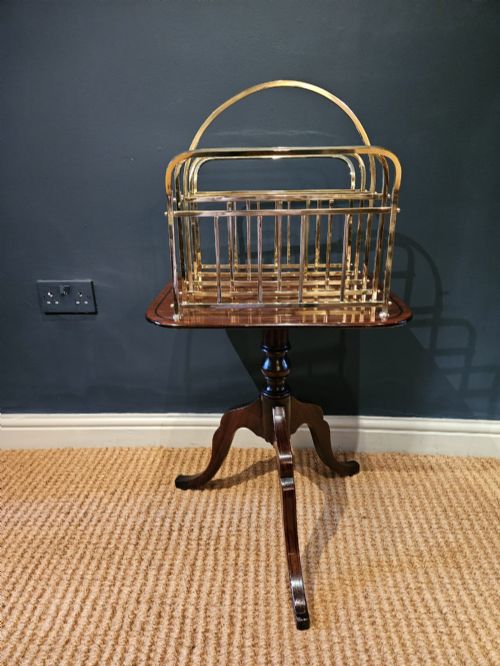
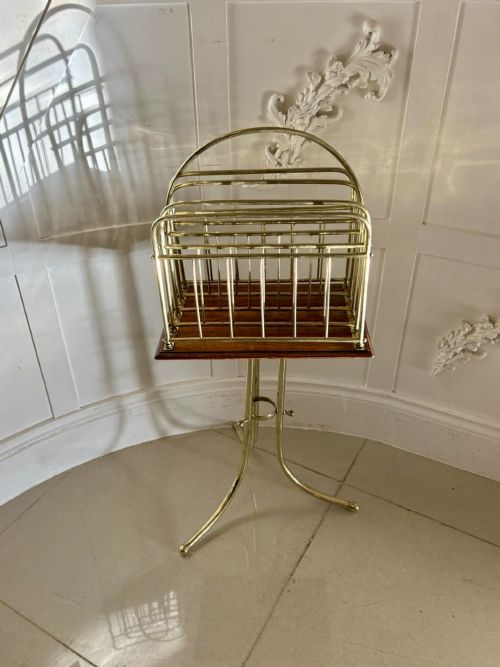
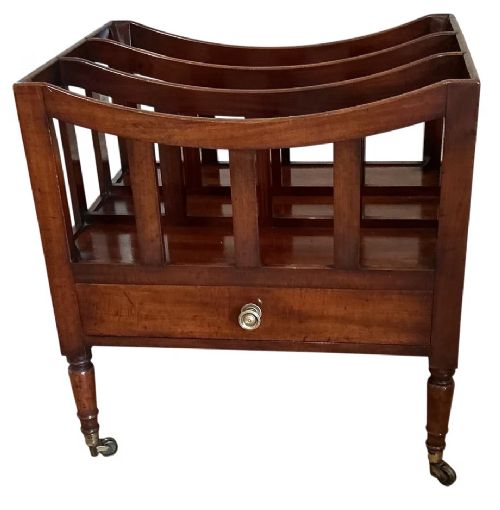
A brass newspaper holder is a practical receptacle designed to store periodicals, journals, and daily papers within easy reach of a seat. When searching this phrase, you encounter forms ranging from floor-standing revolving bookstands and multi-division canterburys to wall-mounted pockets.
The pieces listed span the nineteenth and twentieth centuries, taking in Regency, Victorian, Edwardian, and later modern revivals. Most examples combine polished brass elements with traditional timbers such as mahogany, oak, walnut, or rosewood.
Floor-standing magazine racks and musical canterburys dominate the selection, often featuring segmented dividers for sorting papers. Wall pockets offer a compact alternative for smaller spaces, relying entirely on stamped or cast sheet brass.
How they were made
Metal components utilise brass and copper, sometimes cast in heavy sheets or drawn into tubular rails to form the structural framework. Cast brass ornaments, bamboo-style rods, and riveted joints provide both stability and decorative detail.
Timber elements rely on cabinet-making techniques applied to mahogany, oak, walnut, and rosewood. Turned wooden spindles, fretwork panels, and polished bases anchor the lighter metal superstructures.
Brass Newspaper Holder Retail Price Guide 2026
Typical asking prices for brass newspaper holder among the pieces listed under this phrase on Sellingantiques today, from the lower quarter to the upper quarter. They describe what is for sale here now, not the wider market.
Object forms span musical canterburys, revolving bookstands, boat-shaped racks, and wall pockets.
What varies in quality
Quality rests in the substance of the materials and the crispness of the construction. Heavy gauge brass and dense, well-figured mahogany or oak separate substantial pieces from lighter, mass-produced alternatives.
Joinery and mechanical execution define the upper tier. Revolving stands turn smoothly on central pivots, and canterburys feature robust vertical dividers that remain rigid under the weight of heavy volumes.
Gillows of Lancaster·J.C.Loudon·Maison Jansen
The Brass Newspaper Holder Glossary
- Canterbury
- A low stand fitted with upright partitions, originally designed for sheet music and later utilised for newspapers and magazines. It often incorporates a small drawer or carrying handles at the base.
- Wall pocket
- A hanging receptacle designed to mount directly onto a wall surface for holding post, pamphlets, or single newspapers. They are frequently fashioned from stamped sheet brass or copper.
- Revolving stand
- A floor-standing rack mounted on a rotating mechanism that allows access to multiple compartments from a single seated position. These often combine timber shelves with tubular brass frames.
- Tubular brass
- Hollow cylindrical metal rods used to construct lightweight yet rigid frames for racks and stands. This technique gained prominence during the Victorian and Edwardian periods.
Brass Newspaper Holder: Frequently Asked Questions
How do I care for brass and timber together?
Maintenance requires separate attention for the metal and the wood components. Dust the timber regularly and nourish it occasionally with appropriate wax, avoiding moisture on the polished surfaces.
Polish the brass sparingly with a soft cloth to preserve definition on cast or stamped details. Prevent polish from contacting the adjacent wood to avoid staining the grain.
Were these holders meant to sit on the floor or the wall?
Most examples are floor-standing pieces designed to sit beside an armchair, sofa, or desk. Canterburys, revolving stands, and boat-shaped racks all occupy floor space within arm's reach.
Wall pockets provide the primary exception, featuring flat backs with hanging loops to attach securely to vertical surfaces. These suit tighter spaces where floor area remains limited.
How can I tell a Victorian rack from an Edwardian one?
Victorian pieces tend to use darker timbers like rosewood and heavy mahogany, often paired with ornate cast brass or rich carving. The overall aesthetic leans toward formal display and dense construction.
Edwardian examples frequently employ lighter oak frames paired with simpler tubular brass, reflecting a shift towards domestic utility and airier room layouts.