




Brass Magazine Stand
A brass magazine stand brings polished metal and structured timber to a room, holding periodicals with quiet authority.
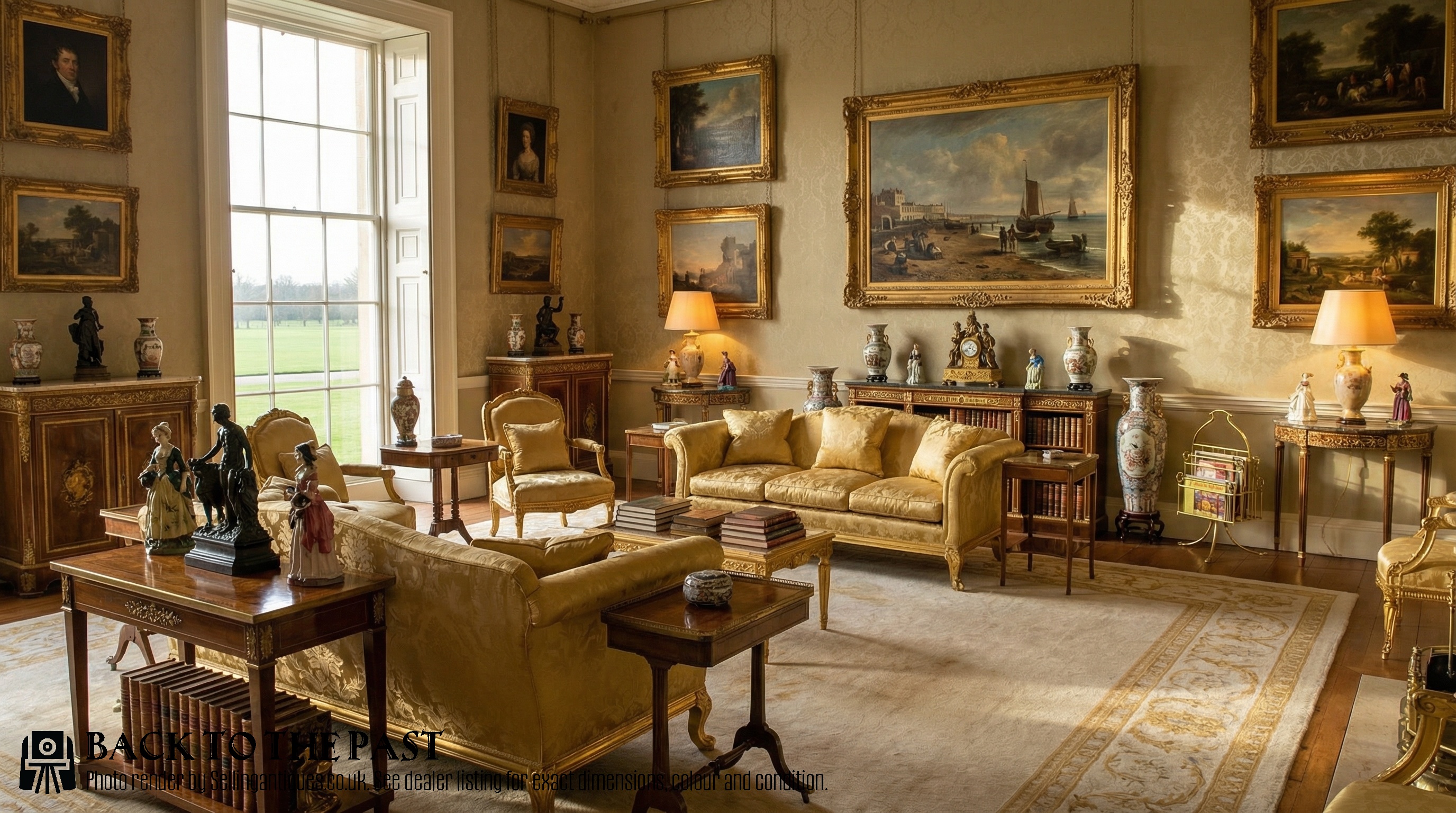
Brass Magazine Stand
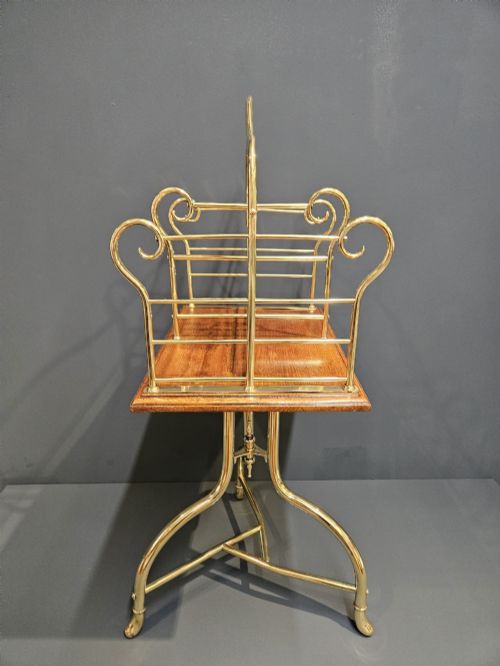
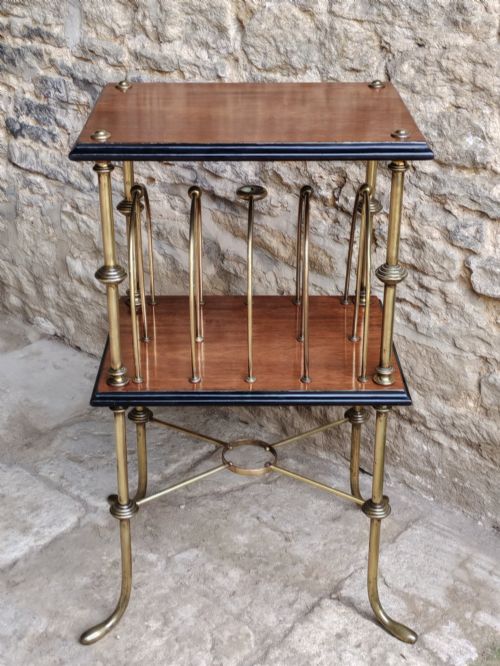
A brass magazine stand organises periodicals, newspapers, and folios using a combination of metal frames and wooden compartments. The pieces seen span from the Georgian and Regency periods through to the Edwardian era and the early twentieth century.
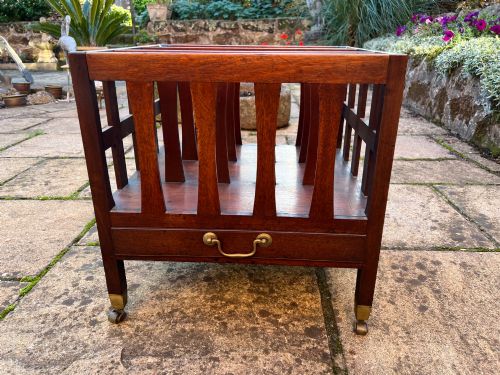
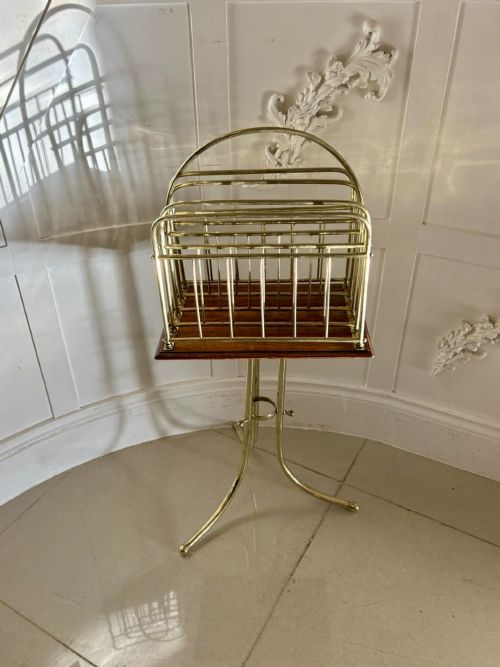
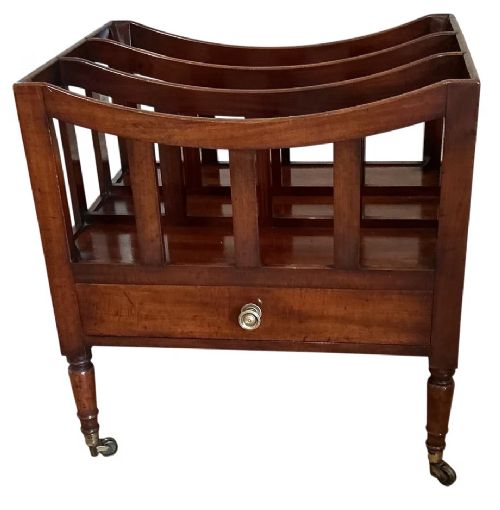
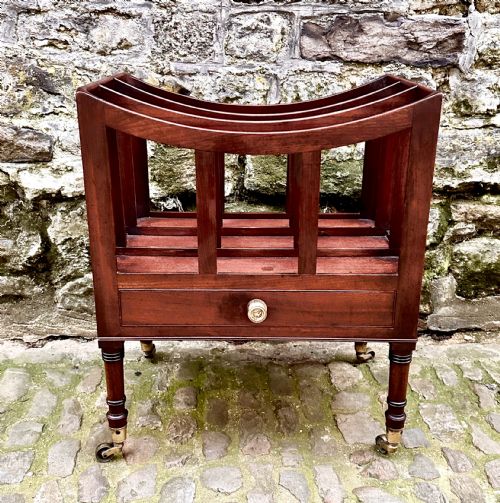
The form often overlaps with the traditional Canterbury, a low stand with partitioned sections for papers, sometimes fitted with castors or a carrying handle. Revolving models also appear frequently, allowing books and magazines to spin on a central axis for easy access.
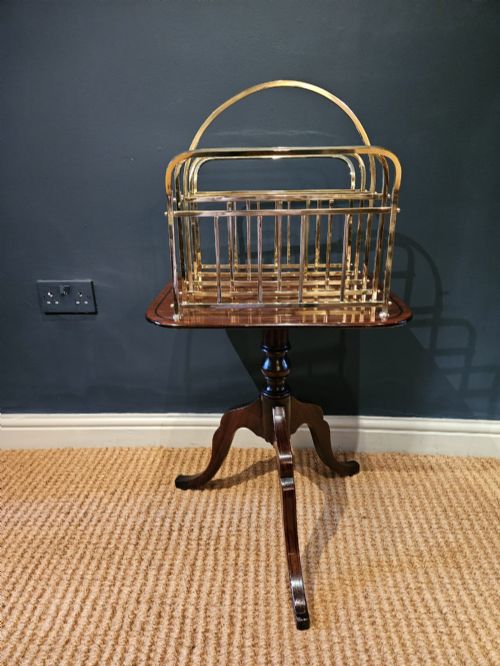
Makers utilised timber alongside brass, combining mahogany, burr walnut, and oak with metal rods, spindles, and carrying handles. These stands served both formal drawing rooms and country house libraries, adapting to domestic reading habits across centuries.
Construction and Materials
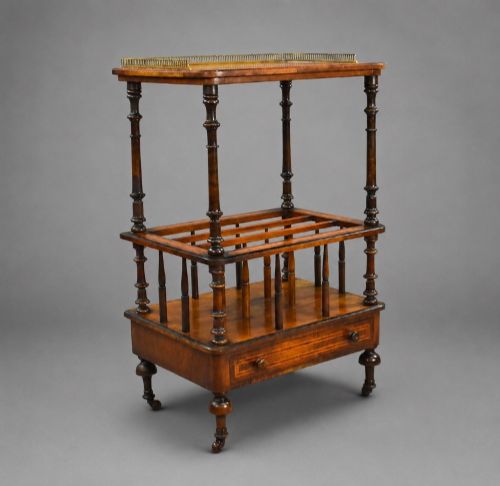
Makers constructed the timber bodies of these stands using mahogany, burr walnut, rosewood, and oak, often incorporating inlaid details or carved partitions. Solid wood frames provided structural weight, whilst divisions were formed from thin wooden slats or turned spindles.
Brass elements include tubular framing, carry handles, decorative feet, and distinctive dividers shaped to support upright publications. Copper and tubular brass appear in later Arts and Crafts or twentieth-century pieces, while earlier examples rely on cast brass mounts and pivoting mechanisms.
Brass Magazine Stand Retail Price Guide 2026
Typical asking prices for brass magazine stand among the pieces listed under this phrase on Sellingantiques today, from the lower quarter to the upper quarter. They describe what is for sale here now, not the wider market.
Assessing Quality
Quality rests on the weight of the brass and the choice of timber cabinetry. Heavier gauge metalwork and finely figured mahogany or burr walnut distinguish the finer examples from simpler production.
Construction details reveal the standard of manufacture, such as dovetailed drawer joints where drawers are present, neat inlay work, and robust revolving mechanisms that turn without binding. Superior pieces display crisp casting in the brass fittings and thoughtful joinery that keeps the partitions rigid.
Gillows of Lancaster·William Tonks and Sons·Maison Jansen
The Brass Magazine Stand Glossary
- Revolving
- A design incorporating a central pivot allowing the upper book or magazine holder to turn smoothly. This configuration became particularly popular during the Victorian and Edwardian periods for desktop or floor-standing display.
- Folio stand
- A larger piece intended for oversized volumes, prints, or newspapers. These stands often use adjustable or A-frame supports.
- Whatnot
- An open set of multi-tiered shelves used for displaying ornaments or holding books. Some examples combine this tiered shelving with lower compartments built specifically for periodicals.
Brass Magazine Stand: Frequently Asked Questions
How do I date a brass magazine stand?
Dating relies on timber selection, brass fabrication techniques, and the overarching style of the piece. Regency and Georgian examples use dense mahogany and refined joinery, whereas Edwardian and later twentieth-century stands often employ lighter oak or tubular brass.
Hardware such as castors, screws, and hinges also provides chronological clues. Machine-threaded screws point toward the later nineteenth century and beyond, while hand-cut elements suggest earlier periods.
What is the difference between a Canterbury and a magazine stand?
A Canterbury is a specific historical furniture form originating in the eighteenth century, traditionally featuring partitioned vertical sections and often standing on low legs with castors. They were originally made for music folios before adapting to newspapers.
General magazine stands encompass a broader range of designs, including revolving racks, tubular brass frames, and modern interpretations from the twentieth century that lack the traditional cabinetry of a Canterbury.
Where were these stands used in the home?
These stands sat beside reading chairs in libraries, drawing rooms, and studies where daily newspapers and weekly journals needed tidy containment. Smaller revolving versions functioned as tabletop accessories or compact chairside companions.
Larger country house models stood in grand hallways or reception rooms to hold oversized folios and periodical collections for guests.
How do I care for brass and wood?
Maintenance involves dusting the timber regularly and feeding the wood with appropriate wax to preserve the polish. Brass elements benefit from gentle cleaning with a soft cloth to manage oxidation without stripping patination.
Harsh chemical polishes should be avoided, particularly near veneered surfaces, as run-off can damage the surrounding wood.