


Brass Mounted Writing Slope
These brass mounted writing slope boxes combine portable function with solid timber construction, offering a practical writing surface.
Brass Mounted Writing Slope
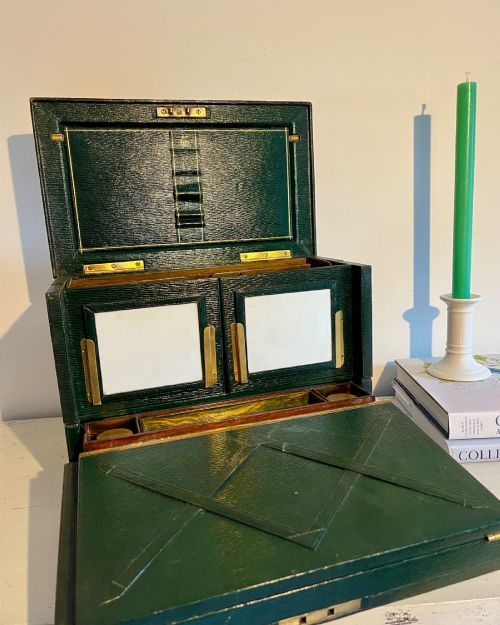
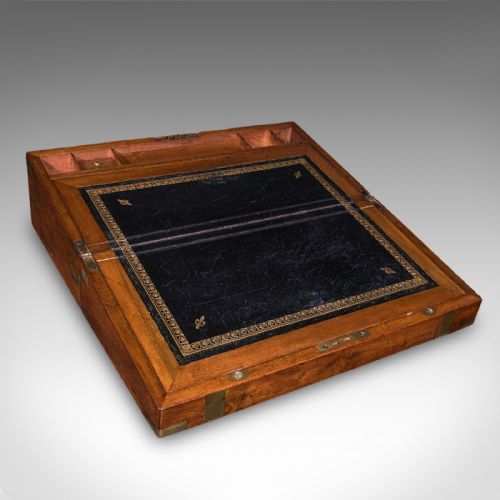
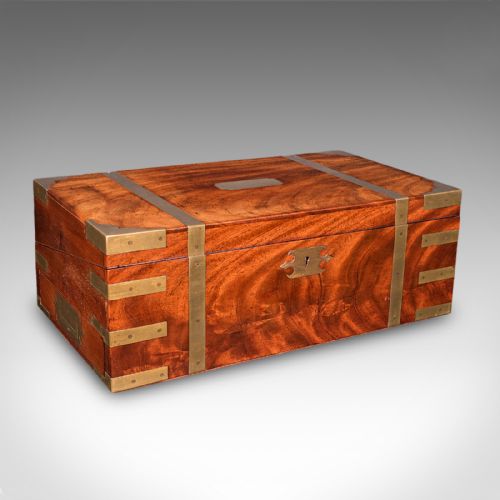
A brass mounted writing slope is a portable box designed to open into a slanted writing surface, housing compartments for paper, ink, and pens. You will most frequently encounter nineteenth-century Victorian and Regency examples made in forms intended for travel or campaign use.
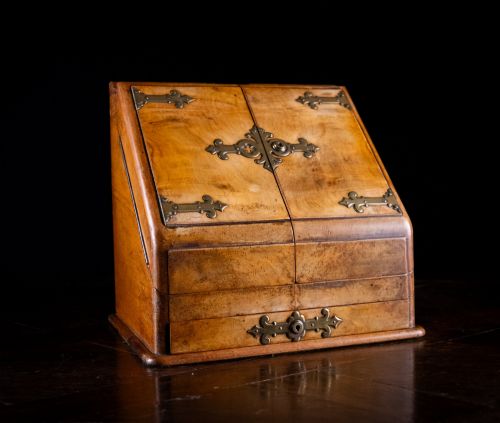
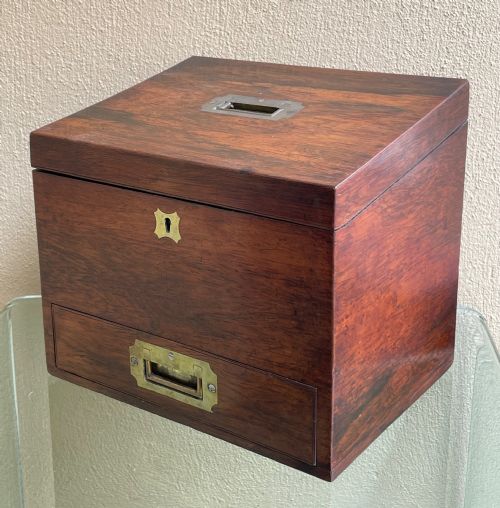
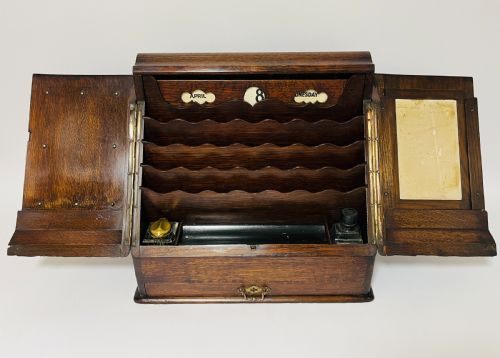
Makers often fashioned these boxes from dense hardwoods such as mahogany, walnut, and rosewood, reinforcing the corners and edges with brass strapwork and corner plates. Some pieces combine the writing slope with stationery compartments, document drawers, or leather-bound internal writing pads.
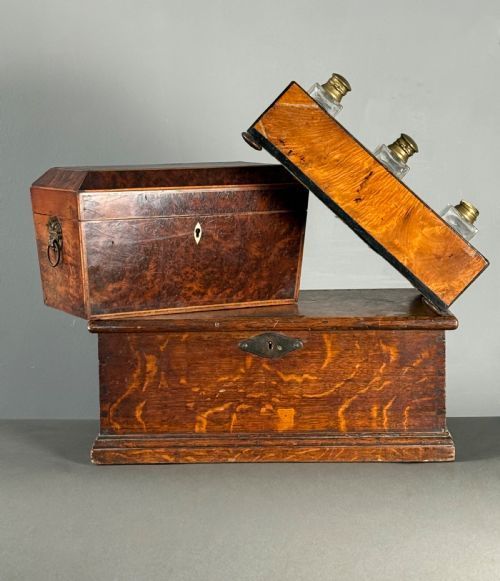
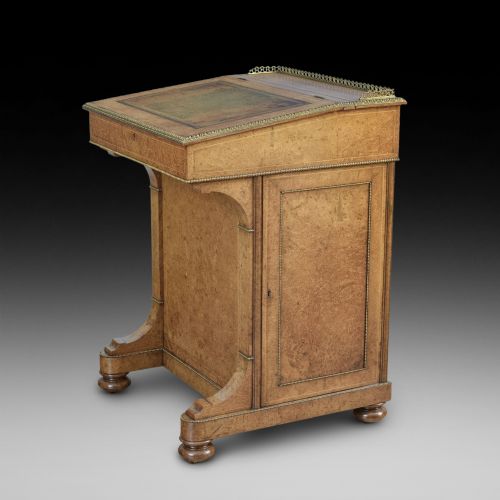
The selection ranges from simple campaign boxes fitted with brass carry handles to larger stationery cabinets and bureau forms. These items reflect the personal correspondence habits of the eighteenth and nineteenth centuries, built to secure valuable papers during transit.
Construction and Materials
Cabinet makers utilised heavy timbers like mahogany, walnut, oak, and camphor wood as the primary body material, often veneered with burr walnut, rosewood, or amboyna on the exterior surfaces. These woods provided the structural rigidity required for portable boxes subjected to regular travel.
Heavy brass mounts, corners, inlay, and escutcheons were countersunk into the wood to protect vulnerable edges and secure the lid against impact. Internal sections frequently feature fitted velvet or leather writing surfaces, sometimes embossed, alongside secret drawers and glass inkwells.
Listings feature woods including mahogany, walnut, oak, rosewood, and camphor wood, spanning the Georgian, Regency, and Victorian periods.
Quality Variations
The standard of timber selection and veneer matching defines the visual appeal of a piece, with figured grains and book-matched burr walnut sitting at the upper end. Finer examples display precise brass inlay work rather than simple surface mounting.
Internal complexity also separates standard utility boxes from exhibition items, with superior pieces incorporating concealed locking mechanisms, spring-loaded drawers, and fitted leather compartments by known retailers.
Briggs 27 Piccadilly London·Houghton and Gunn·Mechi and Bazin·Mappin and Webb·Rodman and Co of Belfast·P and F Shafer
The Brass Mounted Writing Slope Glossary
- Writing slope
- A portable box with a hinged, slanted lid that opens to reveal a flat or angled writing surface and storage wells. These boxes were standard travel items before the widespread use of fitted desks.
- Campaign box
- A piece of furniture or a box built for military use during travel, typically featuring recessed brass handles, reinforced corners, and robust locking mechanisms. They are constructed to withstand the rigours of transport.
- Stationery cabinet
- A vertical desk tidy or box designed to hold envelopes, paper, and writing implements in upright slots or drop-front shelves. They gained popularity during the Victorian period for home studies.
- Bureau de dame
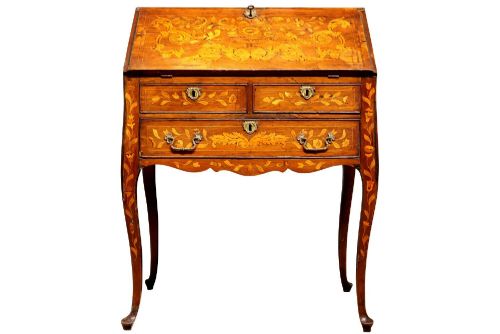
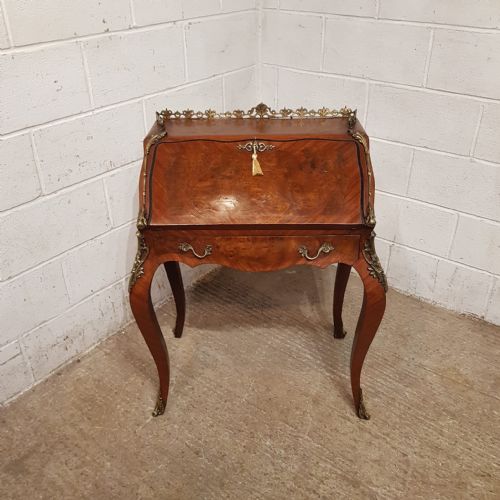
- A small lady's writing desk, often featuring a sloping fall-front or cylinder lid above drawers. These pieces frequently incorporate decorative marquetry or fine wood veneers.
- Escutcheon
- A flat plate of brass surrounding a keyhole, serving both to protect the surrounding timber from wear and as a decorative feature.
Brass Mounted Writing Slope: Frequently Asked Questions
What is a brass mounted writing slope?
A brass mounted writing slope is a portable wooden box featuring metal corner brackets and straps that opens to form an angled writing desk. These objects were used for correspondence while travelling.
Inside, they contain compartments for inkwells, pens, and paper, often lined with leather or velvet. The exterior brass protected the timber edges from damage during transit.
How were these writing boxes used?
Owners used these boxes to store writing materials and provide a stable, angled surface for writing letters away from a full-sized desk. The sloping lid held the paper at a comfortable angle for handwriting.
Secret drawers hidden beneath internal compartments held valuables, stamps, and private documents. Locks and keys ensured the contents remained secure while moving.
How do I date a writing slope?
Dating relies on timber choices, brass mount styles, and construction methods. Regency and Georgian examples often display simpler flush brass inlays and mahogany or rosewood surfaces.
Victorian pieces frequently utilise heavier brass corner strapping, coromandel wood, or burr walnut veneers. Maker signatures or stamps on locks and leather pads offer more precise dates.
Are these boxes suitable for daily use?
These pieces function well for storing stationery or serving as a compact writing desk in a modern home. Their internal compartments organise letters and modern notebooks effectively.
Care should be taken with antique leather writing surfaces and historic wood finishes when placing modern ink or heavy items inside.