

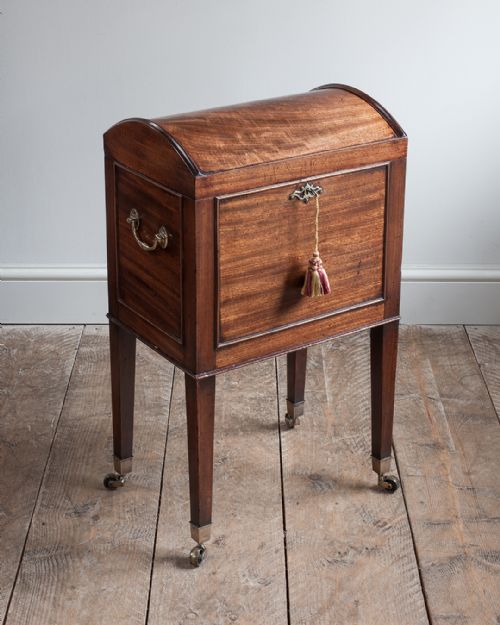


Brass Mounted Chest Stand
A brass mounted chest stand marries a heavy storage trunk with an elevated base, bringing substantial presence and secure interior compartmentalisation to a room.
Brass Mounted Chest Stand
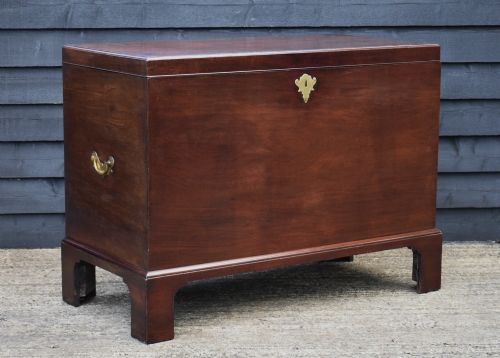
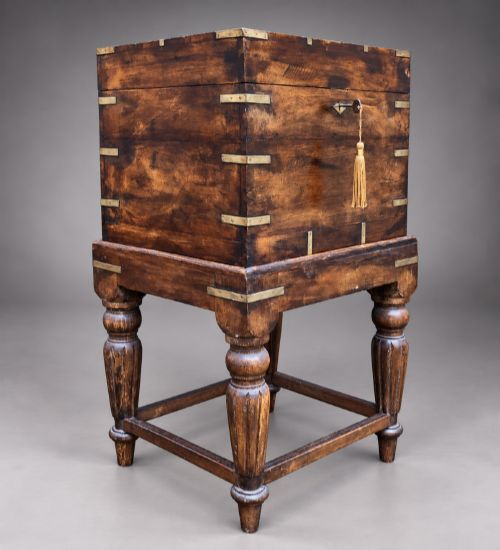
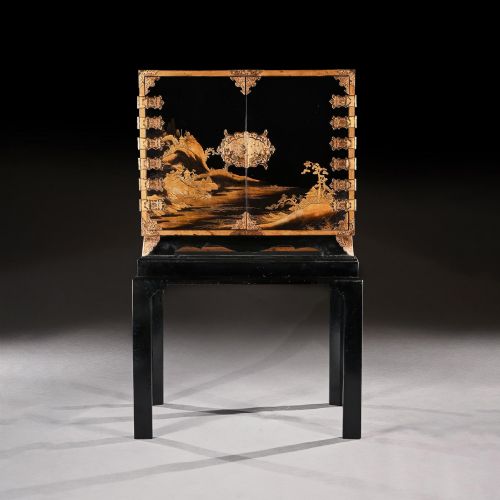
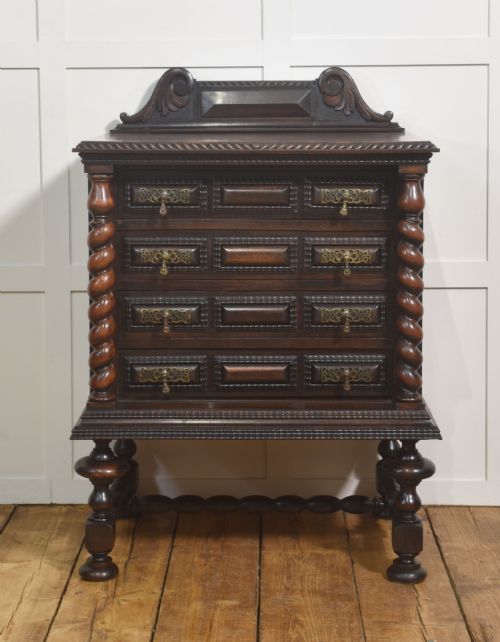
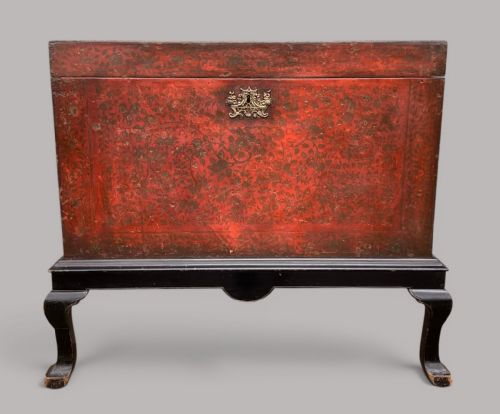
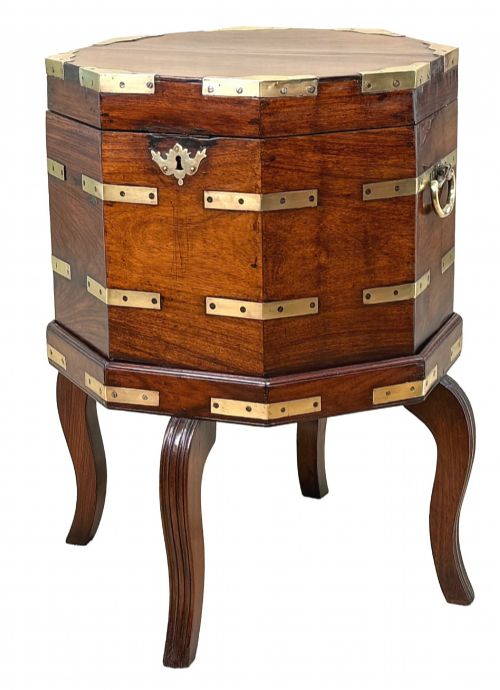
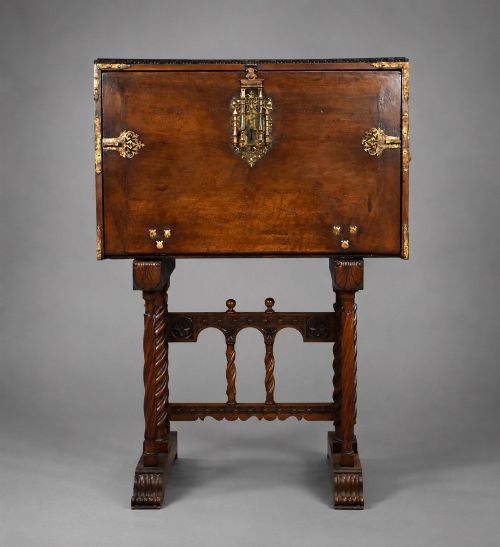
A brass mounted chest stand combines a timber chest, cellarette, or cabinet with a dedicated supportive base, creating a raised furniture form designed for storage and display. When searching for a brass mounted chest stand, you encounter pieces spanning from the seventeenth century through the twentieth century, with strong representation from the eighteenth and nineteenth centuries.
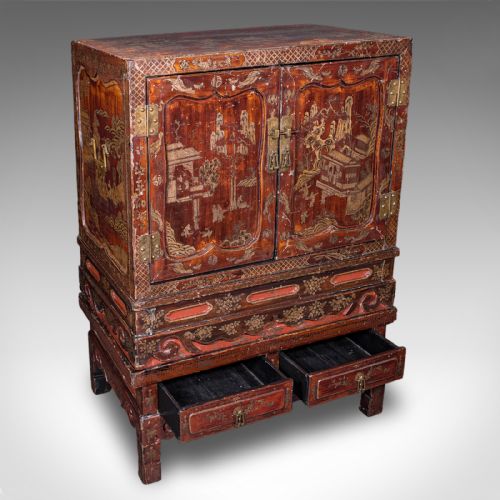
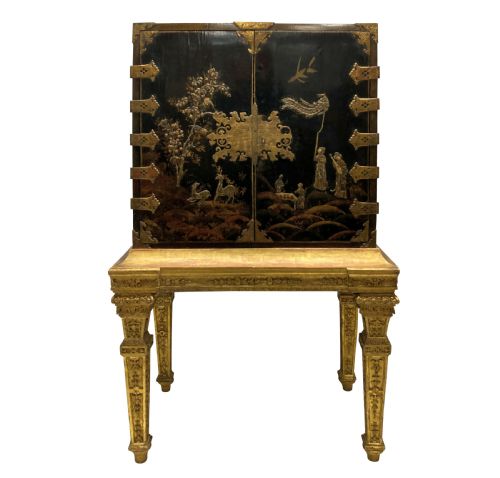
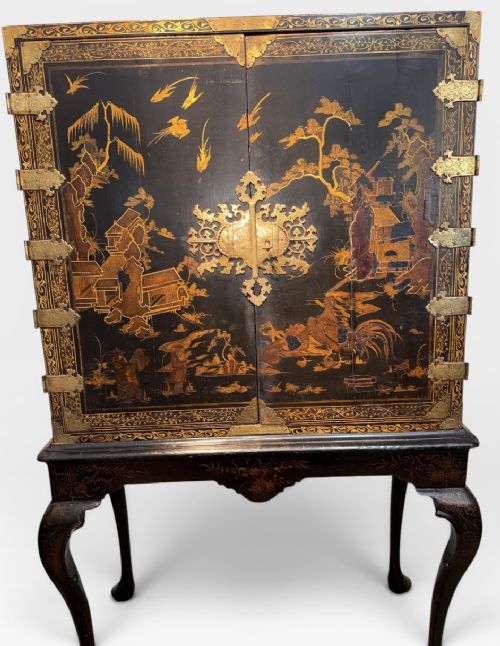
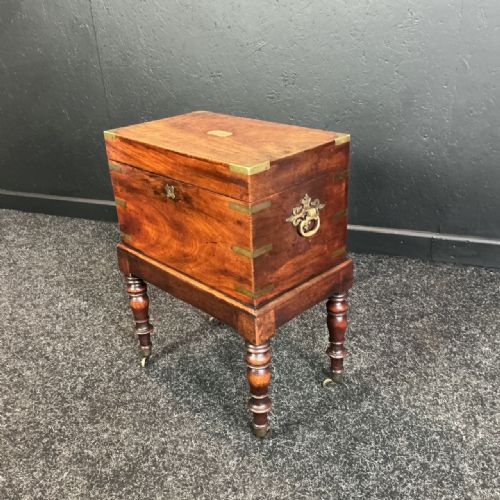
The materials and styles vary widely across global traditions, taking the form of Dutch colonial teak and ebony trunks, Anglo-Indian padouk cellarettes, and Chinoiserie lacquered cabinets on stands. Mahogany, oak, walnut, and rosewood frequently form the primary structure of the chests.
Many examples utilise distinct regional aesthetics such as Spanish Baroque, William and Mary, and Regency designs, each pairing a utilitarian box or cabinet with sturdy legs or a low frame. The mounts provide structural reinforcement while introducing polished metallic contrast to the timber.
Materials and construction methods
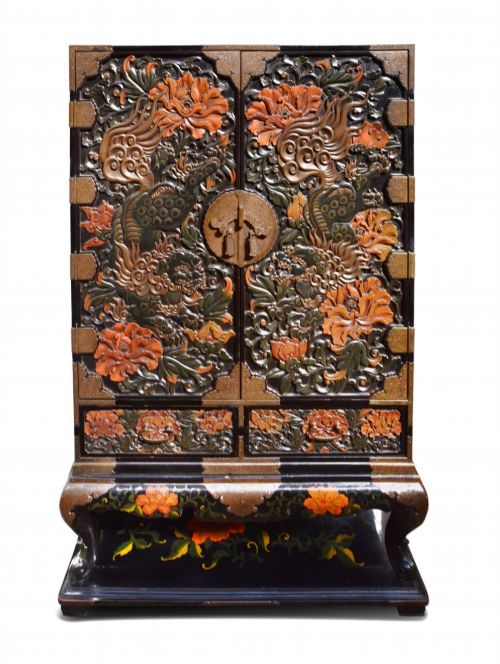
Craftsmen built these pieces using dense hardwoods such as mahogany, teak, padouk, and walnut, often applying delicate veneers like kingwood, burr walnut, or tortoiseshell over secondary timbers. Surface decoration frequently involved elaborate red or black lacquer work executed in Chinoiserie or Japanese Edo styles.
Brass mounts, corner brackets, straps, and carrying handles were fastened securely to the exterior to protect vulnerable edges and reinforce the joints during transit or daily use. Iron elements also appear on certain seventeenth-century and colonial pieces to add heavy-duty structural stability.
Stands were constructed either as an integral architectural support matching the upper chest or as a complementary table base designed to elevate the heavy storage compartment off the floor.
Listings feature pieces spanning from the 17th century to the 20th century, including Edwardian, Victorian, and Georgian periods.
Assessing quality and execution
Quality rests in the harmony between the upper chest and its supporting stand, ensuring the base possesses sufficient heft and joinery to bear the considerable weight above. Finer examples display meticulous parquetry, hand-carved details, or deeply layered lacquer finishes that retain their original depth.
The integrity and originality of the brass mounts distinguish superior pieces, as replacement hardware alters the historical character of the furniture. Cabinetmaking finesse is visible in the smooth operation of drawers, the tight fit of internal cellarette dividers, and the precision of the dovetail joints.
The Brass Mounted Chest Stand Glossary
- Cellarette
- A lockable cabinet or chest specifically designed for storing bottles of wine or spirits. These vessels often feature internal partitions lined to protect glassware.
- Bargueño
- A type of Spanish chest or cabinet featuring a drop-front writing surface and numerous small drawers. They frequently sit upon a dedicated stand and display ornate mounts.
- Chinoiserie
- European decorative style reflecting Chinese artistic influences. It employs lacquered surfaces, gilt motifs, and scenic depictions.
- Padouk
- A heavy, durable tropical hardwood prized for its reddish-brown colour and stability. It appears frequently in Anglo-Indian furniture.
- Teapoy
- A small chest or container mounted on a pedestal or stand, originally used for holding tea leaves. They often contain internal canisters.
- Parquetry
- Geometric mosaic woodwork used for decorative veneer surfaces. It creates patterned floors or cabinet panels using contrasting timber pieces.
Brass Mounted Chest Stand: Frequently Asked Questions
What is a brass mounted chest stand?
It is a raised furniture form that combines a lidded chest, trunk, or cabinet with a fitted base or stand. The brass mounts serve both a functional purpose for reinforcement and a decorative role.
These pieces range from colonial travelling trunks to formal domestic cellarettes and lacquered display cabinets.
How were these pieces used historically?
They served primarily for secure storage and transport of valuable personal possessions, documents, or bottled beverages. The elevated stand kept dampness away from the contents and brought the chest to a convenient height for access.
Cellarettes were kept in dining rooms for wine, while larger cabinets stored textiles, curiosities, or writing equipment.
How do I date a chest on stand?
Dating relies on identifying the primary timber species, the construction of the drawer joints, and the stylistic vocabulary of the stand. Seventeenth and eighteenth-century pieces often display distinct baroque or walnut framing, while nineteenth-century versions frequently utilise mahogany or exotic colonial hardwoods.
Hardware styles, lacquer techniques, and foot designs also provide clear chronological markers.
How do I live with one in a modern home?
A chest stand functions exceptionally well as a statement storage piece in a living room, hallway, or dining area. The interior compartments provide practical concealment for modern items while the decorative exterior adds historic texture.
Position the piece away from direct heat sources and strong sunlight to protect delicate lacquered surfaces and natural timber veneers.