


Traditional Dark Wood Chest
A traditional dark wood chest brings gravity and deep grain to a room, offering practical storage through centuries of solid craftsmanship.
Traditional Dark Wood Chest
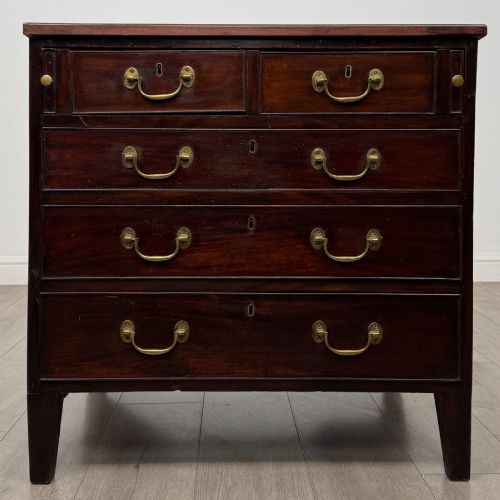
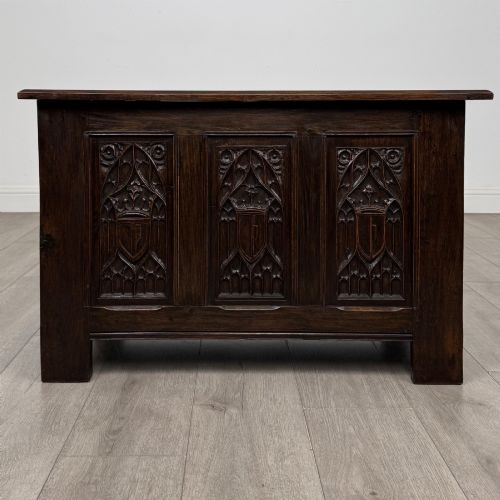
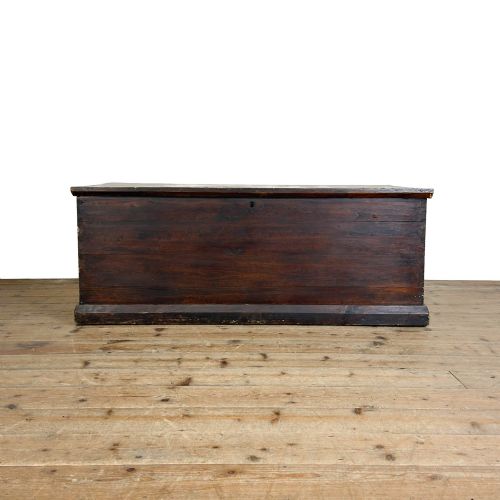
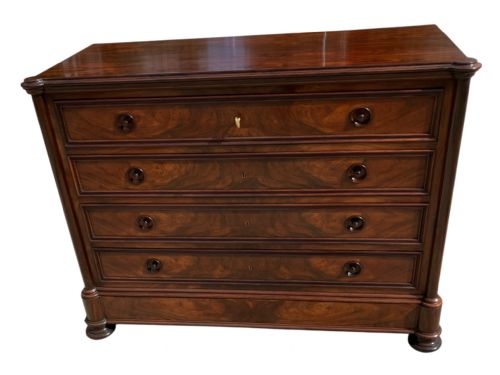
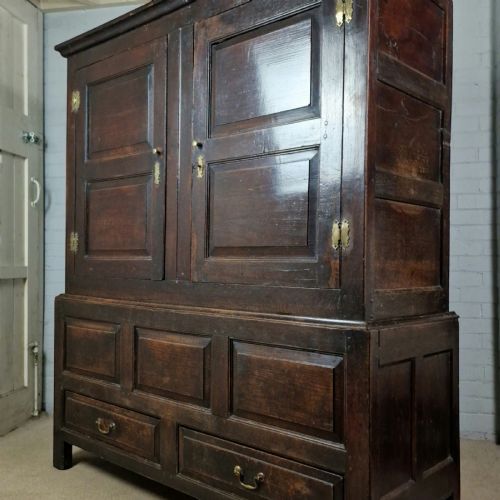
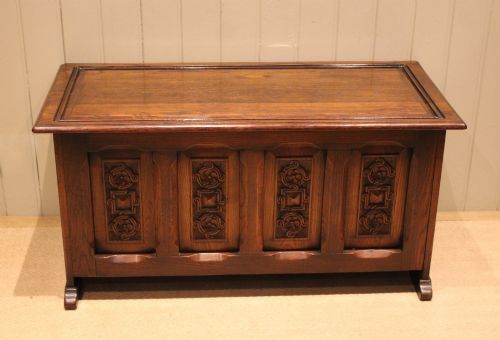
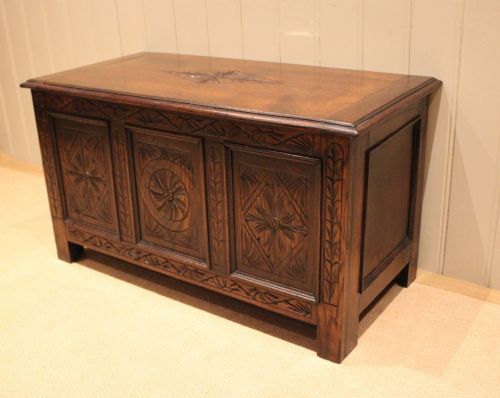
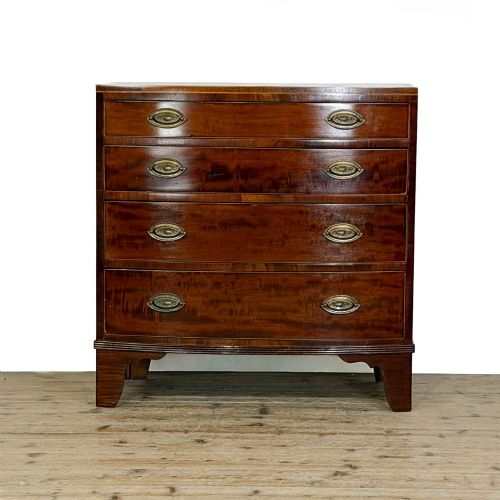
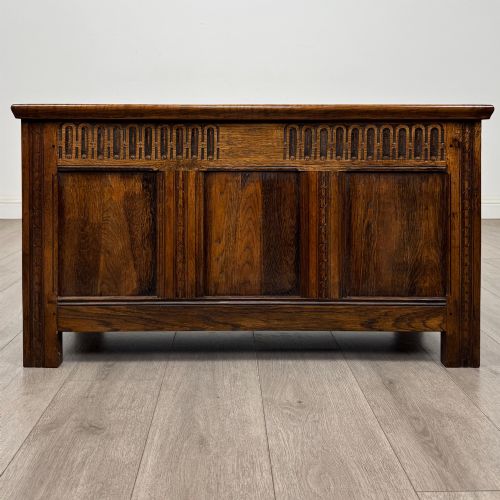
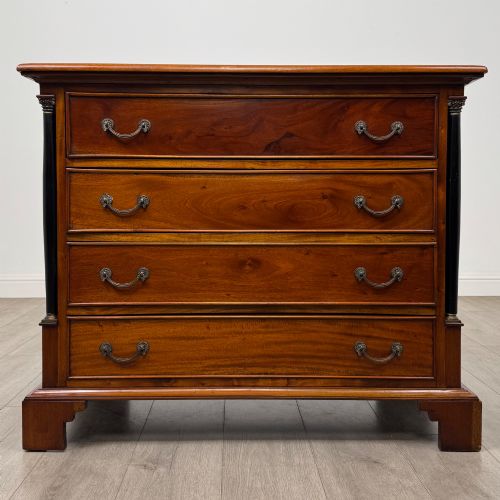
When you search for a traditional dark wood chest, you encounter a variety of substantial storage forms ranging from robust oak coffers and blanket boxes to stately mahogany chests of drawers. These pieces span multiple centuries and stylistic revivals, representing domestic utility from the seventeenth century through to the Edwardian period.
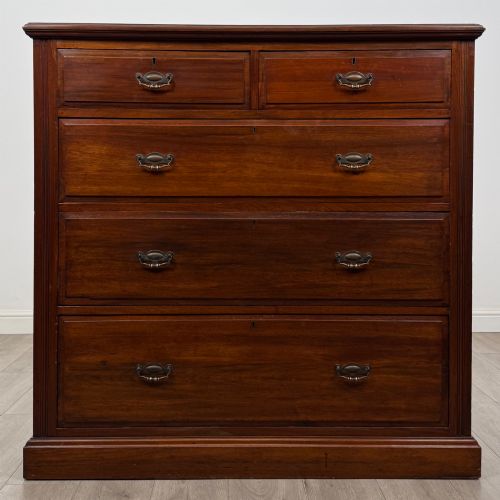
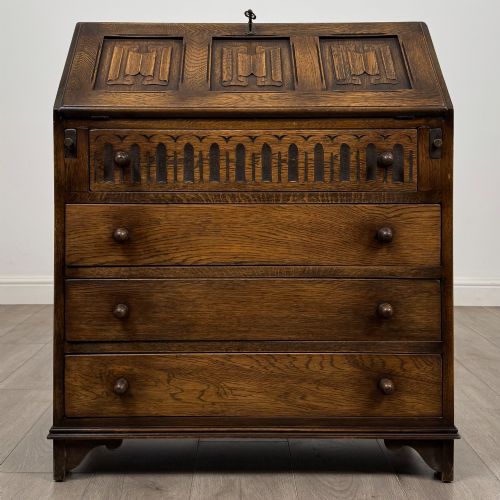
The pieces on this page are predominantly constructed from dense timbers such as mahogany and oak, taking the form of chests of drawers, blanket chests, and coffers. You will regularly meet Edwardian interpretations of earlier Georgian styles alongside genuine eighteenth and nineteenth-century examples.
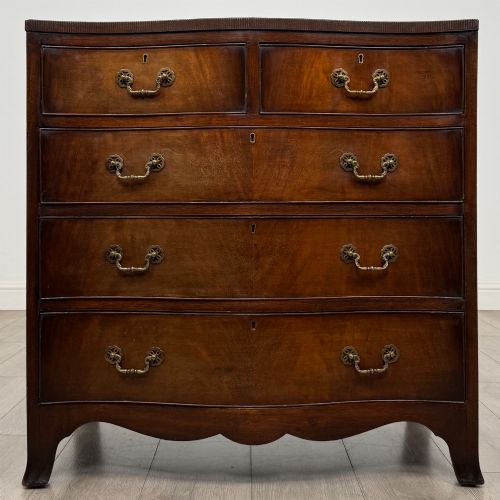
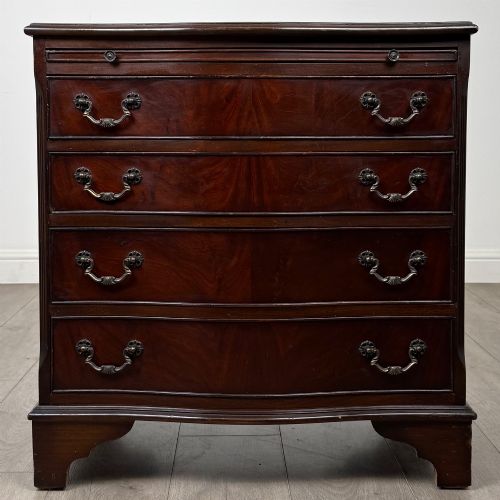
Originating from diverse domestic and regional workshops, these items include provincial English oak coffers, bow front mahogany chests of drawers, and occasional specialised pieces like apothecary cabinets or tallboys. Each form reflects the storage needs of its era, utilising dark wood to anchor the interior space.
How they were made
Makers relied on durable hardwoods including oak, mahogany, elm, and pine, often enhancing the surface with brass handles, escutcheons, and iron hardware. Construction techniques combined traditional joinery such as panel and frame assembly for coffers with precise dovetailing for the drawer boxes of tallboys and chests.
Carving and surface shaping defined the decorative approach, featuring linenfold motifs, geometric panels, and carved relief work on oak pieces alongside flame mahogany veneers and serpentine curves on later models.
One exceptional apothecary cabinet manages eighty tiny drawers for traditional Chinese medicine herbs.
What varies in quality
Quality rests in the selection of timber, where rich grain patterns like flame mahogany or deeply figured oak elevate a piece above plain utility boards. The crispness of hand-carving and the precision of dovetail joints distinguish finer workshops from provincial production.
Integrity of proportion and the retention of original brass hardware or patinated surfaces separate pieces that have maintained their historical character from those heavily altered over time.
The Traditional Dark Wood Chest Glossary
- Coffer
- A large wooden chest traditionally used for storing valuables, linens, or documents. These sturdy pieces often feature hinged lids and carved front panels.
- Bow Front
- A convex curved front contour typical of certain nineteenth-century chests of drawers. This shape softens the profile of heavy timber furniture.
- Tallboy
- A tall chest of drawers, often constructed as a chest on chest or a single elongated carcass. They maximise vertical storage capacity.
- Dovetail
- A traditional interlocking joint used in drawer construction. Fine, tight pins and tails indicate skilled cabinetmaking.
- Linenfold
- A style of carved wooden panelling resembling folded linen cloth. It appears frequently on sixteenth and seventeenth-century revival oak panels.
Traditional Dark Wood Chest: Frequently Asked Questions
How do I care for a dark wood chest?
Keep the timber away from direct heat sources and sudden humidity changes to prevent the wood from splitting or warping.
Apply a traditional beeswax polish occasionally to nourish the grain and maintain a natural, protective surface sheen.
What is the difference between a coffer and a chest of drawers?
A coffer is a box accessed via a hinged lid from the top, primarily designed for bulk storage of blankets and textiles.
Chest of drawers utilise horizontal sliding compartments accessed from the front, developed for more organised clothing storage.
How can I tell a Georgian chest from a Victorian one?
Georgian pieces often display restrained classical proportions, bracket feet, and distinct cockbeading around the drawer edges.
Victorian examples frequently present heavier proportions, bolder flame mahogany veneers, and plinth bases or turned feet.
Can I use a coffer as a coffee table?
The flat top of a sturdy wooden coffer makes it a functional surface for books and decorative objects in a living space.
Ensure the lid remains securely supported if utilised regularly within a busy room layout.