
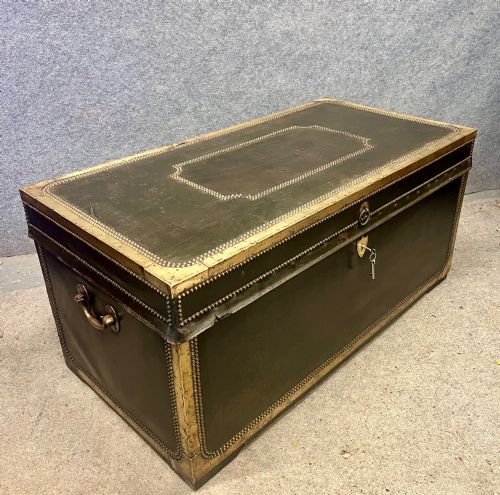

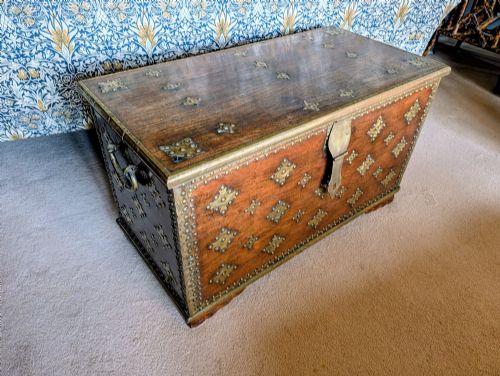
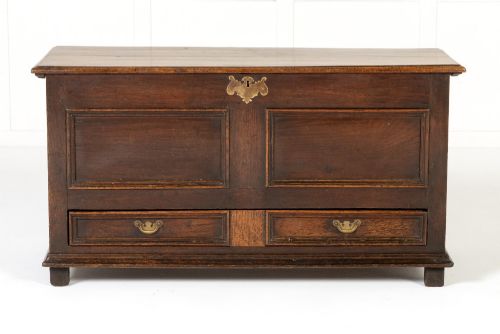
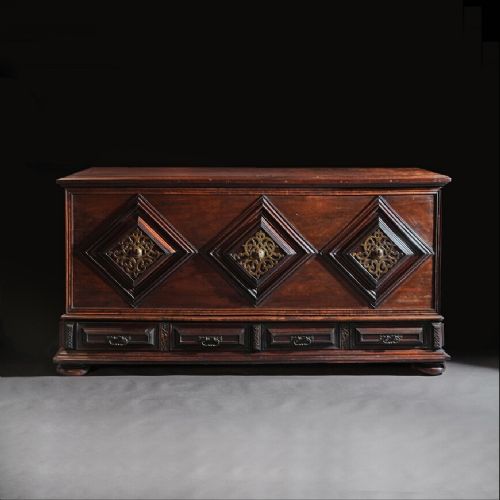


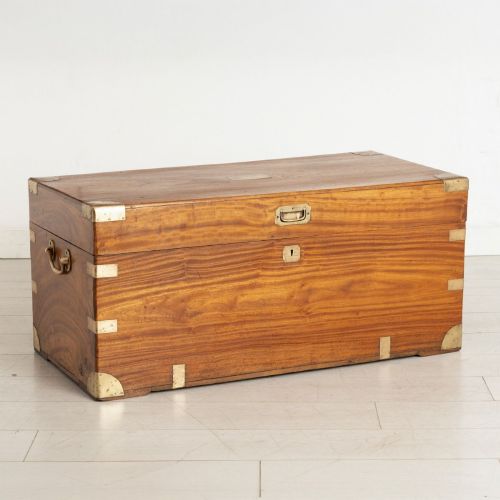

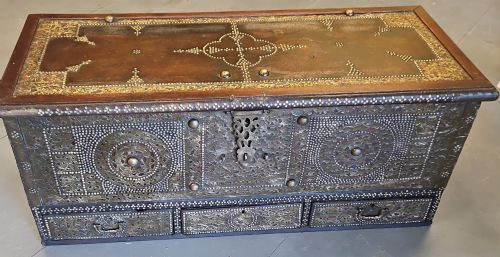
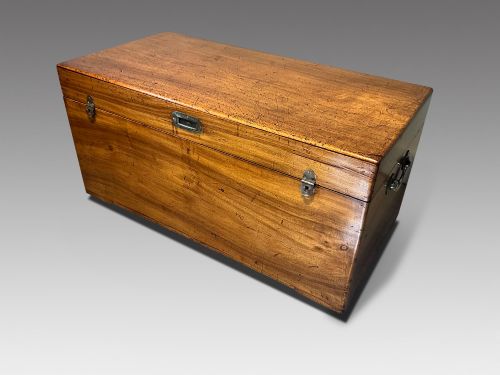

Brass Mounted Blanket Box
A brass mounted blanket box brings sturdy travel furniture into a modern interior, offering deep storage with robust metal corners and straps.
Brass Mounted Blanket Box
A brass mounted blanket box functions as a substantial storage container designed to protect textiles and valuables during transit or in domestic rooms. These items emerge from various global trade routes, military campaigns, and domestic workshops across past centuries.
The pieces on this page span several eras, with nineteenth-century campaign examples and eighteenth-century colonial chests appearing most frequently. Buyers encounter forms ranging from heavy camphor wood trunks to sturdy oak coffers fitted with protective metal work.
Origins stretch from British colonial outposts and China Trade ports to regional European workshops. Each geographical source imparts distinct timber choices and specific corner reinforcements suited to local climates and travel demands.
How they were made
Carpenters constructed these chests from durable hardwoods such as camphor wood, teak, padouk, and oak, often selecting timber for its resistance to insects and humidity. These dense woods provide the structural integrity required for long journeys by sea and land.
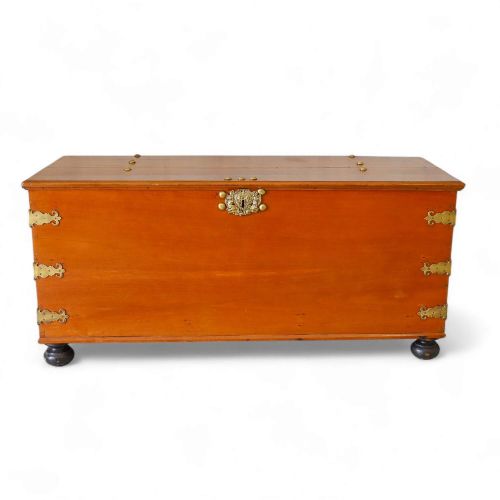
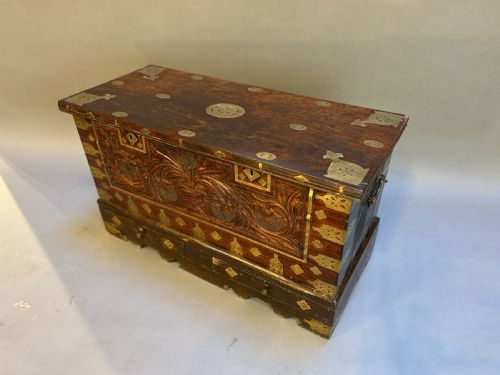
Brass mountings, straps, and corner brackets were hammered and screwed into place to reinforce the joints against heavy impacts. Iron and leather elements also appear alongside brass fittings to secure lids and corners.
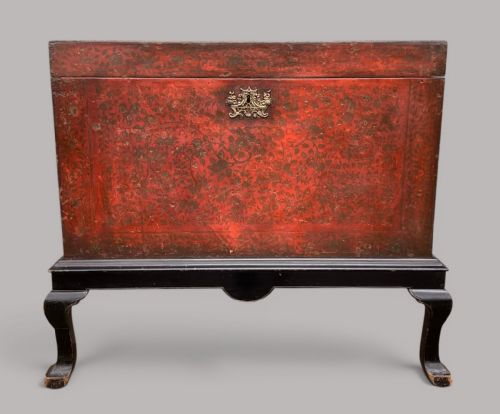
Joinery techniques relied on tight interlocking joints and heavy internal framing to support the weight of contents during travel. Surface finishes range from natural polished grain to red lacquer and leather coverings.
The selection includes styles from Victorian campaign and Anglo-Indian to Dutch Colonial and Chinese Export.
What varies in quality
The density and selection of the primary timber set the foundation for a piece's longevity and weight. Heavy, uniform hardwoods indicate superior material selection compared to softer secondary woods.
The complexity and thickness of the brass hardware distinguish standard utility trunks from finer commission pieces. Heavy cast or beaten brass mounts with intricate corner strapping show superior craftsmanship.
The integrity of internal compartments, original locks, and surviving hinges separates untouched examples from heavily restored or altered trunks.
The Brass Mounted Blanket Box Glossary
- Camphor wood
- A fragrant timber native to Asia, traditionally utilised for campaign chests because its natural scent repels moths and insects. This wood forms the core material for many overseas trade trunks.
- Campaign trunk
- Portable furniture built in sections with recessed brass handles, designed for military officers on active service. These pieces dismantle or travel easily.
- Coffer bach
- A small Welsh box or chest raised on feet, traditionally used for storing household linen and valuables. These domestic pieces date back to the Georgian era.
- Padouk
- A heavy, durable tropical hardwood with a reddish hue, chosen for colonial furniture and strong boxes. It resists warping in humid environments.
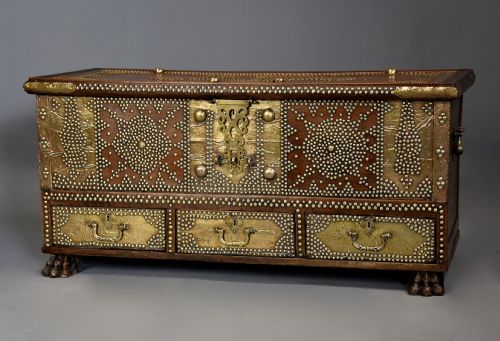
- Zanzibar chest
- A heavily studded storage chest featuring brass work and strapwork, associated with East African trade routes. These trunks often combine regional craftsmanship with imported hardware.
Brass Mounted Blanket Box: Frequently Asked Questions
How were brass mounted blanket boxes used originally?
These chests travelled on ships, trains, and carriages to protect uniforms, blankets, and personal valuables during extended journeys. Their robust construction ensured contents remained secure in difficult travel conditions.
At journey's end, they served as permanent storage furniture within homes, offices, and military quarters.
What woods are common in these boxes?
Camphor wood and teak appear frequently, valued for their resistance to moisture and insects in tropical climates. Oak and walnut also feature in European and domestic examples.
Padouk and mahogany are regularly found on pieces originating from colonial trade routes.
How do I care for camphor wood?
Keep the timber away from direct heat sources and strong sunlight to prevent the natural oils from drying out. Dust regularly with a dry cloth and apply occasional wax if the surface appears dry.
Avoid harsh chemical cleaning products that might damage the original polish or lacquer.
How can I tell a campaign chest apart?
Campaign pieces feature flush brass handles, reinforced corners, and occasionally two-part construction for easy transport. Their hardware sits level with the wood surface to prevent snagging during transit.
Standard blanket boxes lack these specific military adaptations and heavy corner bracing.