




Brass Log Holder Bucket
A brass log holder bucket brings functional warmth to a hearth, combining sturdy metalwork with traditional fireside utility.
Brass Log Holder Bucket
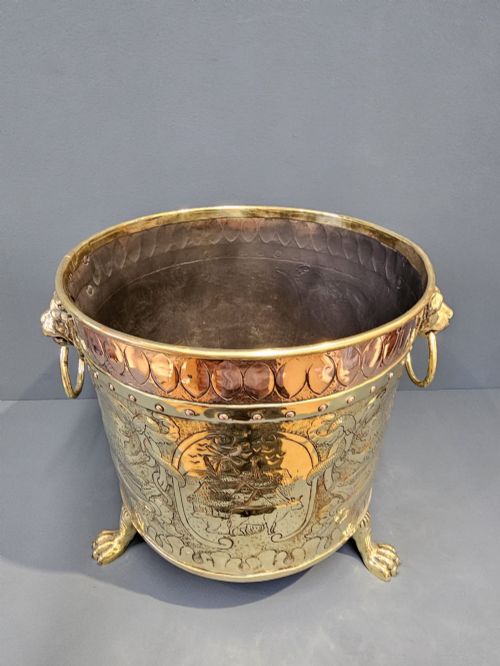
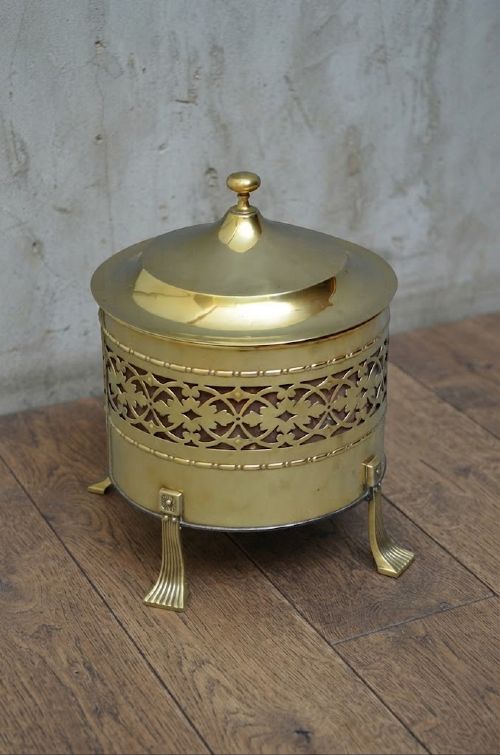
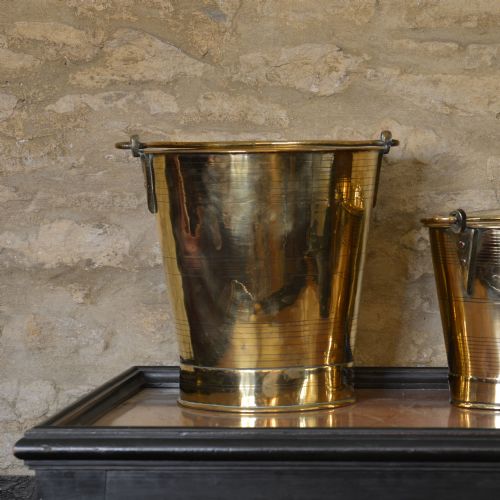
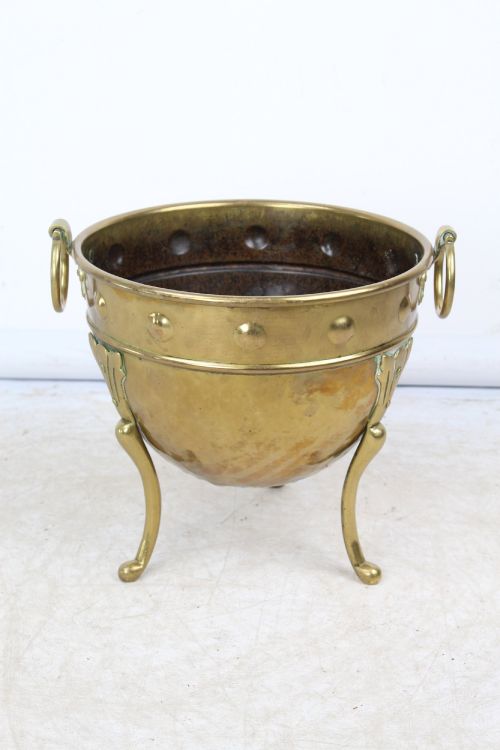
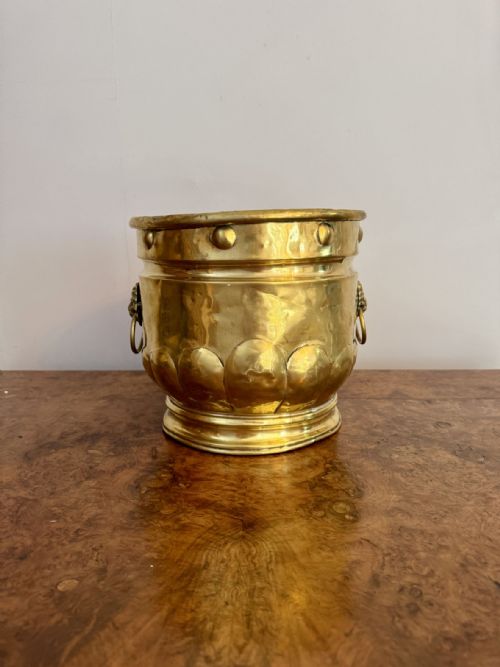
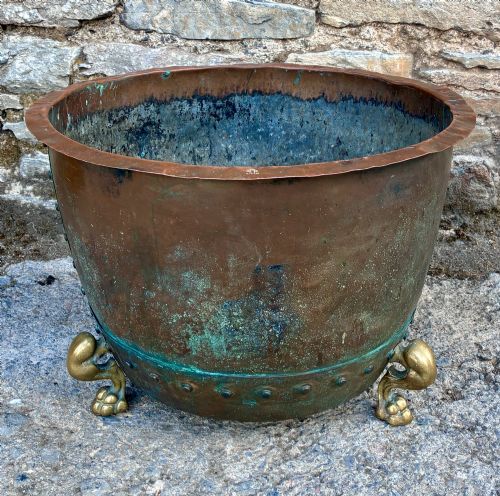
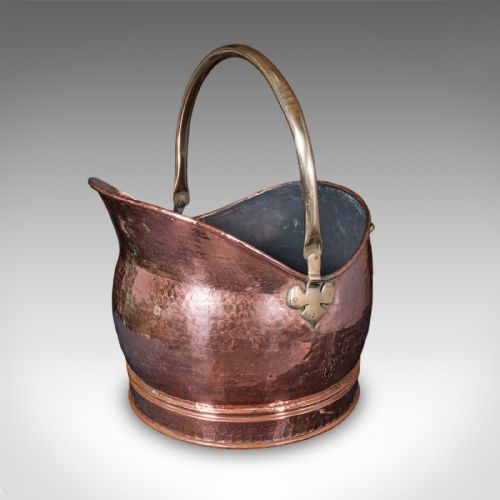
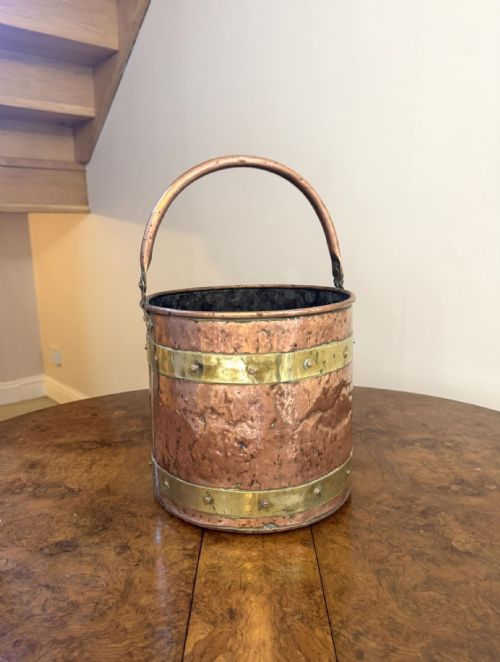
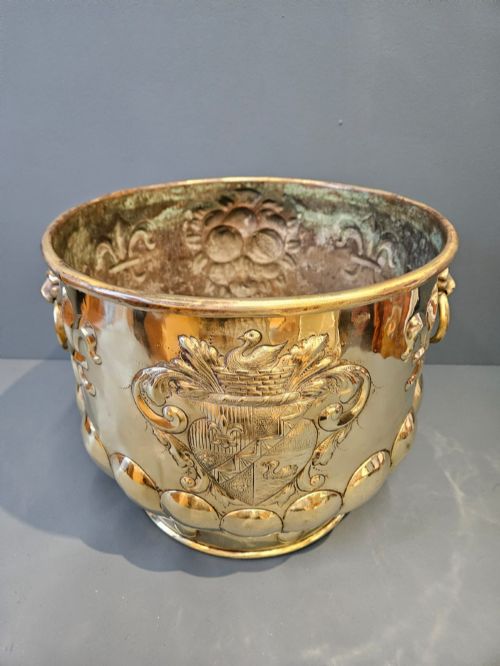
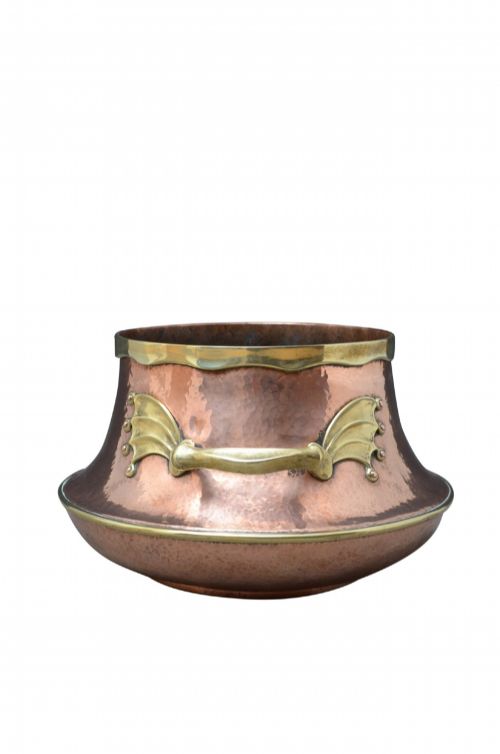
A brass log holder bucket serves as a container for storing fuel beside a fireplace, taking forms ranging from cylindrical bins to helmet scuttles and planters. The pieces available here cross several decades, including Victorian and Edwardian examples alongside older Georgian and Arts and Crafts designs.
Most items on this page date from the nineteenth and early twentieth centuries, constructed to handle daily hearth duties while displaying decorative metalwork. Alongside pure brass vessels, many choices combine brass with copper banding, oak staves, or iron fittings.
Makers and workshops of the period produced these coal and log receptacles for domestic use, utilising heavy gauge metals that survived generations of fireside service. Their shapes adapt easily to modern rooms, often serving double duty as planters or interior storage bins.
Materials and construction
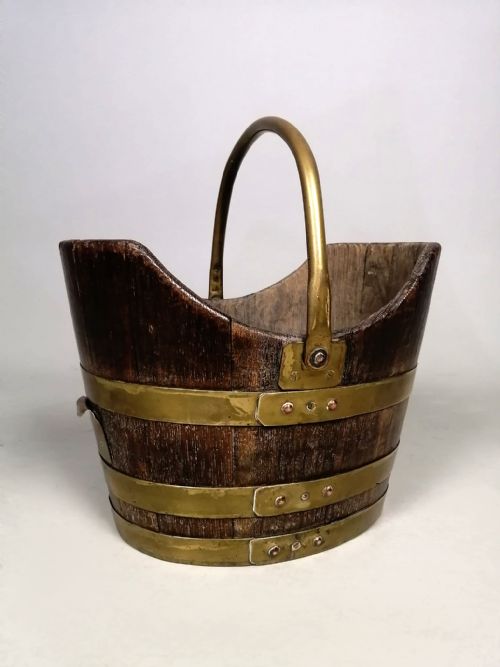
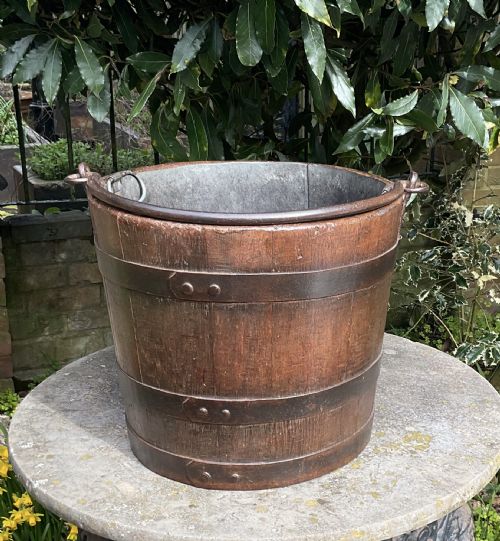
Makers built these vessels using sheet brass and copper, joined together with visible rivets, dovetail seams, or heavy metal banding. Many examples employ coopered wooden staves of oak or mahogany, bound by thick brass hoops to ensure structural strength.
Surface ornamentation relied on hand hammering, embossing, and pierced fretwork, creating textured panels that catch the firelight. Handles and paw feet cast in solid brass or iron were riveted securely to the bodies to bear the heavy weight of logs and coal.
The selection includes pieces spanning from the 18th century through the Edwardian era, utilising brass, copper, oak, and mahogany.
Standards of craftsmanship
Quality rests in the weight of the metal and the integrity of the construction, such as tightly fitted wooden staves or cleanly executed hand-hammered relief. Thicker gauge brass resists denting and maintains its structural shape under heavy loads of firewood.
Design details elevate certain pieces, including maker marks, cast armorial crests, and refined swing handles with turned wooden grips. The crispness of embossed motifs and the precision of riveted joints distinguish ordinary utility vessels from finer examples.
Henry Loveridge·William Soutter & Sons·Petrus Ramus
The Brass Log Holder Bucket Glossary
- Helmet scuttle
- A coal container featuring a flared mouth and a sloped body resembling a helmet, designed for pouring fuel cleanly. These typically include a fixed rear handle and a swinging top handle.
- Coopered
- A method of construction where narrow wooden staves are joined side by side and bound with metal hoops, similar to barrel making. This technique appears frequently in wooden log buckets.
- Dinanderie
- A term for various objects made of brass, copper, or bronze originating from towns along the Meuse valley. It describes decorative vessels produced with traditional metalworking methods.
- Jardiniere
- An ornamental pot or stand designed to hold plants or flowers. Many large brass and copper vessels originally built for coal storage find new life in this role.
Brass Log Holder Bucket: Frequently Asked Questions
How do I clean an antique brass bucket?
Maintenance depends on personal preference regarding patina, as many collectors prefer to leave the aged surface untouched.
Gentle washing with warm soapy water removes accumulated soot and dust without stripping the historic finish.
Were these buckets meant for coal or logs?
Objects of this type served multiple fireside functions, holding coal, peat, kindling, or large logs depending on their size.
Shallower helmet shapes typically held coal for easy pouring, while straight-sided bins accommodated firewood.
Can I use an antique bucket outdoors?
These vessels were manufactured for indoor domestic use beside a hearth rather than exterior garden exposure.
Moisture outdoors accelerates corrosion on the interior linings and weakens wooden components or iron fittings.
How do I date an older brass bucket?
Dating relies on manufacturing methods, such as hand-cut dovetails, heavy riveted seams, and specific decorative styles like Arts and Crafts or Art Nouveau.
Maker stamps or registration marks on the base provide more precise chronological placement.