





Brass Lion Handles
Brass lion handles furnish heavy timber furniture and metal planters, giving Georgian and Victorian vessels a grounded, classical weight.
Brass Lion Handles
When you search for brass lion handles, you encounter heavy cast fixtures attached primarily to planters, jardinières, cellarettes, and mahogany case furniture from the Georgian, Regency, and Victorian periods. These pieces serve practical lifting and carrying functions while adding formal decorative emphasis to timber and metal vessels.
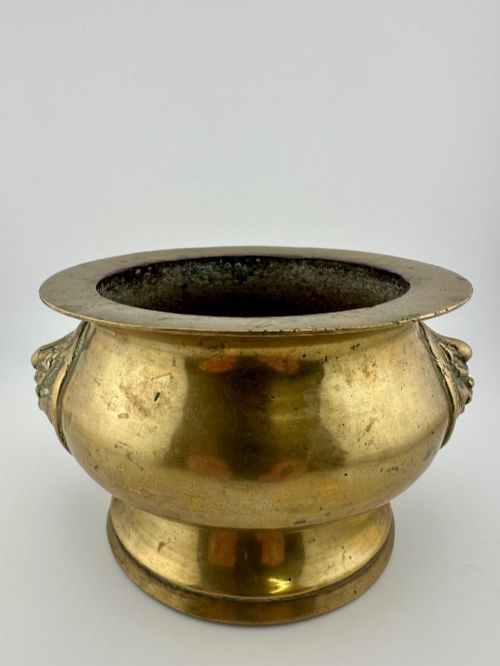
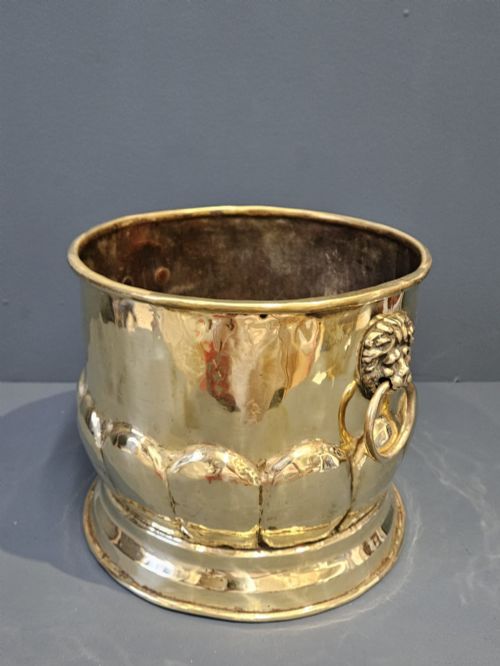
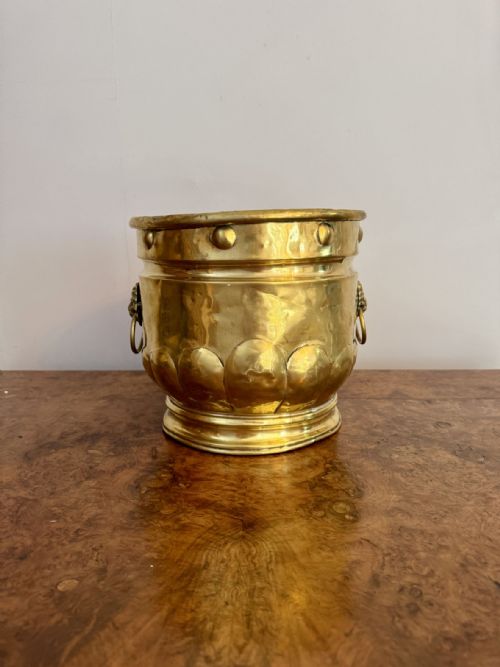
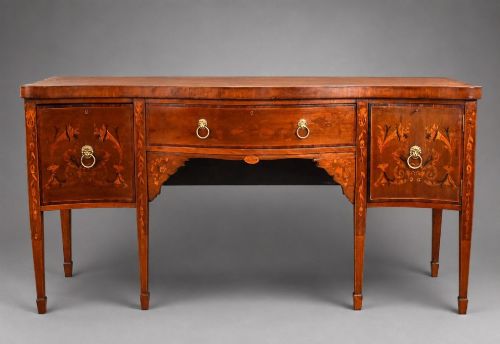
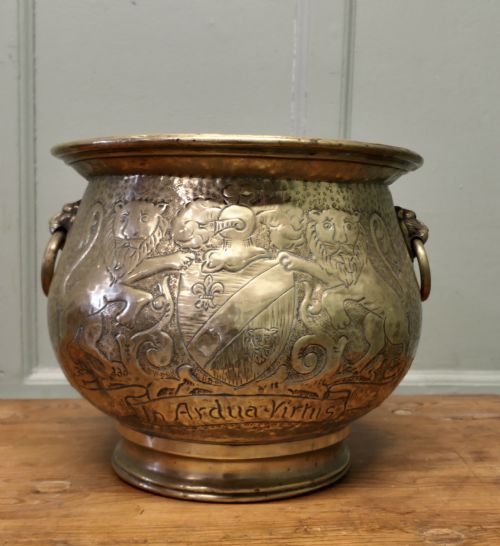
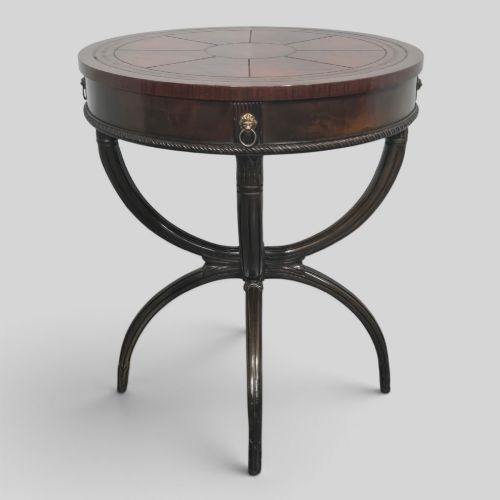
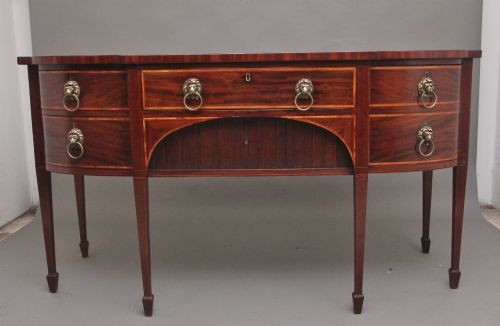
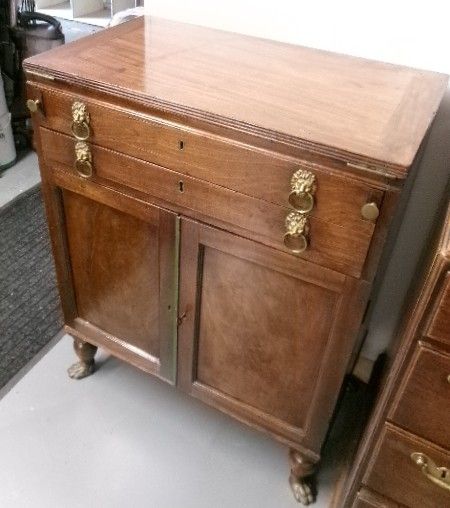
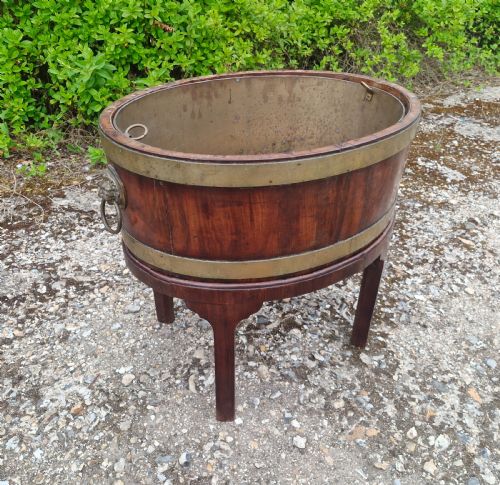
The versions most commonly met on this page are circular brass or copper planters, coal buckets, and log bins bearing cast lion mask and ring handles. Alongside these vessels, buyers find chests of drawers and tea caddies where smaller brass lion heads secure the drawers or lift the lids.
How they were made
Makers cast these handles in brass, often utilising sand-casting methods to achieve detailed manes, jaws, and ring loops. The resulting metal hardware was then secured to copper bodies, oak staves, or solid mahogany furniture using threaded bolts or heavy pins.
Vessels combining brass lion handles with timber frequently incorporate hand-planed secondary woods, boxwood stringing, or brass banding. Copper and brass planters rely on soldered or dovetailed seams to hold water and weight without leaking.
Heavy metal lions stare from coal buckets and tea caddies alike, guarding dry kindling and loose leaves with equal solemnity.
What varies in quality
Proportion and material integrity also separate items across the range. High-quality examples feature heavy gauge copper or dense mahogany bodies that support the substantial weight of the cast brass handles without sagging or pulling away from the wood.
Gillington of Dublin
The Brass Lion Handles Glossary
- Lion mask
- A decorative casting shaped like a lion's head, frequently holding a heavy metal ring in its mouth.
- Jardiniere
- An ornamental pot or stand designed to hold growing plants or flowers.
- Cellarette
- A lockable container used for storing wine bottles near the dining table, often fitted with heavy carrying handles.
- Sarcophagus
- A monumental container shape with a sloping lid, popular for tea caddies during the Regency period.
- Planter
- A vessel intended to contain potted greenery, commonly constructed from brass, copper, or bound oak.
Brass Lion Handles: Frequently Asked Questions
What are brass lion handles found on?
These cast metal mounts appear chiefly on 19th-century coal buckets, copper jardinières, and mahogany case furniture such as chests of drawers and cellarettes. They function primarily as robust lifting grips while introducing a formal neoclassical motif to utilitarian objects.
Items range from small table tea caddies to large floor-standing log bins. The handles themselves are typically secured through the walls of metal vessels or screwed directly into heavy timber drawer fronts.
How do I date a piece with lion handles?
Dating relies heavily on the accompanying wood, construction methods, and overall vessel style rather than the handle alone. Georgian and Regency examples often display hand-cut dovetails, rosewood or mahogany veneers, and finely chased brass work.
Later Victorian and 20th-century pieces generally utilise machine-sawn timbers and heavier, standardised metal castings. Examining the interior linings and fixing bolts also helps determine the manufacturing era.
How do I care for brass lion handles?
Maintaining these metal fixtures involves gentle dusting and occasional cleaning with a soft cloth to remove grime without stripping the aged surface. Aggressive polishing is generally avoided to preserve the natural patina built up over generations.
When the handles are attached to wood or leather, care must be taken to keep moisture away from the surrounding material. Regular checks on the mounting screws ensure the heavy metal rings remain secure against the timber or metal body.