
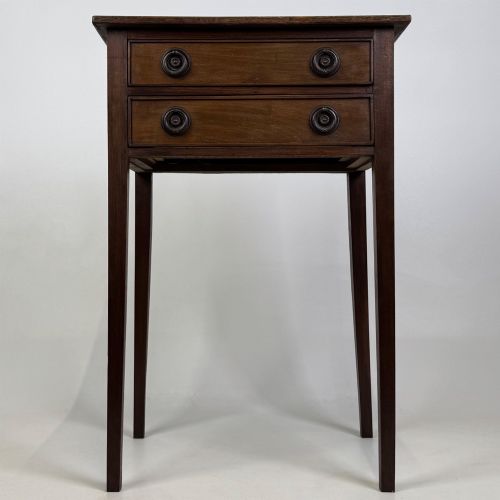
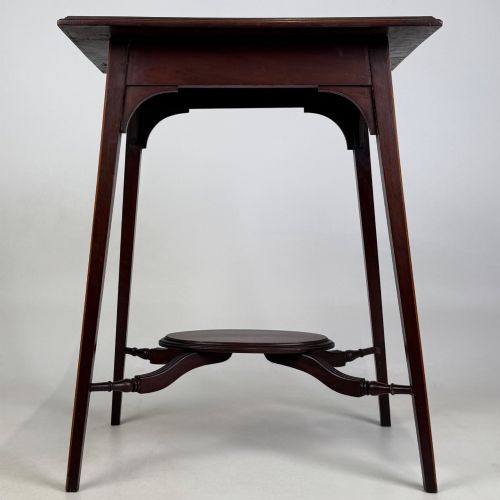
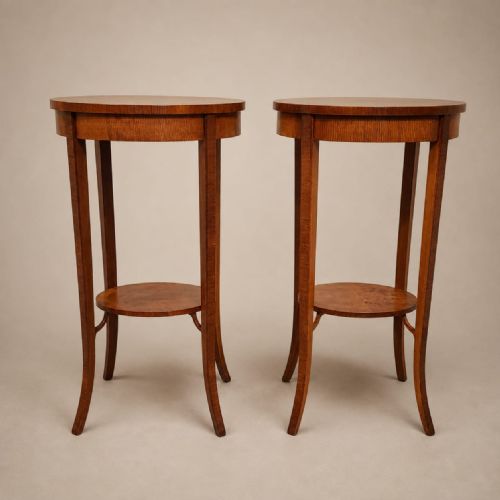


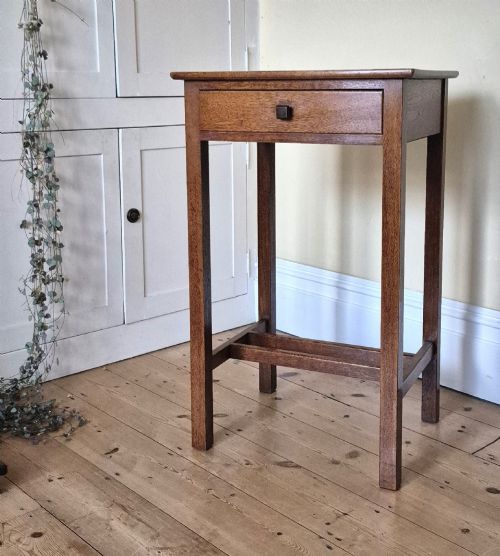
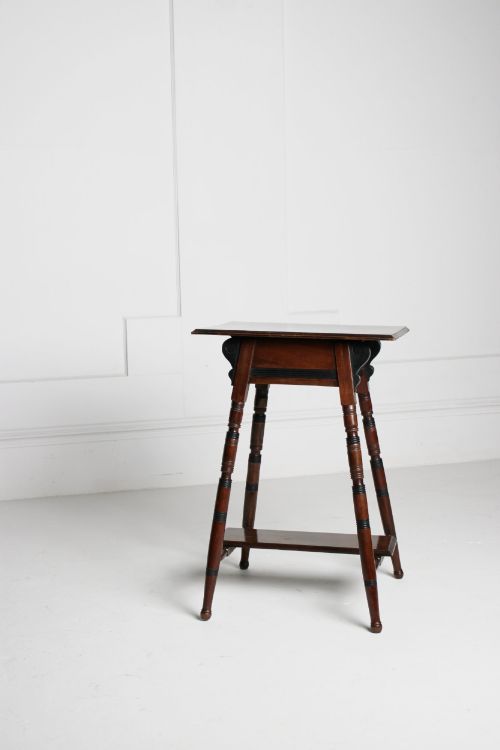

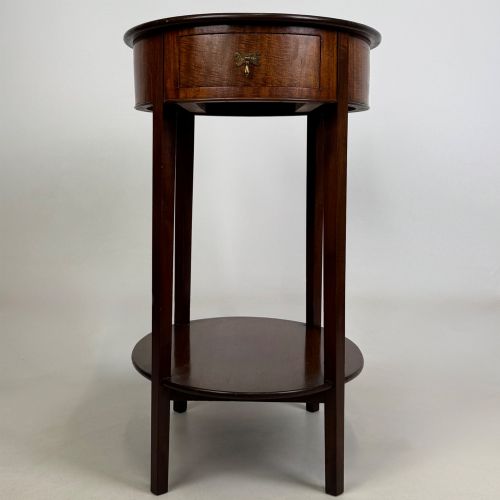
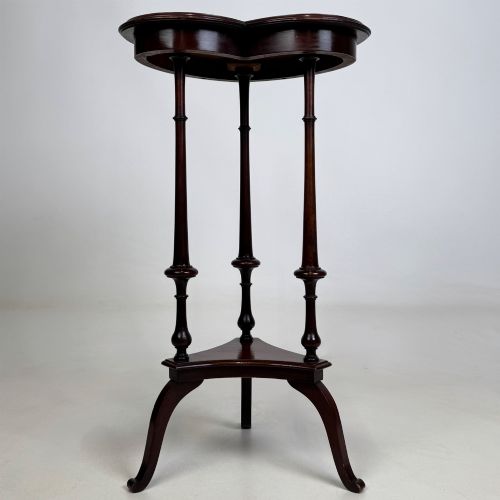
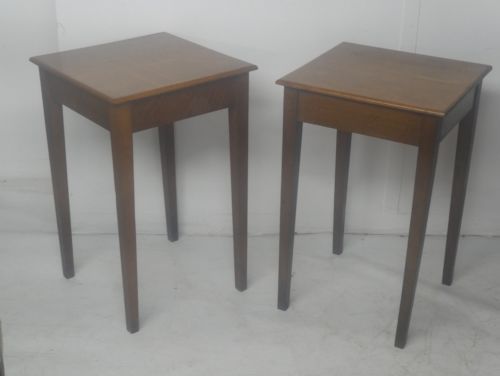

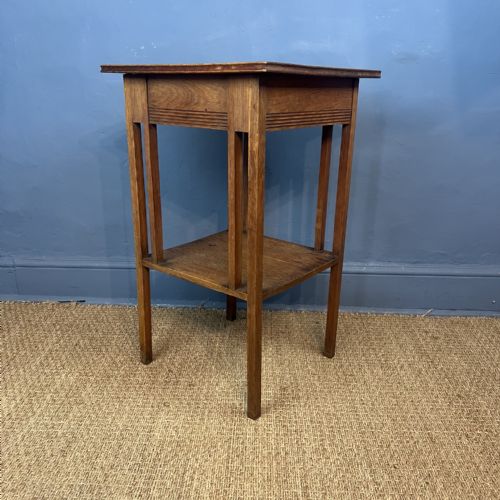
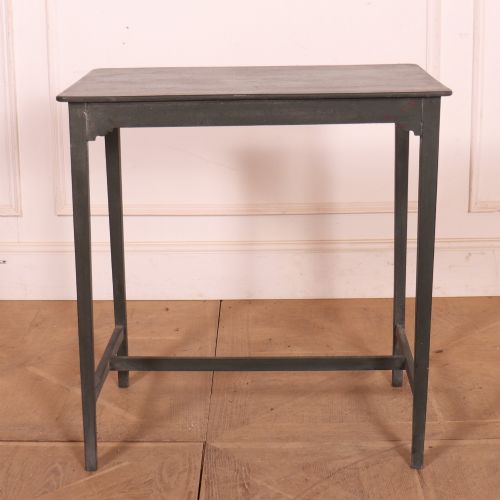


Tall Occasional Table
A tall occasional table serves various rooms as a perch for lamps, plants, or books, combining practical height with compact elegance.
Tall Occasional Table
The selection ranges from simple provincial oak lamp tables to sophisticated satinwood and mahogany pieces influenced by Sheraton revival or French neoclassical styles. Makers and workshops from London to Glasgow produced these versatile pieces to meet domestic demands for elevated display surfaces.
How they were made
Cabinet makers utilised dense hardwoods such as mahogany, walnut, rosewood, and oak for structural integrity, often incorporating lighter timbers like boxwood and satinwood for decorative inlay work. Brass details, onyx tops, and hand-painted motifs appear on select French and English pieces to elevate the visual texture.
Joinery techniques ranged from traditional mortise and tenon frames in Arts and Crafts pieces to delicate veneering and edge banding on Edwardian and revival tables. Turned and tapered legs provide the necessary elevation while maintaining a slender profile suited to smaller footprints.
Mahogany and oak dominate the timber selections across these nineteenth and twentieth-century listings, alongside rarer rosewood and yew wood.
What varies in quality
The distinction between ordinary and superior pieces rests on the choice of timber figure, the crispness of inlaid details, and the overall balance of proportion. Finer examples display carefully matched wood grains and meticulous hand-finishing rather than mass-produced uniformity.
Structural stability at height determines longevity, where precise joinery ensures the table remains rigid despite its slender build. Premium execution shows in the refinement of turned supports and the integration of secondary materials like brass or marble.
Hubert Simpson of Kendal·Druce and Co London·Shoolbred
The Tall Occasional Table Glossary
- Torchere stand
- A tall, slender table or stand traditionally used to support a candelabrum or lamp. These pieces elevate lighting or floral displays to eye level.
- Urn stand
- A small, elevated table designed specifically to hold a tea urn or decorative vessel. They typically feature compact tops and sturdy yet slender legs.
- Galleried
- A raised border surrounding the edge of a tabletop, designed to prevent items from rolling off. This feature often appears in pierced brass or carved wood.
- Satinwood
- A lustrous, yellow-brown timber prized for its fine grain and reflective quality. It frequently appears in eighteenth and nineteenth-century veneer and inlay work.
- Inlay
- A technique where contrasting pieces of wood, metal, or shell are inserted into depressions in the base material to create decorative patterns.
Tall Occasional Table: Frequently Asked Questions
How do I tell Edwardian pieces apart from Victorian ones?
Edwardian tables generally display lighter construction, simpler lines, and a preference for satinwood inlay or Sheraton revival motifs. They reflect a shift towards brighter, airier domestic interiors at the turn of the twentieth century.
Victorian examples tend to use heavier timbers like dark mahogany or walnut with more robust proportions and ornate carving. Regional variations and revival styles often blend these traits, so timber selection and joinery offer the best clues to age.
Were these tables used for lamps historically?
Many nineteenth-century examples served as torchere stands or urn stands rather than electrical lamp tables, holding candles, oil lamps, or heavy ceramic vessels. As domestic lighting evolved, owners naturally repurposed these sturdy elevated surfaces to hold electric table lamps.
Their height made them ideal for casting light downward over seating areas without crowding the main floor space. This adaptability explains why older stands transition so smoothly into modern living spaces.
How do I care for antique wood surfaces?
Regular dusting with a soft, dry cloth prevents particulate buildup that can dull the polished finish of nineteenth-century timber over time. Applying appropriate paste wax occasionally feeds the wood and maintains a gentle, natural sheen without trapping moisture.
Direct sunlight and sudden temperature changes should be avoided to prevent timber from warping or veneers from lifting. Using coasters protects older French polish and wax finishes from liquid rings.